
De-essing explained: taming sibilance without dulling the voice
That stabbing "sss" on every take, the "sh" that spits the moment you add air: sibilance is the nightmare of vocal mixing.…



That stabbing "sss" on every take, the "sh" that spits the moment you add air: sibilance is the nightmare of vocal mixing.…
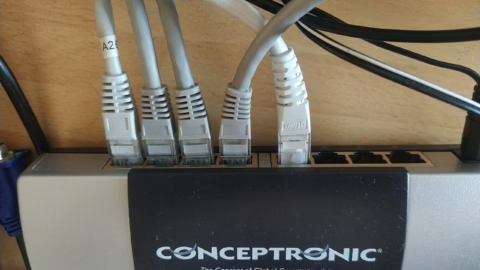
Dante, AES67, ST 2110: audio-over-IP has taken over radio and TV. But behind those networks, an invisible clock decides that everything stays…

The LFO is the movement engine behind almost every synth patch: it makes a filter sweep, a note shimmer, a pad breathe.…
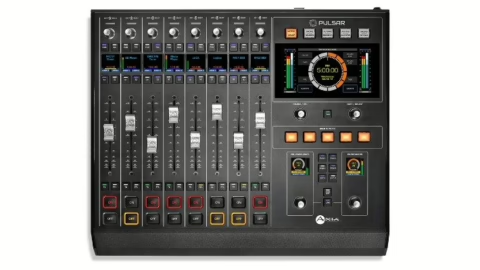
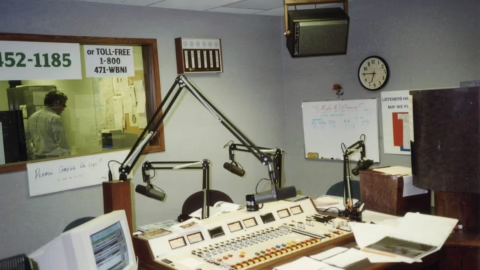
Behind every radio signal sits a playout system that decides, to the second, what goes to air. Automation, cart walls, the log,…

Feedback is not bad luck: it is a loop you can measure and push back. Here is how to win gain before…
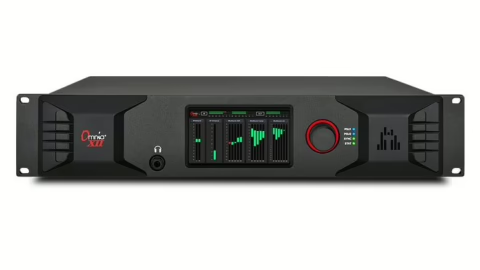
Between the console and the transmitter, a radio station's sound runs through an audio processor that sets its sonic signature and protects…

Attack, decay, sustain, release: these four controls decide whether a sound snaps, settles or fades. The ADSR envelope is the tool that…
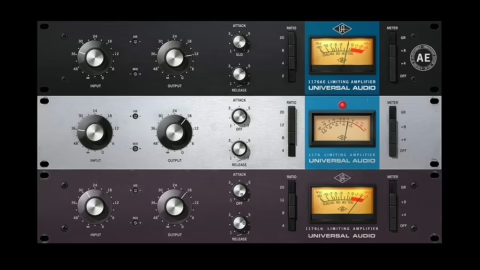
Also called New York compression, parallel compression blends a heavily compressed copy of a signal with the untouched original. You gain density…

The little +48V button is everywhere — on interfaces, consoles and preamps — and it's still one of the most stubborn sources…
Starting a webradio is more than plugging in a mic. Between the streaming server, the encoder, the codec choice and loudness control,…