


Euphonix CS2000
Digitally controlled analogue console — assignable surface and total automation (1990s)
Description
Technical
Specifications
Inputs / Outputs
| Total inputs | 56 |
|---|---|
| Inputs / outputs | Surface/Audio Tower link over a multi-way serial cable; the interface was raised to 10 Mbit/s across the range's evolution (Crescendo → CSII → CS2000 → CS3000). Source: Wikipedia / documentation. |
Processing
| Mix buses | 24 |
|---|---|
| Architecture | Four-part system: the Mix Controller (digital control surface), the Audio Tower (remote analogue processing rack), the patchbay and the support computer. The surface talks to the Audio Tower over a multi-way serial cable "snake". Source: CS3000/2000 operation manual. |
| Groups and VCA/DCA | Each fader drives a DCA (Digitally Controlled Attenuator): faders are NOT motorised, gain control is digital. Every block of 8 faders, the Master Controller and the Digital Studio Controller are computers. Settings retained in battery-backed RAM on power failure. Source: manual. |
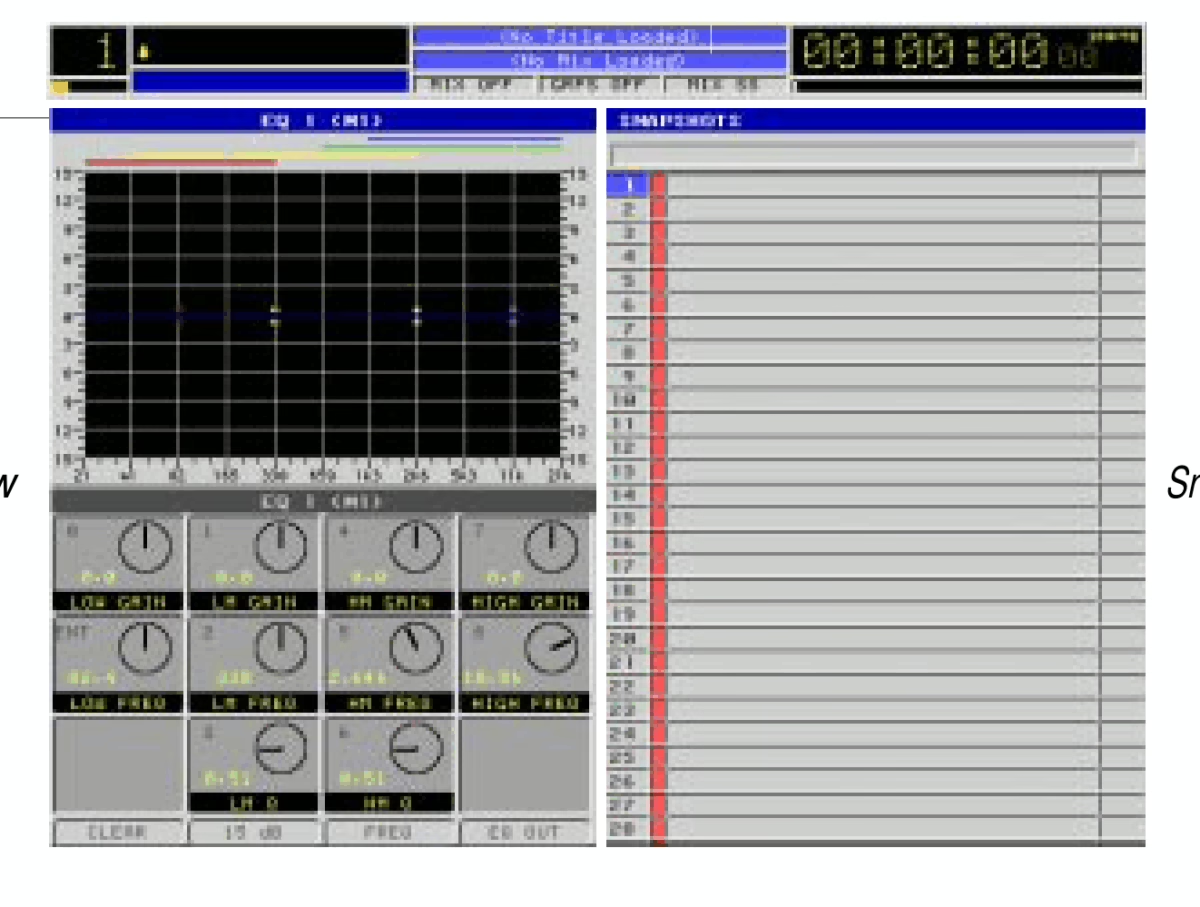
| EQ | 4-band parametric EQ (LF, LM, HM, HF), a signature technology designed by Rob Silfvast; curve shown and edited in real time on screen. Source: manual. |
Surface
| Physical faders | 80 |
|---|---|
| Motorized faders | No |
| Screens | 1 |
| Touchscreen | No |
| Automation | Dynamic automation of faders, mutes, pans, aux sends, EQ and routing, complemented by SnapShot recall (storing all console and configuration parameters). Source: manual / Euphonix documentation. |
| Screens — details | Colour TFT screen (EQ, dynamics, SnapShot windows) plus an alphanumeric SmartDisplay on the Master Control Panel. Source: manual. |
Recording
| Onboard recording | No |
|---|
Networking
| Redundant PSU | No |
|---|---|
| Redundant networking | No |
Other
| Variants and configurations | CS2000: configurations up to 80 faders, up to 56 channels per Audio Tower; 24 "Cube" buses and 16 dynamics channels (configuration-dependent; to be confirmed). The larger CS3000 reaches 96 faders. Sources: manual + dealer listings. |
|---|
Strip & details
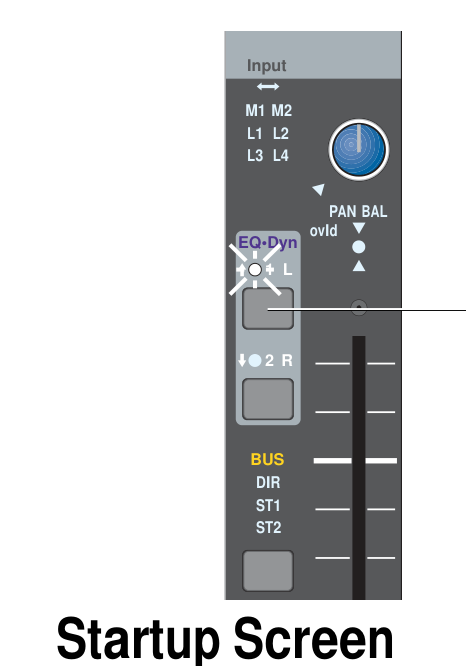
Rotate your phone to landscape for a better view of the strip.
Software
- Euphonix MixViewSoftware environment of the CS range (EQ, dynamics, SnapShot windows, session management) running on the support computer and shown on the console's TFT screen.
Other screenshots
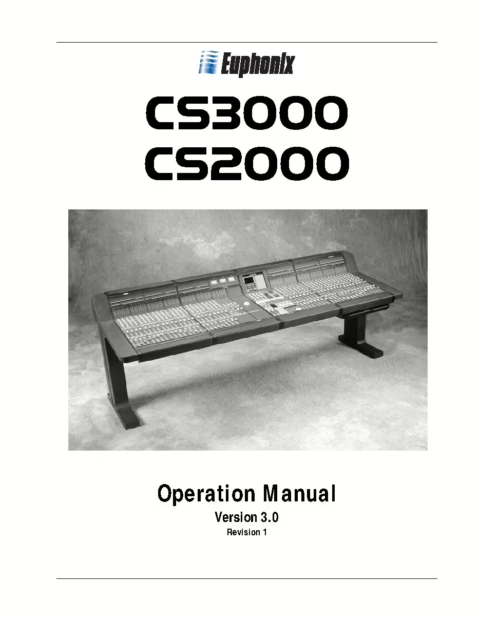
Documents
Editorial & artists
Our take
History & design
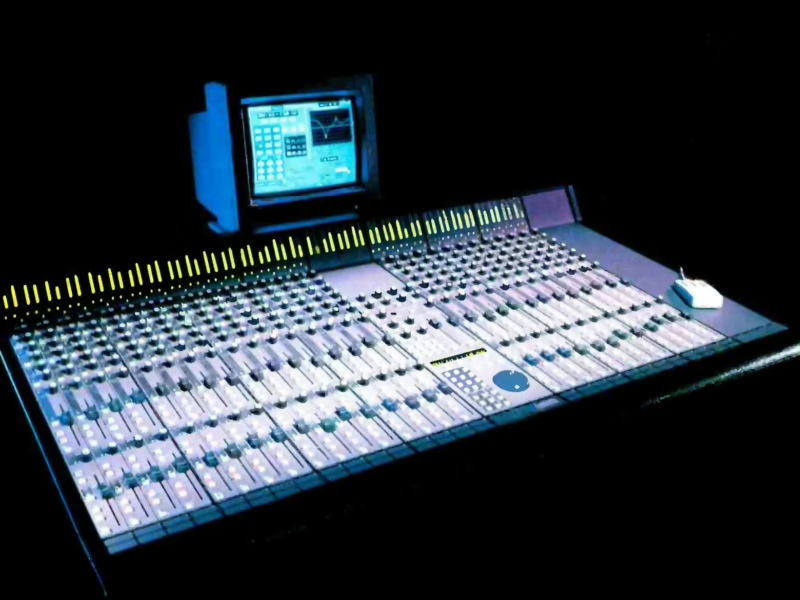
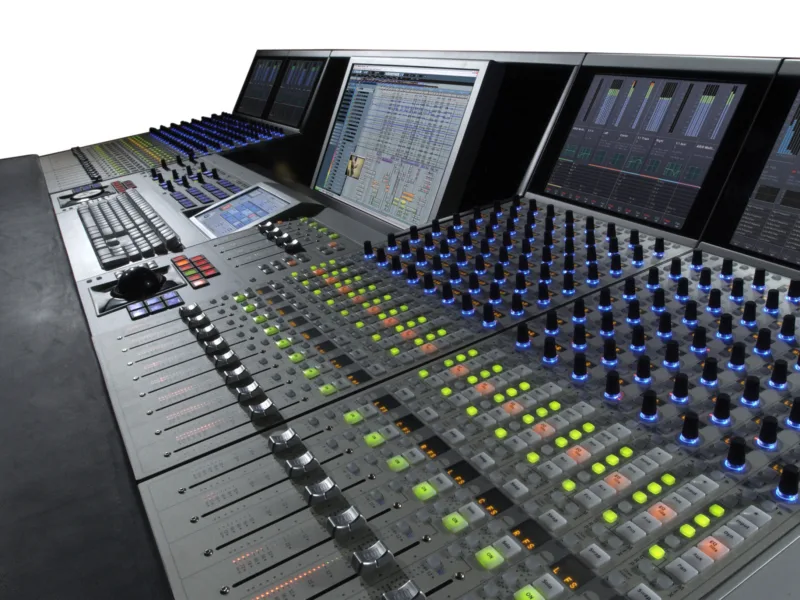
The Euphonix CS2000 is a digitally controlled analogue mixing console released from 1993 by American maker Euphonix. It belongs to the Crescendo → CSII → CS2000 → CS3000 line, the first successful range of large "digitally controlled analog" consoles. The system comprises four parts: the Mix Controller (control surface), the Audio Tower (remote analogue processing rack, up to 56 channels), the patchbay and a support computer, linked by a multi-way serial cable.
Each channel relies on a DCA (Digitally Controlled Attenuator): faders are not motorised, gain control is fully digital, and settings are held in battery-backed RAM. The console offers full dynamic automation (faders, mutes, pans, auxes, EQ, routing) and SnapShot recall storing every parameter. The brand's signature 4-band parametric EQ (LF/LM/HM/HF) is edited in real time on a colour TFT screen backed by an alphanumeric SmartDisplay. The CS2000 shipped in configurations up to 80 faders, with its bigger sister CS3000 reaching 96.
- Scott Silfvast — Co-founder / Lead designer
- Rob Silfvast — Designer of the 4-band parametric EQ
- Adam Reif — Co-founder / Mechanical design
- Andrew Kalman — Firmware
- Russ Kadota — Software
Links
Related consoles
Some merchant links are affiliate links. Purchases may support Digital Mixing at no extra cost.
Documents are archived locally for preservation. Source credited. Takedown requests: [email protected]