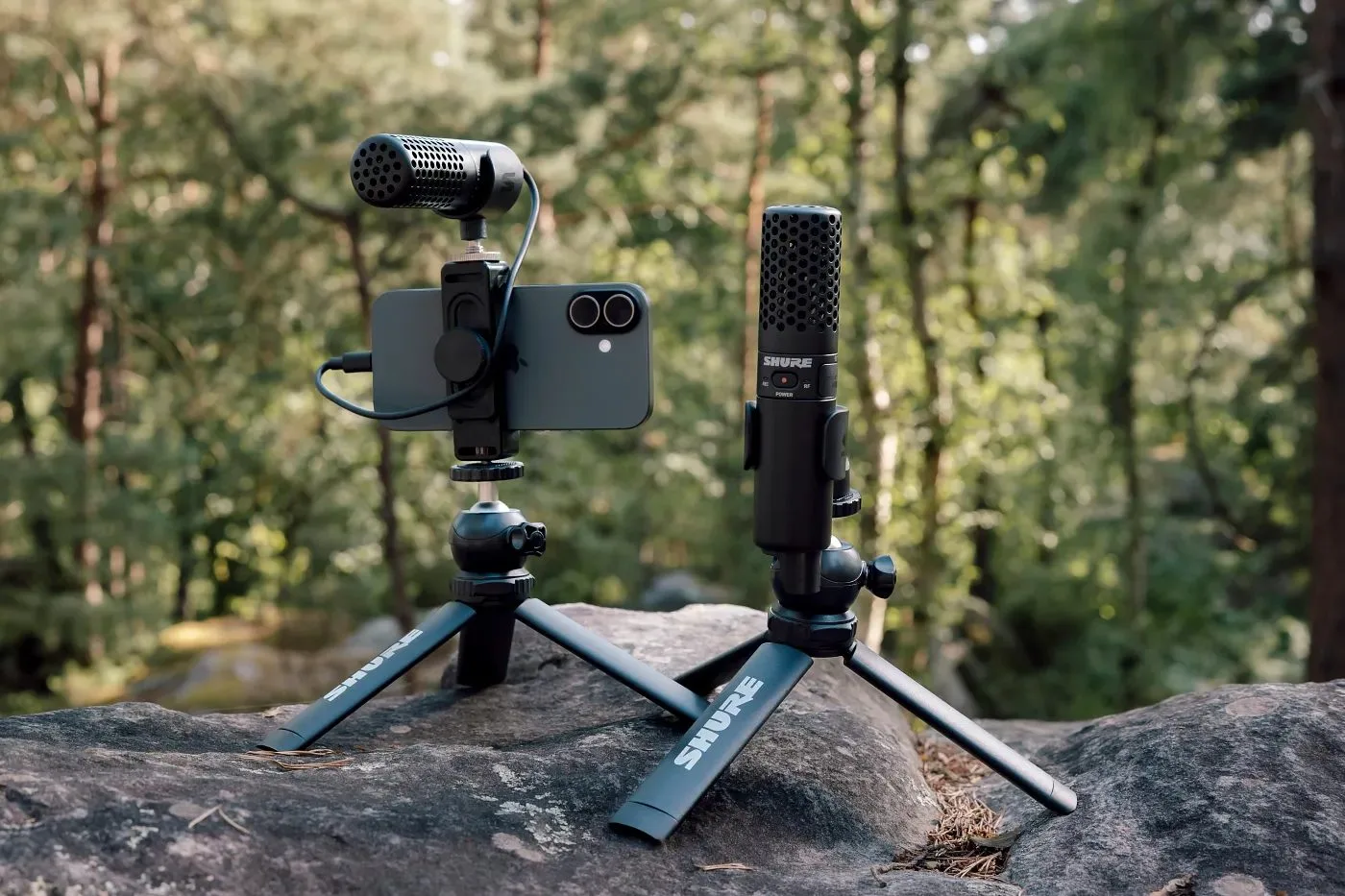
Shure is stepping out of its comfort zone. The brand, best known for conventional stage and studio mics, has announced the MV360, a pocket-sized spatial capture microphone that connects over USB-C. It targets a fast-growing niche: immersive sound for 360 video, VR and, more broadly, any content that aims to drop the listener into the middle of the scene. Priced around 349 dollars, it arrives alongside a preview of a higher-end model, the MV360+.
Ambisonics in a pocket body
The MV360’s whole idea is to capture the entire sound field, not a single direction. It records in first-order ambisonics, B-format (Ambix) — four channels that describe the sonic sphere and can be decoded toward any direction in the edit. In practice you set the mic down, record once, and choose the orientation, width or binaural perspective afterward. The MV360 also offers several ready-to-use modes: mono, stereo, immersive binaural, auto source tracking and full 360-degree capture.
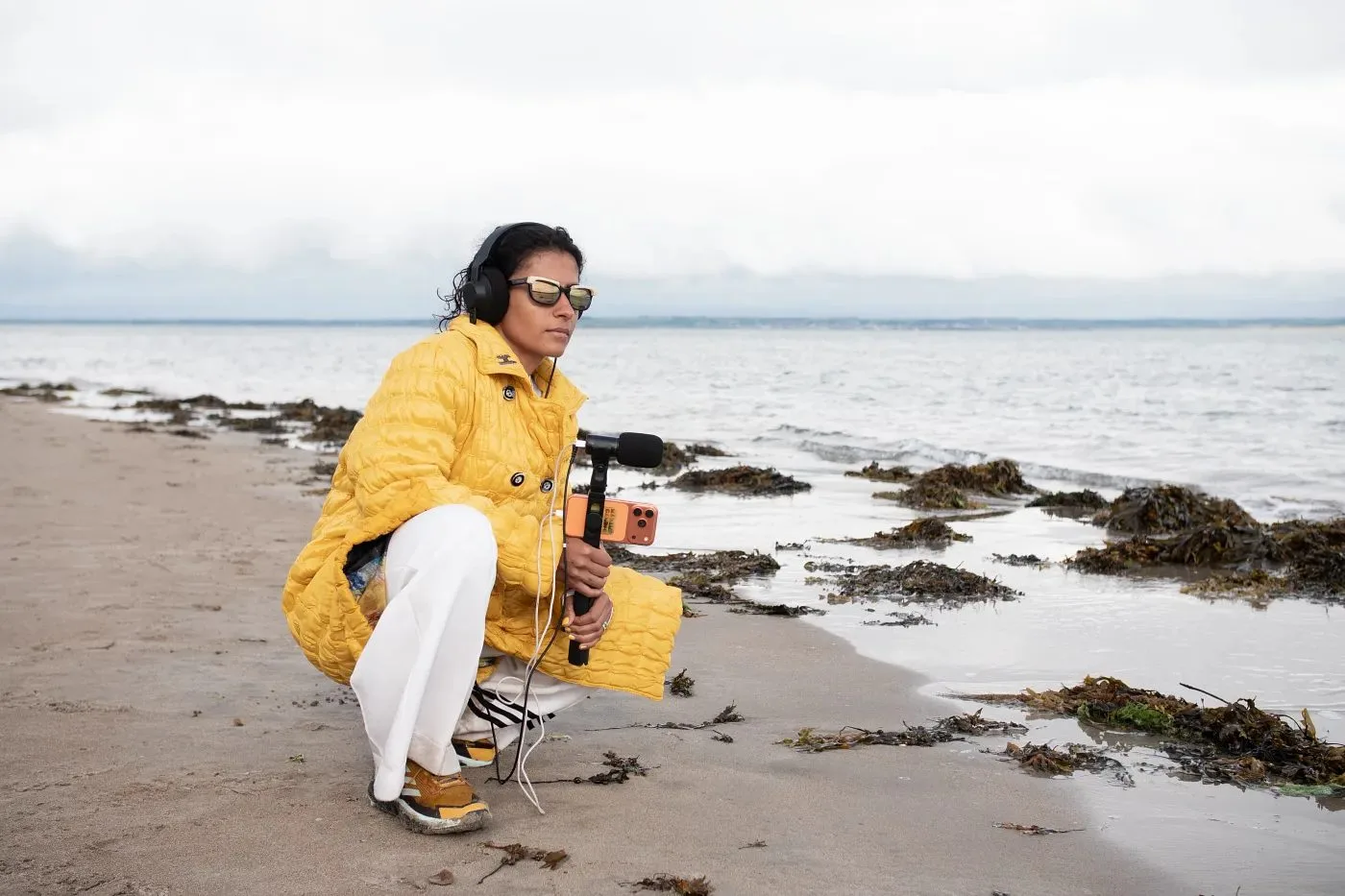
One cable, any device
Where this kind of recording used to demand a dedicated recorder and a bit of craft, the MV360 goes for radical simplicity. The all-metal body plugs into a phone, tablet or computer over USB-C, which powers it and takes the audio down the same cable. Recording happens in the brand’s MOTIV apps or straight into a DAW. It’s a deliberate mobility play: the creator heads out light, captures an immersive ambience with no equipment bag, and processes later. The logic echoes the Zylia ZM-2, another USB-C ambisonic sphere, but Shure aims at a far more compact format and at videographers as much as sound engineers.
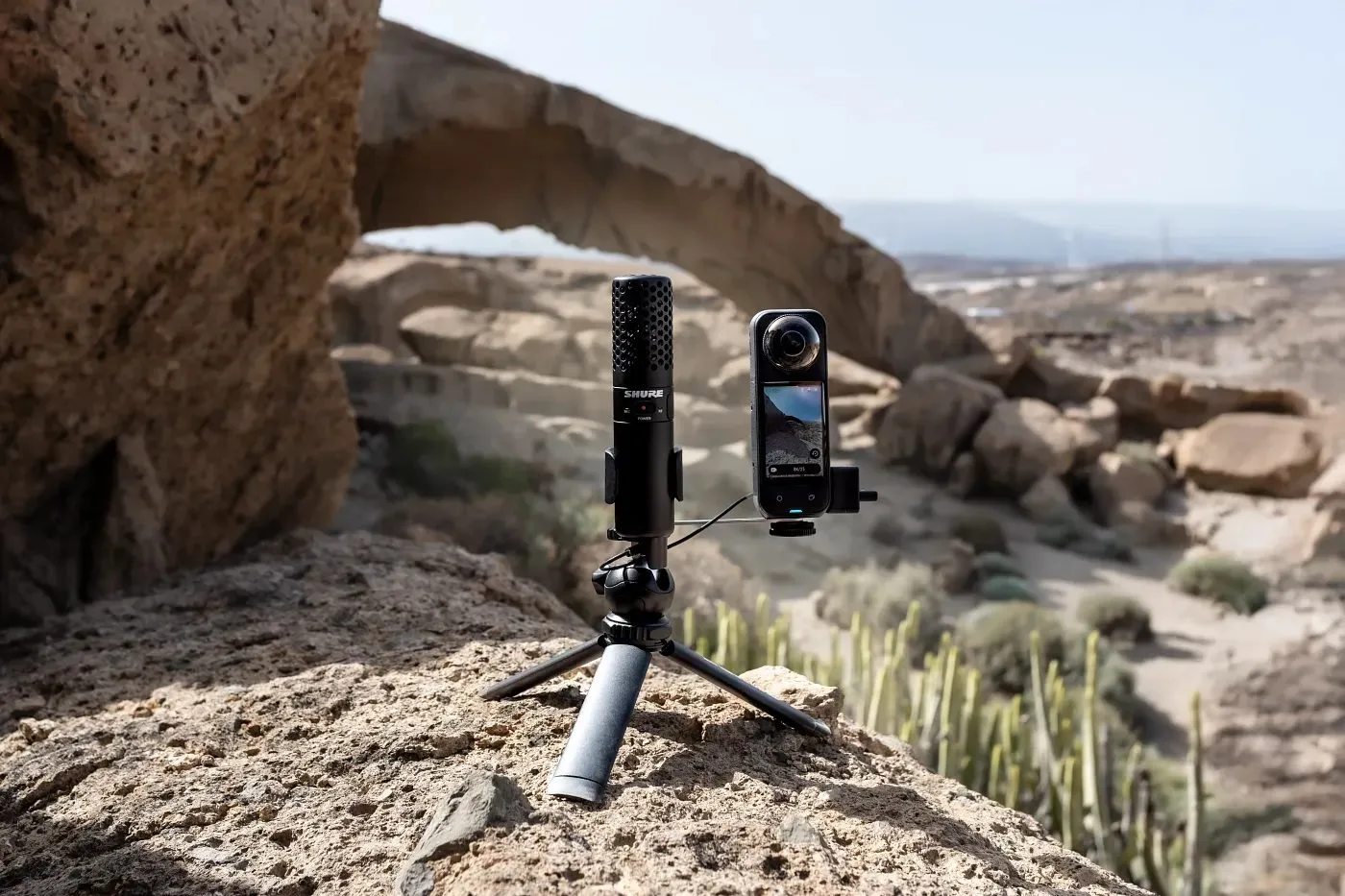
MV360 and MV360+: two tiers
Shure used the launch to unveil a bigger sibling, the MV360+, due in early 2027 at around 449 dollars. It adds what the base model lacks to cut the cord from a host device: battery power, an internal 32-bit floating-point recorder to microSD, and wireless control. The 32-bit float is the feature field users will notice, since it makes gain-setting almost painless and forgives unexpected peaks — real comfort in ambience work where you don’t control the dynamics. To audition and check those immersive takes, an honest nearfield monitor like the IK Multimedia iLoud Micro Monitor 2 is enough to form a reliable view before a headphone render.
My take
Ambisonics stayed an insider’s field for a long time, with its jargon and its intimidating mics. The MV360 takes the opposite bet: one simple object, one cable, one app, and immersive becomes reachable for any videographer. 360 and VR need sound that turns with the image, and affordable options have been thin. The real question is self-noise: a compact spatial mic at this price has to prove it holds silence, because a hissy ambience recording is useless. If Shure nailed that, the MV360 could open up a format that needed it — and the 32-bit model to follow will make the whole thing even calmer in the field.
Frequently asked questions
Do you need a separate recorder or interface?
No. The MV360 plugs into a phone, tablet or computer over USB-C, which powers it and takes the audio down the same cable. No intermediate box is needed with the base model.
What capture modes does it offer?
Mono, stereo, immersive binaural, auto source tracking and full 360-degree capture. Under the hood the mic works in first-order ambisonics, B-format (Ambix), which you can decode freely in the edit.
What’s the difference between the MV360 and the MV360+?
The MV360+, announced for early 2027 at around 449 dollars, adds battery power, an internal 32-bit float recorder to microSD and wireless control. The 349-dollar MV360 relies on a host device for power and recording.
What software does it work with?
Recording runs in the brand’s MOTIV apps or straight into the DAW of your choice, with the mic seen as a multichannel USB source.
What’s in the box?
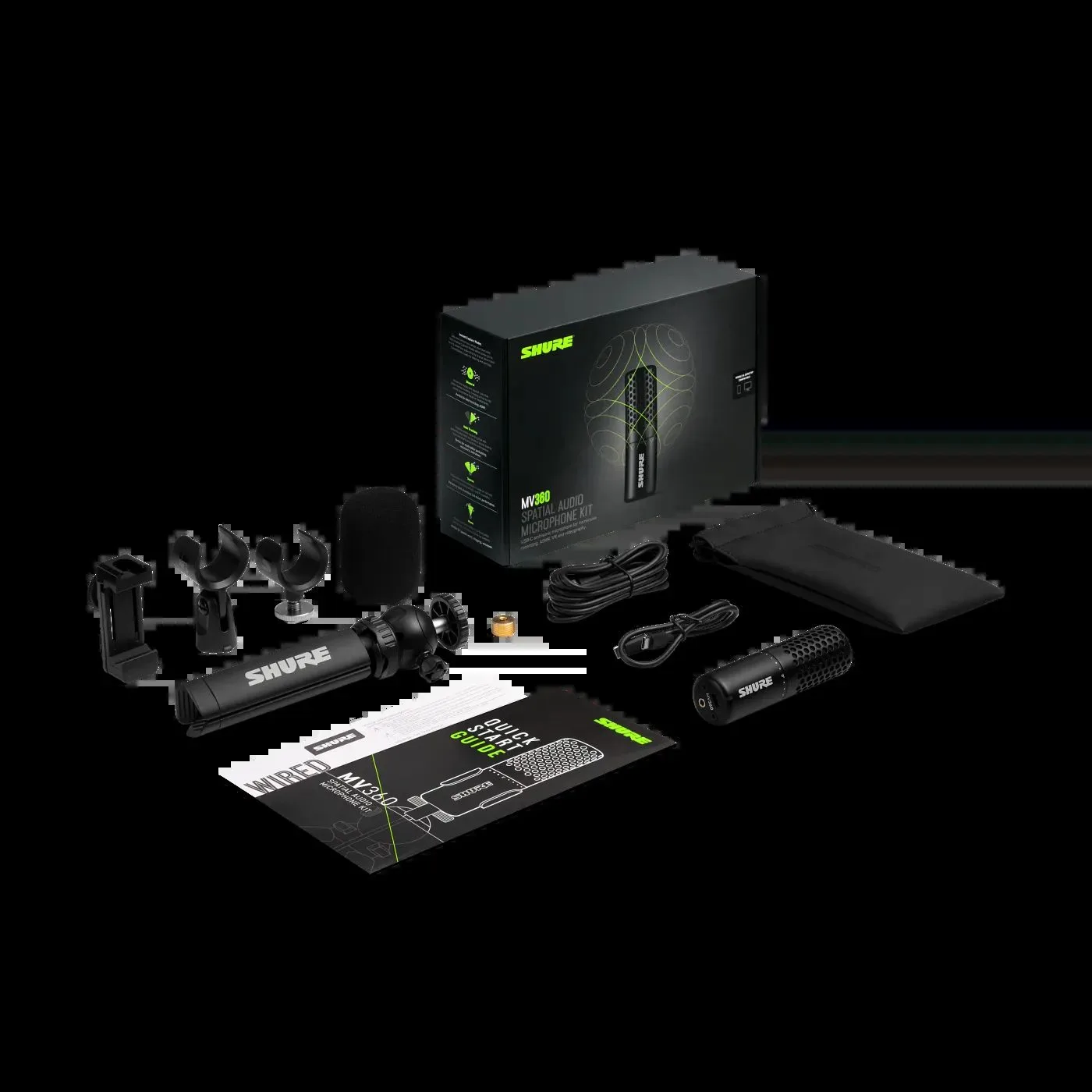
Alongside the mic, Shure supplies a tripod, a cold-shoe clip, a 5/8-inch clip, a smartphone clamp, two USB-C cables, a foam windscreen and a carrying case.