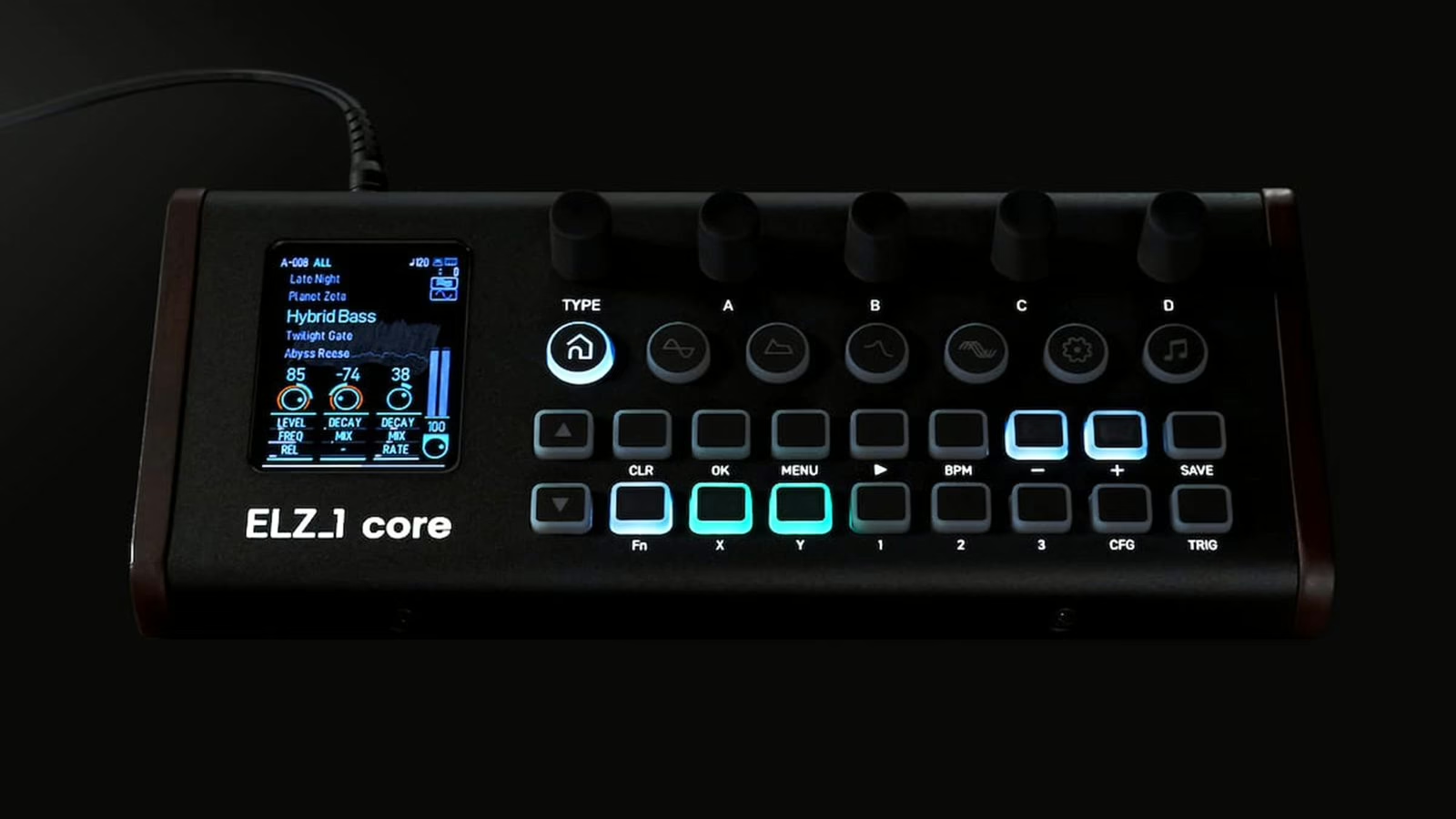
The Sonicware ELZ_1 was never an ordinary synth. Behind its little keyboard and square screen sat an engine that could jump from a wavetable to an FM algorithm and then to physical modelling without ever switching instruments. Sonicware now takes that exact engine, strips away the keys and the speaker, and drops it into a desktop box: meet the ELZ_1 core.
Same brain, a far more useful shape
The idea is simple: keep what makes the ELZ_1 interesting — its sonic range — and give it a logical spot in a modern setup, next to a controller, a computer or a stage rig. The core measures 234 × 103 × 57 mm and weighs under a kilo, runs and is controlled over USB, and offers 48 kHz / 16-bit audio in and out straight to the computer. You lose the original’s standalone, take-anywhere charm; you gain a module you actually integrate.
The front panel stays true to the house style: a 2.4-inch colour screen on the left, five rotary encoders and twenty-five colour-backlit buttons to move through engines, sequencer steps and sound banks. Nothing intimidating, but enough to program deep without endless menu-diving.
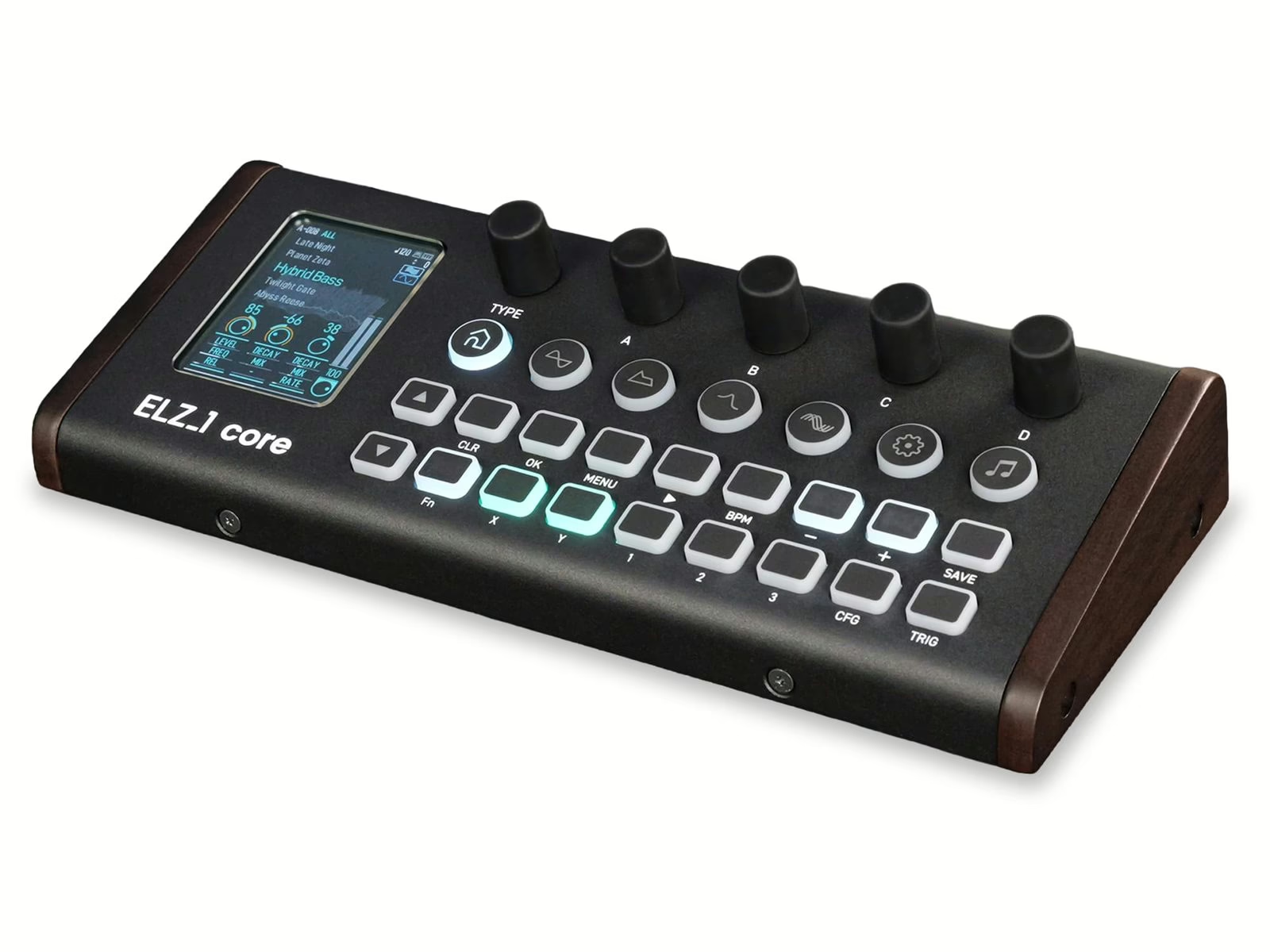
Eighteen engines under the hood
The heart of the core is its eighteen synthesis types, which you can stack up to three oscillator layers per sound. There’s virtual analogue, FM, physical modelling, wavetable synthesis and the more leftfield approaches Sonicware has cultivated for years. Polyphony climbs to twenty voices depending on the chosen engine.
For raw material, the ELZ_1 core ships with sixteen wavetables officially licensed from Waldorf, drawn from the classic PPG and Microwave — a rare pedigree at this price. Better still, it imports wavetables built in Serum, opening the door to a near-unlimited personal library. If you want to know why that matters, our explainer on wavetable synthesis spells out what a single table can do.
Sequencer and effects
This is more than a sound source: it packs a 128-step, 128-pattern sequencer with step and real-time recording, plus non-quantised MicroTiming to nudge events and humanise a groove. Forty-nine effects across four modules round things out, from the usual reverb and delay to granular processors and a cassette-tape simulation — a clean way to dirty a sound, in the spirit of granular synthesis.
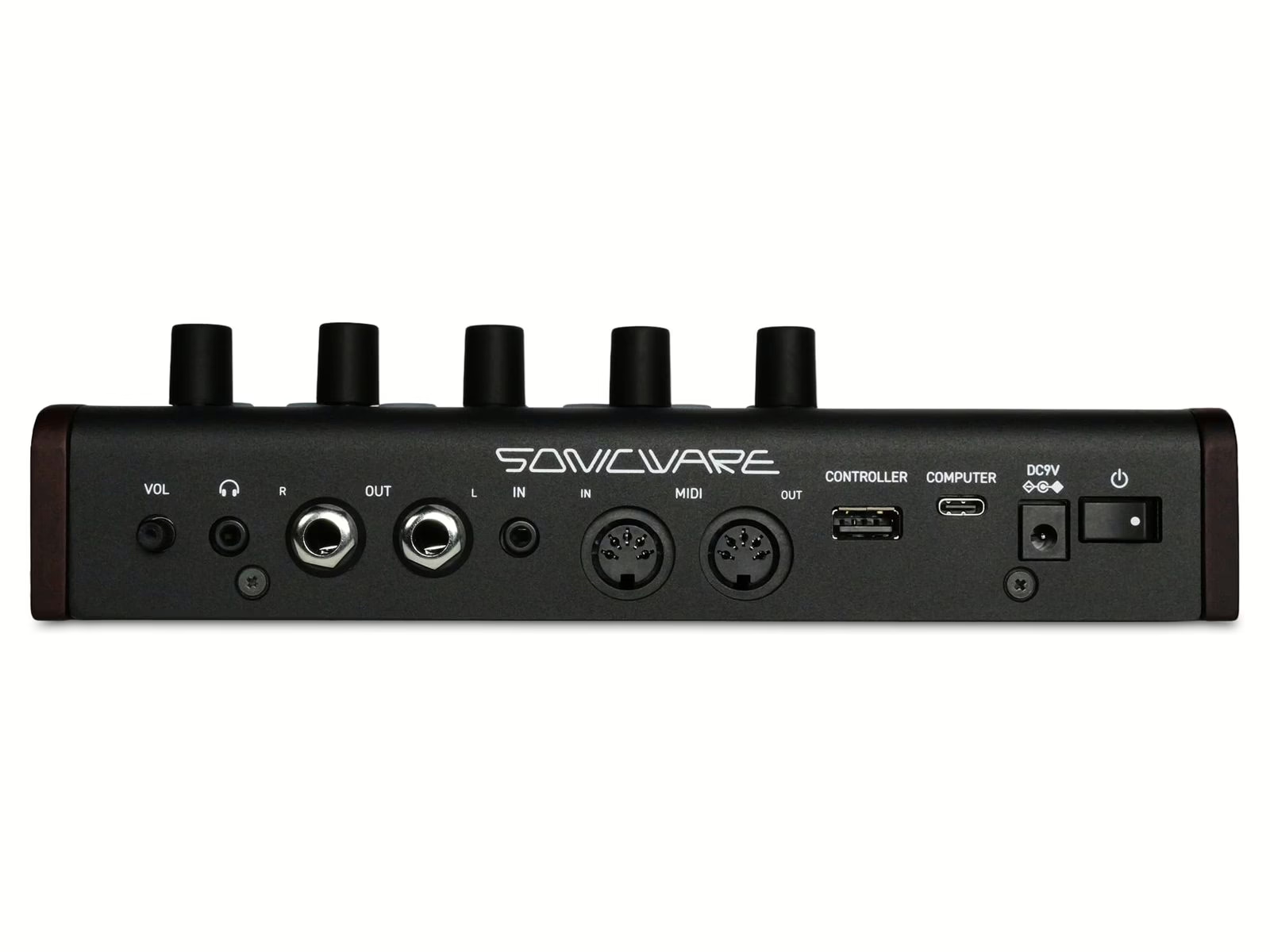
Specs at a glance
| Spec | ELZ_1 core |
|---|---|
| Synthesis engines | 18 types, up to 3 oscillator layers |
| Polyphony | up to 20 voices (engine-dependent) |
| Wavetables | 16 Waldorf-licensed (PPG, Microwave) + Serum import |
| Sequencer | 128 steps, 128 patterns, MicroTiming |
| Memory | 512 sounds (256 performance-ready) |
| Effects | 49, across 4 modules |
| USB audio | 48 kHz / 16-bit, 2-in / 2-out |
| Form factor | 234 × 103 × 57 mm, 0.97 kg |
| Price | $499 / £449 / €539 inc. VAT |
The core is made to order, with the first fifty units due mid-October. Alongside it, Sonicware gives the keyboard ELZ_1 play a firmware 3.0 update: redesigned preset browser, reworked menus. The ELZ_1 family keeps moving on two fronts. In the same vein of unusual instruments, think of proposals like the Modartt Airteq, which also bet on synthesis off the beaten path.
My take
Taking the keyboard out of the equation was the right call. The ELZ_1 was always a likeable object but a slightly awkward one: too rich to be a toy, too cramped in its take-anywhere ergonomics. As a desktop module, that multi-synthesis engine finally lands where it belongs — a sound source you plug in, sequence and layer with everything else. The Waldorf wavetables and Serum import are a genuine draw at this price. The made-to-order model will test your patience a little. For anyone after a wide sonic palette in a small box, the core is one of the more intriguing releases of the season.