Four seconds, a melody, a station name sung by a spotless choir. The radio jingle is one of the most familiar sound objects of the 20th century, and yet one of the least told. Behind a large share of these on-air signatures sit a small Texan city and two companies: PAMS of Dallas, then JAM Creative Productions. Their story is that of a brilliant production idea, copied everywhere, and still alive.
A four-second signature
A station ID jingle serves a precise purpose: tell you who you are listening to, in a few seconds, memorably. On a music station, it links two songs, launches a segment, repeats the frequency. Done well, it becomes as recognisable as a brand’s visual logo. It is a piece of station imaging, that set of short sounds that gives a station its identity, and that modern radio still polishes, as our article on radio automation and station imaging shows.
Dallas, Bill Meeks and the birth of PAMS
It all starts with William B. Meeks Jr., born in 1921. As early as 1947, he wrote jingles for KLIF in Dallas, owned by Gordon McLendon, one of the pioneers of American Top 40 radio. In 1951, Meeks founded his own house: PAMS, for “Production, Advertising and Merchandising Service”. At first the business stayed modest, a few jingles tailored for local advertisers.
The idea that would change everything arrived in the mid-1950s. Rather than compose a unique theme for each client, PAMS recorded backing tracks, then added vocals suited to each station. A station heard a demo, then ordered its version, with its name and frequency sung over the same arrangement. Jingle syndication was born: a single production, resold and re-dressed dozens of times.
The Top 40 golden age
With the explosion of Top 40 stations in the late 1950s, PAMS found its market. Station IDs became the main business, to the point that the company was renamed PAMS, Inc. in late 1964. Orders poured in from across the country, then the world. The packages, organised into numbered series, dressed legendary stations: WABC in New York, WLS in Chicago, but also the offshore pirate stations Wonderful Radio London and Swinging Radio England, and even BBC Radio 1 and 2 in their early days. In 1972, Billboard described PAMS as the largest jingle house in the world.
The bond with programmers was close. For WABC, Bill Meeks flew to New York to pitch his ideas to the legendary Rick Sklar, who, once the series were approved, headed to Dallas to oversee the final versions. The company’s studios, at 4141 Office Parkway, ran at full tilt.
How a jingle is made
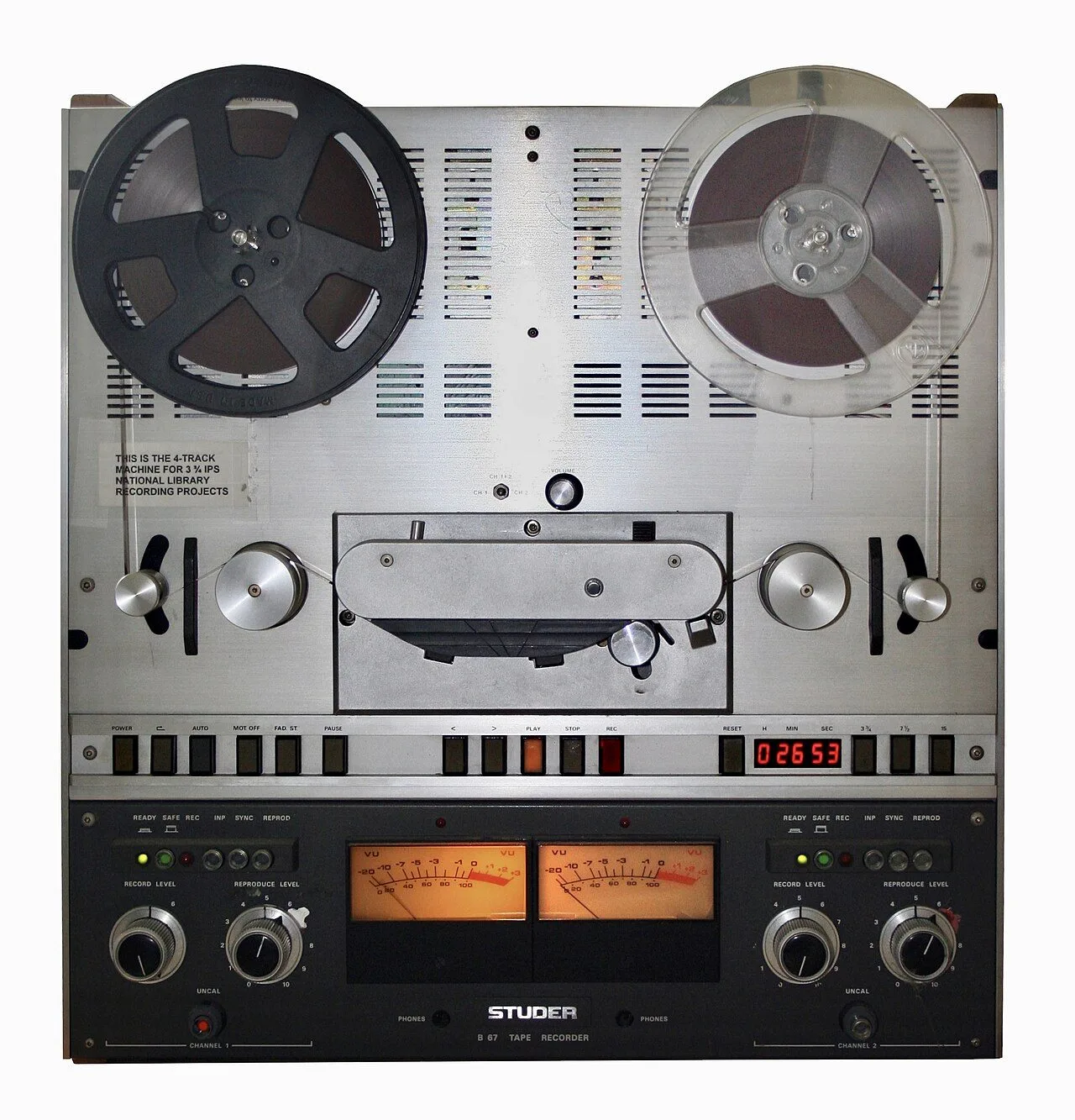
The PAMS method came in two stages. First, the recording of a polished arrangement, often brass, rhythm and keyboards, designed to sound bright on a small transistor radio. Then, the re-recording of the vocals: a seasoned vocal group sang the station name, frequency and hooks over the same track. This split between the backing music and the re-sung vocals, made possible by multitrack tape recording, is PAMS’ real industrial innovation. It let them produce fast, keep a steady quality, and spin one theme out endlessly.
That care for the on-air sound foreshadows the logic of modern radio, where every link in the chain counts, from the voice mic to the broadcast processor. To understand how a station still shapes its sonic colour today, see our feature on radio on-air processing and the one on how a self-op radio studio works.
The fall, then JAM
Bill Meeks ran PAMS for twenty-seven years before suspending operations in 1978. The copyrights passed under the CPMG/PAMS name until 1990, when another Dallas house bought the original company and all its rights: JAM Creative Productions.
JAM was founded in November 1974 by Jon Wolfert and his wife Mary Lyn. Jon had cut his teeth at PAMS, whose catalogue he would eventually own. The JAM building, east of downtown Dallas, houses two studios and a vast media archive. The company claims the title of largest radio-jingle producer in history, and the distinction of staying in its founders’ hands for over half a century.
JAM today
JAM dresses major stations in the United States and beyond: WABC and Z100 in New York, WLS in Chicago, KIIS in Los Angeles, BBC Radio 1 and 2 in the UK, syndicated shows hosted by Casey Kasem or Dick Clark, and promo music for television. Its best-selling package, “Warp Factor”, was created for Z100 in 1985. True to the PAMS legacy, JAM now re-sings the catalogue’s classics over the original orchestral backing tracks, giving stations the exact sound of the 1960s with their own name sung over it.
This continuity says something about the craft: good imaging never really goes out of date, it gets re-dressed. A station’s sonic signature stays a goldsmith’s job, halfway between music, branding and studio technique.
My take
Few people know that the soundtrack of their radio childhood was often built in a Dallas studio. PAMS’ idea, record one arrangement and re-dress it endlessly, remains a production model of fearsome efficiency, long before the age of samples and digital copy-paste. That a 1985 package still serves stations in 2026 proves a good jingle ages better than most of the hits it announces. Next time a station sings its name, listen closely: you are hearing a piece of industrial history.