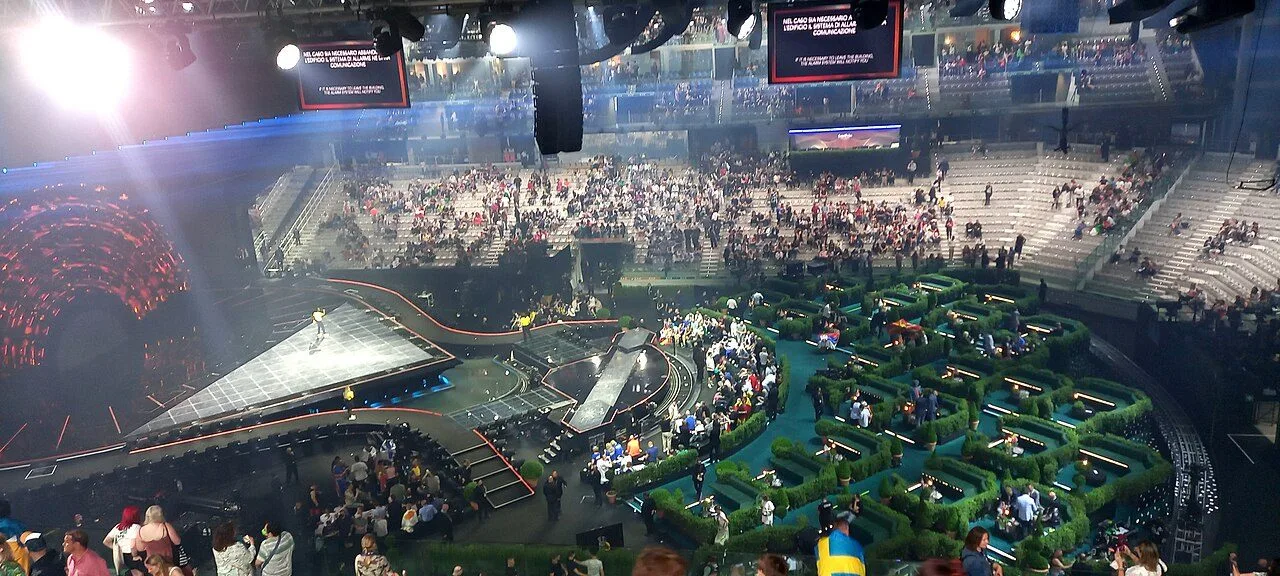
Three minutes per song, a few dozen seconds of turnaround between acts, and tens of millions of viewers across dozens of countries. Eurovision is one of the largest live music productions on the planet, and behind the glitter of the stage runs an audio chain of dizzying scale. A look inside the control rooms of a show where nothing can go wrong on air.
A control setup built for the extreme
The numbers speak for themselves. In 2015, in Vienna, Austrian broadcaster ORF delivered the first Eurovision routed entirely over audio-over-IP: a Lawo Nova 73HD core carried more than 6,600 audio signals to six OB trucks, as well as to the FOH and monitor consoles inside the hall. The wireless inventory reached 96 Sennheiser radio mics and 32 in-ear systems, with a Pro Tools playback system. Trade press, from SVG Europe to ProSoundWeb, documented the shift.
In 2021, in Rotterdam, rental partner NEP fitted two UHD trucks with 64-fader Lawo mc²56 consoles, backed by Nova routing cores and the VSM control system. A dedicated room, sometimes called the music room, lined up two more consoles for delegation and interval mixing. All broadcast audio ran over RAVENNA and AES67, while the in-hall PA was fed by Dante cards housed in the Nova cores.
Several mixes, one live show
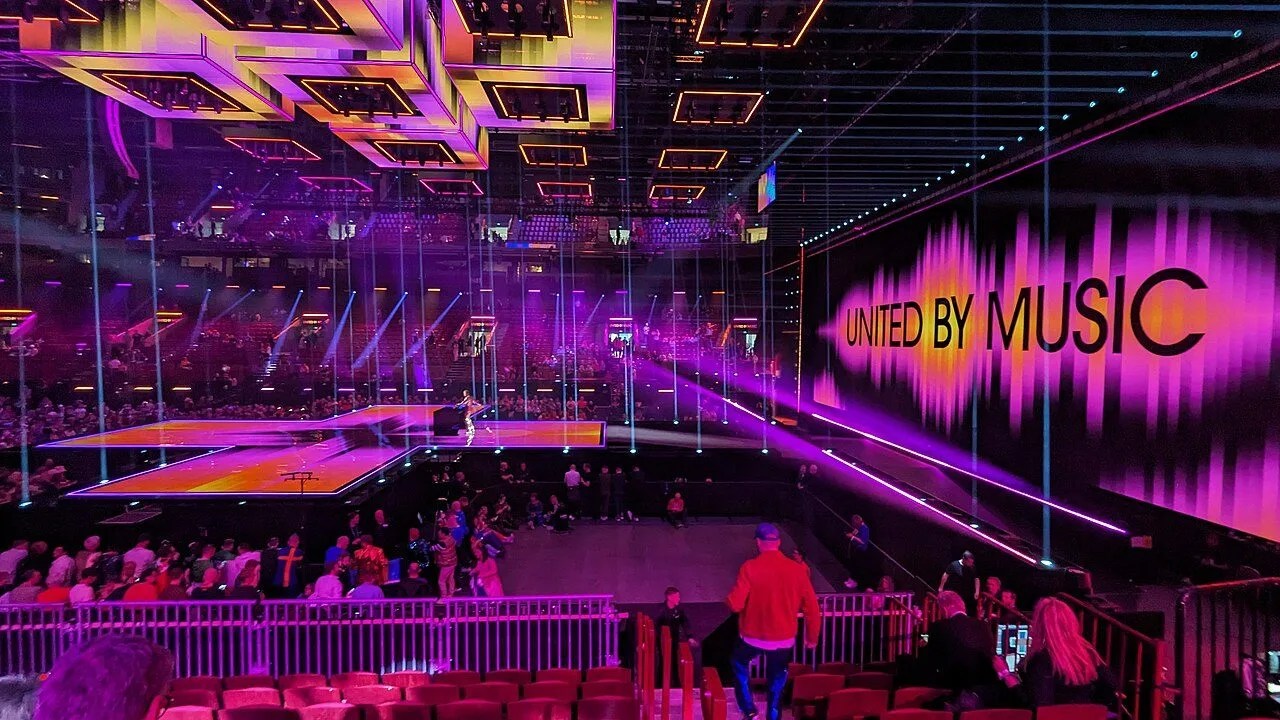
A show this size does not make one sound, but several at once. The monitor desk serves the artists on stage, almost all on in-ears, with a personal mix per song. The FOH desk covers the audience in the hall. And the separate music desk builds the mix for viewers at home, who never hear the FOH or the monitors. In 2022, in Turin, that broadcast mix was produced natively in 5.1, with a stereo downmix calibrated for broadcasters. The loudness target follows the EBU R128 standard, around minus 23 LUFS, so that every country receives a consistent level.
The clock against the engineer
The real difficulty is not the channel count, but time. Between two performances there is barely enough to clear one set, build another, re-patch the mics and check the in-ears before the next cue. Each delegation arrives with its own settings, monitor sends and playback levels, stored in advance in the consoles as scenes recalled at the touch of a button. One wrong recall, one forgotten send, and the mistake goes out worldwide. This logic of scenes and safe recalls is the backbone of the live show.
The rulebook adds its share. Instruments have not been played live on stage since the orchestra was dropped at the end of the 1990s: the instrumental parts run as playback, and only the lead vocal must be sung live, with backing vocals allowed as pre-recordings depending on the edition. The playback, fired from Pro Tools with timecode, has to land to the millisecond on the visuals and the pyrotechnics.
A full-scale lesson in audio-over-IP
Eurovision has become a showcase for the network standards that now run through broadcast. Routing thousands of signals between a stage, several control rooms and six trucks over one network would not have been feasible with point-to-point analogue wiring. To understand the building blocks behind this kind of production, the site covers how AES67 works, the role of RAVENNA, how an OB truck builds the sound of a broadcast, and the demands of broadcast loudness.
My take
What impresses at Eurovision is not the wall of gear, it is the discipline it forces. Store every song, secure every recall, hold a frequency plan for dozens of delegations, then start again in forty seconds: the show is a distillation of live craft far more than a show of power. Audio-over-IP made all of it manageable, provided you master the network the way crews once mastered the cable. You watch the stage, but the real feat happens in the control room.