Some venues are designed, and some are found. Red Rocks belongs to the second kind. Between two sandstone monoliths close to 300 feet tall, west of Denver, nature carved an amphitheatre that sound engineers cite as a benchmark, as much for what it offers as for what it demands.
An amphitheatre cut from 300 million years of sandstone
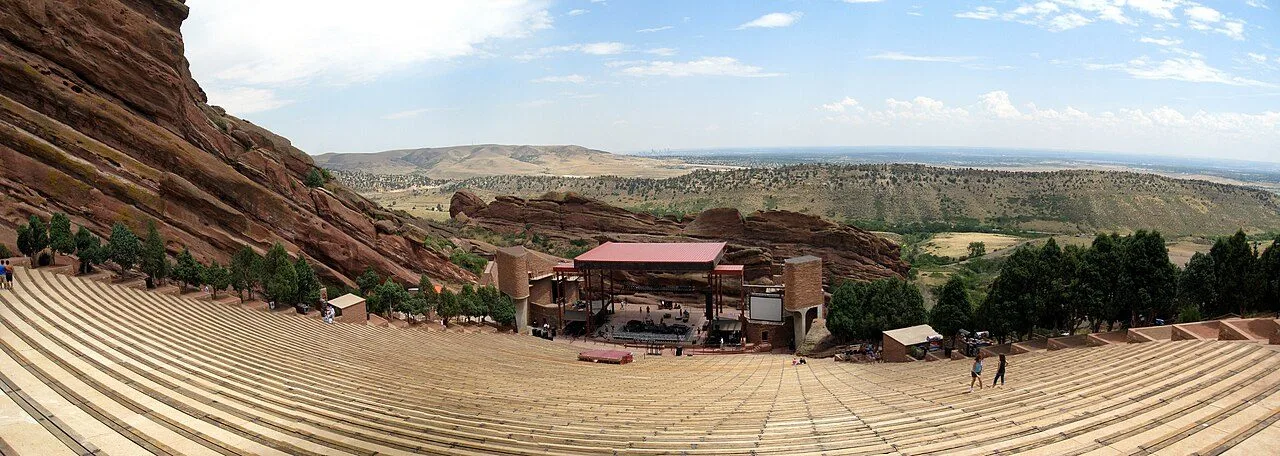
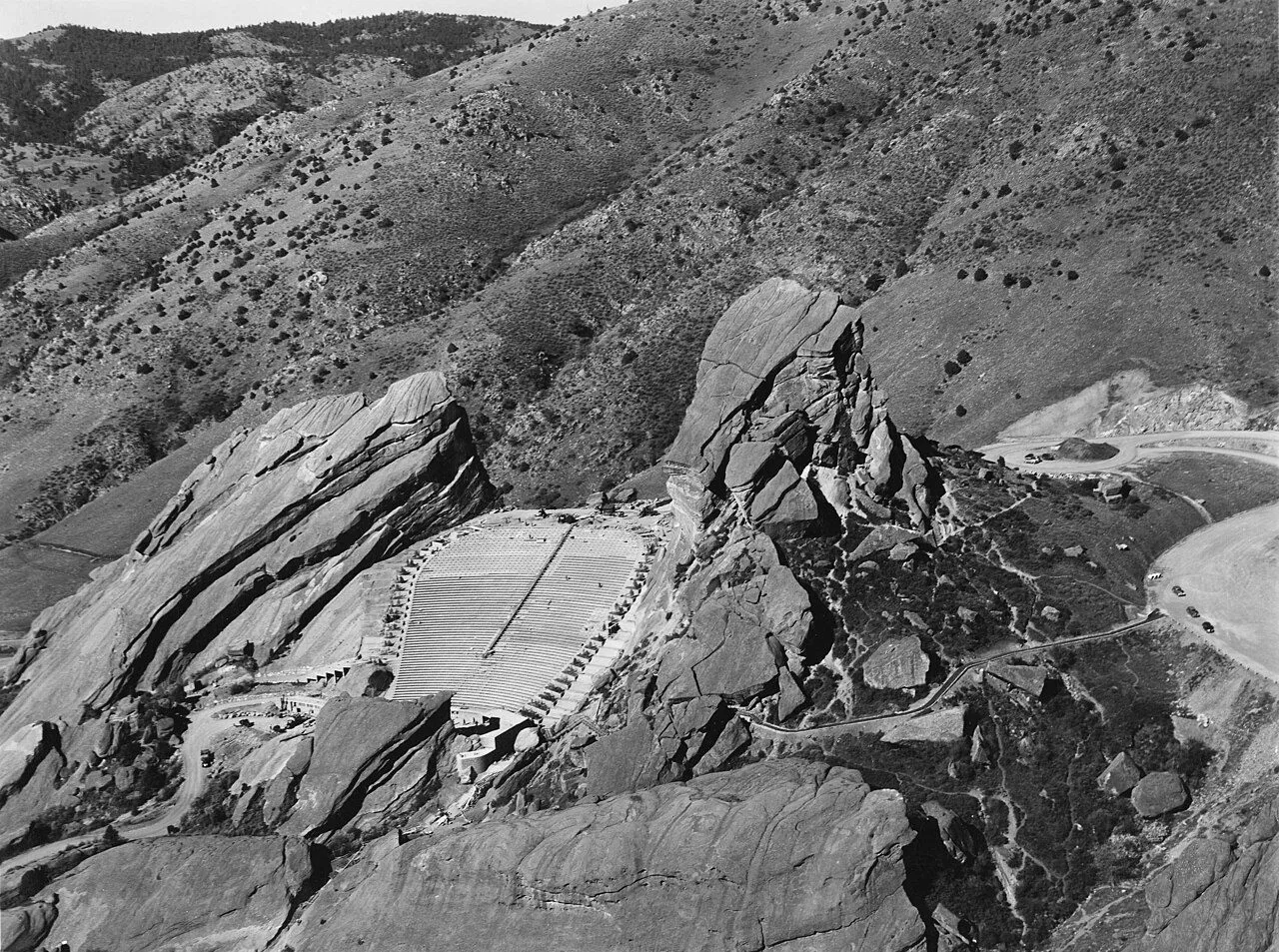
The site sits in Morrison, Colorado, at about 6,450 feet of elevation. The red rock that gives it its name belongs to the Fountain Formation, a sandstone laid down close to 300 million years ago, then tilted upright by the rise of the Rockies. Two formations frame the slope: Creation Rock to the north, Ship Rock to the south, each rising around 300 feet, with Stage Rock behind the stage. Between them, a natural incline drops toward the stage.
Turning the site into a concert venue was the work of Denver architect Burnham Hoyt, whose drawings run from 1935 to 1940. Construction, begun in 1936 with the labour of the era’s public programmes, led to an opening on 15 June 1941. Capacity stands at 9,525 seats, laid over tiers that follow the rock.
Why the rock makes the venue sound
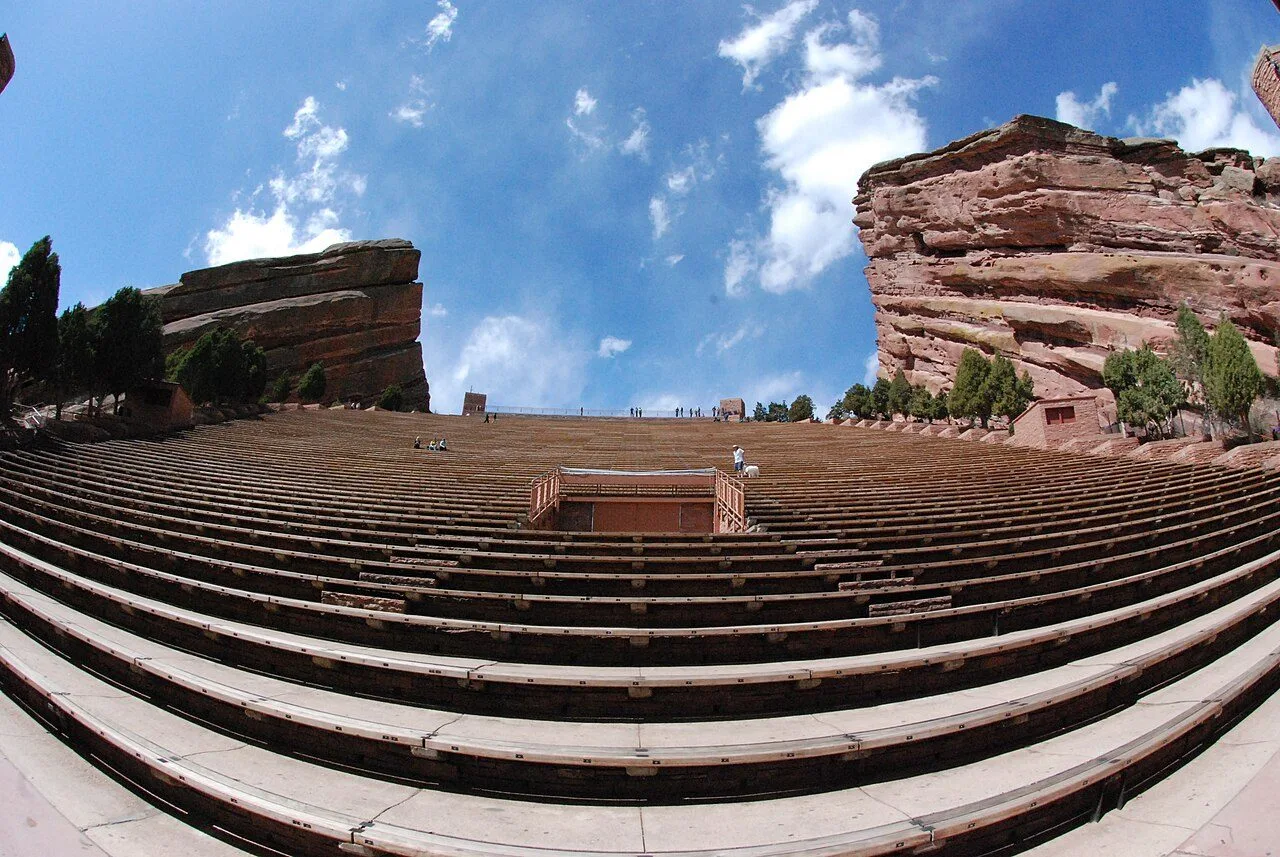
The acoustic reputation of Red Rocks is no accident. The two monoliths and the stage rock form a partial enclosure, a mineral shell that returns and reinforces sound toward the audience instead of letting it spill into the open. The steep rake of the seating works the same way: every listener gets the direct sound from the stage over a short, clear path, which limits time differences and dead zones. A venue designer would chase exactly those two qualities, a well-placed reflective surface and a direct line of sight. Here, geology supplied them.
That natural shell has a flip side. The walls also send energy back toward the stage, and late reflection has to be managed through the placement and aim of the sources. The place rewards crews who mind the direction of sound, and punishes rough settings.
The open-air puzzle
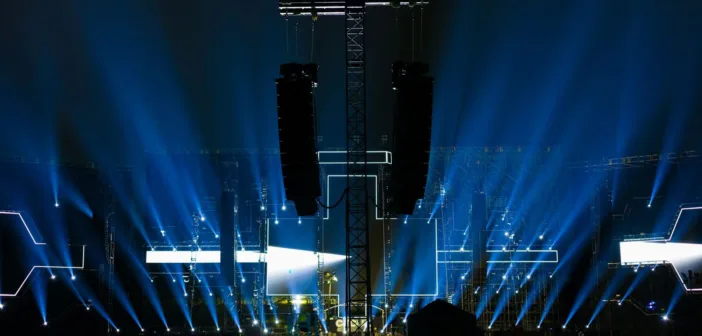
Red Rocks has no roof, and that changes everything for a touring crew. No structure allows the PA to be flown: line arrays hang from ground-based towers or scaffolding built for the occasion, on each side of the stage. Coverage has to track the slope over the full height of the seating, from the front row to the farthest seats, with no gap and no excess. On the longest layouts, delayed reinforcement points help hold the rear, on the principle of delay towers.
On top of the acoustic constraints comes a regulatory one. The site is owned and run by the City of Denver, and the neighbouring town of Morrison imposes strict level control and a curfew. Crews work with a sound-pressure ceiling and a finish time, far from the idea of a limitless open air. The open air also affects propagation: at this altitude, the drier, cooler night air slightly changes throw, a detail the system techs fold into their margins.
An open-air studio for the live record
The acoustic signature of Red Rocks has ended up on many live albums and concert films. The most cited case remains Under a Blood Red Sky, captured by U2 on 5 June 1983 in pouring rain, whose images and sound did as much for the legend of the place as for the band’s. Since then, recording a night at Red Rocks has become a near-ritual for artists on a US tour, and the capture benefits from this mineral shell that gives the sound a particular footing.
For a technical follow-up, Red Rocks illustrates several live-sound topics at full scale: how level fades with distance, the role of delay towers over long depths, and system tuning that aligns the sources before doors. The venue is also a reminder of why the modern line array changed coverage in large spaces.
My take
Red Rocks fascinates because it reverses the usual order: normally you build a venue around an acoustic brief; here the venue sets the terms. The result rewards precise crews and punishes guesswork, which makes it a test of craft more than a comfort zone. Then there is the magic of the place, hard to quantify, which even the best PA only accompanies. It is easy to see why so many artists want to cut a night there.