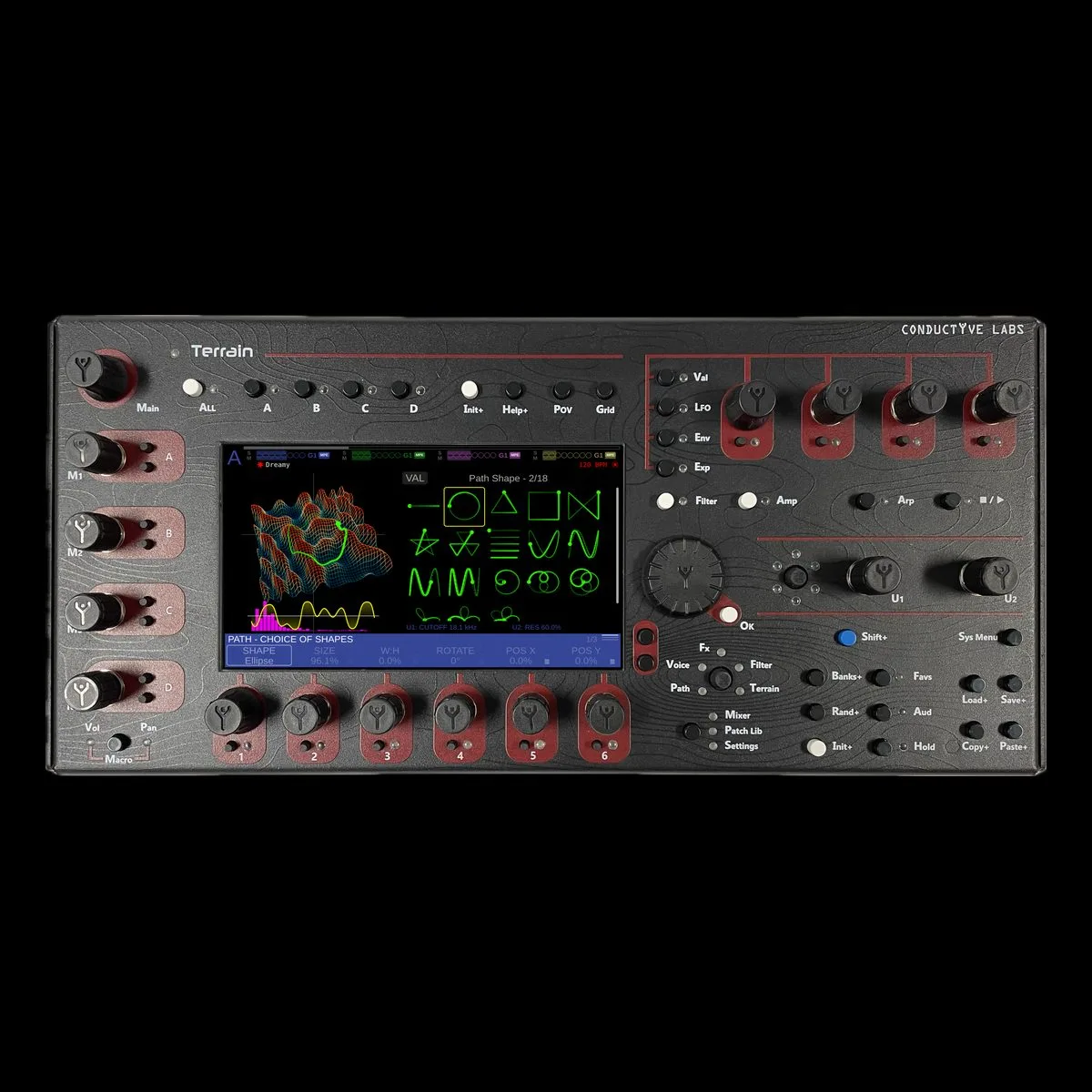
Small hardware synth makers tend to zig where the big brands zag, and Conductive Labs is a good example. Known for the NDLR, its cult MIDI sequencer and arranger, the US workshop is back with something far more ambitious. The Terrain is now up for pre-order at $1,199, with a first run deliberately capped at 50 units and shipping slated for mid-December 2026.
Terrain synthesis, wavetable reading in three dimensions
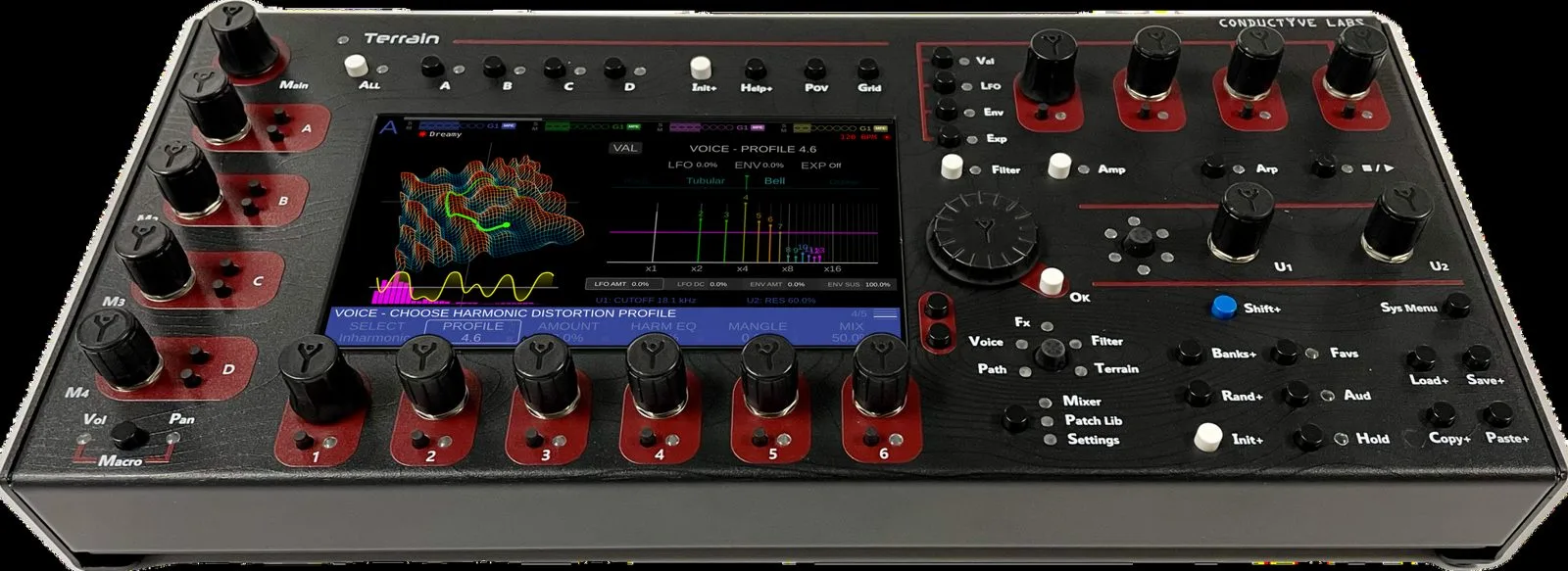
The idea behind the name deserves a word of explanation. A classic wavetable runs a playhead along a line of waveforms, a two-dimensional progression. Terrain synthesis moves that playhead across a surface, a three-dimensional landscape. The path can trace a circle, an ellipse, a Lissajous figure or a diagonal that sweeps the terrain at a chosen angle. Change the path and you change the timbre, without touching the source itself.
Each voice combines two terrains you can morph between, up to seven-voice unison, two sub-oscillators and four noise types. The clever part is how you build the terrains: you can generate them from an image file or an existing wavetable, then morph across them. The concept is not entirely new, wave-terrain reading already appeared in some software and in the wave-terrain firmware of Mutable Instruments’ Plaits. Conductive Labs promotes it to main engine here, inside a standalone machine.
A full synth, not a lab curiosity
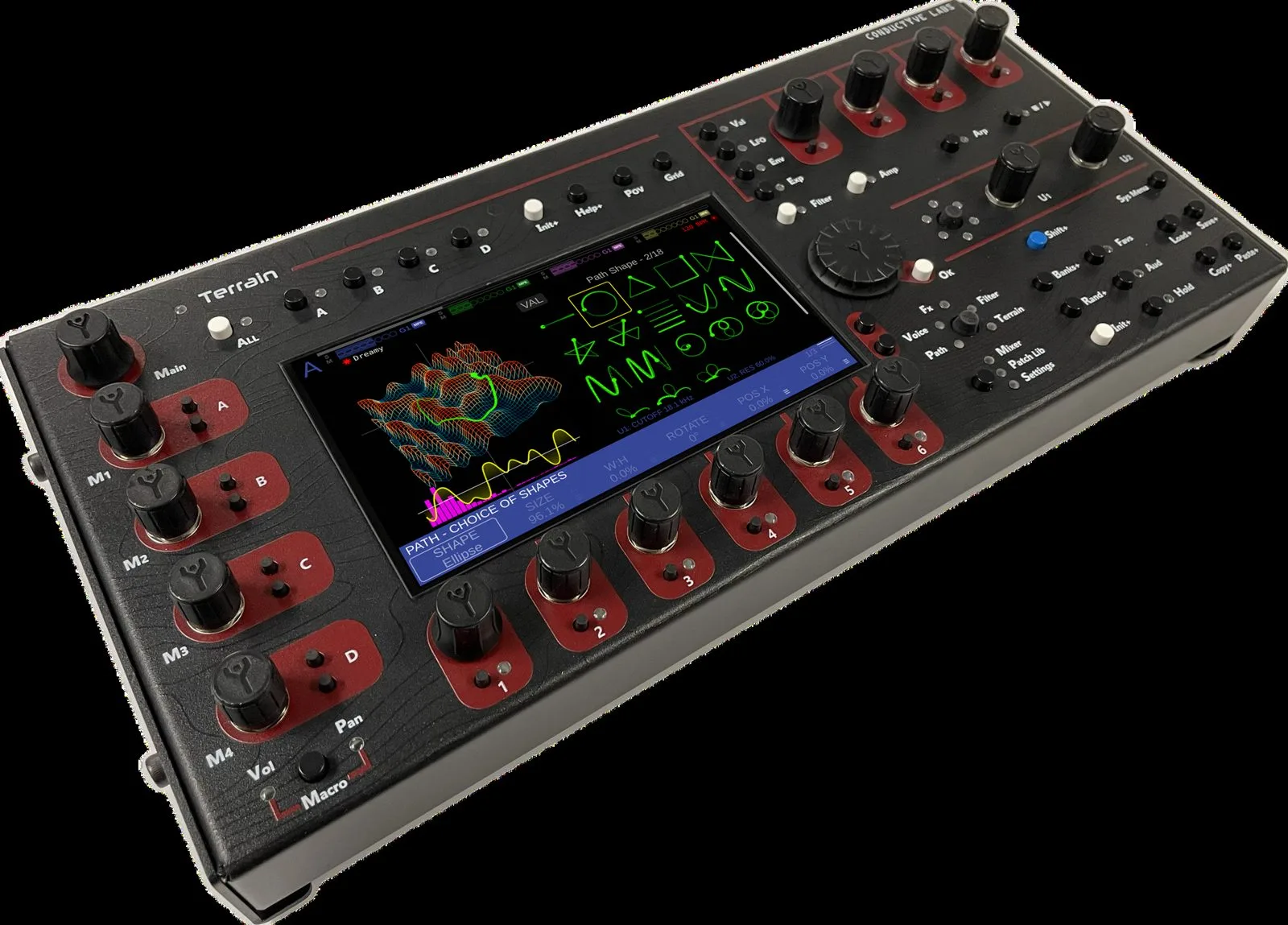
Behind the concept sits a solid, playable synthesizer. The filter offers eight models, including three ladder variants, an SEM, a diode, a comb and two formants, plus extra modifiers. The modulation section claims a very high count of LFOs and envelopes, enough to animate the terrain and the playback path without hitting a ceiling. Onboard effects cover delay, ping-pong, reverb, shimmer, chorus, flanger, mono and stereo phaser, overdrive and a decimator.
The Terrain is four-part multitimbral, with eight voices per part, arranged as splits, layers or stacks. A sequencer and an arpeggiator, itself spread across the four parts, round things out. You drive it from a 7-inch screen, infinite encoders and a jog wheel, a sensible choice for moving through this many terrains and modulations.
Connectivity built for the studio and the modular rack
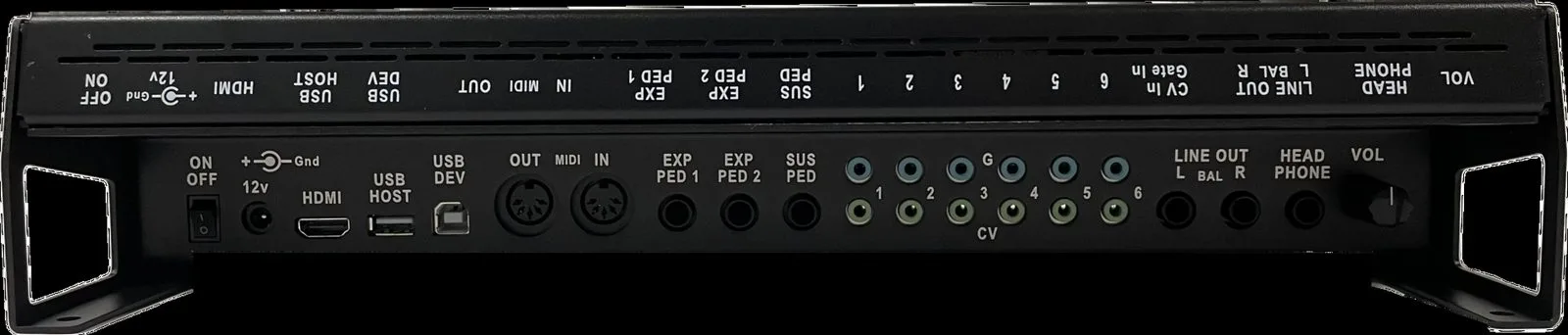
On the back, the instrument goes well beyond MIDI. There is a five-pin DIN MIDI in and out, a USB host port and a USB device port, six CV/Gate outputs, three expression pedal jacks, a balanced left and right stereo output and a headphone out. Enough to sit at the heart of a small modular system, be driven from an external sequencer, or slot into a studio rig without an extra interface box.
Price, availability and where it sits
At $1,199, the Terrain lands above entry-level grooveboxes, among screen-based character synths. The project ran a crowdfunding campaign in 2025, with an early-bird tier at $899 that sold out fast, before settling at this catalogue price. The first run, limited to 50 units and due in mid-December 2026, reads more like a measured launch than a mass production. Latecomers will have to wait for the next batch.
| Spec | Terrain |
|---|---|
| Engine | Terrain synthesis, two morphable terrains per voice |
| Polyphony | Four-part multitimbral, eight voices per part |
| Oscillators | Up to seven-voice unison, two sub-oscillators, four noise types |
| Filter | Eight models (three ladders, SEM, diode, comb, two formants) |
| Effects | Delay, ping-pong, reverb, shimmer, chorus, flanger, phaser, overdrive, decimator |
| Connectivity | DIN MIDI, USB host and device, six CV/Gate, three pedals, balanced stereo, headphone |
| Price | $1,199, pre-order, shipping mid-December 2026 |
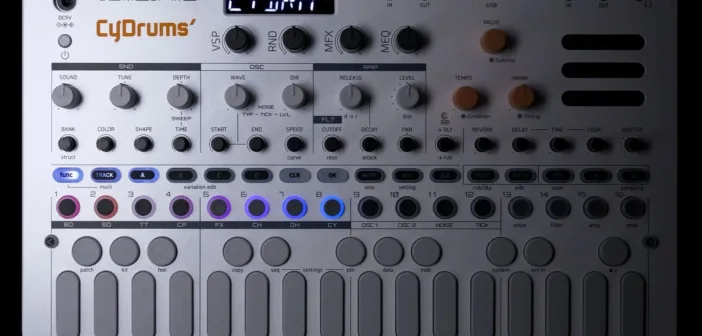
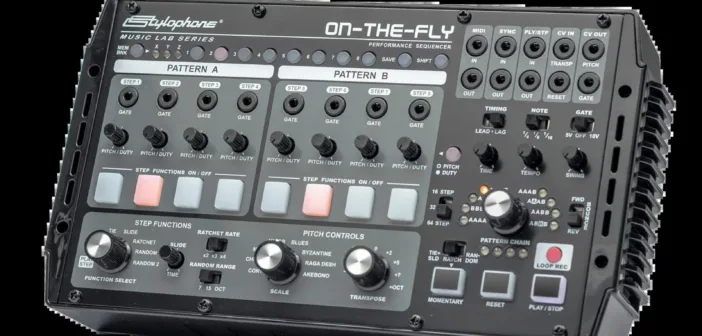
This launch belongs to a strain of electronic instruments chasing a sound of their own rather than one more clone. In the same spirit, we recently saw the Noise Lab Beat Designer rethink the sequencer step, and the Sonicware CyDrums bring drum synthesis down to a compact format. The Terrain plays the same card, a strong idea over a long feature list.
My take
Terrain synthesis is no gimmick: dragging a playhead across a landscape opens shifting timbres few machines produce this directly. Conductive Labs’ bet is to make it a real stage and studio instrument, with four parts, a generous screen and serious I/O, rather than a proof of concept. The open questions are the price and a run of just 50 units, which keep the Terrain for the committed and the curious. If the engine delivers in real playing, it could become a small reference for sound design.