4ms keeps stocking its Eurorack with serious processing tools. After a string of synthesis and effects modules, the American maker introduces Mesa, a stereo reverb module built in collaboration with Valley Audio. The idea is simple on paper but rare in the format: bring a well-regarded software reverb, Valley’s Plateau — familiar to VCV Rack users — into hardware, and make it fully controllable by control voltage.
Valley’s Plateau, in hardware
Mesa is built on the Dattorro plate algorithm, a genre reference for its density and musicality. 4ms quotes 96 kHz internal processing in 64-bit double precision, which places the module above most Eurorack reverbs, often held back by limited onboard compute. The stated goal isn’t a realistic room but manufactured space: long tails, shifting textures, pads you stretch to an infinite hold. In a modular system, where any voice can drift toward ambient or drone, that’s exactly the kind of tool that recolours a whole patch.
Everything under control voltage
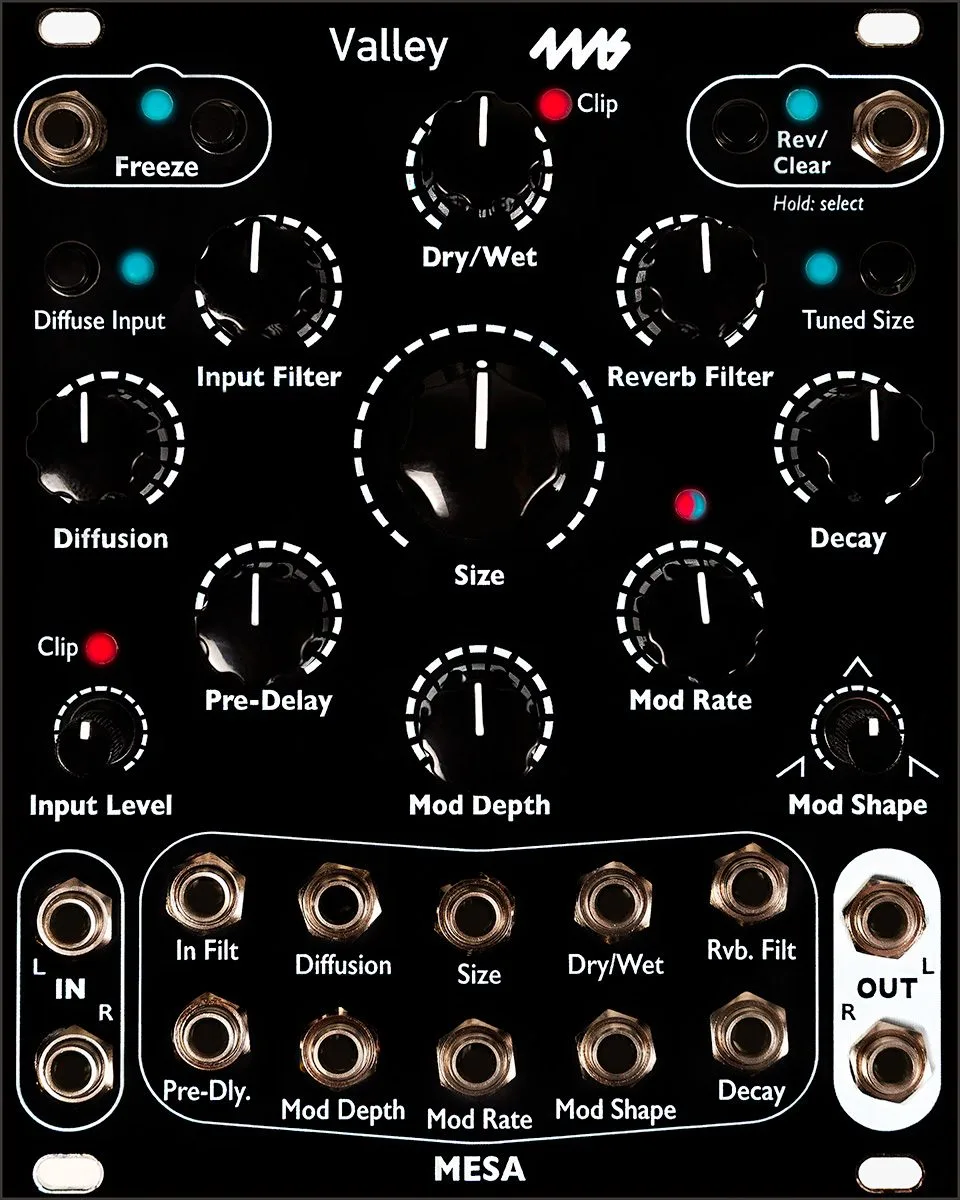
The 20 HP panel leaves no doubt about the module’s philosophy: everything modulates. Room size, mix, diffusion, pre-delay, decay, input and reverb filters, modulation rate and depth, modulation shape — each parameter has its own control and, for the most part, its own dedicated CV input along the bottom connector row. Add a Freeze function to hold the reverb as a sustained pad, a Reverse mode, a stereo input and a stereo output. This is far from a simple end-of-chain effect: Mesa plays as a voice in its own right, much like a module such as the Verbos Haas Zone Processor.
Price, availability and companion
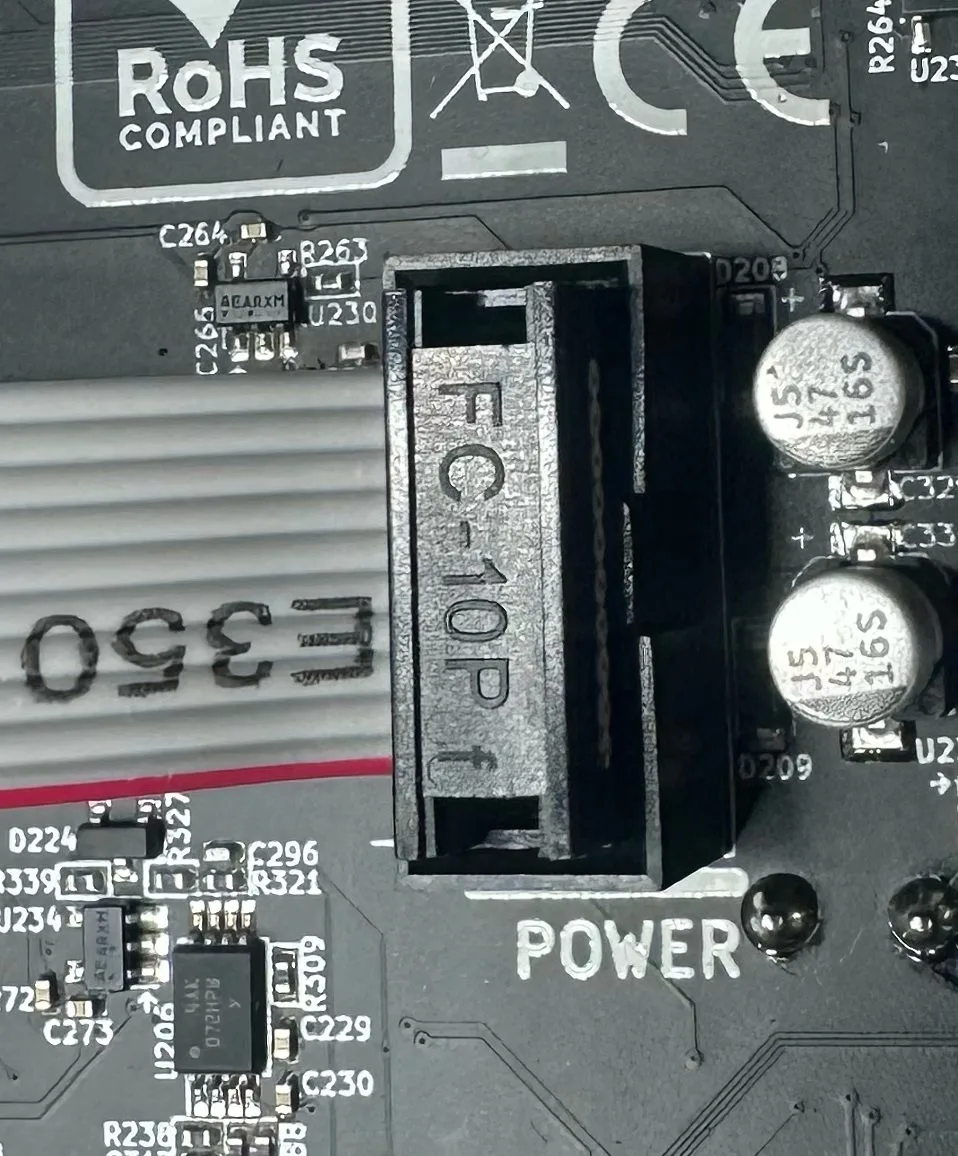
Mesa is priced around 399 dollars and takes up 20 HP in the rack, with the usual ten-pin Eurorack power connector. 4ms announced a companion module at the same time, the LEQA, a levelling EQ amp sold at around 345 dollars that logically rounds out the processing chain. For anyone building a system around a central brain like the Befaco ARK, a reverb of this quality slots naturally into the effects section.
My take
A good Eurorack reverb is rare, because the compute budget usually forces a trade on quality. Starting from Valley’s Plateau and giving it a CV input per parameter aims high instead, and plays the modular card to the full: here the reverb isn’t an effect you set once, it’s a material you work in real time. Freeze and Reverse open the door to pure sound design, and full stereo avoids the usual workarounds. At 399 dollars for 20 HP, Mesa isn’t an impulse buy, but for a texture- and ambient-leaning rack it’s the kind of brick that earns its place and never gets unplugged.
Frequently asked questions
What width and power does it need?
Mesa takes up 20 HP and connects to the Eurorack bus via a standard ten-pin power header. It fits any system in the usual format, with no adapter.
Where does the reverb algorithm come from?
It’s the hardware version of Valley Audio’s Plateau, known in the VCV Rack environment, based on the Dattorro plate algorithm. Internal processing is quoted at 96 kHz in 64-bit double precision.
Can you freeze or reverse the reverb?
Yes. Freeze holds the reverb as an indefinitely sustained pad, and a Reverse mode flips the behaviour — two valuable tools for sound design and transitions.
Are all parameters CV-controllable?
Most controls — size, mix, filters, pre-delay, modulation, decay — have a dedicated control-voltage input, so you can automate or modulate the reverb from the rest of the system.
What’s the price, and is there a matching module?
Mesa sits around 399 dollars. 4ms also announced the LEQA, a levelling EQ amp at around 345 dollars, designed to complete the same processing chain.