


Description
Technical
Specifications
Inputs / Outputs
| Total inputs | 56 |
|---|---|
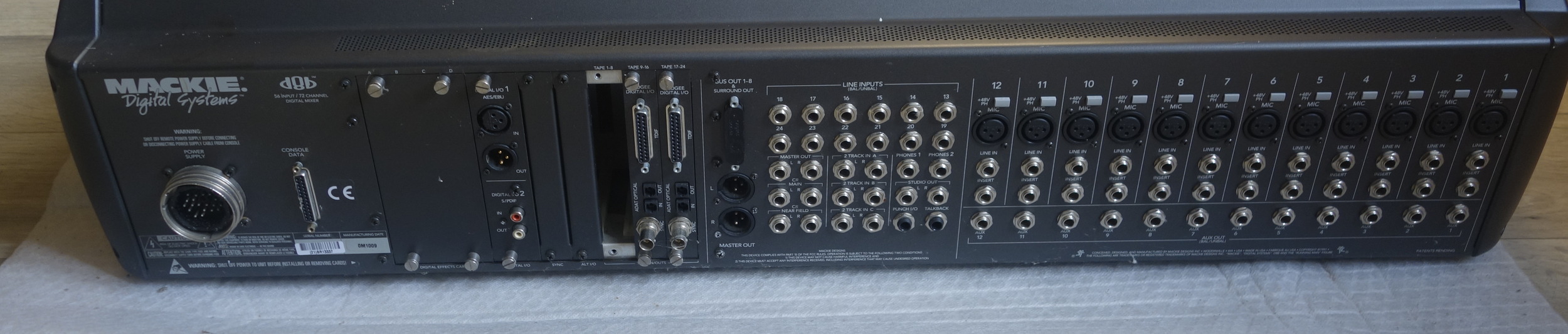
| Inputs / outputs | 56 inputs, 72 channels, 8 buses · Built-in Ethernet; optional AIO cards (analogue, ADAT, AES/EBU, S/PDIF, TDIF) + effects cards |
Processing
| Mix buses | 8 |
|---|---|
| DSP engine | Remote Pentium 166 MHz CPU (Mackie Real Time OS), 32-bit fixed-point DSP |
| Max sample rate | 48 kHz |
| Bit depth | 24 bits |
| Processing resolution | 32 bits |
| Channels | 56 inputs, 72 channels, 8 buses |
| Channel processing | EQ + dynamics simultaneously on all 48 channels · Parametric EQ + gate + compression on all 48 channels simultaneously |
| Conversion | 24-bit converters, 128× oversampling, Apogee UV22 dithering (optional Apogee cards) · 24-bit converters, 128× oversampling, 115 dB S/N (EIAJ) |
| DSP engine — details | Remote brain with 166 MHz Pentium CPU, Mackie real-time OS, SVGA output for external monitor · 32-bit DSP, >190 dB internal dynamic range |
| Effects and plug-ins | Built-in digital effects: reverb, delay, chorus |
| Modularity and expansion | Third-party plug-in support; regular software updates |
Surface
| Physical faders | 24 |
|---|---|
| Motorized faders | Yes |
| Touchscreen | No |
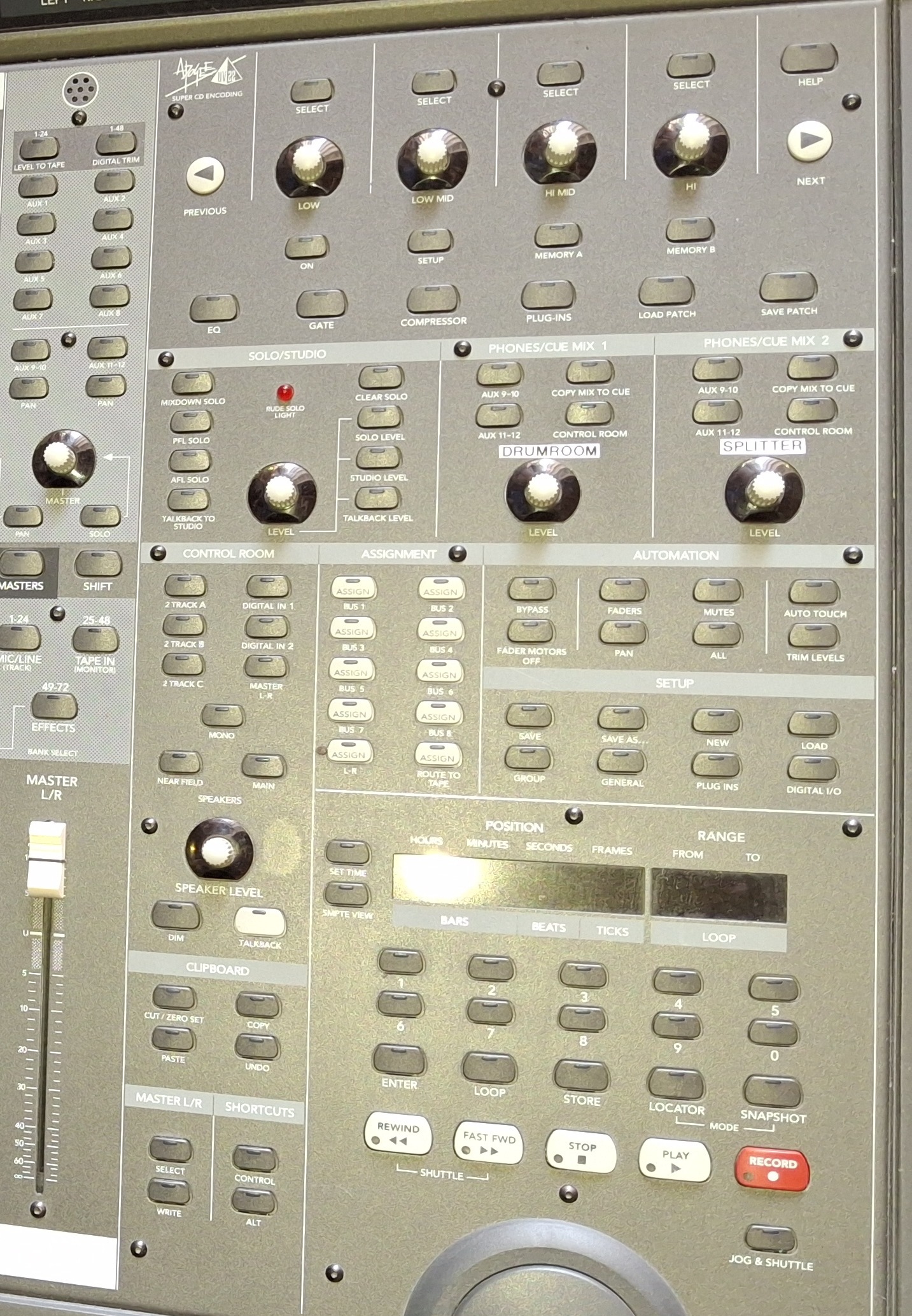
| Faders | 24 motorised 100 mm faders, full automation |
| Control surface | 100 mm motorised faders, transport jog wheel, mouse editing on external VGA monitor |
Recording
| Onboard recording | No |
|---|---|
| Recording | Built-in floppy drive and hard disk for session storage |
Networking
| Networking & protocols | ADAT / AES/EBU |
|---|---|
| Redundant PSU | No |
| Redundant networking | No |
Strip & details
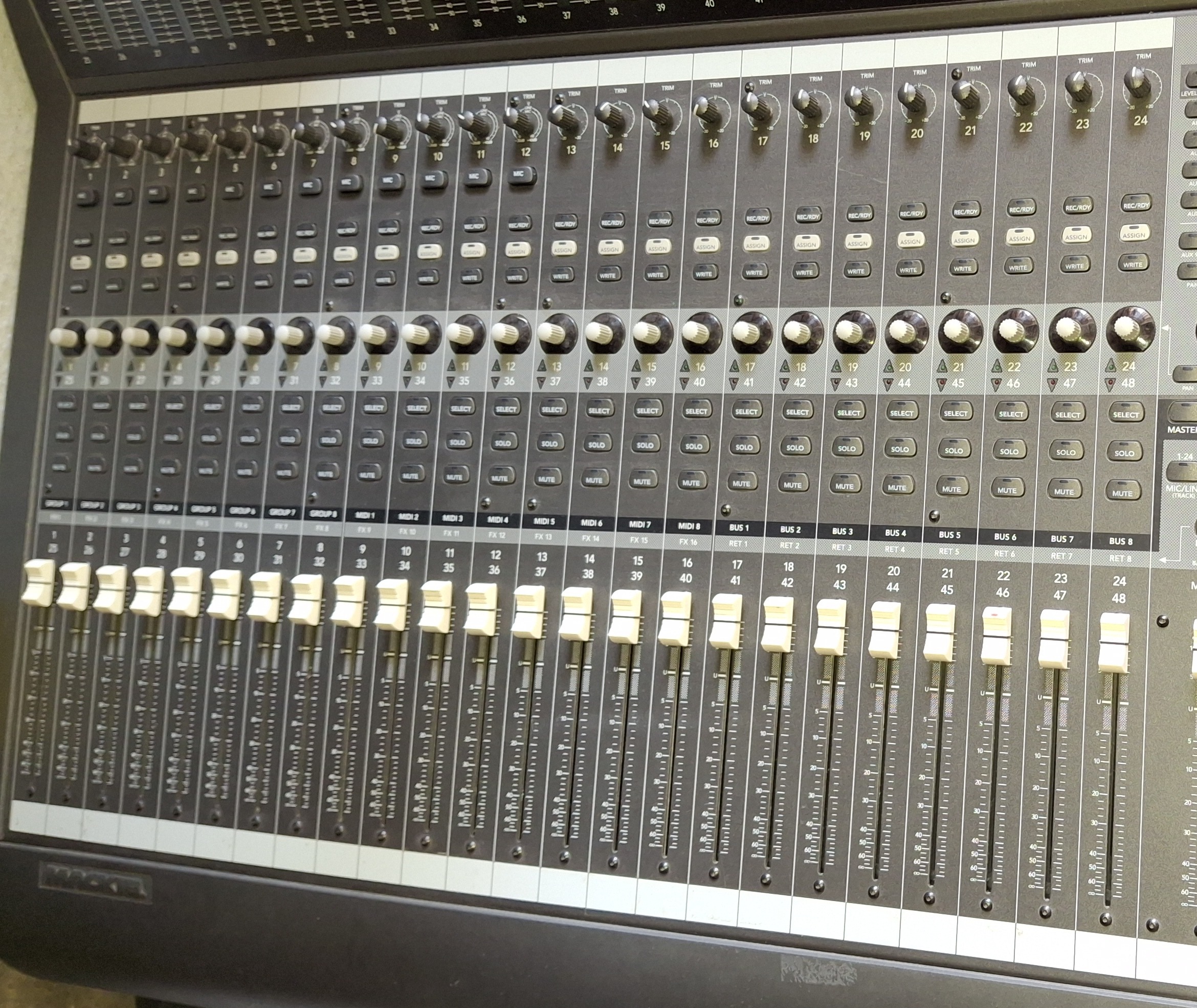
Rotate your phone to landscape for a better view of the strip.
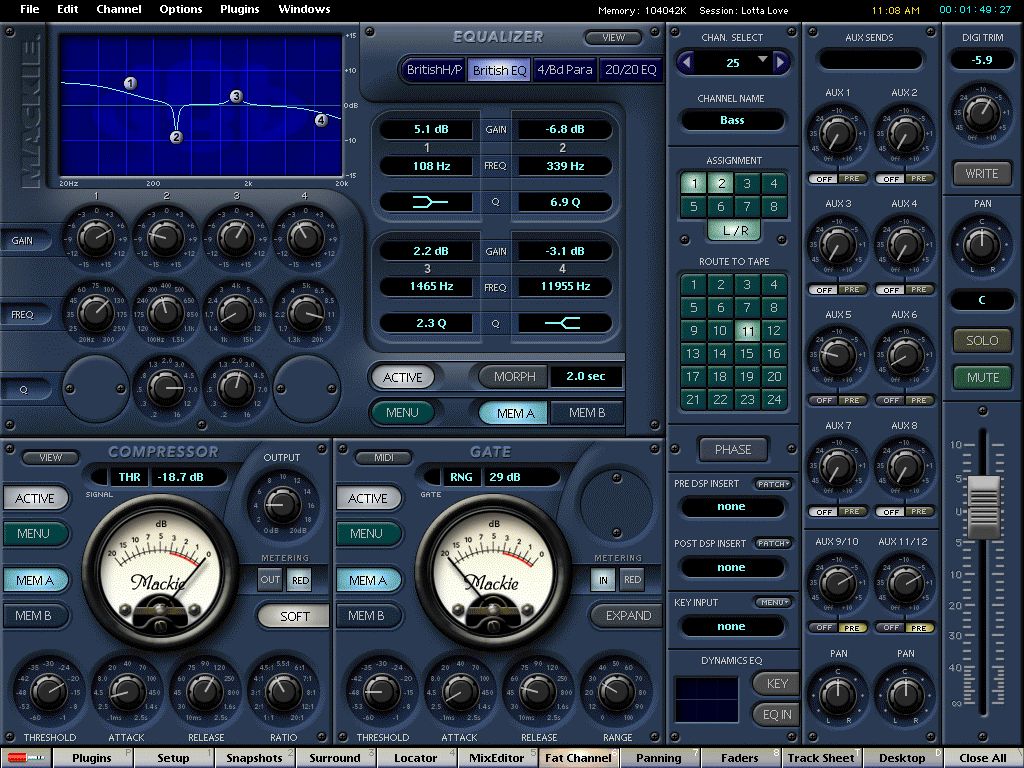
Rotate your phone to landscape for a better view of the strip.
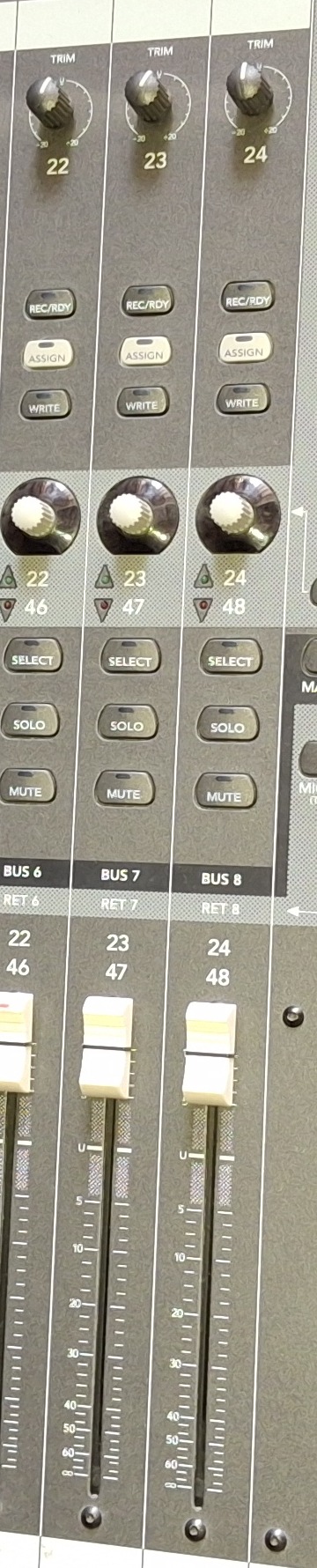
Rotate your phone to landscape for a better view of the strip.
Rotate your phone to landscape for a better view of the strip.
Rotate your phone to landscape for a better view of the strip.

Rotate your phone to landscape for a better view of the strip.
Rotate your phone to landscape for a better view of the strip.
Rotate your phone to landscape for a better view of the strip.
Software
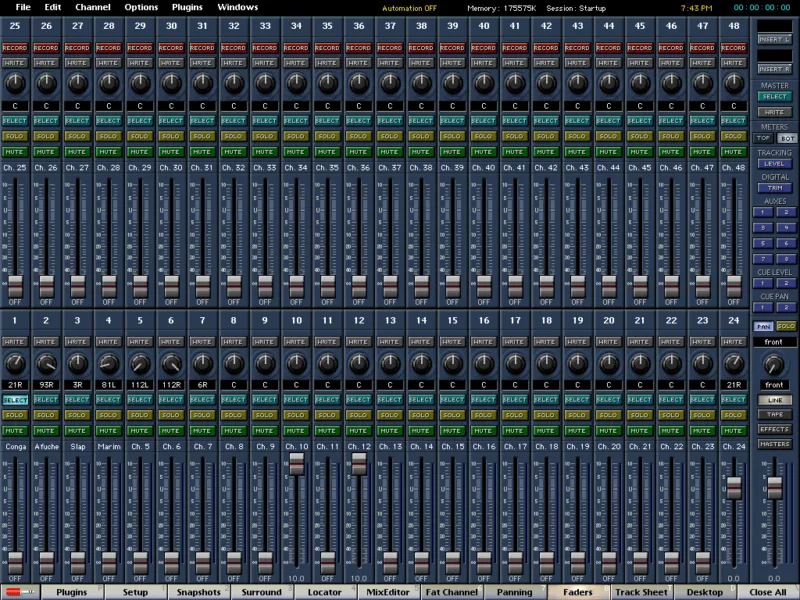
 Mackie Real Time OSProprietary real-time operating system driving the d8b's surface and mixing.
- UAD Powered Plug-InsUniversal Audio's dedicated-DSP plug-in suite, first hosted on the d8b.
Other screenshots
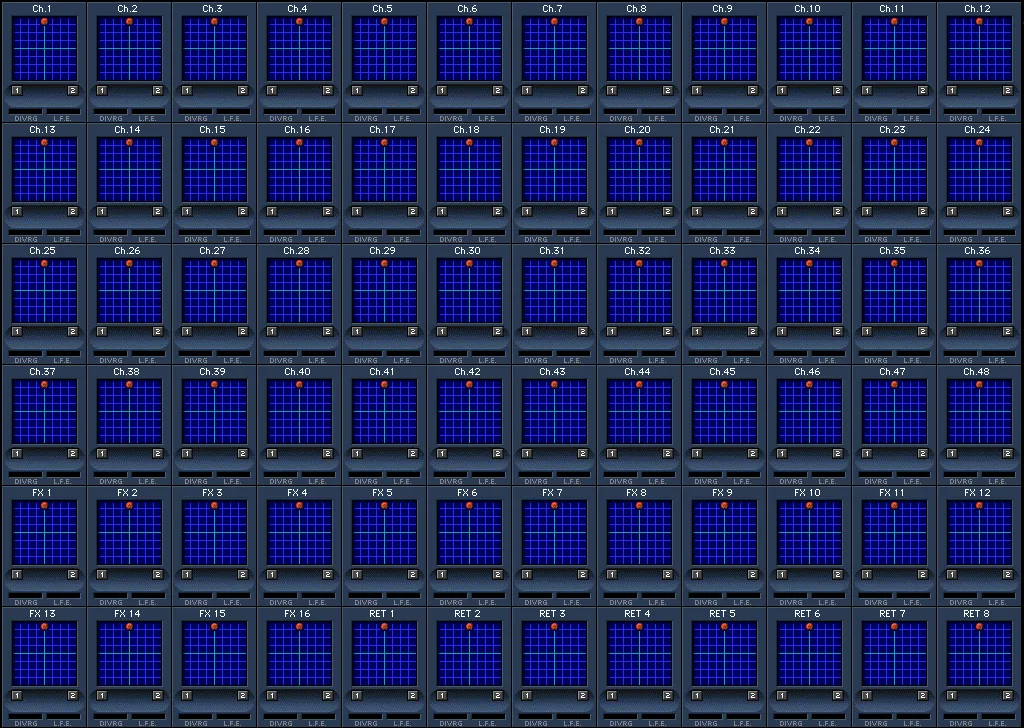
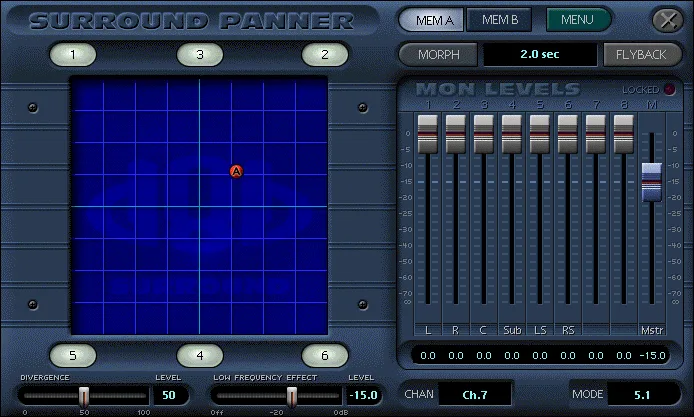
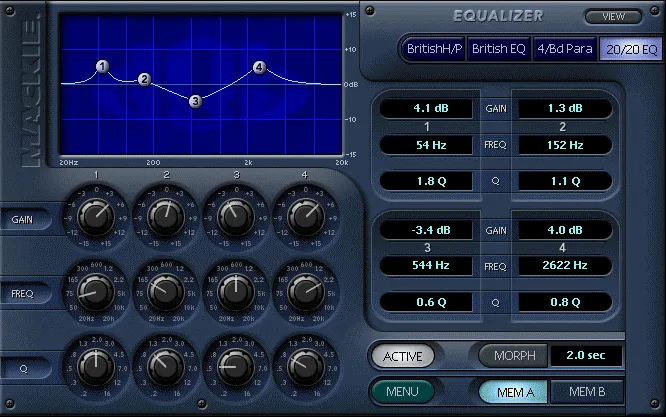
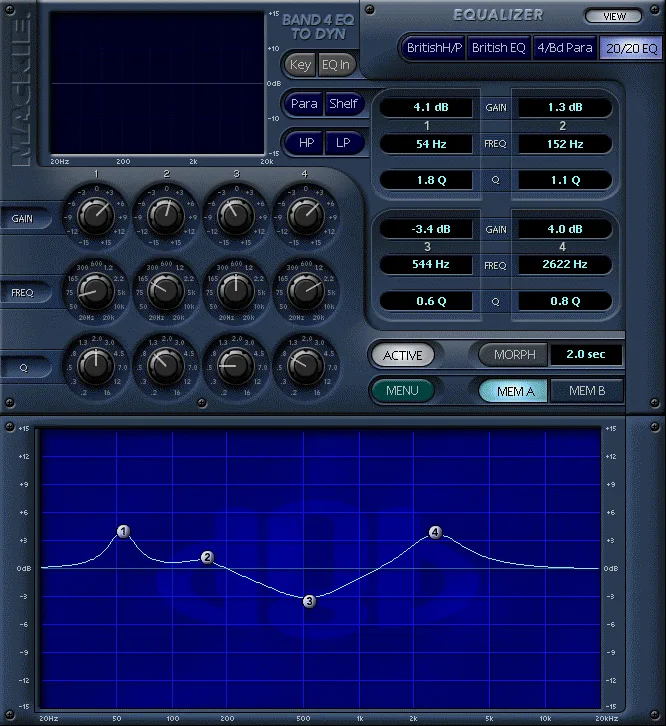
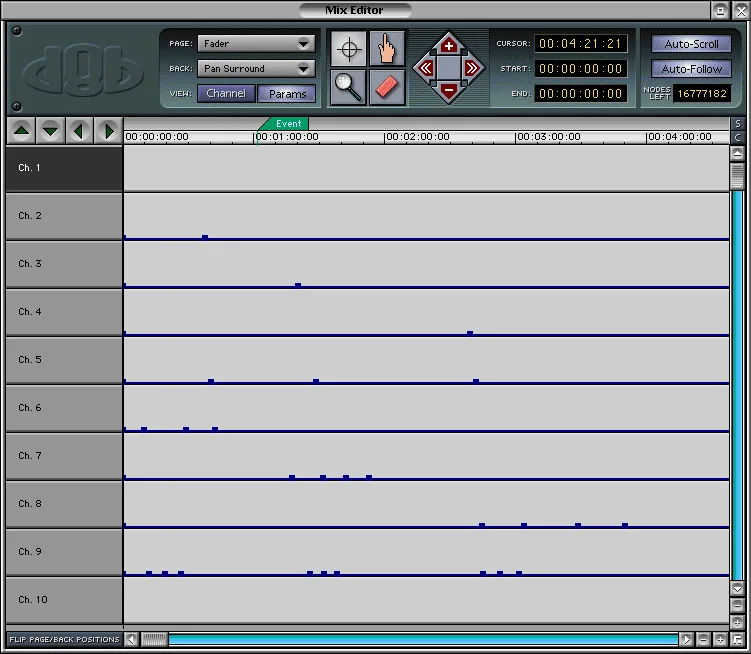
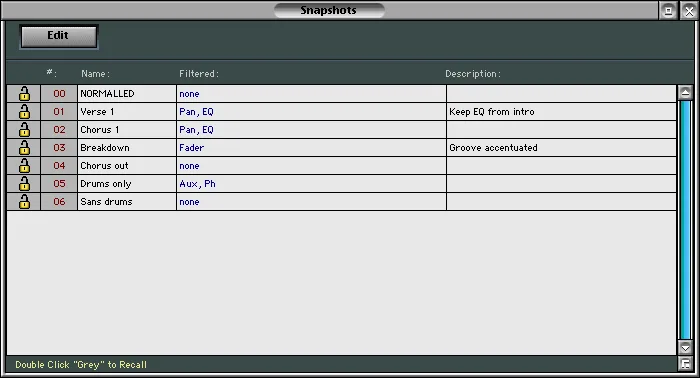
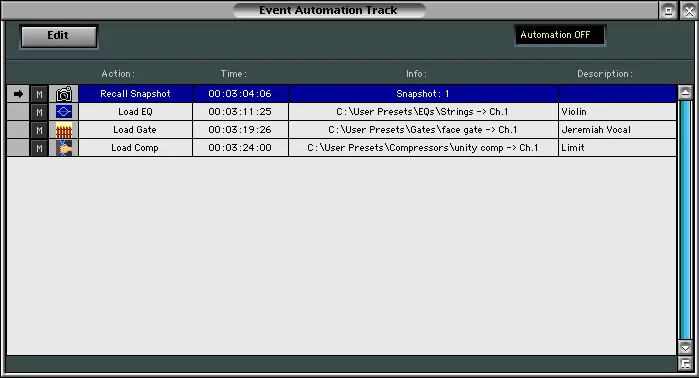
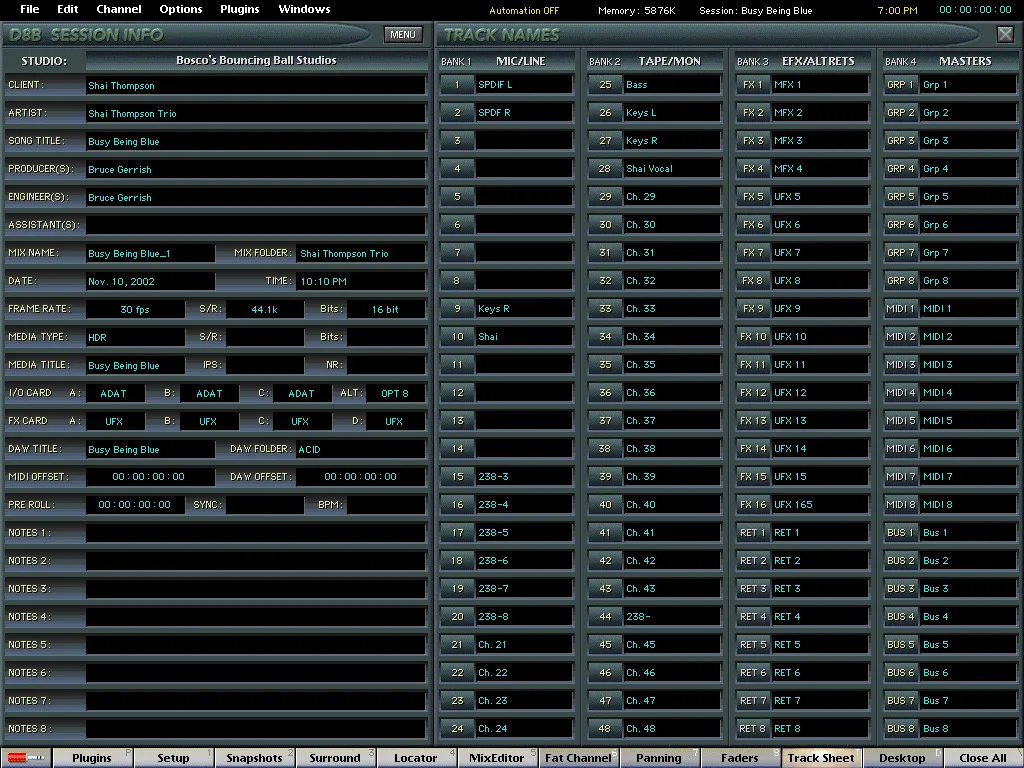
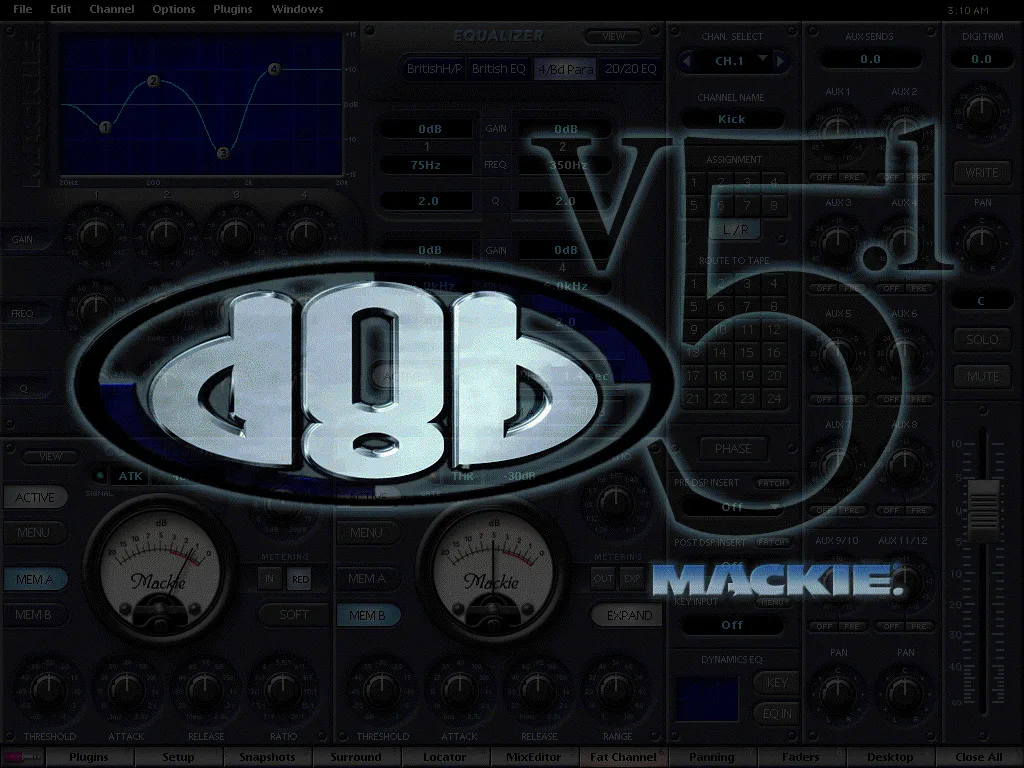
Editorial & artists
Our take
History & design
The Mackie d8b (Digital 8•Bus) is Mackie's first digital console, produced from 1998 to 2005. It was the first to break the price/performance barrier of digital mixing, offering a complete, musical surface at a revolutionary price for its time.
Its architecture rests on a remote brain: a computer with a 166 MHz Pentium processor running a proprietary real-time operating system (Mackie Real Time OS), with an SVGA video output for an external monitor, a floppy drive and a hard disk. The surface handles 56 inputs and 72 channels across 8 buses, with parametric EQ, gate and compression available simultaneously on all 48 channels, plus built-in digital effects (reverb, delay, chorus).
The 24-bit conversion (128× oversampling, Apogee UV22 dithering) could be upgraded with optional Apogee converter cards and ADAT expansion cards. The d8b also served as the first host platform for Universal Audio's Powered Plug-Ins (the UAD engine), which made their debut on it.
Known as intuitive and 'analogue in spirit', the d8b remains a sought-after console, maintained by an active community long after production ended.
- Greg Mackie — Founder of Mackie
Links
Related consoles
Some merchant links are affiliate links. Purchases may support Digital Mixing at no extra cost.
Documents are archived locally for preservation. Source credited. Takedown requests: [email protected]