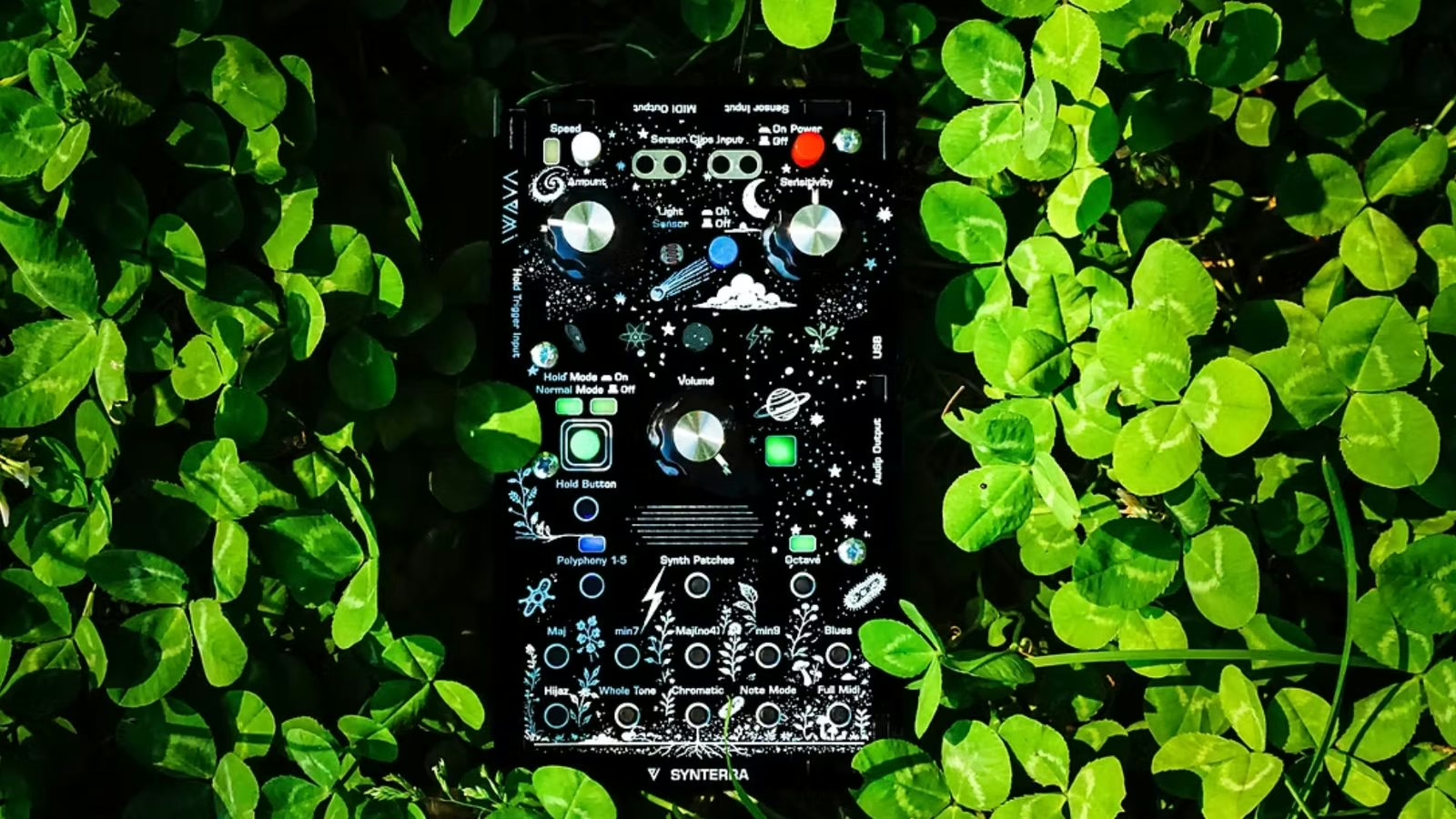
Just when you thought you had seen every flavour of generative instrument, from Eurorack modules to apps that loop patterns forever, the VAEMI Synterra drops in an unexpected piece: a small standalone synth, shaped like a colourful brick, that draws its raw material from the living, physical world around it. A plant, a fruit, a mushroom, a chunk of wood, a conductive surface, ambient light or bare skin: anything whose electrical properties change over time becomes a modulation source.
The concept is simple but elegant. Synterra continuously measures magnetic and electric field variations picked up through crocodile clips, a built-in light sensor and a touch area on its surface. That data, slow and inherently unpredictable, is then shaped by probability structures and a quantizer, and replayed in a chosen scale. The result is never quite the same twice, yet it stays musical.
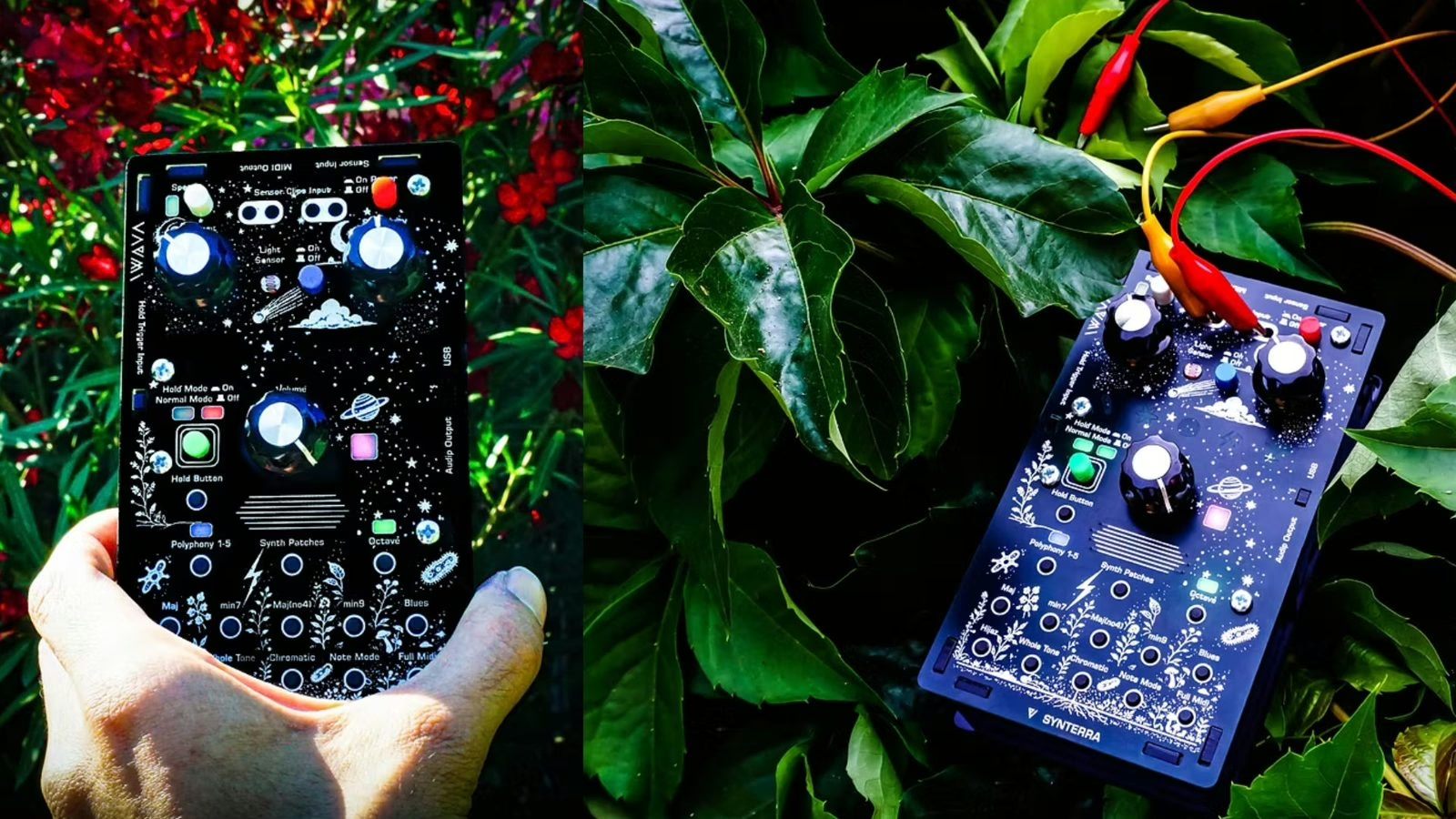
Nine synth engines in a brick
Synterra does more than spit out notes: it packs nine distinct synth engines across a deliberately wide range. There is subtractive synthesis, a wavetable engine, a resonator, Karplus-Strong for plucked-string timbres, a drum engine and a noise generator. Enough to move from an evolving pad to a gritty rhythmic line without switching instruments.
The generative side runs on eight selectable scales, sample-and-hold note organisation and up to five voices of polyphony across five octaves. You do not play every note by hand: you frame the system (scale, sensitivity, modulation amount) and let it compose within those limits. That is the whole philosophy of the generative instrument, here made tangible and wired directly to the real world.
Key facts
| Spec | VAEMI Synterra |
|---|---|
| Type | Standalone bio-interactive generative synthesizer |
| Engines | 9 (subtractive, wavetable, resonator, Karplus-Strong, drums, noise…) |
| Sensing | Magnetic/electric field via crocodile clips, light sensor, touch surface |
| Sequencing | 8 scales, probability, quantizer, sample and hold |
| Polyphony | Up to 5 voices, 5 octaves |
| I/O | MIDI in/out, USB (power and computer/tablet link) |
| Power | Battery or USB |
| Price / availability | around 86 EUR ex. VAT on pre-order (down from ~103 EUR), shipping September 2026 |
Standalone instrument or modulation source
Where Synterra gets genuinely interesting in the studio is its dual nature. In generative mode it runs on its own, producing sequences you capture as audio or send over MIDI to another synth. But its MIDI input also lets you impose a scale and harmonic structure from a keyboard and play it like a conventional instrument. In other words, you can let it improvise off a ficus, or rein it in and treat it as a slightly unusual sound engine.
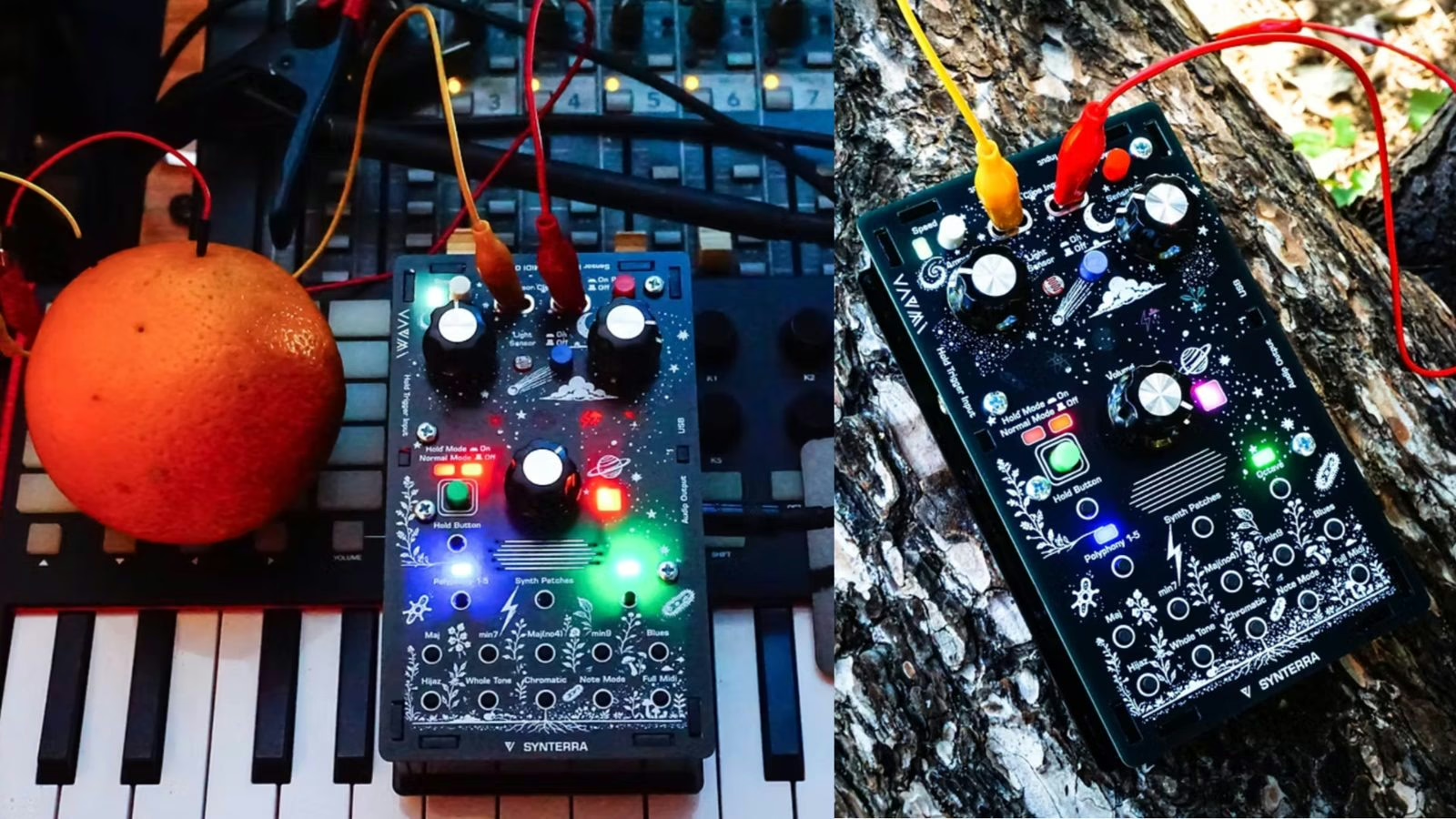
On the integration front the essentials are covered: MIDI in/out to talk to the rest of the rig, USB for power and a link to a computer or tablet, and battery power that makes it a companion for sonic exploration away from the studio. Just three knobs govern output level, modulation amount and sensitivity: the promise is an immediate object, not a maze of menus.
Gimmick or real tool?
Let’s be honest: a synth driven by a banana is as much a wink as a serious instrument. I have seen enough electronic curiosities to be wary of concepts that make a great headline and a poor daily driver. Yet there is real coherence here: turning a slow, organic, unpredictable signal into a modulation source is exactly what modular patchers chase with their random generators and envelope followers. Synterra simply brings the living world into the loop, for pocket change. At this price the question is not whether it replaces your main synth, but whether it opens up textures you would not have found otherwise. For ambient work, installations or sound design, the bet looks sound.
Synterra is up for pre-order on the maker’s site, with first units due in September 2026. In the same exploratory vein, it sits alongside the Pittsburgh Modular Lifeforms SV-2 semi-modular, the Dawesome Abyss II generative synth and the portable Teenage Engineering EP-40 Riddim groovebox.