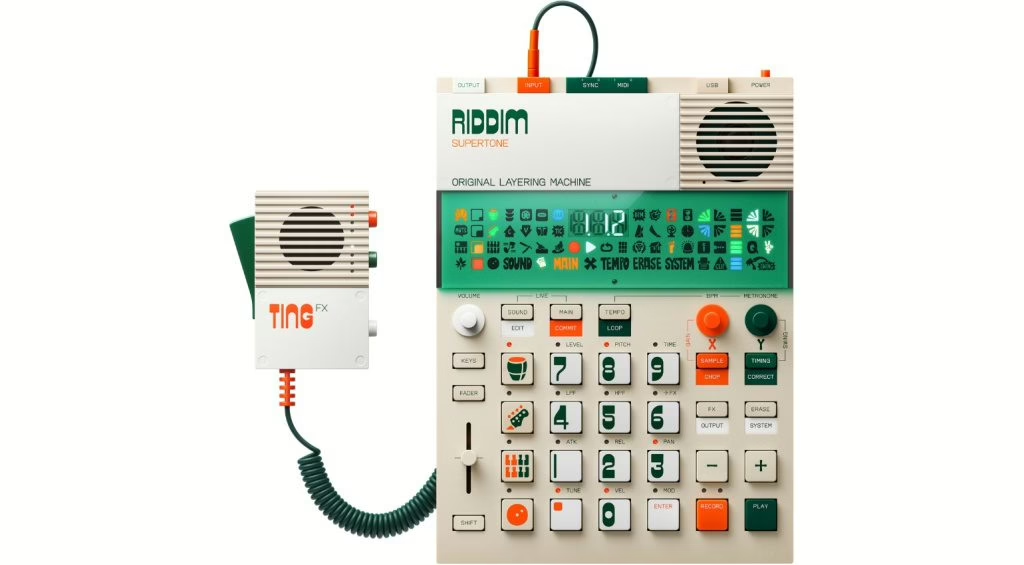
Teenage Engineering has made a habit of carving themed versions of its pocket machines. With the EP-40 Riddim, the Swedish brand does more than dress its EP-133 sampler in sound-system colors: it adds, for the first time in the range, a genuine synth engine called Supertone. That detail, far more than the reggae-flavored library, is what turns a niche object into a real instrument.
An EP-133 platform refocused on sound-system culture
Hardware-wise, the EP-40 carries over the K.O. II chassis: twelve pressure-sensitive pads, a step sequencer, a built-in speaker and mic, and battery or USB-C power. This is the same rhythmic notepad format Teenage Engineering popularized, designed to let you build tracks anywhere, with no computer screen or interface in the way. The 128 MB of internal memory, expandable to 256 MB, leaves room to stack loops and multisamples.
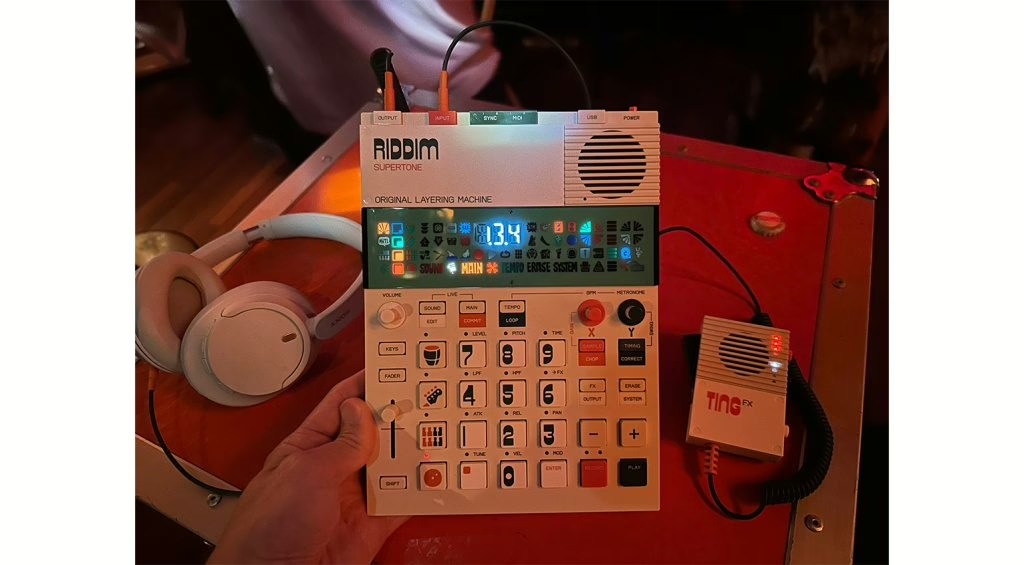
The way the soundbank is laid out says everything about the intent: percussion sits in slots 001 to 399, bass from 400 to 499, keys from 500 to 599, and effects from 600 to 699. You get drum kits, basslines, chord stabs, sound effects, vocal shouts, plus multisampled keys, a melodica and a guitar — the whole vocabulary of a Jamaican studio packed into one box.
Supertone: the first in-house synth in the EP line
This is the real technical headline. Until now, the EP-133 and K.O. II were strictly samplers: no synthesis, just playback of reworked samples. Supertone introduces a simple subtractive engine with nine presets, capable of classic reggae basses and leads plus a pressure-sensitive dub siren. There’s nothing revolutionary in the architecture — one oscillator, a filter, an envelope — but the addition changes what the machine is: you no longer just replay frozen samples, you generate sound.
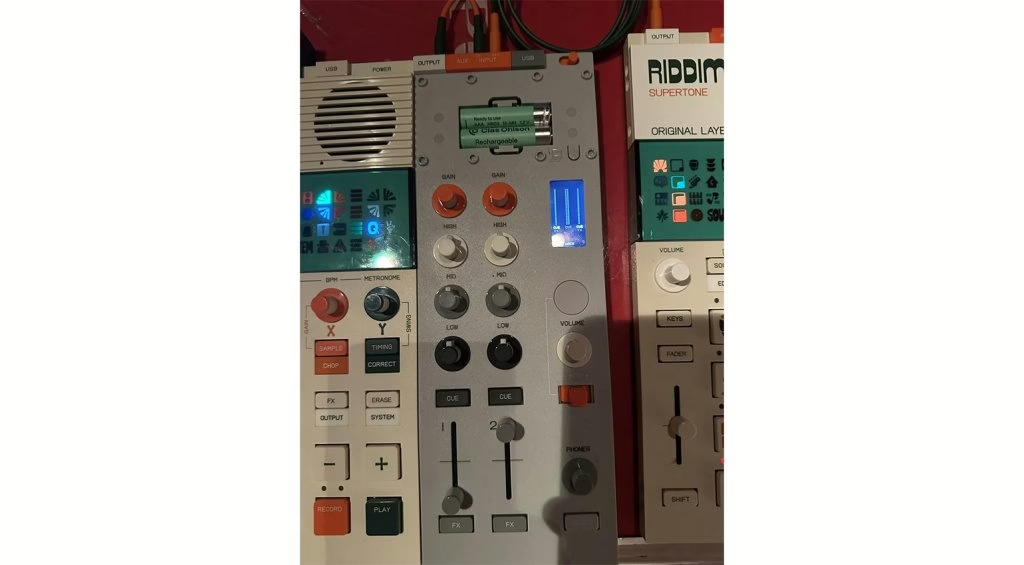
The pressure-responsive dub siren is a smart ergonomic call: in a live take, that’s exactly the gesture you want to ride by hand, without diving into a menu. A loop performance mode lets you layer parts on the fly, pulling the EP-40 closer to a small stage instrument than a mere production block.
A library shaped by dub’s architects
Teenage Engineering brought in King Jammy and Mad Professor for the sound curation. More than 300 samples were cut for reggae, dub and dancehall, alongside eight fully remixable artist tracks — enough to take an existing production apart and rebuild it. You can question the marketing logic of a themed product; you can’t fault these sounds for their stylistic accuracy, because they come from the right people.
Specs at a glance
| Item | Detail |
|---|---|
| Polyphony | 12 stereo / 16 mono voices |
| Memory | 128 MB internal, expandable to 256 MB |
| Sampling | 16-bit, 46 kHz |
| Synthesis | Supertone, subtractive engine, 9 presets |
| Effects | 7 main effects + 12 punch-in effects |
| Projects | 9 editable projects |
| Connectivity | stereo in/out, MIDI, sync, USB-C |
| Power | AAA batteries or USB-C |
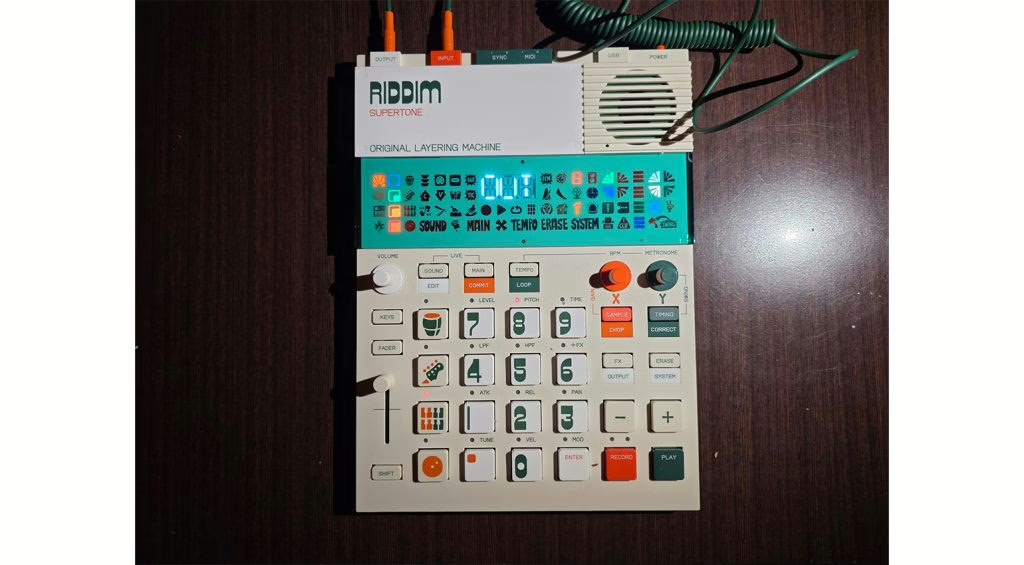
On the processing side, seven main effects and twelve punch-in effects cover the essentials of dubbing out a track: delay, reverb, filters and saturation triggered at your fingertips. Nothing exotic, but a toolset that matches the intended use.
My take
Teenage Engineering excels at the desirable object, sometimes at the expense of depth. The usual charge against its themed spin-offs — a pretty one-trick pony — mostly falls away here, precisely because of Supertone. A machine that generates its own basses and leads is no longer a prisoner of its library: it can work well beyond reggae, as long as you enjoy its immediate feel. It’s the kind of well-designed, no-nonsense gear that earns a spot in a gig bag next to a compact sampler like the 1010music blackbox 2 or an analog drum machine. The real test is the concept’s staying power: even a simple synth opens far more doors than yet another sample pack.
Price and availability
The EP-40 Riddim sells for $333 / £299 (349 €), and for a limited time Teenage Engineering bundles it with the EP-2350 Ting microphone for free. It’s available now through the usual retailers. If you’re chasing affordable synthesis from another angle, take a look at our roundup of free virtual synthesizers.