Dawesome is back with Abyss II, the second generation of its “visual” synthesizer that files sounds by colour where everyone else lines up oscillators. Due on 20 August 2026, this version deepens the engine, adds a mono mode, sample import and full MPE support, while holding on to the idea that made the plugin’s name: you design a sound by looking at it, not by calculating it.
A synth that thinks in colour, not formulas
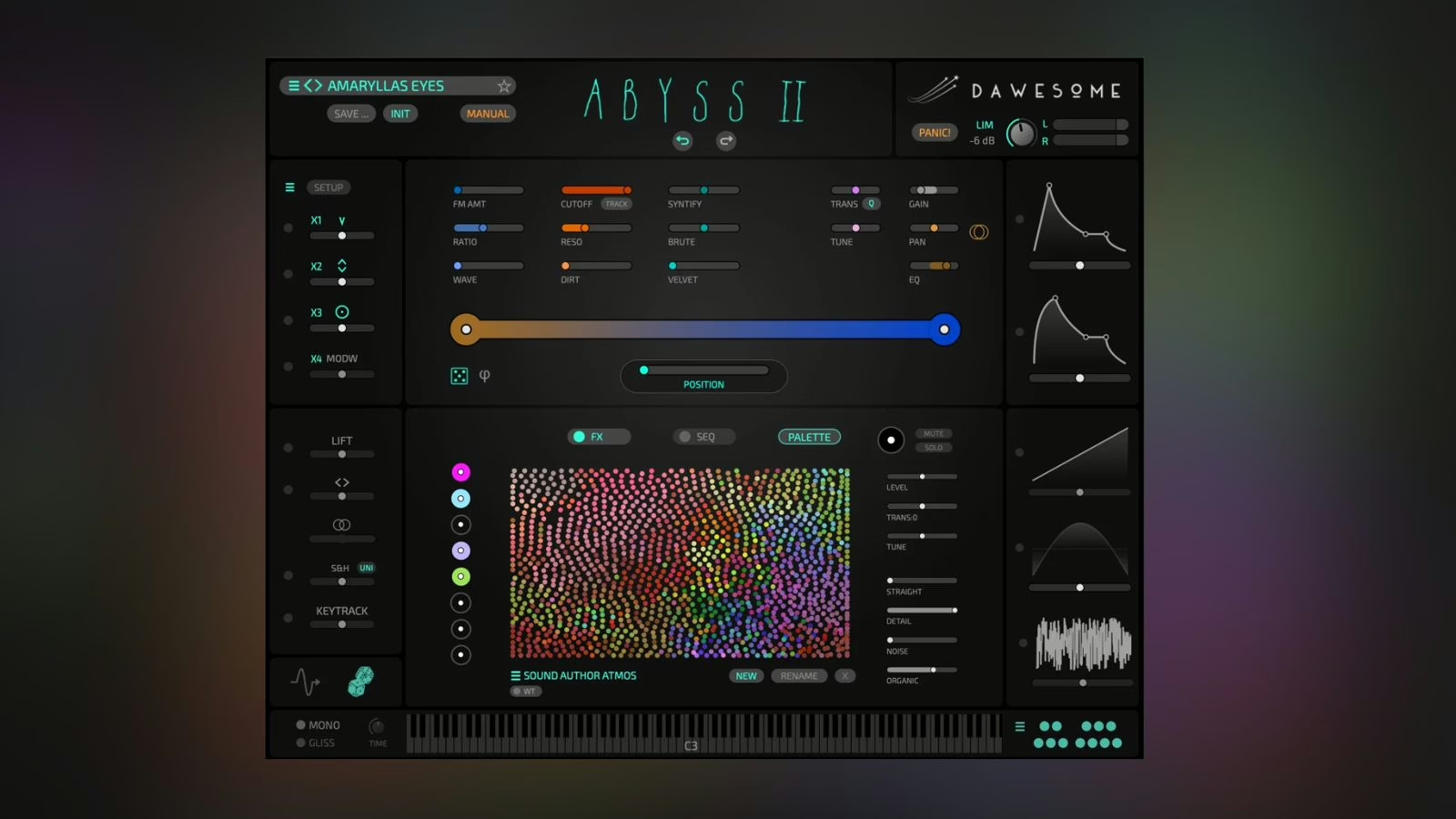
Abyss rests on a simple, slightly radical premise: we perceive a sound long before we can describe it in hertz and envelopes. The engine slices samples into many frames, extracts the spectral data of each one, then leans on machine learning to assign a colour to every timbre and cluster similar-sounding tones together on a palette. The upshot: you move through a cloud of colours, you drift from one hue to the next, and the sound evolves with you. Morphing is no longer an abstraction buried under modulation matrices — it’s a gesture.
This is more than a gimmick. For cinematic pads, evolving drones and constantly shifting textures — Abyss’s home turf — it dramatically shortens the distance between intent and result. You’re chasing a mood, not a cutoff value.
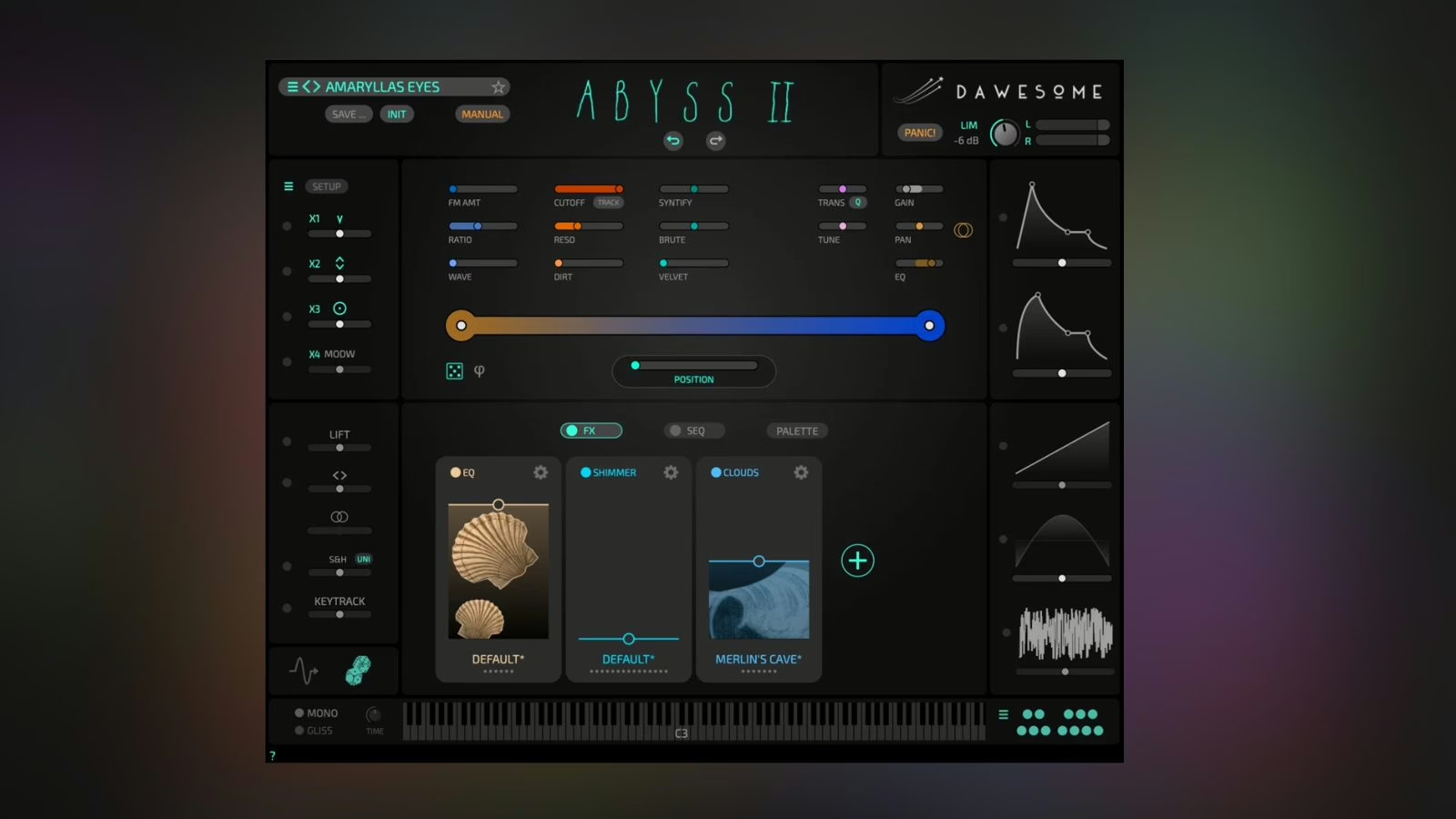
What version II actually changes
The big conceptual news is that the system now opens up to your raw material. Abyss II accepts drag-and-drop samples to extract a bespoke colour palette: you turn a field recording, a loop or an acoustic instrument into playable territory. The plugin can also play back user-generated colours and timbres imported from wavetables, which widens the vocabulary considerably compared with the first release.
The rest of the update targets playability and depth:
- A mono mode alongside polyphonic operation, welcome for basses and expressive leads;
- Three macros named brute, velvet and syntify, designed to shape a patch’s character in a single move;
- A rebuilt multi-effects section with sixteen all-new effect types, custom presets and an improved limiter;
- A polyrhythmic sequencer for melodic lines that don’t just loop on themselves;
- Full MPE support with flexible controller mapping — and continued compatibility with standard keyboards.
Long-overdue refinements round it out: undo/redo, MIDI mapping setup, a randomizer, a high-contrast accessibility mode and a preset browser that finally gets tags and filters. The factory bank ships with 400+ sounds, roughly 200 new and 200 refreshed Abyss classics, from well-known sound designers.
Price, availability and upgrade
Abyss II ships on 20 August 2026. Like the first release, expect VST3, AU and AAX on macOS and Windows. The pricing plays the access card:
| Option | Intro price | Regular price |
|---|---|---|
| Full version | $89 / €89 | $149 / €149 |
| Upgrade from Abyss | $45 / €45 | $75 / €75 |
Good news for recent buyers: if you bought the original Abyss in 2026, the upgrade to Abyss II is free.
Our take
I’ve watched plenty of “intuitive” synths that were really just marketing paint over yet another subtractive architecture. Abyss is one of the few that delivers, because its distinctiveness is structural rather than cosmetic: the colour-to-timbre mapping genuinely moves the cognitive load elsewhere. For a sound designer up against a scoring deadline, saving those few minutes between “the idea” and “the right sound” changes a working day in concrete terms. The real question — the one no demo will settle — is whether Abyss II’s palette stays controllable once you feed it your own samples, or whether you end up reaching for a more conventional synth to fine-tune. That’s where this version will be judged.
Until we get hands-on, the takeaway is that Abyss II isn’t trying to beat physical-modelling engines or FM emulations at their own game. It offers a different way in, closer to the ear than to the spec sheet. Full details are on the Dawesome site.