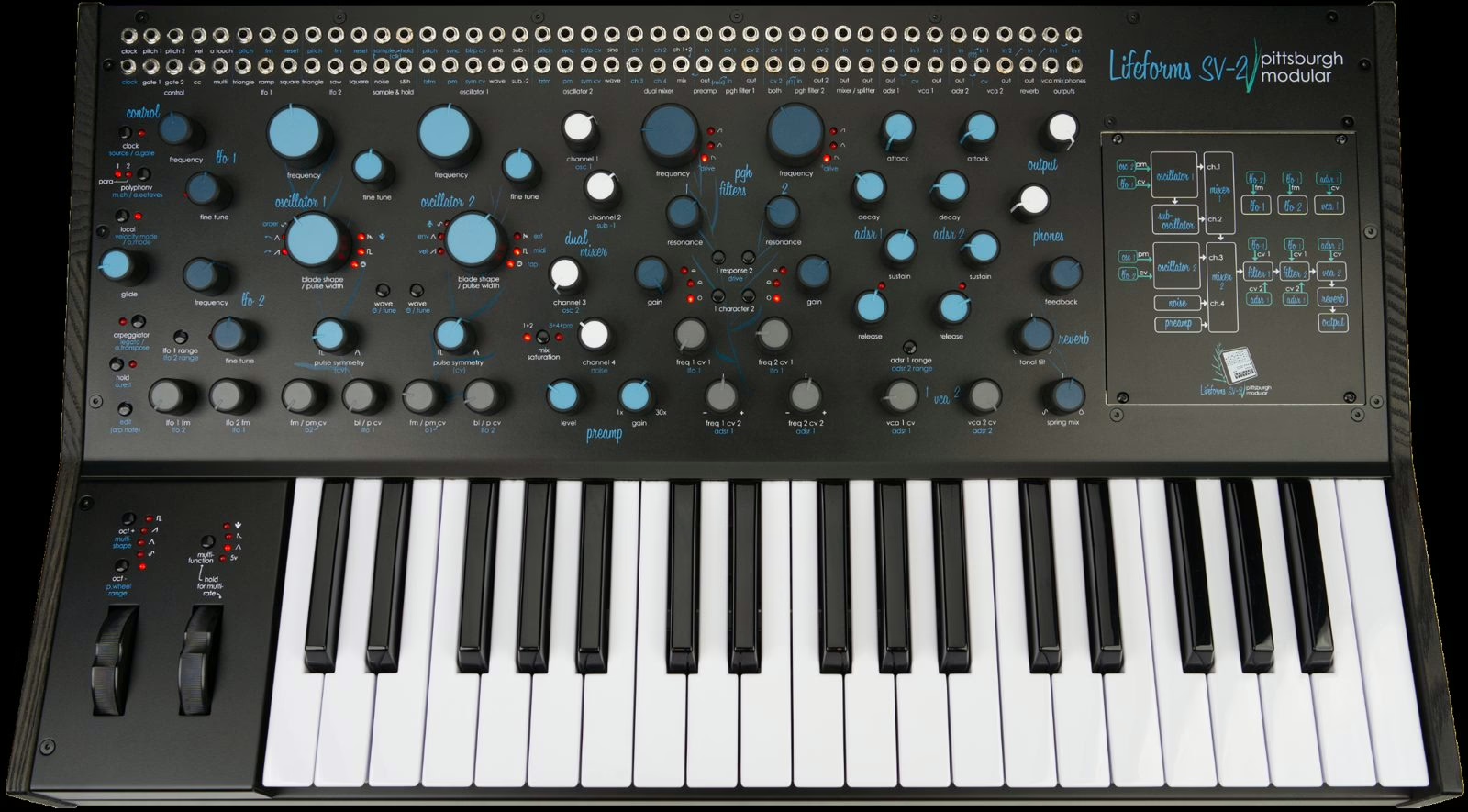
Pittsburgh Modular hadn’t touched its flagship semi-modular keyboard in a while. The American builder fixes that with the Lifeforms SV-2, billed as the next generation of the SV-1. And this is no cosmetic refresh: the instrument has been redesigned from the ground up, from the oscillator architecture right through to the patch bay. The result is a characterful analog synth, firmly rooted in the East Coast tradition yet built for patching and experimentation. Price: €1,599, shipping now.
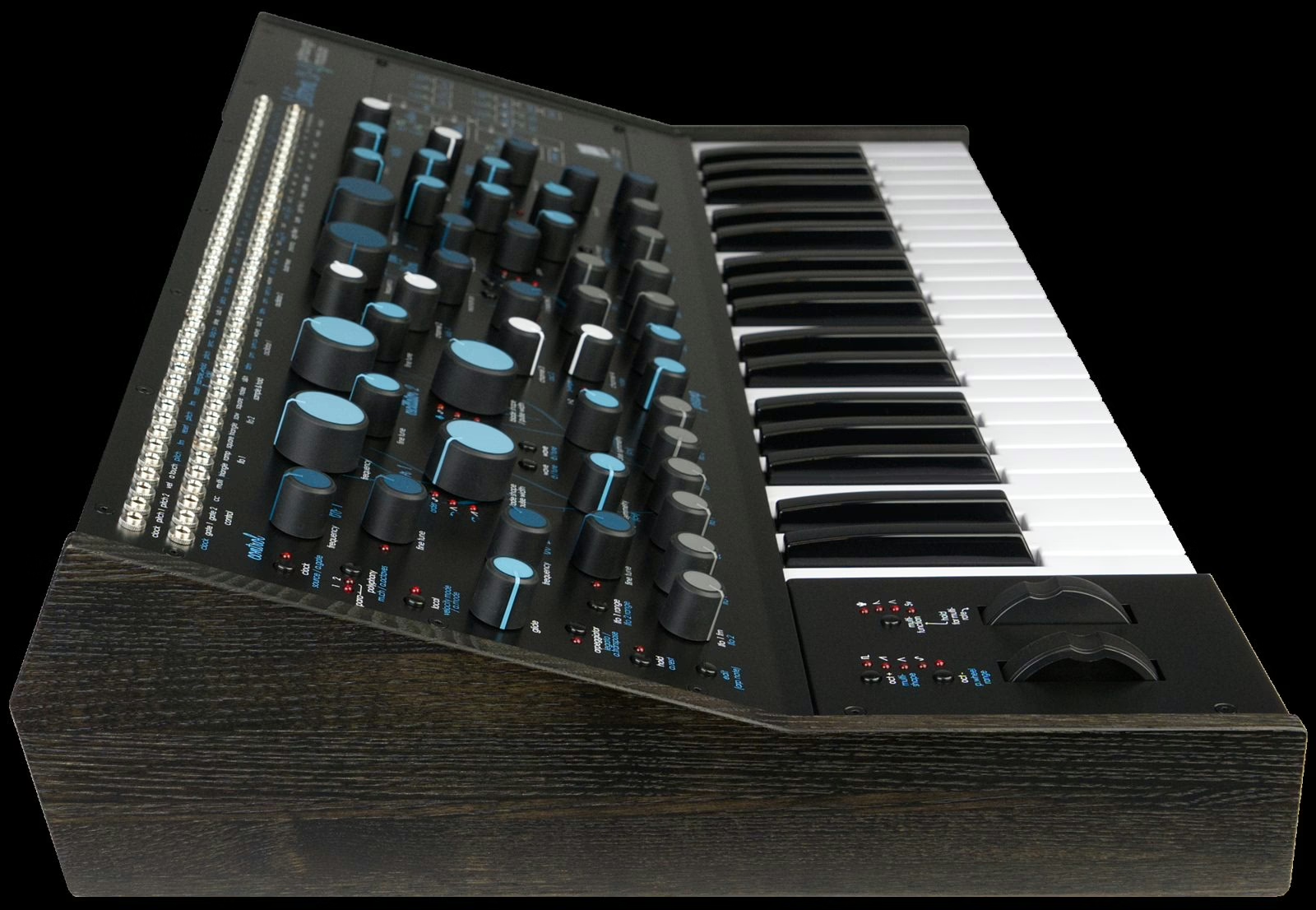
Two thru-zero oscillators at the core
The sound engine is built around two thru-zero triangle-core oscillators. Each delivers the expected shapes — sine, triangle, sawtooth, variable pulse width — alongside more unusual waveforms dubbed blade and random that noticeably widen the tonal palette. A square-wave sub-oscillator adds weight one or two octaves down. Crucially, the SV-2 can be set up as monophonic, paraphonic or duophonic: stack both oscillators for a massive mono voice, or split them to play two parts at once. Thru-zero frequency and phase modulation open the door to metallic, bell-like timbres you don’t always expect from an instrument of this school.
On the filtering side, Pittsburgh Modular refuses to settle for a plain low-pass. The SV-2 packs two state-variable multimode filters offering high-pass, band-pass, low-pass, a combo mode and a random response. A pre-filter overdrive stage, with up to roughly 15 dB of gain on tap, lets you drive the input hard for that controlled aggression subtractive-synth fans crave.
A built-in Eurorack bay: the real design move
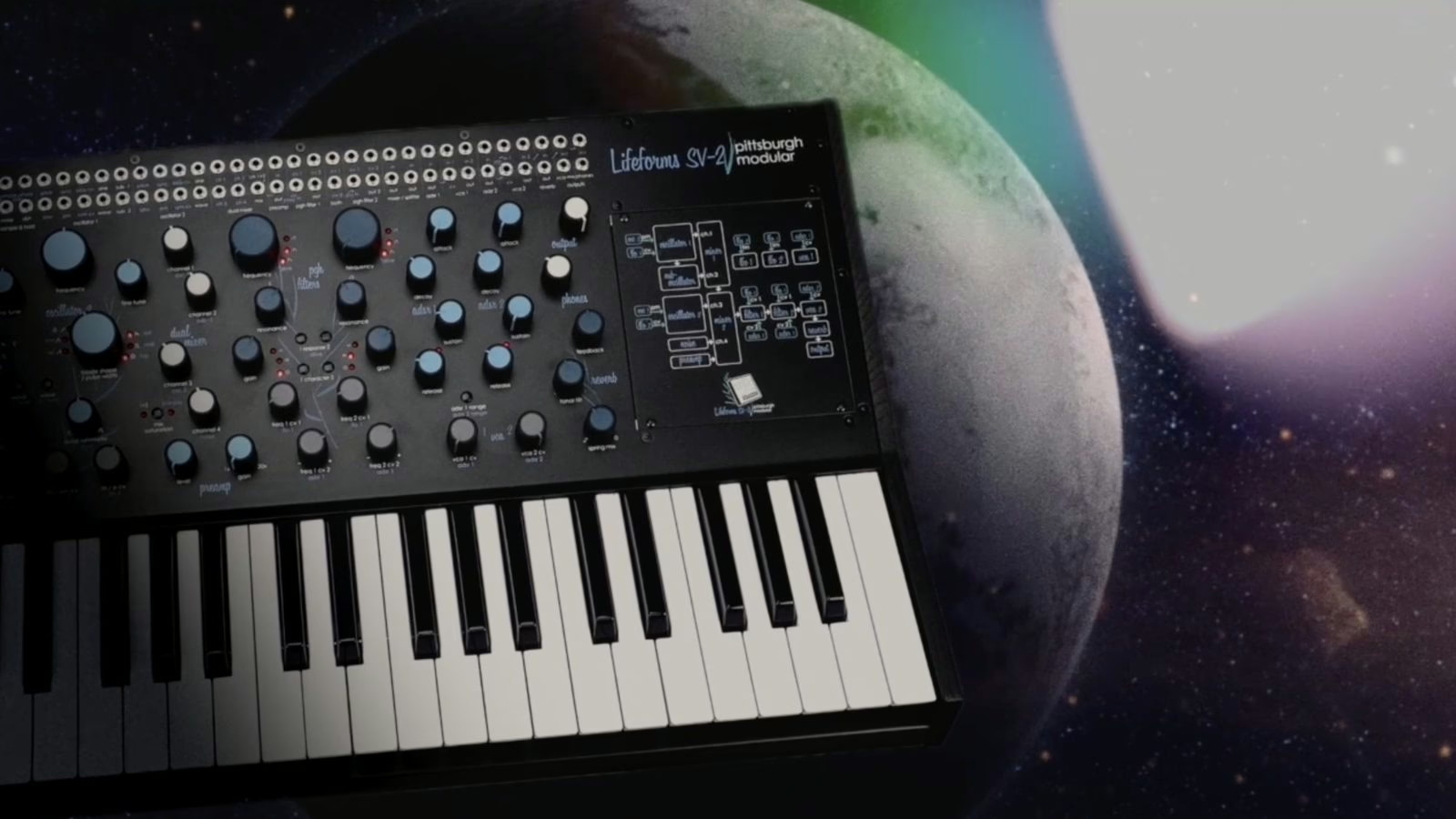
What genuinely sets the SV-2 apart is its 24 HP Eurorack bay, dropped straight into the chassis and paired with an 84-point patch bay up top. In practice, you can mount a Eurorack module of your choice — a second voice, an effect, a function generator — right inside the instrument and patch it into the rest of the architecture. It’s an elegant way to turn a closed semi-modular into an expandable system without forcing a separate rack on you. For anyone easing into modular, it’s also an ideal gateway: start with a complete, playable instrument, then lift the lid step by step.
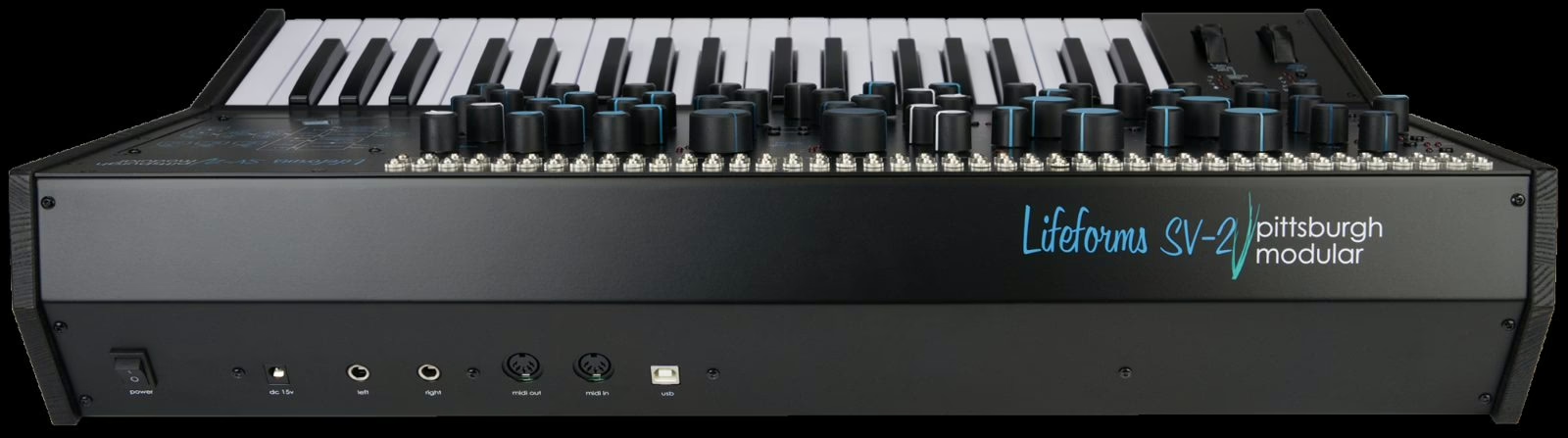
The modulation section follows the same generous logic: two voltage-controlled LFOs, two ADSR envelopes, a sample-and-hold generator fed by analog white noise, plus a pair of VCAs and digital modulation tools backing up the analog core. Rounding things off is a spring reverb with its own shaping EQ and a saturation stage — a welcome reminder that Pittsburgh Modular still cares about its onboard effects.
Highlights at a glance
- Two thru-zero triangle-core oscillators, plus square sub-oscillator (-1 / -2 octaves)
- Mono, paraphonic and duophonic modes
- Two state-variable multimode filters (HP / BP / LP / combo / random)
- Six saturation stages spread across the signal path
- Integrated 24 HP Eurorack bay and 84-point patch bay
- Spring reverb with shaping EQ
That idea of saturation placed at several points along the path — no fewer than six independent stages — is worth pausing on. It lets you color a specific section without smearing the whole signal: a touch of grit on the oscillators, heavier distortion before the filter, extra warmth in the reverb. This kind of fine dosing is what separates a generic synth from an instrument with real personality.
Positioning: a high-end semi-modular, not a toy
At €1,599, the SV-2 isn’t playing in the entry-level semi-modular sandbox. It clearly targets the musician who wants a complete, patchable, long-haul instrument capable of anchoring a small system. The price is justified by the density of the architecture — two oscillators, two filters, two envelopes, two LFOs, the Eurorack bay — and by the brand’s long-standing build quality.
A final word on philosophy. The SV-2 owns its East Coast heritage: stable oscillators, subtractive filters, a signal path you can read just by looking at it. But the Eurorack bay and the off-kilter waveforms give it an exit ramp toward the more experimental West Coast territory. That in-between stance, that refusal to pick a side, is what makes the instrument interesting.
I’ve always preferred synths you can read at a glance. On that front, an instrument where every saturation stage and every filter output is available to the patch bay speaks to me far more than an endless menu. The SV-2 bets on texture, on gesture, on that ability to rough the sound up just enough — and that’s exactly what I want from an analog: that it brings something audible to the table, not another box ticked on a spec sheet.
The real test will be the tuning stability of those thru-zero oscillators and how the filters behave when pushed to the edge. On paper, though, Pittsburgh Modular has delivered a serious redesign that puts the SV line back in the conversation against the semi-modular heavyweights. Full details are on the maker’s site.