The letters VCA turn up in every control room, and they name two different things that get confused constantly: an electronic component on one side, a way of grouping channels on the other. This article deals with the component — what a voltage controlled amplifier actually is, what it does to the signal, and why its invention changed consoles and synthesisers alike. For building and running VCA groups on a stage, we have a dedicated guide to VCA groups.
- A VCA is an amplifier whose gain is steered by a DC voltage rather than by the mechanical position of a potentiometer.
- It allows the fader to leave the audio path: the fader no longer carries signal, it issues an instruction.
- The same component serves as the gain-reduction element in a compressor and as the output stage of a subtractive synthesiser.
- On a digital console there is no VCA cell at all: the term is DCA, and it is a calculation, not a circuit.
An amplifier whose gain you set with a voltage
An ordinary amplifier has an input, an output, and a gain fixed by passive components. A voltage controlled amplifier has two inputs: the audio signal on one side, a DC control voltage on the other. The gain applied to the signal becomes a function of that voltage. Send 0 V and the signal passes at unity; drop the voltage and the signal is attenuated; bring it back and so does the signal.
The important nuance is right there: the control and the audio never meet. The fader you push, a compressor’s detector or a synthesiser envelope all produce a voltage; the VCA simply translates that voltage into level. That decoupling is what makes everything else possible.
The component as we know it owes a great deal to David Blackmer’s work at dbx in the 1970s, then to the integrated circuits from THAT Corporation that still sit inside a considerable number of analogue channel strips. First-generation VCAs carried a deserved reputation for degrading signal — distortion, noise floor, thermal drift. Two decades of refinement settled that question: a well implemented modern VCA is transparent, and the argument has moved elsewhere.
Getting the fader out of the audio path
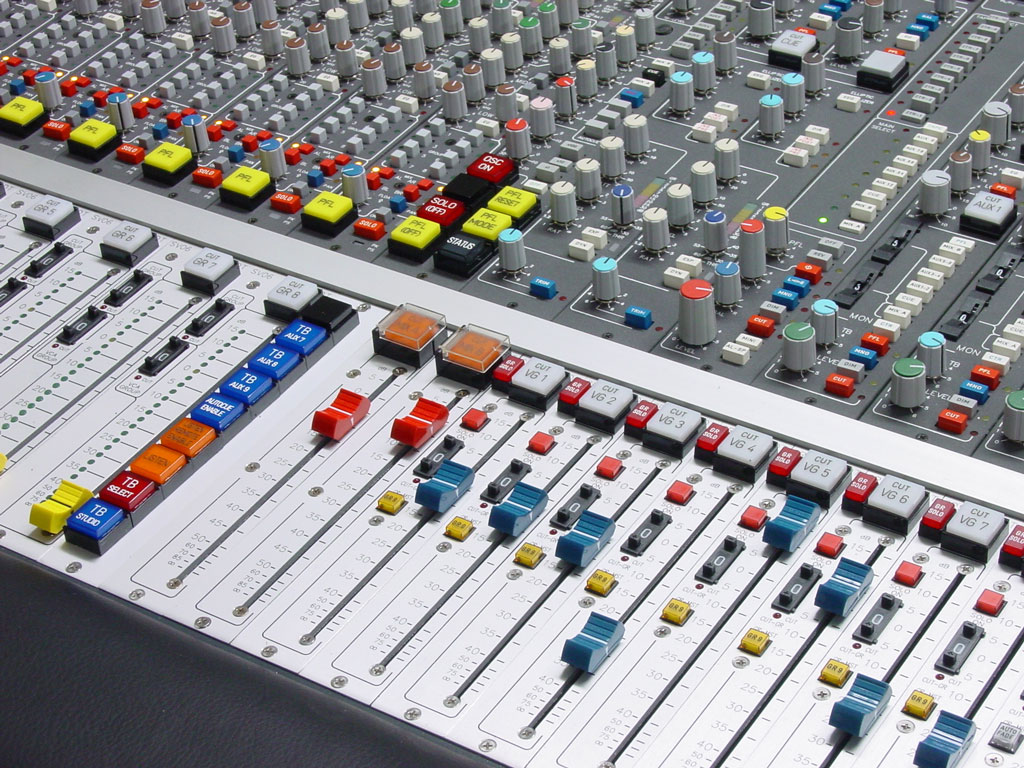
On a fully analogue console, the fader is the signal path: audio physically travels across a resistive track ten centimetres long, with a wiper rubbing along it. It works — it defined mixing for forty years — but it imposes three constraints every operator has met: the track gets dirty and noisy, audio has to be routed up to the surface and back, and above all fader position cannot be memorised or copied.
With a VCA in the channel, the fader becomes a simple voltage generator. The signal itself stays as short as possible inside the chassis. Three consequences follow, and they shaped the craft: crosstalk and noise drop because audio no longer wanders around; automation becomes possible, because a voltage can be stored and replayed, which gave us automated mixing consoles; and several faders can drive the same cell, which opens the door to grouping.

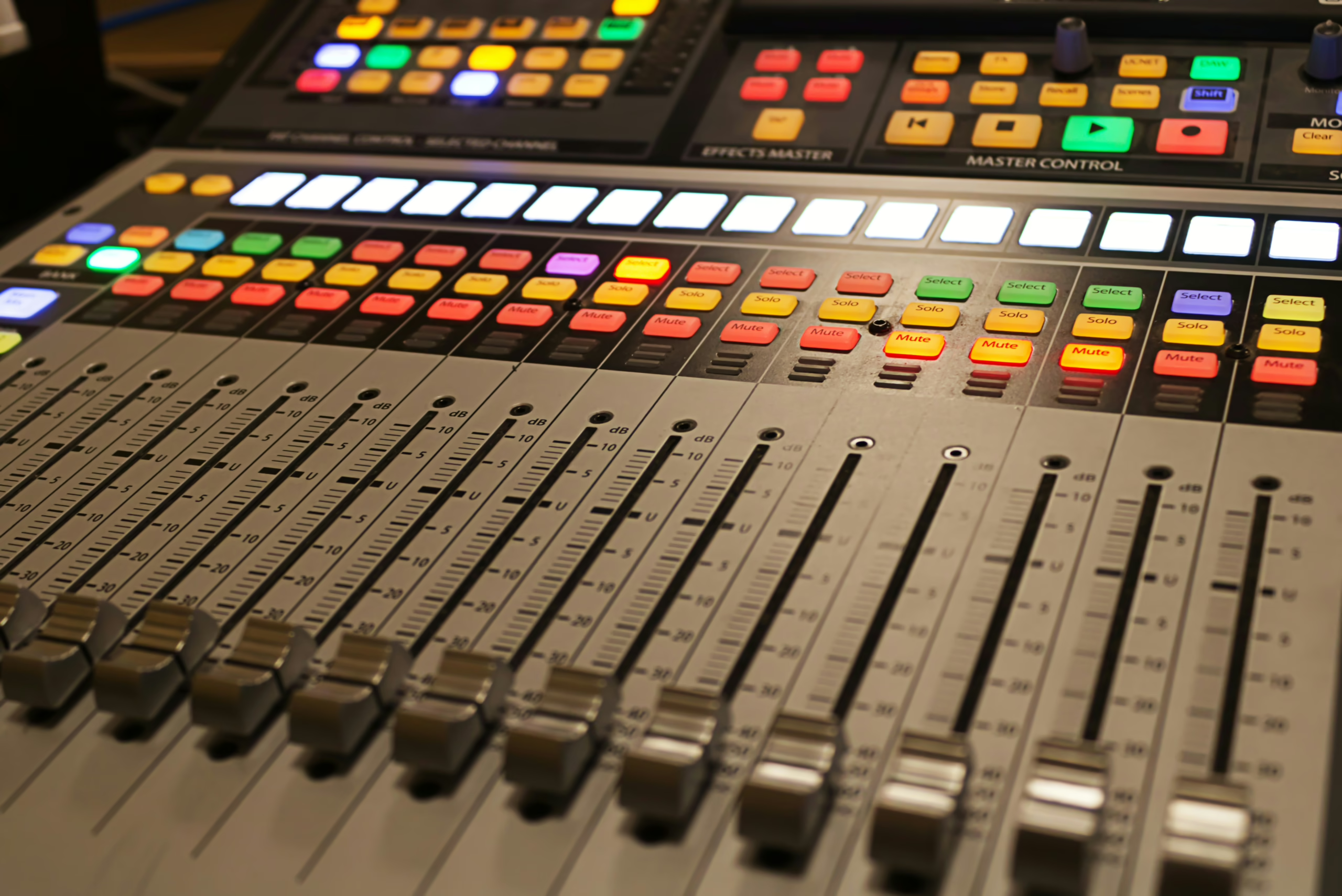
That row of small buttons under each fader routes no audio whatever. It simply tells the channel which control voltage to obey in addition to its own. Nothing is being moved around: an instruction is being distributed.
The same component, at the heart of the compressor
A compressor is made of two halves: a detector, which watches the level and decides how much gain reduction to apply, and a variable gain element, which actually applies it. That second block has to change gain quickly, cleanly and on command — which is the definition of a VCA.
Hence the familiar classification of compressors by topology, which is nothing more than a classification by gain element. The VCA cell offers the fastest response and the most predictable reduction law, which explains its dominance on bus compressors and console channel strips. A FET stage goes faster still but colours more; an optical cell introduces inertia and non-linearity that give it all its character; a valve vari-mu circuit compresses by varying a tube’s gain. The vocabulary on spec sheets becomes far more readable once you realise it describes one single position in the circuit.
“VCA compressor” does not mean “compressor that sounds cold”. It says only that gain reduction is performed by a voltage controlled cell. A compressor’s character comes at least as much from its detector — its attack law, its program-dependent behaviour — as from the technology of its gain stage.
And at the heart of the synthesiser
The third territory of the VCA is synthesis. The canonical chain of a subtractive synthesiser reads VCO, VCF, VCA: a voltage controlled oscillator produces the timbre, a voltage controlled filter shapes it, and a voltage controlled amplifier gives it its envelope in time. Without that final VCA the note never stops; it is what turns a continuous drone into a sound that attacks, holds and decays.
So the same component fills two jobs that look unrelated — setting a channel level, drawing a note’s envelope — because fundamentally it only does one thing: apply a gain it is told to apply.
VCA or DCA: the vocabulary shift digital brought
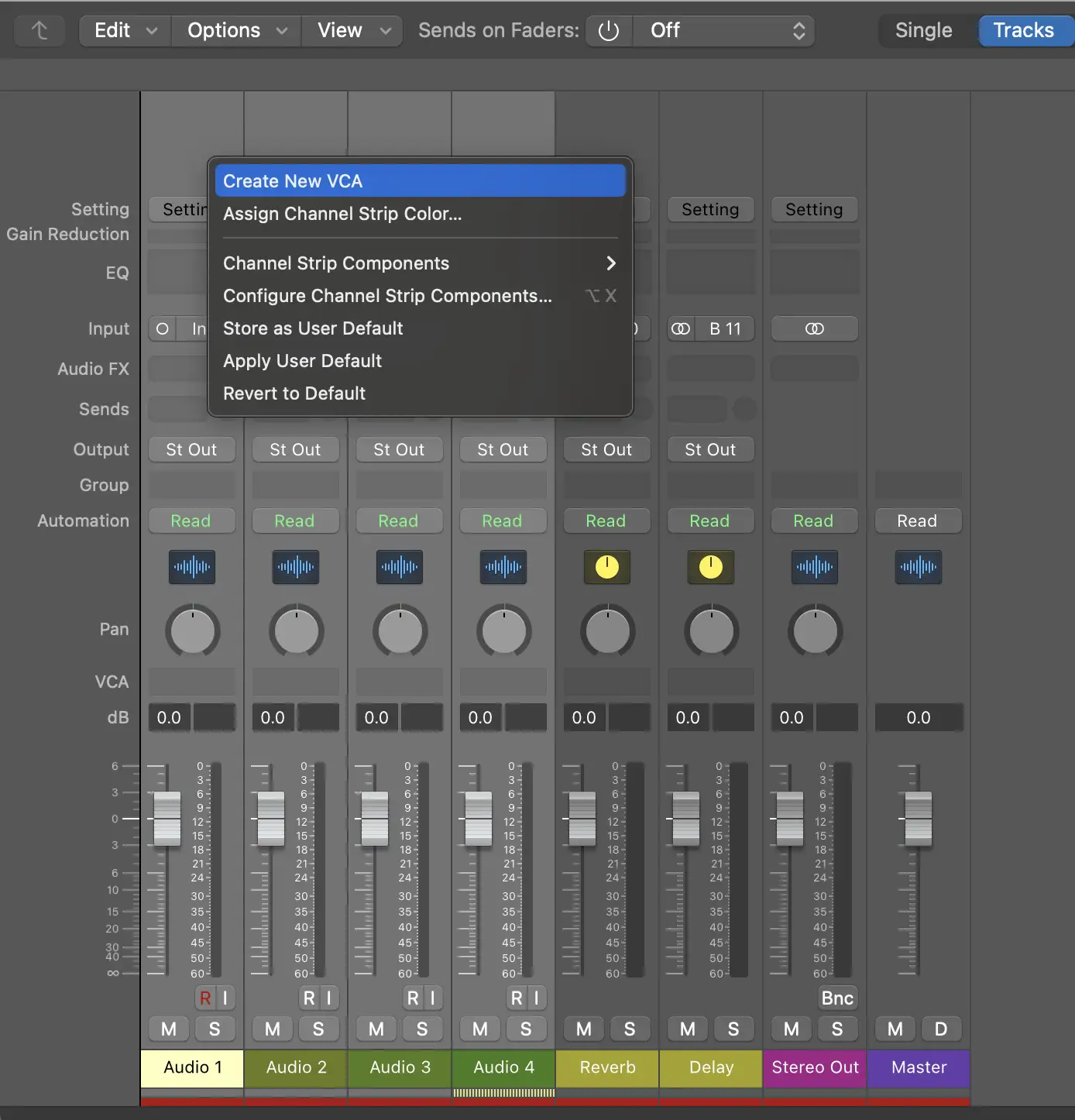
Open a digital console: there is not one VCA cell anywhere in the signal path. Level is a multiplication applied to a stream of samples. The correct term therefore becomes DCA, for digitally controlled amplifier — and manufacturers are split, some keeping “VCA” out of habit, others insisting on “DCA”.
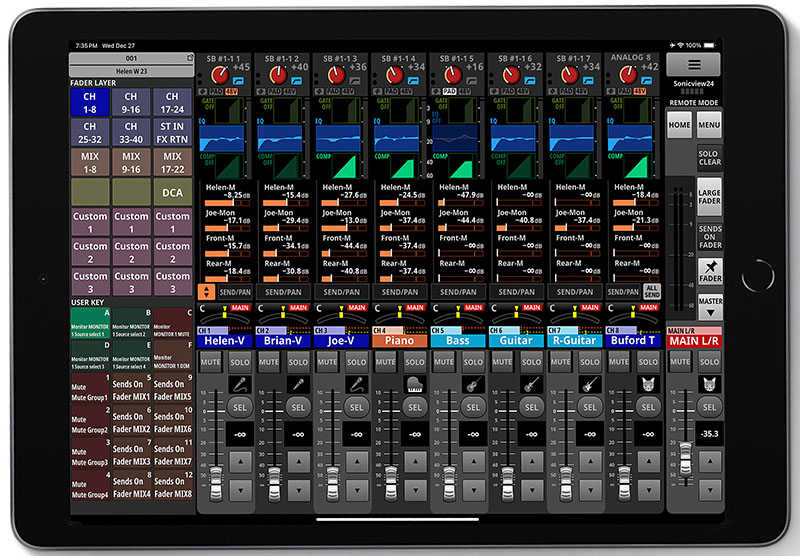
The behaviour is rigorously identical from the operator’s point of view: a master fader applies a gain offset to a set of channels without ever summing their signals. Workstations adopted the same logic and often the original word, which completes the confusion.
The confusion not to encourage: a VCA is not a subgroup
This is the most frequent mistake, and it has very concrete consequences on a stage. A subgroup is an audio bus: signals are genuinely summed there, come back out through a single fader, and can be processed as a whole — a compressor on the drum bus acts on the sum. A VCA sums nothing: each channel still goes straight to the main bus, and the VCA master merely offsets their respective gains.
That difference dictates the choice in practice. Want to compress a drum kit as a whole, or send a horn section to a shared reverb? You need a subgroup. Want to drop the whole kit 3 dB between two songs without touching the internal balance or the post-fader sends? You need a VCA. The two coexist perfectly well on the same console — and on tour that is the normal case. The overall mechanics are covered in our guide to routing and buses on a digital console.
A VCA master acts upstream of the tap point of post-fader sends. Pull a VCA down 6 dB and you also pull down what is heading to your reverbs, because their send follows the fader. Pre-fader sends do not move — which is exactly why stage monitors are fed pre-fader. We cover that tap point in our article on auxiliaries on a mixing console.
Why this component mattered
The VCA did far more than simplify volume control: inside a console, it separated what belongs to the signal path from what belongs to control. That separation is the precondition for automation, scene recall, tablet control, and ultimately everything that defines a contemporary control room. When the shift to digital happened in the 1990s and 2000s, it did not have to invent the principle: it had been there, in copper, for twenty years. It simply replaced the cell with a multiplication.
It is also why the question “do an analogue VCA and a digital DCA sound the same?” is badly framed. On a digital console there is nothing to make sound: gain is a number. On an analogue console the quality of the VCA does matter, but that is a question of circuit implementation, not of principle.
Frequently asked questions
What does VCA actually stand for?
Voltage Controlled Amplifier. The abbreviation names a component first, and by extension the control fader that uses one. Both senses coexist in everyday speech, hence the permanent confusion.
What is the difference between VCA and DCA?
None from an operating point of view, a total one technically. A VCA is an analogue circuit whose gain follows a voltage; a DCA is a multiplication applied to a digital stream. On a digital console only DCA is strictly accurate — but plenty of manufacturers and workstations kept “VCA”.
Is a VCA useful in a home studio?
Yes, as soon as your session passes fifteen or so tracks. Grouping drums, backing vocals or pads under a control fader lets you adjust a whole set without rewriting each track’s automation or breaking your effect sends. Unlike a subgroup, it creates no additional summing point.
Does a VCA compressor always sound clinical?
No. The topology describes the element that applies gain reduction, not the character of the result. A compressor’s behaviour comes largely from its detector and its attack and release laws, both independent of the gain stage technology.