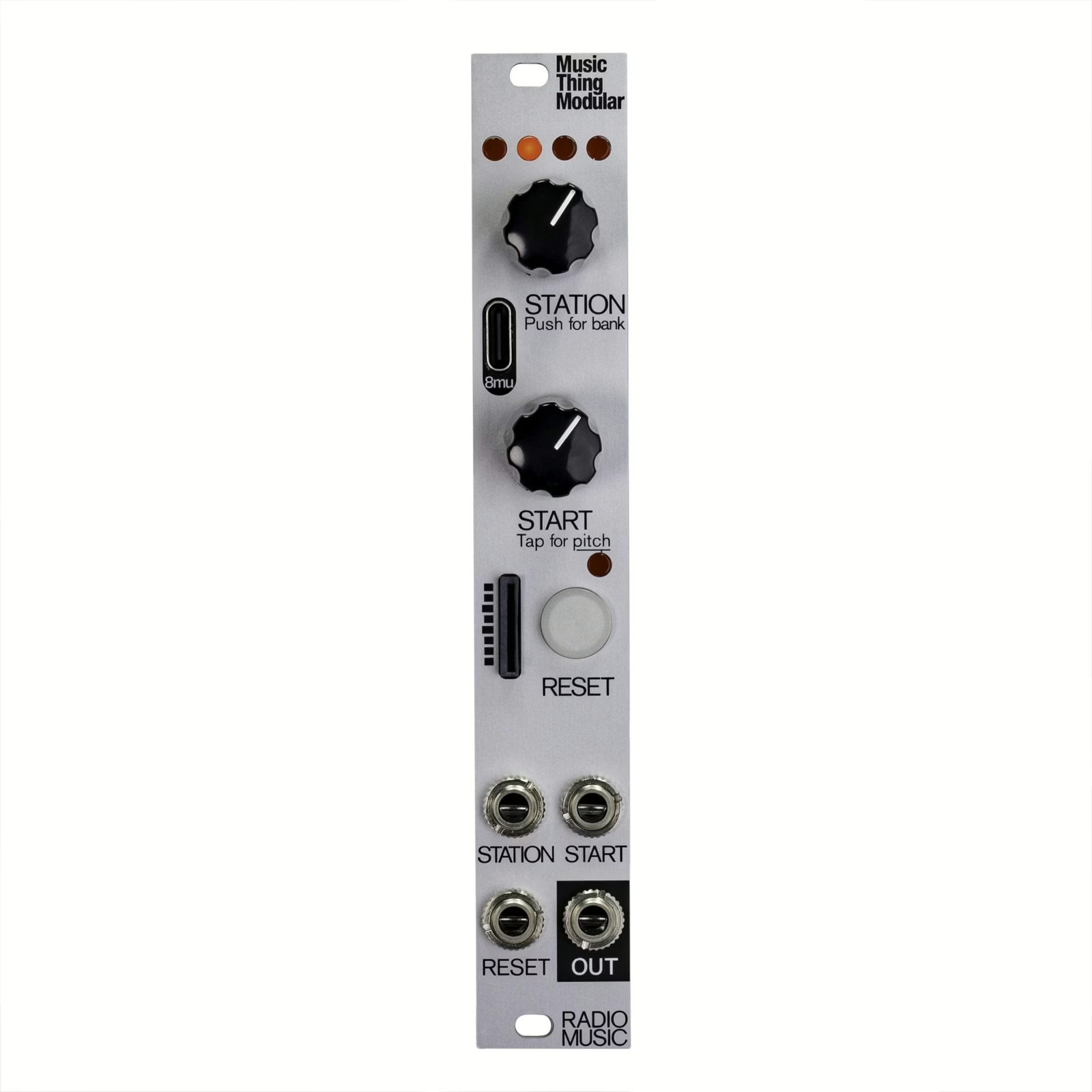
Some modules become classics without ever trying to. Music Thing Modular’s Radio Music is one of them: a tiny 4 HP sample player that behaves like a radio you tune with control voltage, sitting somewhere between tape and an old sampler. A decade after the original, Tom Whitwell has rebuilt it as a Mk2 that keeps the idea and rethinks nearly all the hardware.
A DIY classic, rebuilt from the ground up
The concept hasn’t moved: you load audio files onto a microSD card, sort them into stations, and the module plays them back as if you were turning a radio dial. Depending on what you feed it — pads, field recordings, rhythmic loops, all sorts of noise — the Radio Music becomes an unpredictable well of sound, perfect for feeding a modular patch or kicking off an idea.
The real change is under the hood. The Mk2 moves to the RP2040 processor, the same one that powers the brand’s Workshop Computer and 8mu controller. In practice, playback gets cleaner: the noise floor drops below -86 dB and trigger latency falls under 2 ms. Speed changes stay smooth, with the tape-like character regulars love.
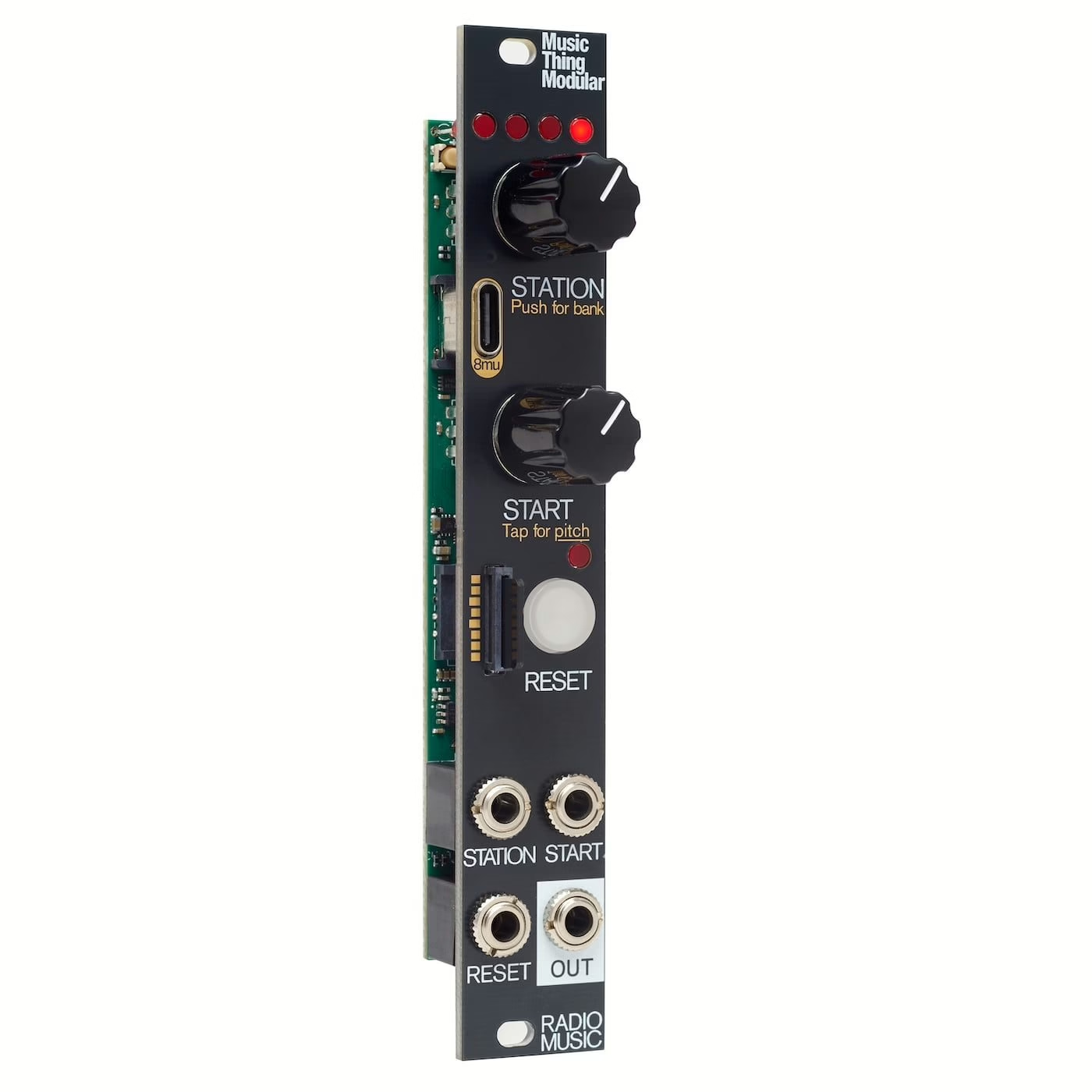
Stations, speed and loops: what the module actually does
The Radio Music Mk2 plays WAV, AIFF and RAW files up to 24-bit/96 kHz, from a microSD card supported up to 2 TB. You organise your sounds into up to 16 stations, each holding as many files as you like. The speed range spans -2 to +2 octaves, so extreme slow-downs and pitched-up runs are both on the table.
Several play modes coexist. Chromatic mode tracks 1 V/octave and turns the module into a tunable player, handy for hitting a specific pitch. Speed mode decouples playback from pitch, loop mode offers forward or ping-pong playback, and a START knob sets the sample’s reset point. Finally, a tuner mode offers three characters — sharp, soft, radio — to find the right station gently or, conversely, abruptly.
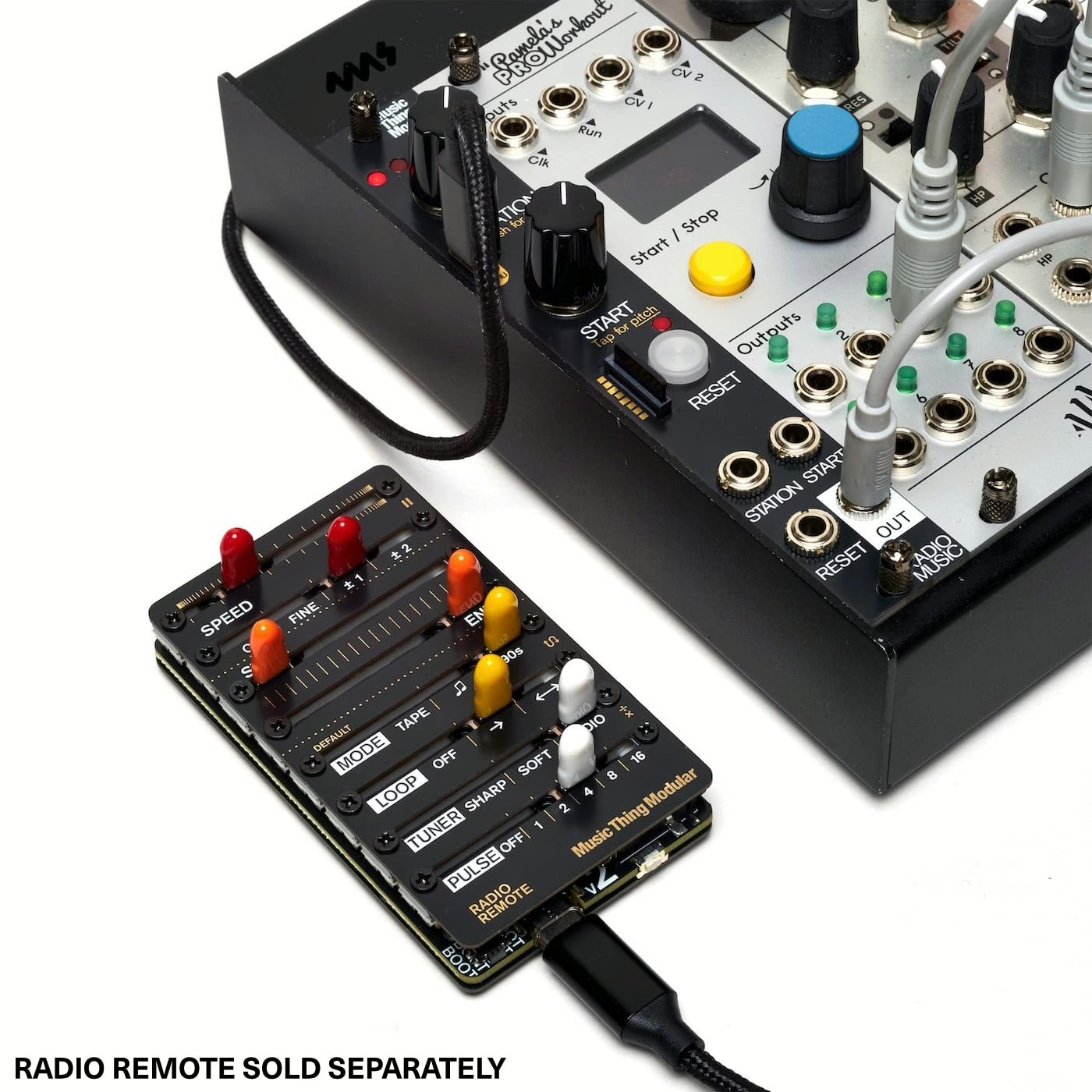
An optional remote and a module that stays open
New on the ergonomics side: a USB-C socket takes the Radio Remote, a controller sold separately. It’s actually alternative firmware for the brand’s 8mu USB MIDI controller, used to drive the module from a distance. It’s optional, but it changes how you play live, especially when the module is buried deep in a large system.
True to Music Thing Modular’s DNA, the Mk2 stays open: the code is free and alternative firmware development is openly encouraged. That’s exactly what gave the first Radio Music a second, community-driven life, with playback variants dreamt up by users themselves. The format is unchanged: 4 HP, 25 mm deep, skiff-friendly.
Key specs at a glance
| Item | Detail |
|---|---|
| Format | Eurorack 4 HP, 25 mm deep, skiff-friendly |
| Processor | RP2040 (as in Workshop Computer and 8mu) |
| Files | WAV, AIFF, RAW up to 24-bit/96 kHz |
| Storage | microSD up to 2 TB, 16 stations |
| Audio | Noise floor below -86 dB, latency < 2 ms |
| Speed | -2 to +2 octaves |
| Modes | Chromatic (1 V/oct), speed, loop (forward/ping-pong), tuner, pulse |
Price and availability
The Radio Music Mk2 is up for pre-order in two forms. The assembled version is listed at around £149 for the black panel and £156 for aluminium (ex VAT); the full DIY kit drops to £115/£125. The optional Radio Remote is announced at roughly $130 assembled or £105 as a kit. Deliveries are expected in October 2026. At that price, and with a solder-it-yourself kit that stays approachable, the module appeals as much to seasoned modular users as to anyone wanting to get into eurorack DIY.
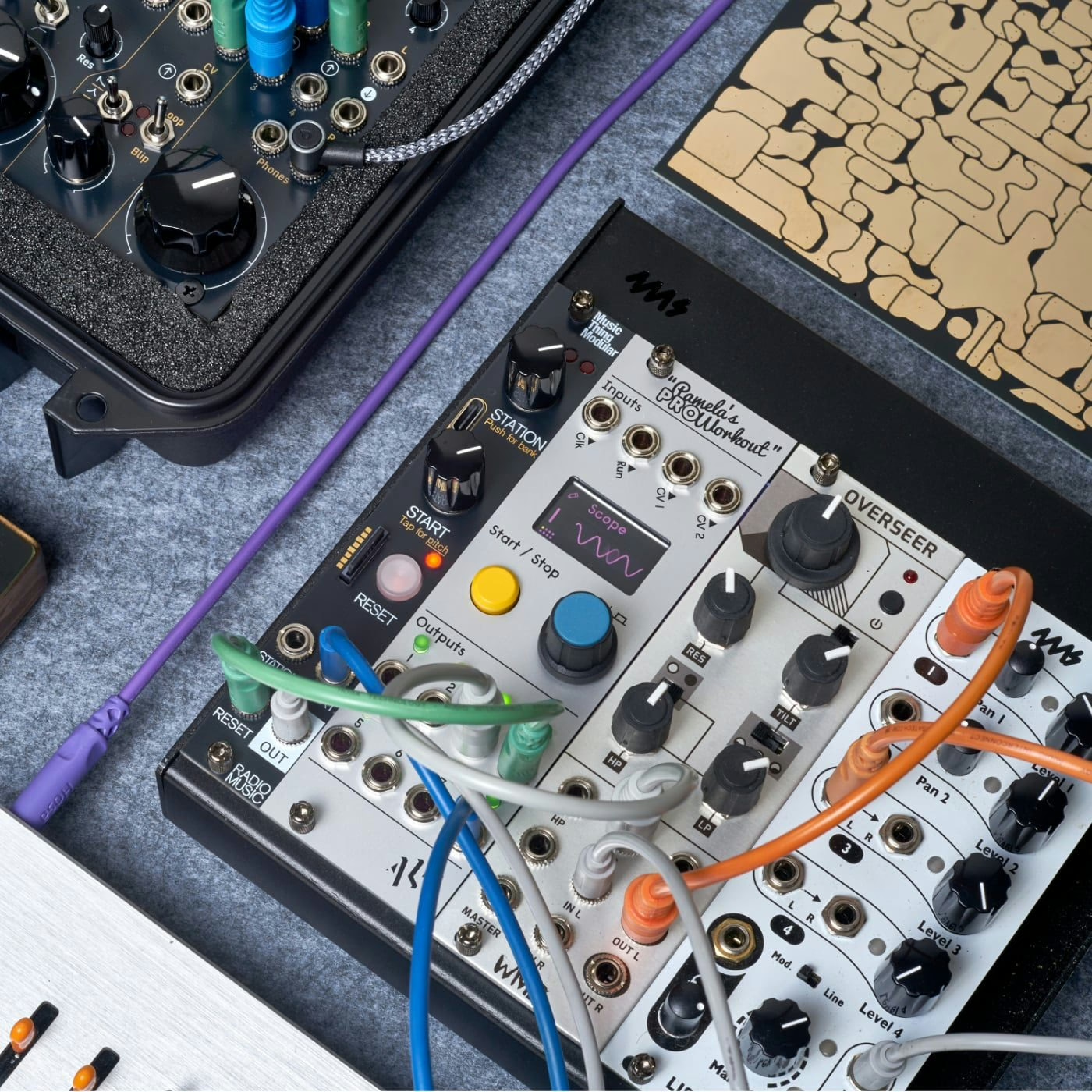
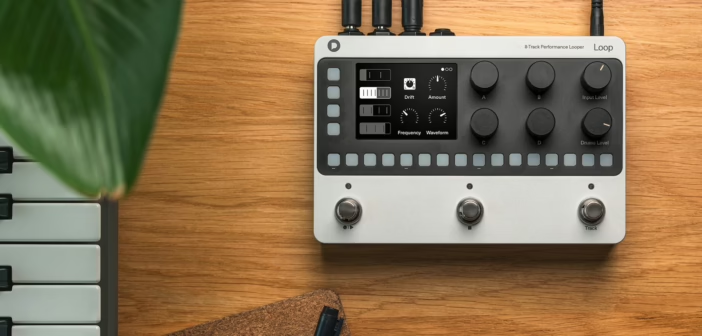
In a modular world awash with sample players, the Radio Music keeps a spot of its own: the playful, slightly unpredictable module you keep for surprise rather than precision. If you want a fuller idea machine, the Polyend Loop plays in another league; on the eurorack side, the Shakmat Lancer’s Lash and the Elektron Outbox 8 show how alive the small format still is.
My take
It’s a smart move: keep a cult module exactly as people love it and only touch what genuinely fell short — the noise and the responsiveness. The jump to the RP2040 isn’t a gimmick; it answers the one serious criticism of the first Radio Music. Everything else — the chance-radio feel, the microSD card you fill with your own finds, the free firmware — is intact, and that’s for the best. At £115 as a kit, it’s also a lovely way into eurorack soldering. The rest is taste: this module rewards those happy to loosen their grip. If you want sample-accurate control, look elsewhere; if you like being surprised by your own system, it’s hard to beat.