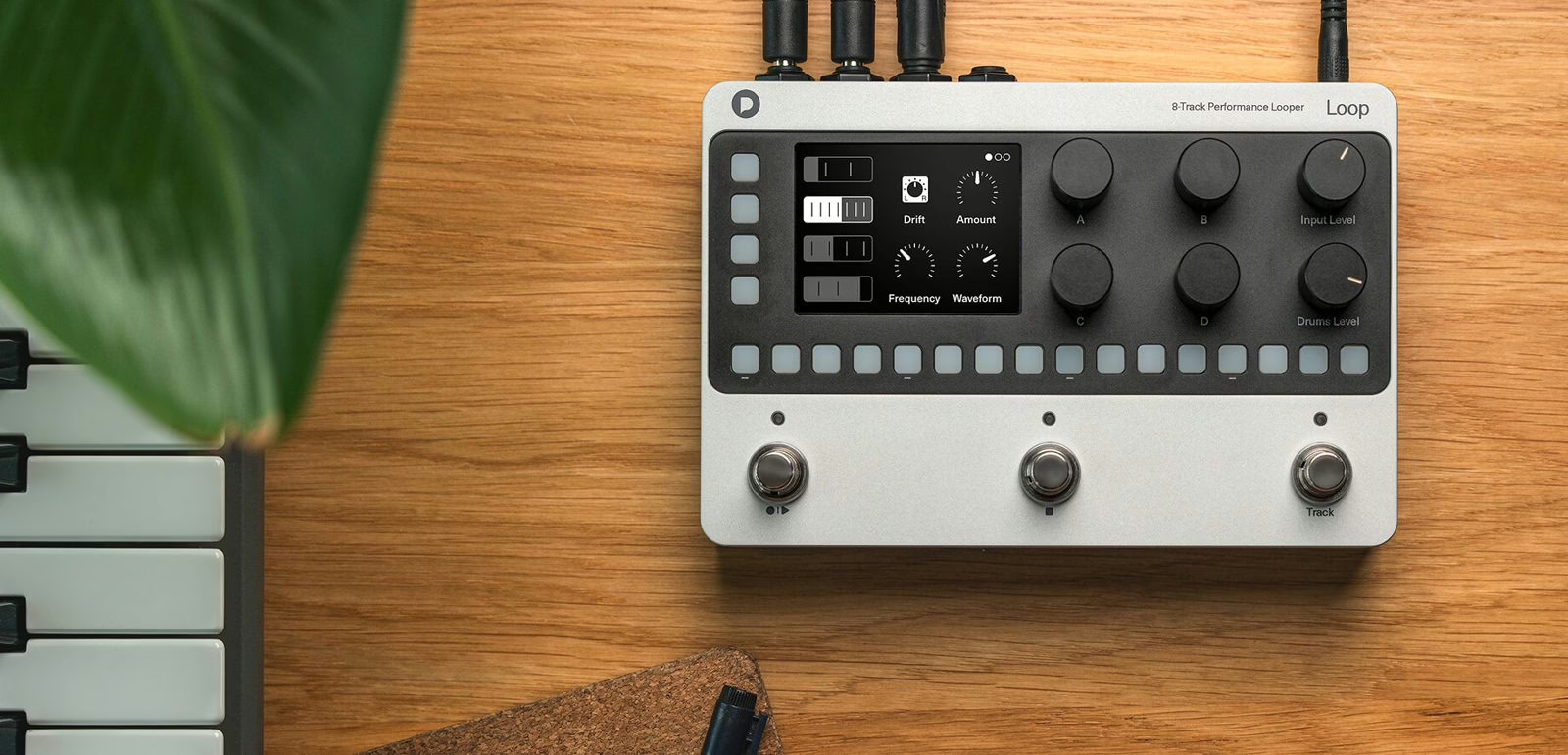
Polyend has unveiled the Loop, a compact instrument that pairs four stereo loopers, a drum machine and more than a hundred effects. Shown at Guitar Summit 2026, it is up for pre-order at $599 and ships in October.
Polyend has a habit of building machines that refuse to sit in a box. The Loop is no exception: neither a classic looper pedal nor a full-blown groovebox, it bills itself as an “idea machine” made to catch a spark before it fades. The bet is clear: give you just enough to build a track, without the intimidating depth of a full sequencer.
Four loopers, a drum machine and effects to spare
At the centre are four independent loop tracks, each mono or stereo, with a maximum of 52 seconds per track. You record on the fly through the stereo input, or load prepared loops from a microSD card. Each track locks to tempo — internal or via MIDI — or runs free, with forward, reverse and ping-pong playback to twist the material.
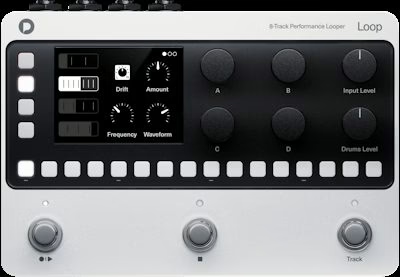
Alongside the loopers, a four-track drum machine provides the backbone. Polyend quotes more than 350 rhythm patterns, over 500 drum kits and more than 180 audio loops, all programmable straight from the hardware with no computer screen. A multi-FX processor then carries over a hundred effects to colour, mangle or spread the tracks. The whole thing takes instrument and line sources, plus a dynamic microphone.
Who it is for, and how much
Polyend aims wide: guitarists, songwriters and electronic musicians. That fits an object sitting halfway between a stage pedal and a writing instrument. The Loop is up for pre-order at $599, with shipping slated for October 2026 — pricing that puts it against compact grooveboxes rather than simple pedalboard loopers.
In that spirit, it extends a lineage we follow closely: the Teenage Engineering EP-40 Riddim, the 1010music blackbox 2 and the Dirtywave M8 tracker all work this portable idea-factory ground. The Loop adds its own twist: constraint as a creative engine. Polyend lists the full specs on its product page.
My take
The Loop owns its limits, and that is exactly what makes it interesting. Four 52-second tracks, a drum machine and effects: enough to lay down a whole idea, too little to get lost. That deliberate frugality is an antidote to the blank page, and it suits the target crowd, from the guitarist stacking layers to the producer after a quick sketch. The feel of the effects and the screenless workflow are the open questions, but the concept is smart. At $599 it has to win out over fuller grooveboxes — its promise of spontaneity might be enough.