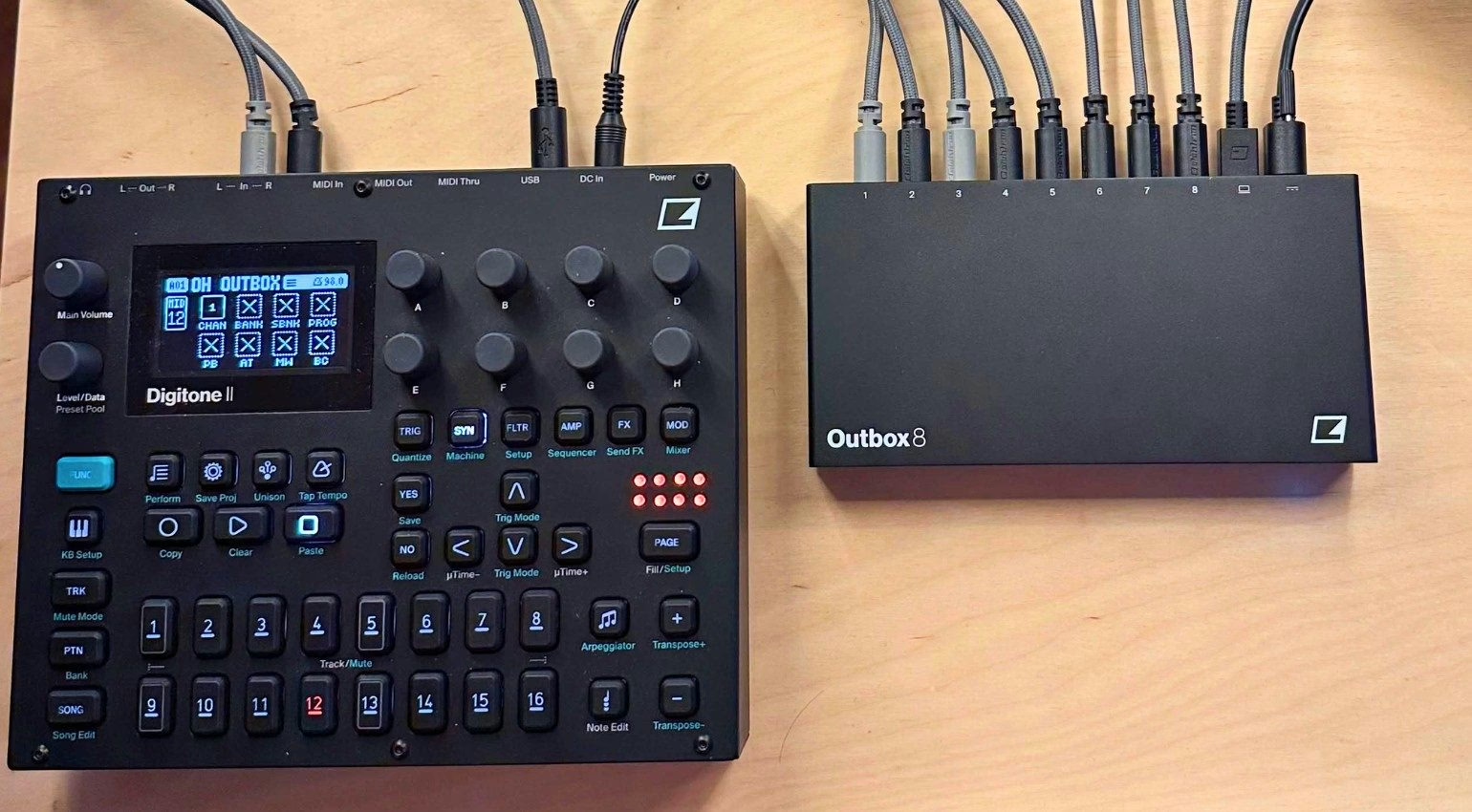
For years, Digitakt and Digitone owners have hit the same wall: everything leaves the box through a single stereo pair. Tracks, voices and drum channels are summed long before they reach the console or interface. Elektron finally tackles the problem with the Outbox 8, an unassuming black box that adds eight individual outputs to nearly its entire lineup, and it is available now.
Eight outputs, audio or CV, no computer
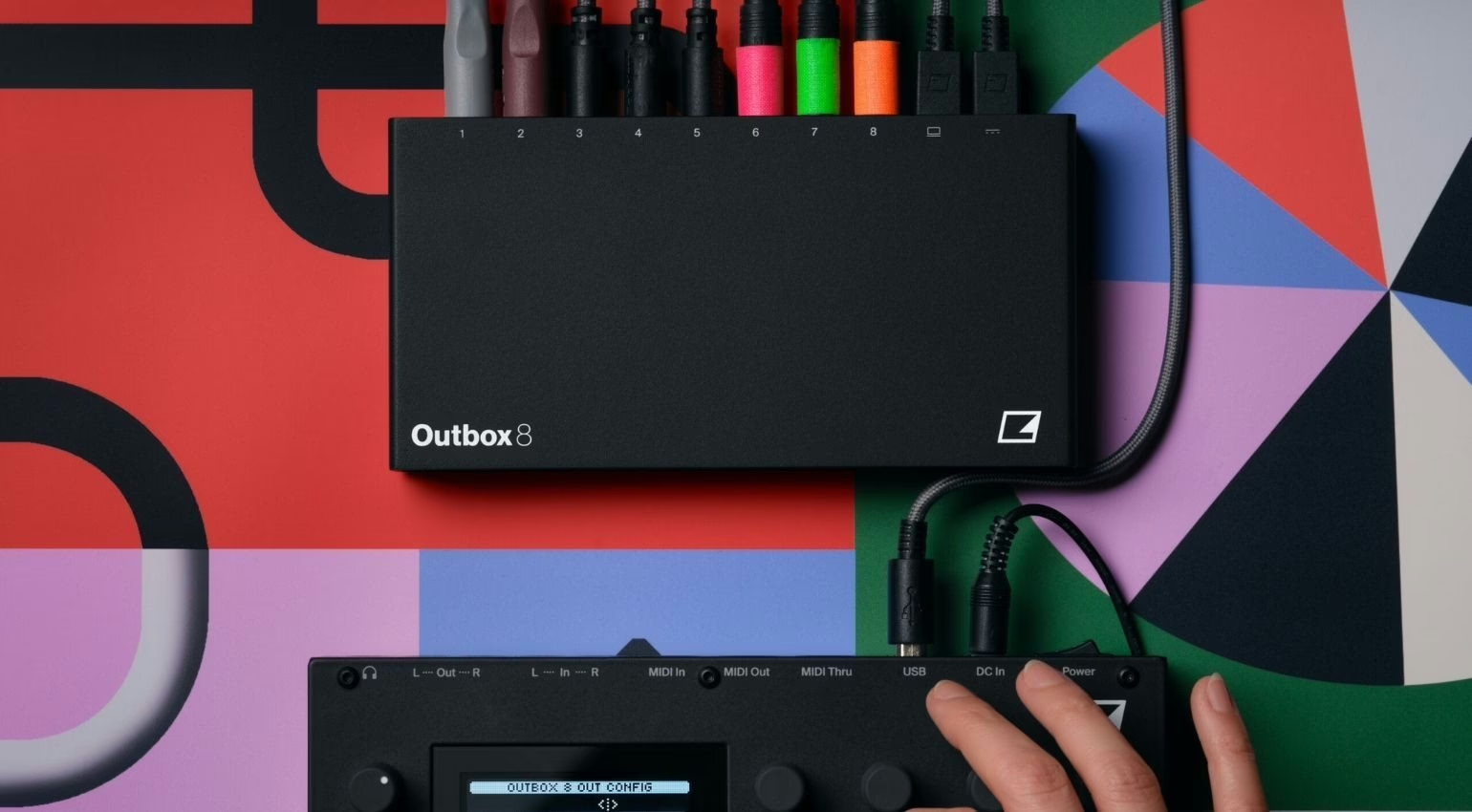
The Outbox 8 is a multi-output interface built around 48 kHz / 32-bit D/A converters. It offers eight 1/4-inch outputs that can be configured as eight mono channels or four stereo pairs. Each output is impedance-balanced and DC-coupled, which lets it carry audio as well as control voltage.
That is the clever part: every output is independently switchable to audio or CV, with a choice of behaviours covering V/oct pitch, Hz/V pitch, a linear value, a trigger, a gate or a clock. The voltage range reaches plus or minus 5 V, enough to drive a modular system or an analog synth straight from a groovebox sequence.
Overbridge, but in hardware
The key point is that it all runs over a single USB cable. The Outbox 8 uses the Overbridge protocol on the hardware side: where Overbridge previously required a computer to stream tracks out separately, this box does the job on its own. Plug in a Digitakt II, Digitone II, Syntakt, Analog Four, Analog Rytm or Tonverk and you get your tracks out individually, ready to process, mix and record on their own.
Compatibility is broad and spans both the first and second generations of the machines involved. The Octatrack, Monomachine and Machinedrum are recognised but do not support multi-output audio streaming: on those, the Outbox still works as a USB-MIDI-to-CV interface. Connection is over a USB-C port (USB 2.0 high-speed) that handles data and power via USB Power Delivery, with a second USB-C port available for power.
A bridge to the rest of the studio
The Outbox 8 is not limited to the Elektron ecosystem. It doubles as a standalone USB-MIDI-to-CV interface and accepts class-compliant devices: a computer, tablet or phone can use it to turn MIDI into control voltages. For anyone juggling a groovebox, a DAW and a wall of modular, it is the missing link that ties the three worlds together without stacking up converters. We laid out the fundamentals of MIDI and control voltage in our guide on getting synths, modular and computers to talk to each other.
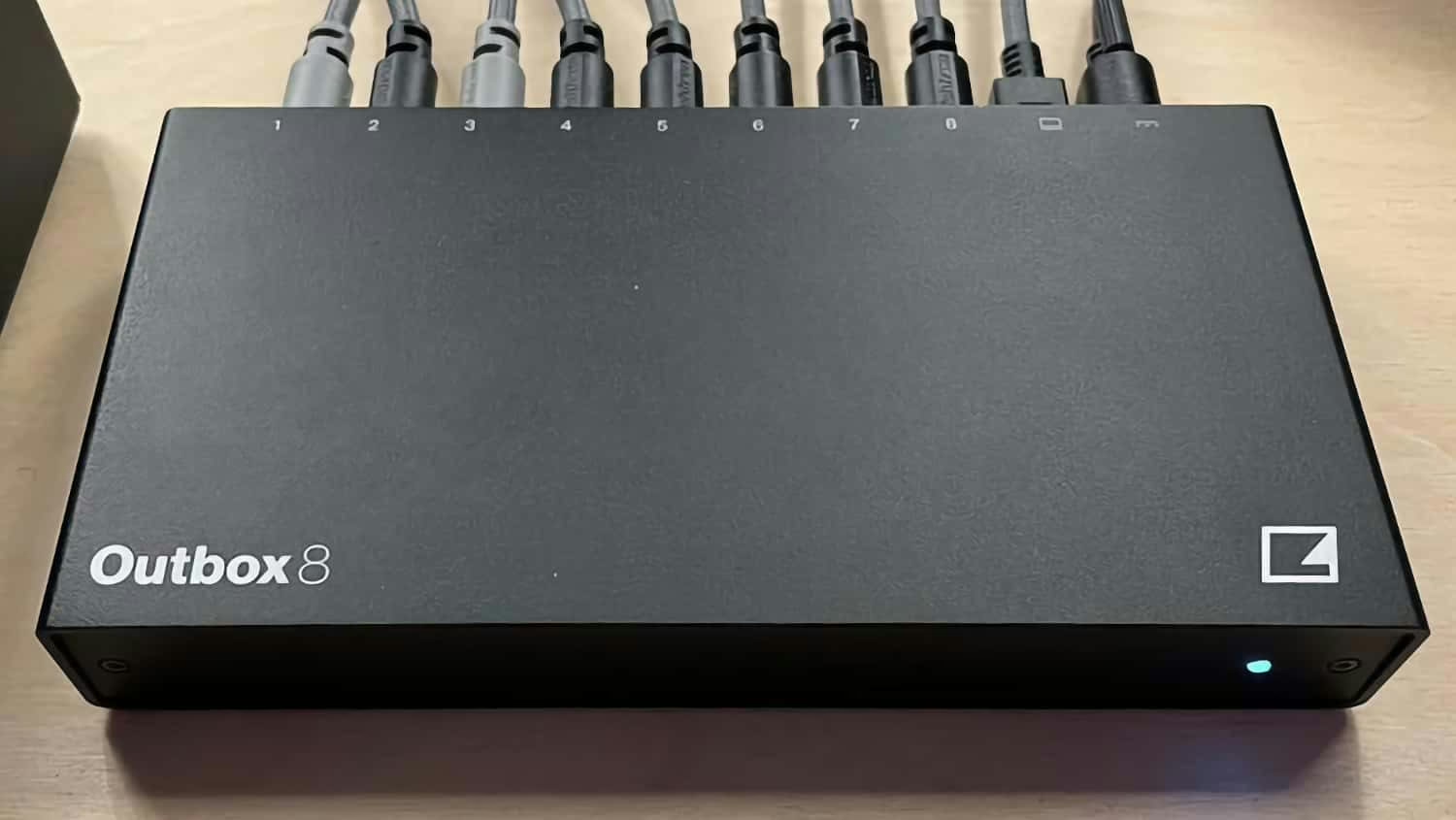
Pricing is set at 349 dollars / 299 euros, and the unit is already on sale through the usual retailers. At that price the Outbox looks like a sensible accessory for what it delivers: cleanly separating each track from a machine so you can mix, reverb or compress it individually transforms the way you finish a groovebox-based track.
Our take
Having lived through the shift from analog to computer-based music from the inside, I keep saying it: fully in-the-box production is entirely viable. But part of a Digitakt’s appeal is its immediacy, and being stuck with a summed stereo out wasted some of that as soon as you wanted to mix seriously. The Outbox 8 fixes exactly that, without forcing a computer session or adding latency. It is the kind of link that makes an audible difference: separating the tracks opens up individual processing, and that is where the gap between a demo and a mix is won. We would have liked more than eight outputs for bigger rigs, but for the format and the price, the proposition is spot on.
For more on the production side, see our coverage of the wider gear world and the manufacturer’s own Elektron product page.