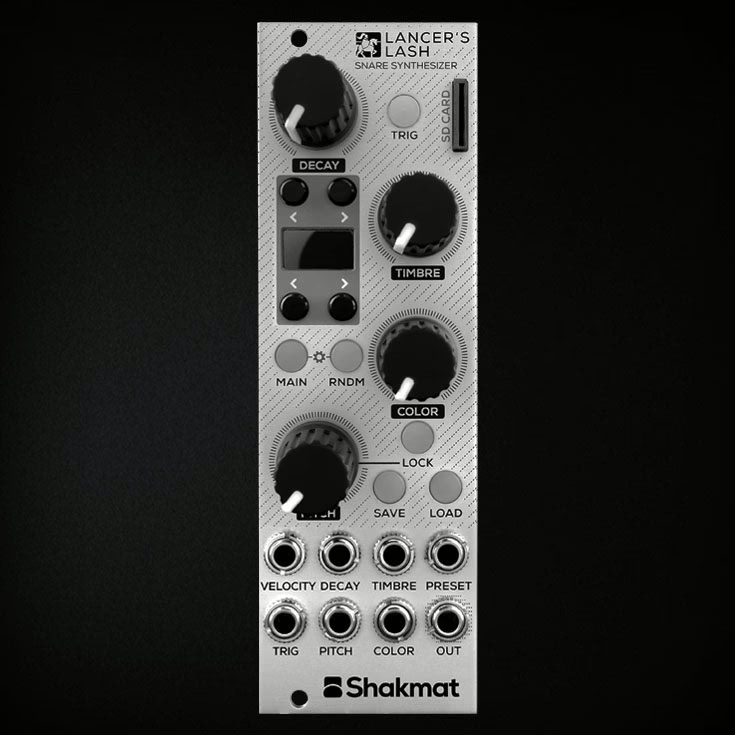
Belgian maker Shakmat is releasing, in September 2026, a module dedicated to a sound Eurorack rarely tackles head-on: the snare drum. The Lancer’s Lash fits in 8 HP, is skiff-friendly, and brings together seven different synthesis engines with a consistent control logic across them all. Enough to cover the classic electronic snare through to the strangest percussion, without changing your reflexes.
Seven engines, one interface
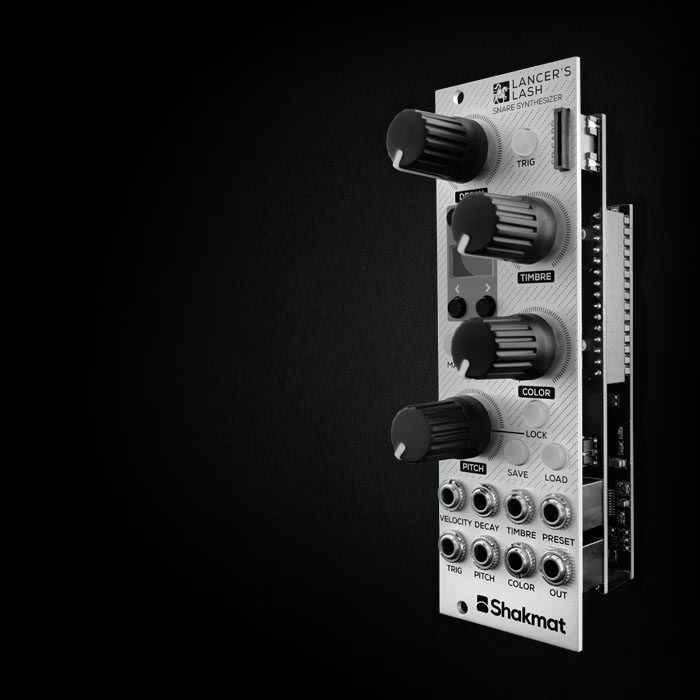
That is the module’s core idea: seven synthesis models — Analog, Slap, Modal, Physical, FM, Granular and Blend — but controls that stay put. Pitch and Decay handle tuning and length, Timbre and Color shape the ingredients of the selected engine. You move from an analogue snare to a modal metallic hit or a noisy granular texture while keeping the same four knobs under your fingers. For a stage or studio instrument, that consistency is priceless: you sculpt by feel, not by menu.
Everything modulates, everything saves
The Lancer’s Lash offers CV control over all the core parameters — velocity, decay, timbre, preset selection, color and pitch — plus a trigger input and a main output. It has 256 slots of non-volatile internal memory to recall your sounds, and a microSD slot for firmware updates and preset management. A randomiser, adjustable per destination, adds hit-to-hit variation: keep the pitch steady while decay and noise drift slightly, or let the machine switch synthesis model altogether.
The Lancer’s Lash at a glance
| Feature | Detail |
|---|---|
| Format | Eurorack 8 HP, skiff-friendly |
| Engines | Analog, Slap, Modal, Physical, FM, Granular, Blend |
| Controls | Pitch, Decay, Timbre, Color (consistent) |
| Modulation | CV on all parameters, per-destination randomiser |
| Memory | 256 slots, microSD slot |
One more block in the Shakmat system
The module sits within Shakmat’s percussion-synthesis range, known for an approach that is both musical and playful. Packing seven engines into 8 HP is also a footprint decision: the snare does not eat half a rack, which matters when you assemble a full modular drum kit. The randomiser, often a gimmick elsewhere, makes real sense on a snare — the element where the ear spots mechanical repetition fastest.
My take
Dedicating a whole module to the snare is an admission that it is the hardest element to keep alive in a drum machine. Seven engines under four knobs is the right balance of depth and playability: you explore without getting lost. The per-destination randomiser is the real find, because a snare that is too regular gives the machine away instantly. It remains to be heard against a simpler dedicated snare module, but the multi-engine approach in 8 HP is ambitious and well judged. For anyone building a modular kit, it is a potential centrepiece.
Related reading: the Doepfer A-198-2 and the Arturia MiniFreak 5.0 update. Product page: Shakmat Lancer’s Lash.
Frequently asked questions
How much rack space does the Lancer’s Lash take?
The module takes 8 HP and is skiff-friendly, so it fits even a shallow case. That is a small footprint for a module that brings together seven synthesis engines.
Can you recall your own sounds?
Yes. A 256-slot non-volatile internal memory stores and recalls your settings. A microSD slot handles firmware updates and preset backup.
What is the randomiser for?
It adds hit-to-hit variation, with an amount you can set per destination. You can keep the pitch steady while decay or noise moves, or let the module change synthesis model.
Does the module accept CV control?
Yes. It offers CV control over all key parameters — velocity, decay, timbre, preset selection, color and pitch — plus a trigger input and a main output.