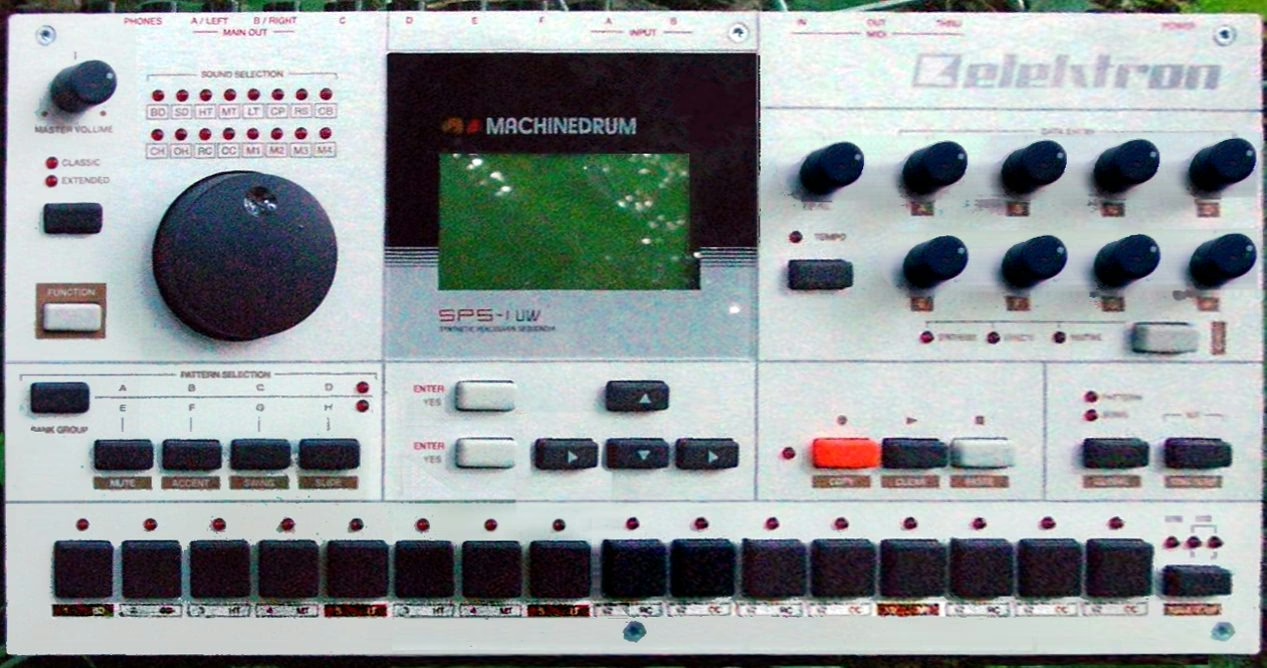
Here is a revival few saw coming. Elektron’s Monomachine and Machinedrum, two cult boxes that long fetched steep prices on the used market, now exist as free, open-source plugins. The project comes from Berlin-based developer Joe Landers, built on a fork of Gearmulator, the open emulation engine started by The Usual Suspects. Both instruments run as VST3 and standalone apps, on macOS (Apple Silicon and Intel) and Windows.
Two engines unlike anything else in Elektron’s history
For anyone who missed the episode, a reminder is in order. The Monomachine (2004-2016) was a per-voice monophonic synth-sequencer with a grab-bag of digital engines: a SID-chip voice, a DX-style FM engine, a virtual-analogue SuperWave and the DigiPro engine. The Machinedrum was a drum machine-synthesizer whose every track could switch between synthesis families: TRX in the Roland vein, EFM for percussive FM, E12 for sample playback and PI for physical modelling. Two machines that sounded like nothing else, whose dry, metallic grain marked a whole electronic scene.
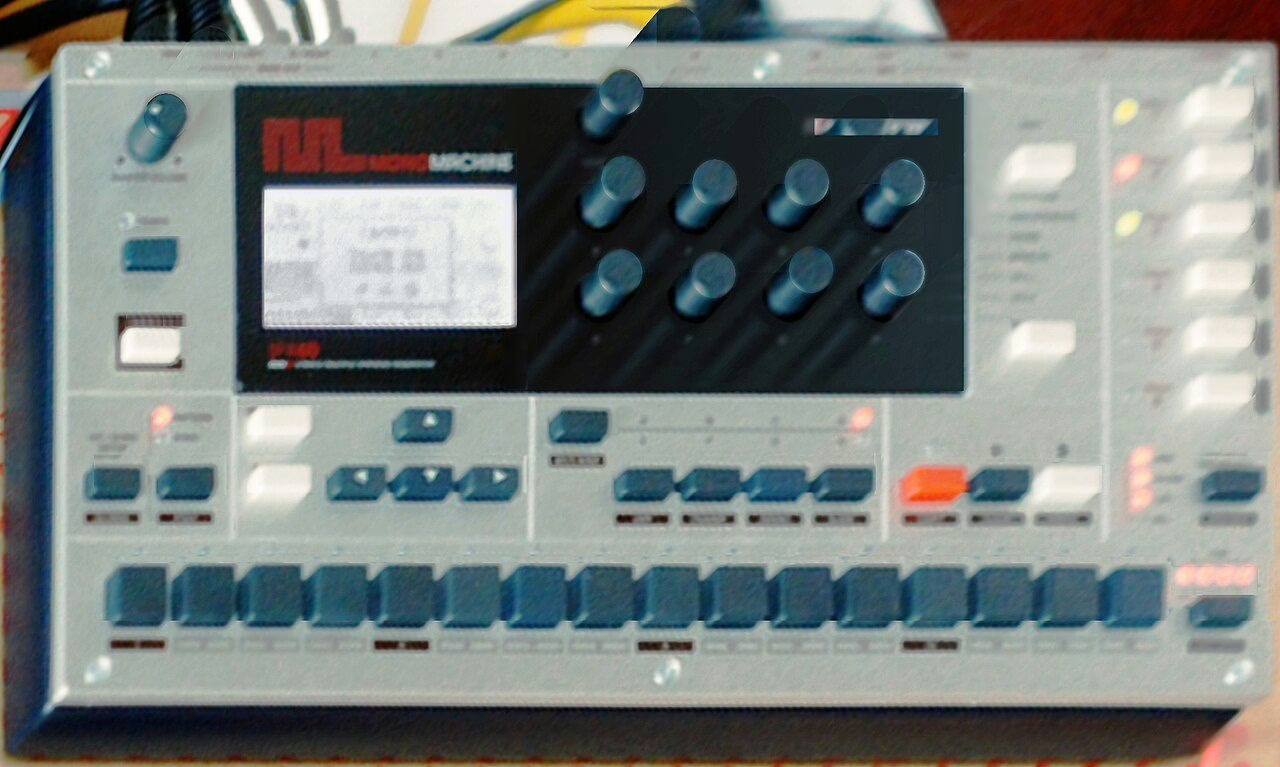
The emulation does more than reproduce the sounds: it recreates the original UIs, the encoder behaviour, the key-chording and, above all, the famous parameter locks — that Elektron signature that lets you lock a different value per sequencer step. That is exactly what gives these machines their groove, and our article on the step sequencer explains why that detail changes everything. On the Machinedrum side, the E12 engine revisits sample playback, a good reason to reread our sampling explainer from another angle.
What these plugins really reproduce
Technically, the work is serious. Each instrument builds on an emulation of the Motorola DSP56303 chips that powered the original hardware, two DSPs per machine. The features that made these boxes special are present:
- SysEx file send, to bring back your existing patterns and kits.
- Routing host audio into the machines’ input, to process an external signal through their effects or sampler.
- Multi-output in VST3, to split tracks across several DAW returns.
In other words, this is not a simple resampling of presets but an attempt to bring back the full workflow. For those who still own the hardware, the idea of a software bridge echoes Elektron’s own opening move with the Outbox 8, which multiplies the outputs of the physical machines.
Free and open, but still in alpha
Two caveats, stated plainly. First, the project requires the original ROM files to run: no firmware, no sound. That is the classic trade-off of a faithful emulation rather than a rewrite from scratch, and it raises a legality question depending on how you source those ROMs. Second, the developer makes no secret that the whole thing is in early alpha: CPU usage is high, especially on older machines. The good news is that more contributors have joined, which bodes well for optimisation. Binaries are distributed for free on the project’s GitHub repo, gearmulator-md-mm.
My take
Hard not to grin at these two coming back to life for nothing. The Machinedrum remains one of the most characterful drum machines ever built, and the Monomachine an oddity no “modern” plugin has truly replaced. The ROM dependency and alpha status call for patience: this is not yet the tool you open in a session under pressure. But to explore a grain you will not find anywhere else, or to revive old SysEx patterns, it is a lovely deal. Whether Elektron lets a project that hands its classics to everyone flourish is another matter.