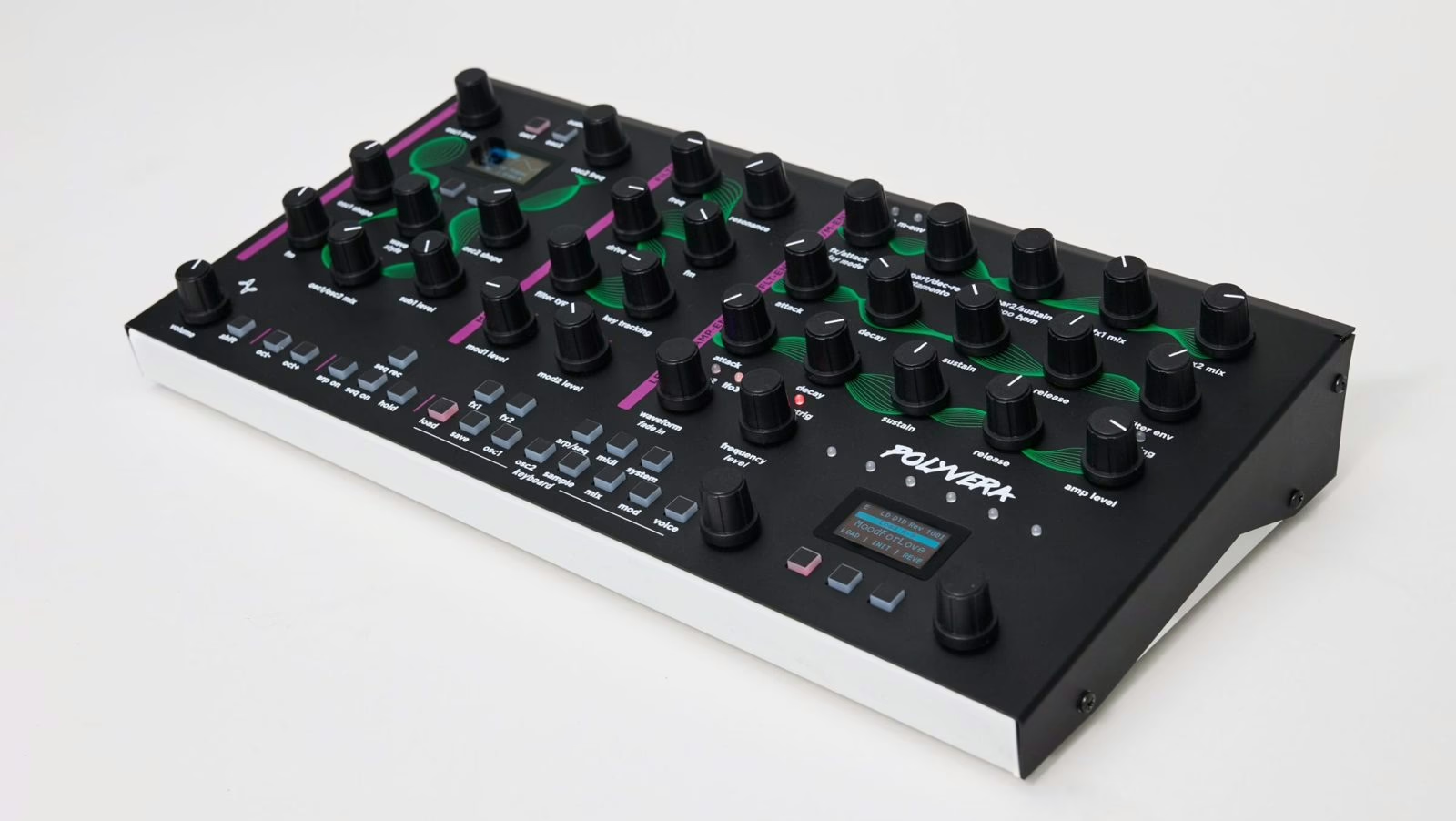
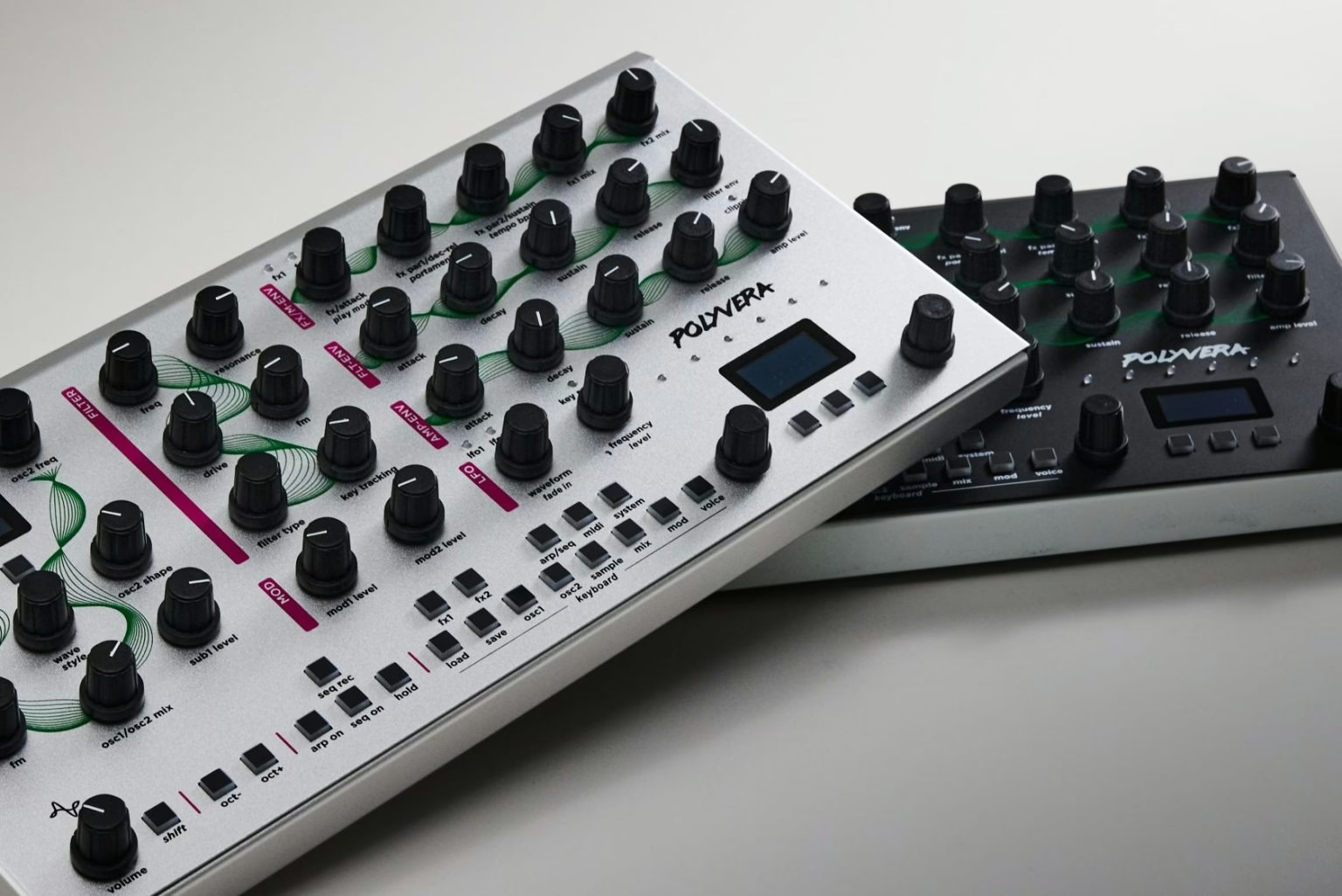
Some instruments try to erase the digital; others make it their raw material. The Suonobuono Polyvera plainly belongs to the second camp. The first synthesizer from a tiny maker, billed as the result of four years’ work, this six-voice hybrid poly commits to an against-the-grain idea: revive the gritty character of the earliest digital oscillators and samplers of the early 80s, then run it through real analog filters.
Early-80s digital grit as a starting point
In the early 1980s, the first affordable wavetable oscillators and samplers forced hard trade-offs in memory and processing power. Those constraints produced an artificial timbre, rich in alias and artefacts, that became the signature of the era’s digital electronic sound — only to fade by the end of the decade as technology smoothed away defects that had, musically, become less interesting. The Polyvera’s two oscillators recreate exactly those artefacts, modelled on some of the most iconic wavetable synths and samplers of the early 80s. You can switch from a clean, modern oscillator to various vintage models, right down to deliberately modded versions of period machines.
An analog heart
The real secret of those early digital machines is that they leaned on analog filters, which did much of the work in making them sound beautiful and punchy. The Polyvera picks up that logic with eight analog filter types built around a classic synth filter chip. The filters overdrive, self-oscillate and take frequency modulation, offering everything from classic analog tones to the frankly experimental. The lowpass can even be paired with an analog distortion stage placed after the filter. That pairing — vintage-flavoured digital oscillators and warm analog filters — is what gives the instrument its personality.
Sampler, modulation and effects
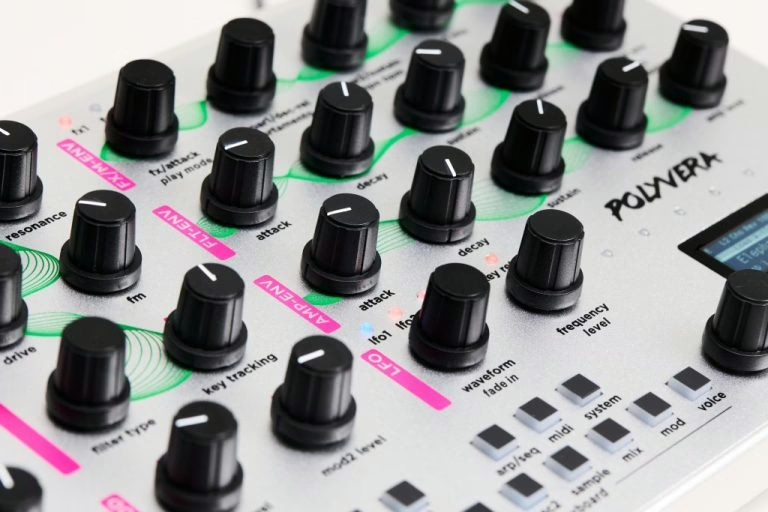
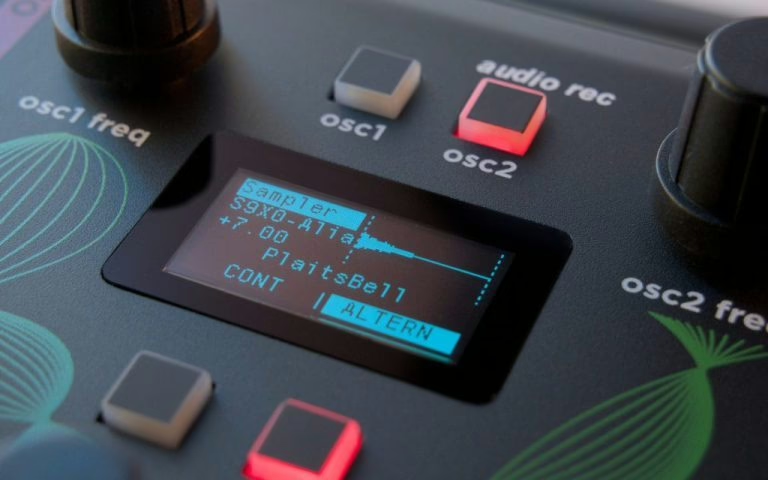
The Polyvera isn’t only a synth: its oscillators can also play samples, and the machine samples straight through its audio inputs, with around sixty seconds of memory on hand. For shaping the sound there’s an eight-slot modulation matrix, three LFOs and a loopable multimode envelope, plus two effects sections — chorus, delay and phaser on one side, several reverb types on the other. It’s all driven from a panel packed with thirty-six pots and encoders and two OLED displays, a resolutely hands-on layout that keeps you on the controls rather than buried in menus.
Editions and availability
The Polyvera comes in two finishes, Silver and Black, at around EUR 1,199 ex VAT (USD 1,499), with an optional pair of 19-inch rack ears for the black version. It’s a boutique build whose firmware keeps evolving month to month — worth remembering: you’re buying a living machine here, not a frozen product. If these oscillators are new to you, a detour through the basics of wavetable synthesis makes the whole thing click.
The bottom line
I lived through the first wave of digital samplers, and I can attest to one thing: their grit was never an aesthetic choice, it was a constraint we put up with for lack of memory and resolution. Watching a young maker take that grit as a starting point today, analog filters in hand, speaks to me far more than yet another Minimoog clone. The Polyvera isn’t trying to remake a classic; it makes an era sound its own way. Against other boutique polys like the Cherry Audio Memorymode 2 or Sweden’s Analog Sweden SWEN2, it stakes out ground of its own.
Frequently asked questions
Is the Polyvera digital or analog?
It’s hybrid. Its two oscillators are digital — wavetable or sampler — but the signal then passes through multimode analog filters. That meeting of the two worlds is exactly what defines its character.
Can you sample your own sounds?
Yes. The Polyvera samples straight through its audio inputs, with about sixty seconds of memory, and its oscillators can then replay those samples the way they would read a wavetable.
How many voices of polyphony does it have?
Six. That’s modest on paper, but in keeping with the instrument’s spirit, which is built for sound design and expressive playing rather than massive pads.
Is there a rack version?
There’s no dedicated rackmount version, but the Black edition can take optional 19-inch rack ears to fit it into a flight case or studio furniture.
What does it cost and in which finishes?
The Polyvera is priced at around EUR 1,199 ex VAT in Silver and Black finishes. Its firmware is updated regularly, adding features over time.