Putting a PA together often starts with one simple question: active or passive speakers? Behind that choice sit very concrete consequences for anyone who carries, cables and maintains a rig. Both families amplify the same sound, but they do not put the amplifier in the same place, and everything follows from that.
Two ways to place the amplifier
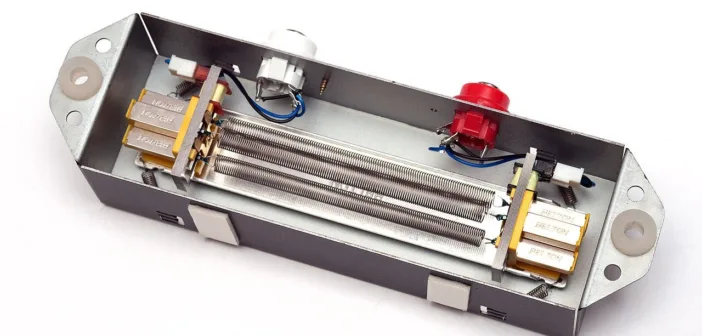
A passive speaker holds only drivers and a passive crossover, which splits the frequencies between low and high. It needs an external amplifier, usually rack-mounted, connected by speaker cable that carries a high-power signal. This is the historic PA architecture, and it remains the rule on large systems.
An active, or powered, speaker builds its amplification into the cabinet. It generally carries an active crossover and digital processing, then one or more amps tailored to its drivers. You send it a simple line-level signal and it handles the rest. In return, it needs a mains outlet nearby.
What the active speaker brings
Integration brings real coherence. The amp is matched to the driver by the maker, digital processing protects the transducers with a limiter, and presets correct the response. You handle fewer links, cabling is line level, lighter and less prone to loss, and the whole thing deploys fast. For a mobile provider, a DJ or a corporate event, that plug-and-play feel saves precious time, and the result stays consistent from one date to the next.
The trade-off shows up on the ground. Each speaker weighs more, since it carries its amp, and you have to bring mains up to the top of every pole. An amplifier fault takes the whole box out, where a central rack is fixed by swapping a unit. And you lose the freedom to choose the power applied to each way yourself.
What the passive speaker brings
Passive shines as soon as the system grows. The speaker stays lighter and easier to handle, the amplifiers gather in a rack that is easy to watch and replace, and you keep control over the amp choice and its settings. No mains runs up high, which simplifies rigging and makes flown systems safer. For a fixed install or a big tour, that central amplification is a real operating comfort.
In exchange, you need to know how to match the amp and the speaker: respect the impedance, aim for an amp power above the program power to keep headroom, and watch the speaker cable runs, where loss lurks. Nothing insurmountable, but a skill in its own right.
| Active speaker | Passive speaker | |
|---|---|---|
| Amplifier | Built in, matched to the box | External, operator’s choice |
| Cabling | Line level, light | Speaker cable, high power |
| Speaker weight | Heavier | Lighter |
| Mains | At every speaker | At the amp rack only |
| Maintenance | Fault = whole box | Central rack, quick swap |
| Best ground | Mobile, small and medium format | Large systems, flown, install |
How to choose by context
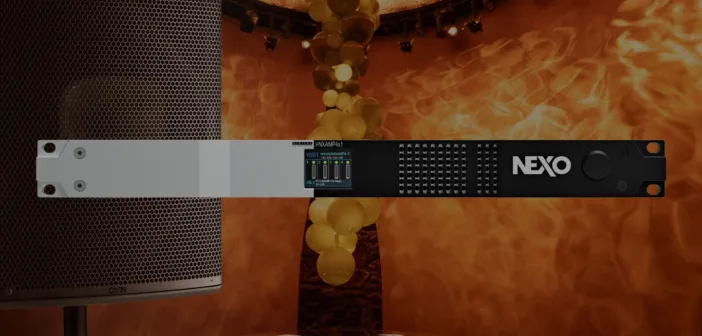
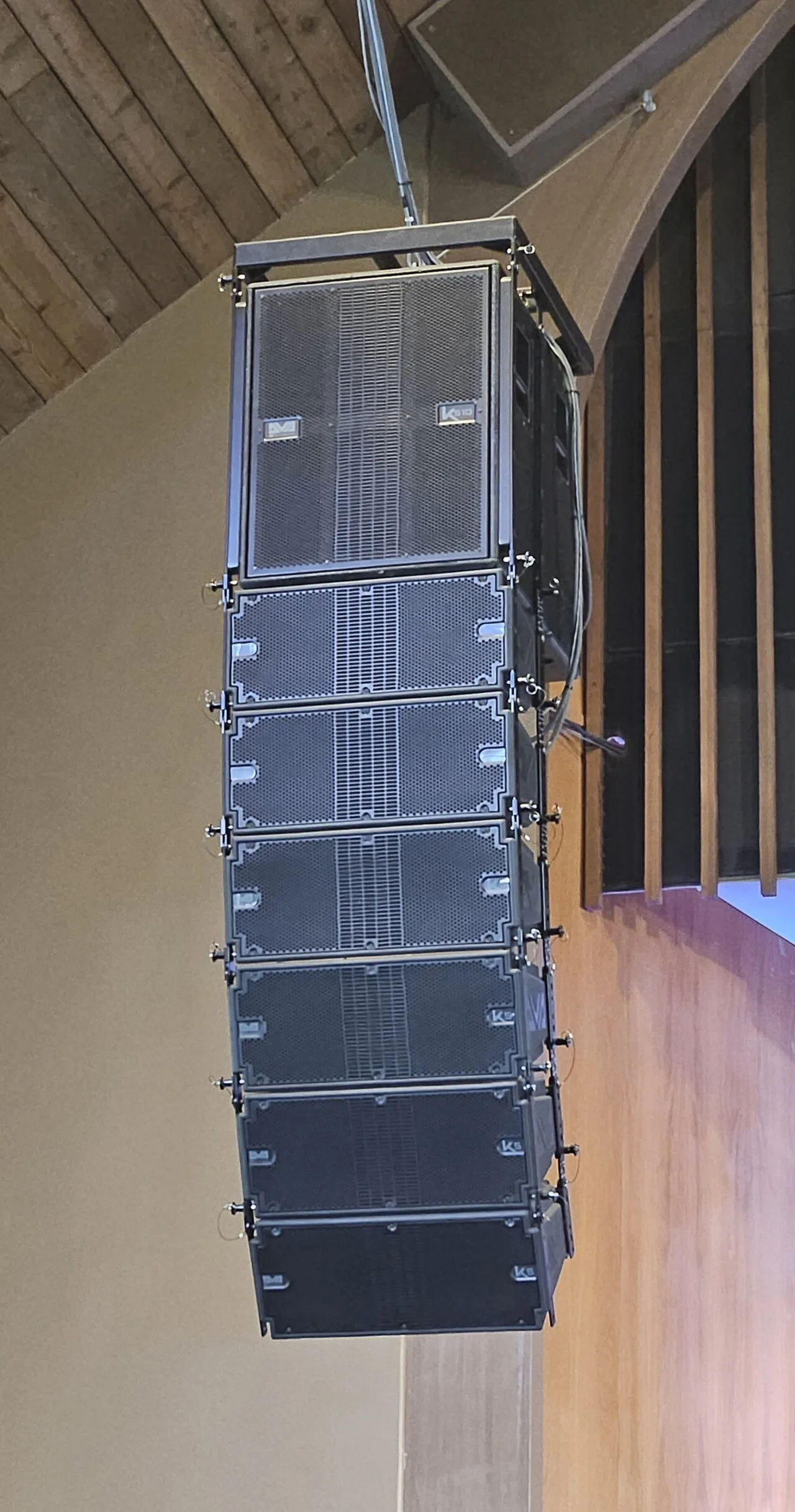
For a small or medium format carried by one or two people, active ticks almost every box: fast to deploy, consistent, no rack to manage. As soon as you aim for a large system, a flown line array or a permanent install, passive driven by amplifier-processors takes the lead again, because it centralises amplification and lightens the flown boxes. Many modern line arrays are in fact passive, fed by dedicated amplifier-processors that handle presets, bi-amplification and protection.
A few pointers before you buy
- With passive, aim for an amplifier delivering about one and a half to two times the speaker’s program power, and check the line impedance.
- With active, take care of the signal feed: a balanced line-level connection avoids hiss and loss over long runs.
- In both cases, good upstream processing protects the drivers; with passive it lives in the amplifier-processor, with active in the cabinet.
- Never under-power a passive speaker: a weak amp that clips damages the highs more surely than a powerful one that is driven well.
My take
There is no camp to defend, only a use to serve. To get out fast and well on mobile formats, active has everything going for it, and the quality of today’s powered boxes makes the old debate moot. As soon as the system grows or goes up in the air, central amplification in passive becomes unbeatable for operation. The right instinct is to start from the job, the weight to carry and the person who will troubleshoot at three in the morning, then pick the architecture that makes their life easier.