You have heard it a thousand times without always naming it: that metallic, slightly liquid bounce that leaps out when you hit a surf guitar string, or the halo that wraps a dub vocal. It is the signature of spring reverb, a mechanical process nearly a century old, still alive in amps, pedals and, as an emulation, in our workstations. The idea fits in one sentence: send the sound travelling through springs.
The principle, a travelling vibration
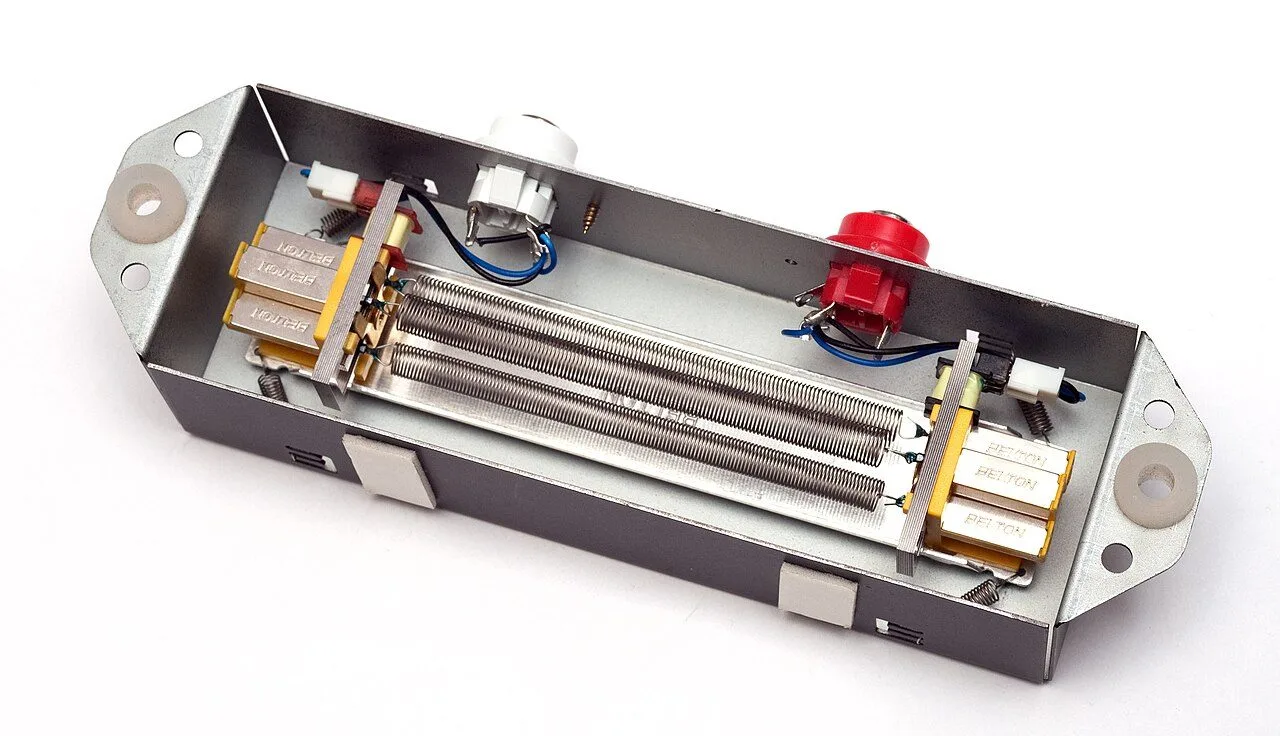
A spring reverb is built around a small metal box, often called a tank, holding one or more springs stretched between two transducers. At the input, a drive transducer, close to a tiny loudspeaker, turns the electrical signal into mechanical vibration and passes it to the spring. That vibration travels along the spring at a finite speed, far slower to the ear than sound in air, bounces at the far end, comes back and sets off again. At the output, a second transducer, working like a microphone, turns those round trips back into an electrical signal. You then mix this reverberated signal with the dry sound.
The magic comes from dispersion: in a spring, highs and lows do not travel at quite the same speed. A sharp transient comes out smeared in time, with that characteristic glide engineers call the chirp. That gives the boing, the liquid drip and the tail, with none of the smooth decay of a plate reverb or a real room. Several springs of different lengths, mounted in parallel, thicken the result and tame the heavy resonance of a single spring.
A story that starts at the organ
The reverberating spring was not born in a studio. It owes its existence to Laurens Hammond, who in the 1930s and 1940s wanted to add depth to his electromechanical organs. The idea was patented, then it spread. In the 1960s, Fender put a spring tank into its amps, and a sound was born: Dick Dale’s surf guitar, reverb-soaked twangs, then a thousand rock records. Studios adopted outboard units, and Jamaica made it an instrument in its own right. King Tubby and the dub engineers literally shook the tank to draw out that metallic crash, the famous splash that punctuates the versions.
Because the spring has a flaw that became a signature: it is sensitive to shocks. Knock the furniture and the tank answers with a roll of thunder. Engineers turned that quirk into an effect, to the point that some period consoles offered a dedicated reverb chamber, isolated from vibration.
What a tank is made of
A reverb tank comes down to a few parts, but each one matters:
- The springs: their length, number and gauge set the length and density of the tail. A long spring gives a wide reverb, a short one a tighter effect.
- The transducers: the impedance of the input and output coils decides how the tank interfaces with the surrounding electronics. That is why you do not swap a tank at random.
- The housing: it isolates the springs from outside vibration and colours the result. Most tanks still made today descend from the models popularised under the Accutronics and Belton names.
The sound, and how to tame it
Spring reverb is not clean, and that is the whole point. It adds a metallic colour, a slightly grainy density, a resonance that sometimes sings on certain notes. On a vocal, it lays down an instant vintage mood; on a snare, it gives that 1960s studio slap; on a guitar, it is part of the basic vocabulary. In return, it can quickly become overbearing.
A few habits keep it musical. A high-pass filter on the reverb return stops the lows from turning everything to mud. A gentle low-pass softens the metallic sheen when it tires the ear. Dosing the mix sparingly lets the effect breathe, and an aux send lets you apply it to several sources without multiplying tanks. To see where it sits among the other families, the article on reverb types in the mix places each tool in context.
Today, from hardware to plugins
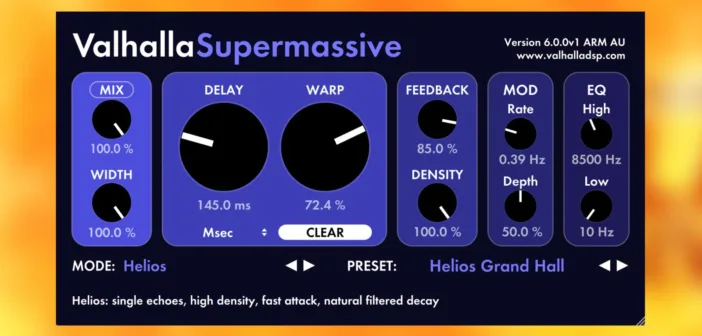
The spring tank has not gone away. You still find it in amps, pedals and modules, and it keeps a place in the studio for anyone who wants the real thing. Alongside, digital emulations have multiplied. The most convincing often go through convolution reverb, which captures the response of a real tank, or through a physical model of how the springs behave. High-end algorithmic reverbs, such as those in a Lexicon 480L, also offer spring-inspired programs. The result rarely matches a tank shaken live, but it gives a handy, maintenance-free send.
My take
The spring is still one of the most characterful reverbs there is, and that is exactly why we keep coming back to it. Where a fine plate vanishes into the mix, the spring stamps an era and an intent. In software it does the job and often sounds great; but the day you meet an old tank, take a moment to knock the furniture next to it. No preset really replaces that crash, and it tells the whole story of this object on its own.