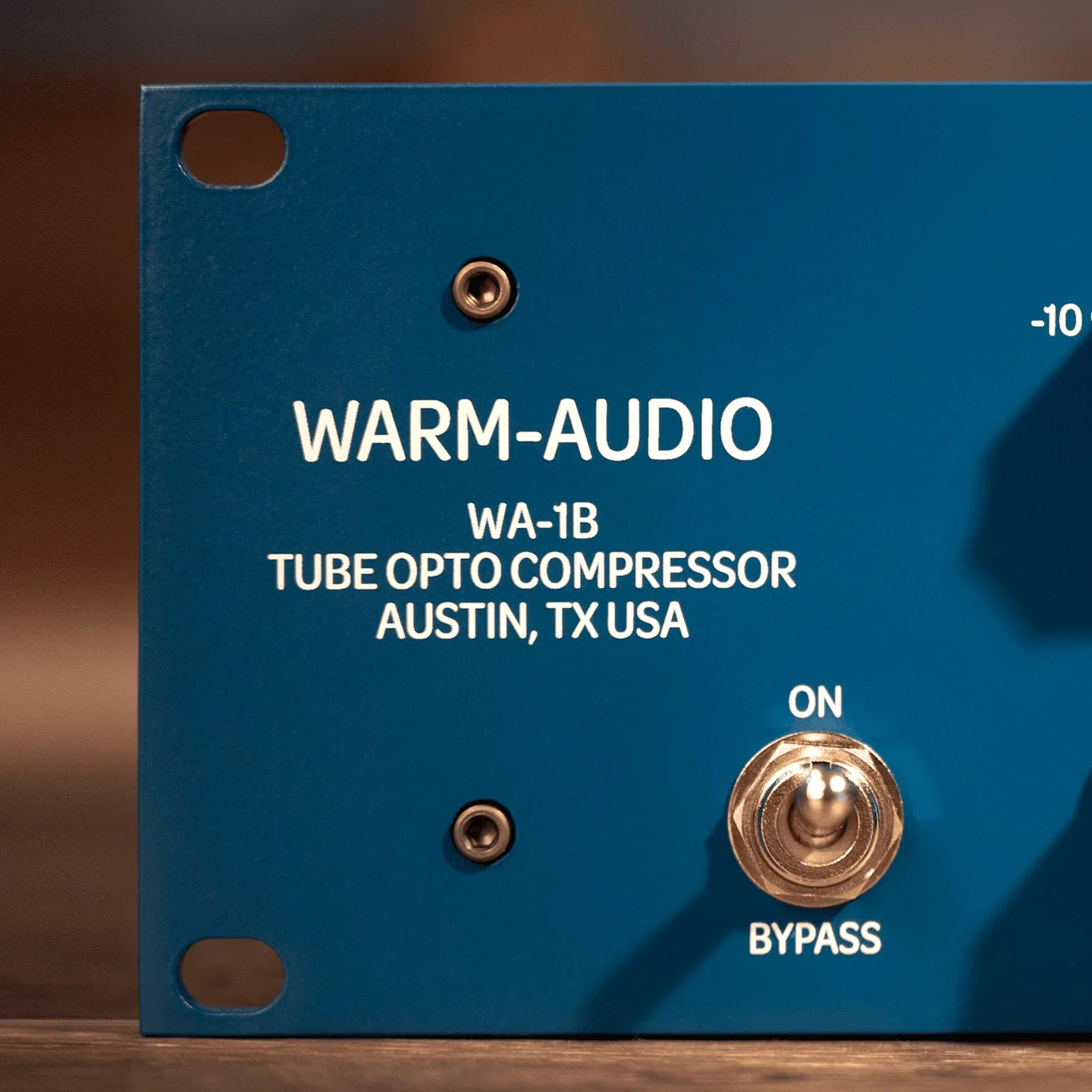
Warm Audio adds a centerpiece to its hardware compressor lineup with the WA-1B, an all-tube, transformer-balanced optical compressor that openly chases the sound of the legendary 1B-style tube opto. The Austin maker’s aim is familiar: deliver an affordable take on a pricey classic without cutting the parts that make the tone.
A tube opto in the 1B tradition
The WA-1B is a mono 2U compressor built around an optical cell and a tube gain stage. That’s the opto principle: smooth, program-dependent compression that catches the signal naturally rather than clamping it. Warm Audio claims the compression style of the original 1B — read the Tube-Tech CL 1B, the genre’s reference — and dresses it in premium parts.
Inside, there’s a Lundahl input transformer and a pair of tubes handling the gain, all on through-hole wiring. That build choice, obvious the moment you lift the lid, is central to the pitch: Warm Audio isn’t copying an interface, it’s reproducing the electrical behavior that gives the 1B its grain.
Classic controls, one detail that changes everything
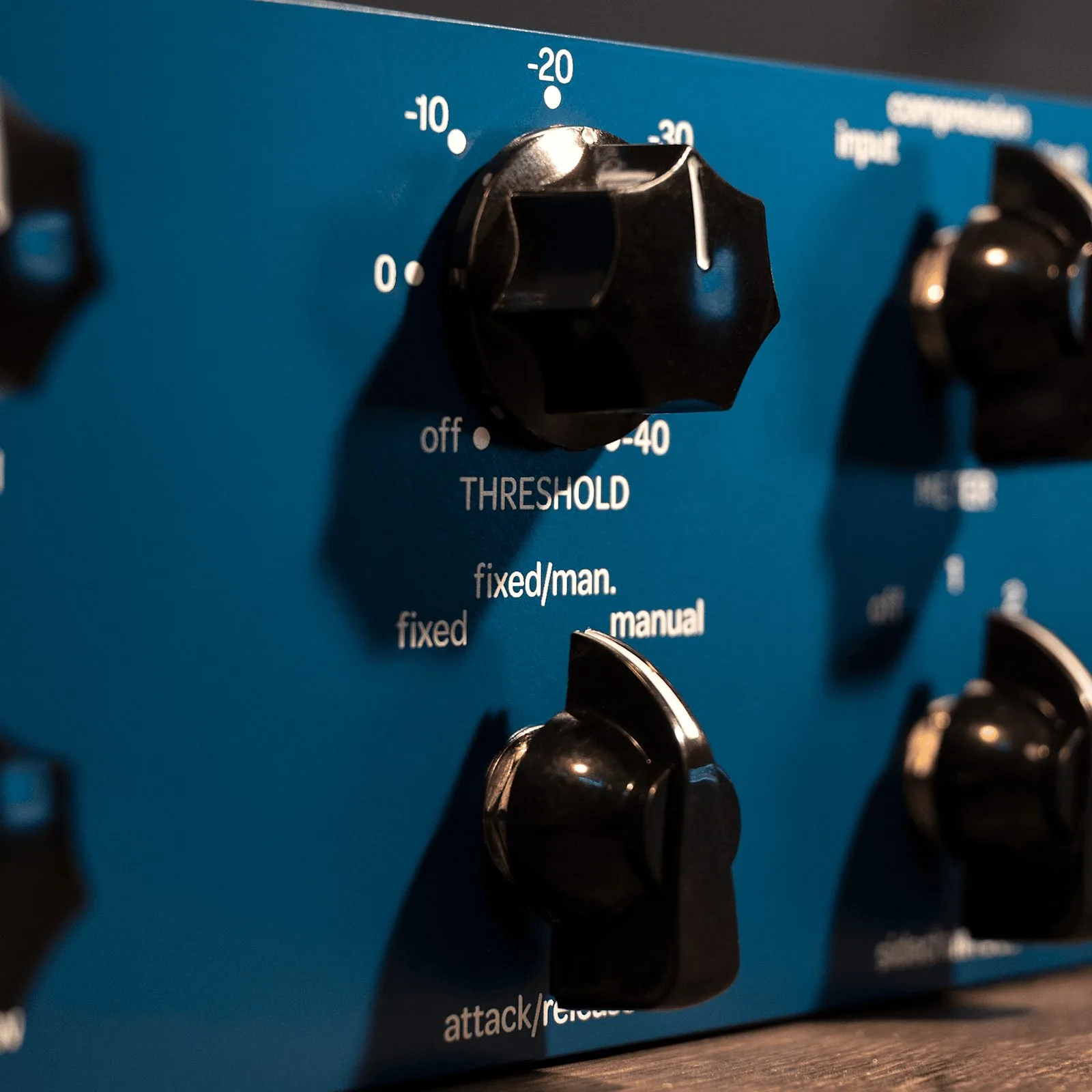
On the front panel, the vocabulary is what an engineer expects: Threshold, Ratio, Attack, Release and makeup gain, with a switch that flips attack and release between fixed and manual modes. Threshold runs down to -40, the ratio covers the usual opto range, and a dedicated control trims the meter reading. Nothing exotic — which is exactly what you want on this kind of box, where you set by ear more than by number.
The real quirk is elsewhere. A three-position sidechain bus selector (Off, Bus 1, Bus 2) chains up to ten WA-1B units on one detection line. In other words, several units can share their compression information and act together — a tool built for serious setups, where you stack stages or treat several channels in a coherent way.
| Spec | WA-1B |
|---|---|
| Type | Tube optical compressor, transformer-balanced, mono 2U |
| Controls | Threshold, Ratio, Attack, Release (fixed/manual), makeup gain, meter trim |
| Linking | 3-position sidechain bus, up to 10 units chained |
| Price | $1,299 MSRP |

Where it lands on the market
The WA-1B arrives in a suddenly crowded segment. The CL 1B sound now comes at every tier: the Behringer BE-1B attacks under $500, the original Tube-Tech sits at the top of the price ladder, and Warm Audio slots in the middle at $1,299, betting on Lundahl transformers and careful construction. For anyone who knows how a tube opto behaves — the way it sits a vocal or a bass without crushing it — the point isn’t the spec sheet but the real grain, and that’s where component quality costs and shows. We walked through the dynamics families in our compressor guides, and the tube opto in the vein of the LA-2A remains the touchstone for this color.
My take
The ten-unit sidechain bus is the idea that stands out. It’s the kind of detail that only speaks to well-stocked studios, but it opens uses — coherent serial compression, linked multi-channel treatment — you don’t expect at this price. The rest plays it straight: the grain of the 1B-style tube opto, transformers that matter, and a price that sits between the budget clone and the original. So the question isn’t whether it sounds good, but how far the component gap justifies the price gap — and on a lead vocal or a bass, this is exactly the kind of box you leave patched in.
Frequently asked questions
Is the WA-1B mono or stereo?
It’s a mono 2U unit. Stereo work needs two WA-1Bs; the sidechain bus then makes it easier by letting them share their compression information rather than being matched by hand.
What is the three-position sidechain bus for?
It links up to ten WA-1Bs on one detection line, through the Bus 1 or Bus 2 positions. The units then act together, which serves both linked stereo compression and coherent staging across several machines.
How does it differ from a cheaper clone of the same circuit?
The compression principle is the same, but the WA-1B leans on Lundahl transformers, a tube gain stage and through-hole construction. That’s where the grain and the price gap open up against an entry-level version of the same compressor type.
What sources suit it best?
The tube opto shines on sources where you want smooth, musical compression: lead vocals, bass and bus treatment. The fixed or manual attack and release modes let you choose between the opto’s typical automatic behavior and a more hands-on setting.