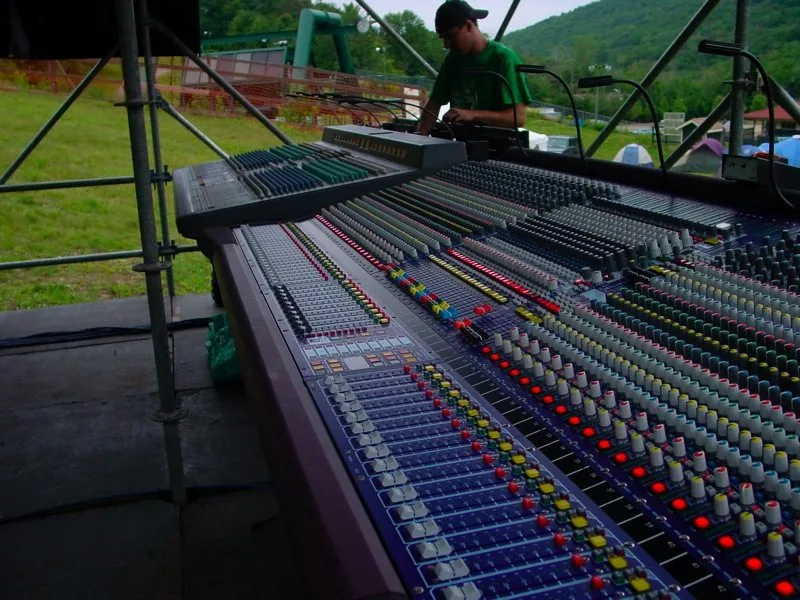
There is one image that sums up the festivals of the 1990s. At the back of the field, under a small mix tent, two large analog consoles sitting side by side, each dedicated to one act, an engineer leaning over the faders while the next one already preps a patch. In many of those photos, one of the two is a Yamaha PM4000. The other, often, a Midas. For a good decade, those two names shared front of house at the biggest concerts on the planet.
1992, the year of the PM4000
Yamaha introduced the PM4000 in the early 1990s, with the PM4000-40C model dated 1992 in the maker’s own archives. The company describes it as a professional mixer built for the most varied demands, judged as much on sound quality as on operability, and notes that it was used at a great many concerts, in Japan and abroad. In other words, the PM4000 was born for the road. It arrived at a pivotal moment: sound systems were getting bigger, touring was going global, and demand for a reliable, legible, transportable console had never been higher.
An architecture built for touring
The PM4000 is organised around a clear structure. It can be configured with up to 48 input channels, stereo inputs included. Routing rests on eight mix groups and a stereo bus, joined by eight auxiliary sends to feed monitors and effects. Above that, an 11-by-8 matrix lets you recompose separate mixes, a real asset for sending different coverage zones, feeding delay towers or providing a clean feed for recording. That matrix logic, routine on digital surfaces today, was then the line between a serious touring console and a house model.
VCAs, automation before digital
The heart of the PM4000 is its VCA master section. Rather than routing audio through group faders, the console controls the level of several channels using control voltages, which lets you ride whole groups from a few master faders and automate their levels. In plain terms, a front-of-house engineer could assign vocals to one master, drums to another, keys to a third, and run the whole show with a handful of faders under the left hand. That principle never went away. It simply changed shape, and every current digital console now offers its groups and VCAs in the same spirit. The PM4000 was already doing that job, in analog, with no screen.
Facing Midas, the console wars
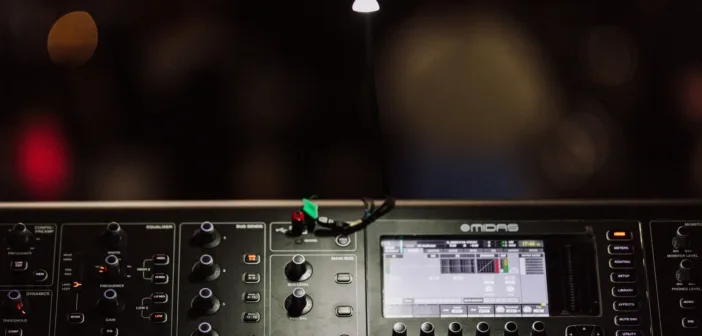
The PM4000 never reigned alone. Across the tent, the Midas desks, XL3 then XL4 and the Heritage series, defended another school of analog sound, more British, prized for the colour of its preamps and EQ. The two approaches coexisted on the same stages, to the point where you find mix positions with a PM4000 and a Midas Heritage 3000 sharing the desk, each handed to a different act on the bill. That is exactly the scene in the photo above. The rivalry pulled everyone up: reliability, ergonomics, preamp quality, each maker pushed the other. For the engineer, the luxury was choosing a console like an instrument, by repertoire and by ear.
The end of an era
The PM4000 lasted a long time, extended by the PM5000 around the turn of the 2000s. Then digital arrived for good. Compact scene-recall surfaces, remote preamps in stageboxes and audio networking swept away the big analog desks in a few seasons, around the same time the modern line array was redrawing sound reinforcement. Today a shared festival console is handled in a few scene files, as we describe in our piece on how festival sound works. The PM4000, by contrast, was handed to the next engineer with a paper patch sheet and a strip of tape down the side.
My take
What strikes you in hindsight is how plain the beast is. No screen, no menus, just a clear architecture and VCA masters that save time at every show. The PM4000s still in service today, and there are some, are a reminder that a well-designed console ages slowly. We are not going back to the giant analog desk, and nobody is asking for it. But getting your hands on a PM4000 is still a good lesson in ergonomics: everything that matters is reachable without hunting, and that is exactly where many modern surfaces could learn from it.