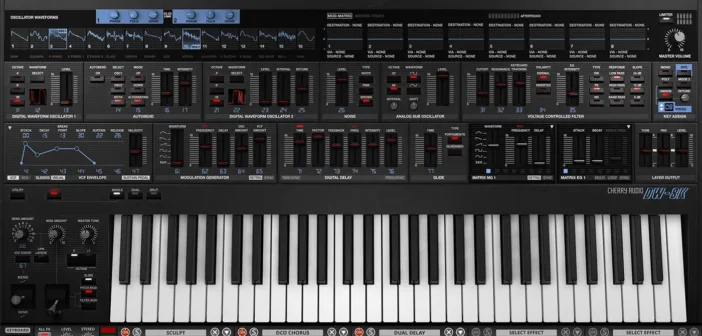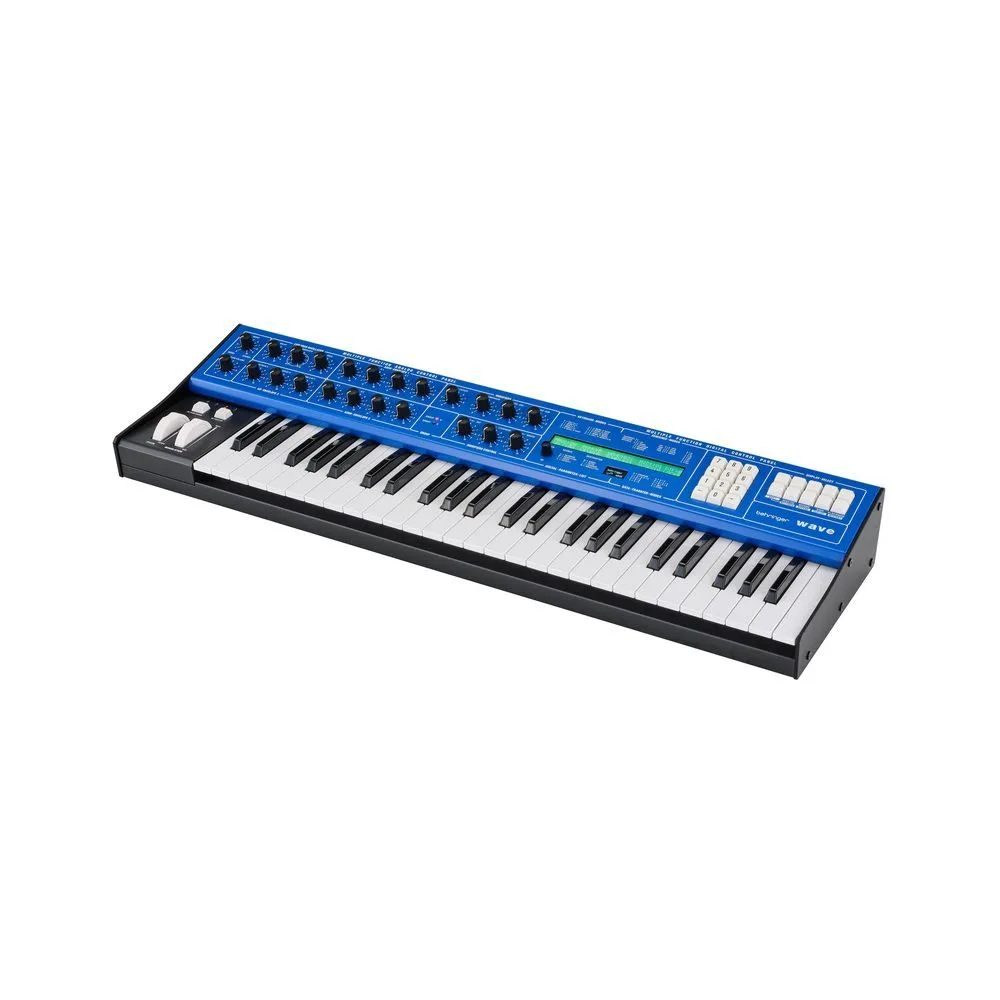
Few Behringer projects have been talked about as much as this one. Announced more than four years ago, delayed and reworked, the Wave has finally landed, and it follows Wolfgang Palm’s PPG Wave recipe to the letter: a classic analog signal path, but oscillators that read low-resolution digital wavetables, for that glassy, metallic grain, a cousin of the sound you get from software wavetable synths, that defined a slice of 1980s pop. The version shipping now drops to EUR489 for Black Friday, against EUR519 normally and EUR599 at launch in late 2024.
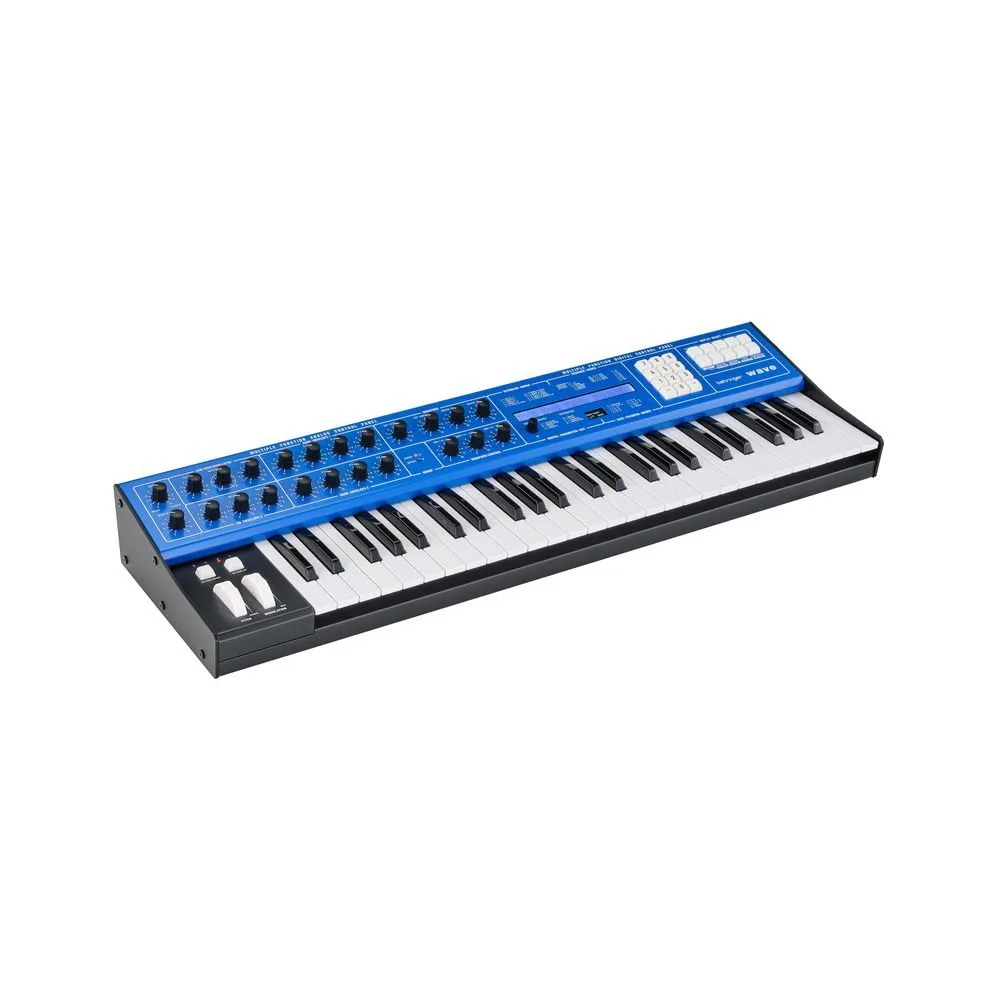
A PPG Wave brought up to date
The PPG idea was simple and radical for its time: instead of oscillating a fixed waveform, each oscillator scans a table of 64 waveforms and jumps between them. The result never has the roundness of a pure analog oscillator, it has that grainy, moving texture that catches the ear. The Wave reproduces both historical resolutions, 8-bit for the 2.2 mode and 16-bit for the 2.3 mode, and hands the rest of the signal to analog filters based on a reproduction of the SSM2044 chip, the one that shaped the character of many early-80s synths. The approach echoes the brand’s other recent clones, from the Polivoks to the units already on sale.
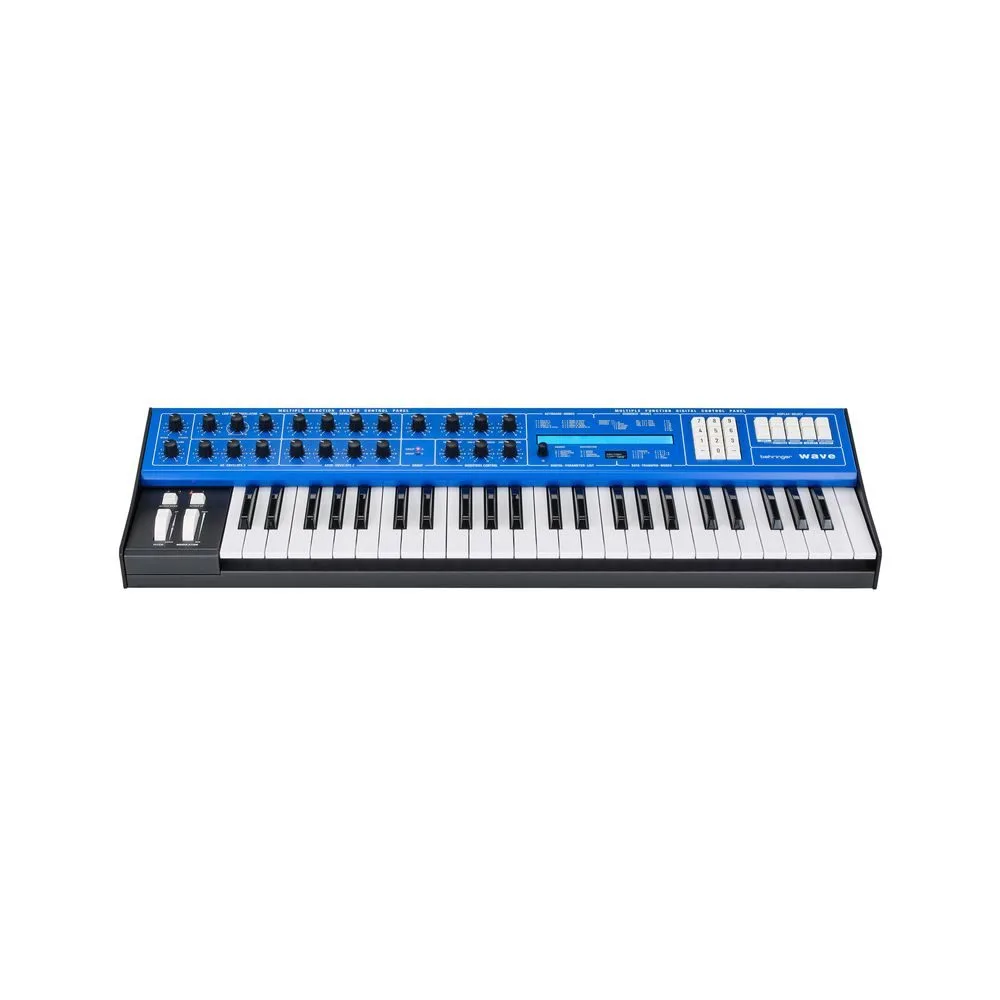
Architecture-wise, each voice sums two wavetable oscillators. With eight voices, that gives you sixteen oscillators in total, enough to stack dense pads or play chords that breathe. The keyboard has 49 keys, with velocity and channel aftertouch. Polyphonic aftertouch is not on board, a deliberate choice to keep the price down.
Wavetables, envelopes and modulation
The Wave carries 30 factory wavetables and lets you store 64 more of your own, 64 waveforms each, plus 32 user transients to give an attack some bite. Modulation stays lean but well judged: two ADSR envelopes, assignable to the filter, the amplitude or the wavetable position, an extra AD envelope for pitch or, again, table position, and one LFO. A stereo width control widens the result with no external effect.
The internal rhythm section is more than a token arpeggiator. The Wave offers a polyphonic sequencer and a dual arpeggiator, with the classic up, down, up-down and random modes. It stays in the logic of a playing instrument rather than a groovebox, but it is enough to lay down a line and loop it with no computer.
Connectivity, the quiet strong point
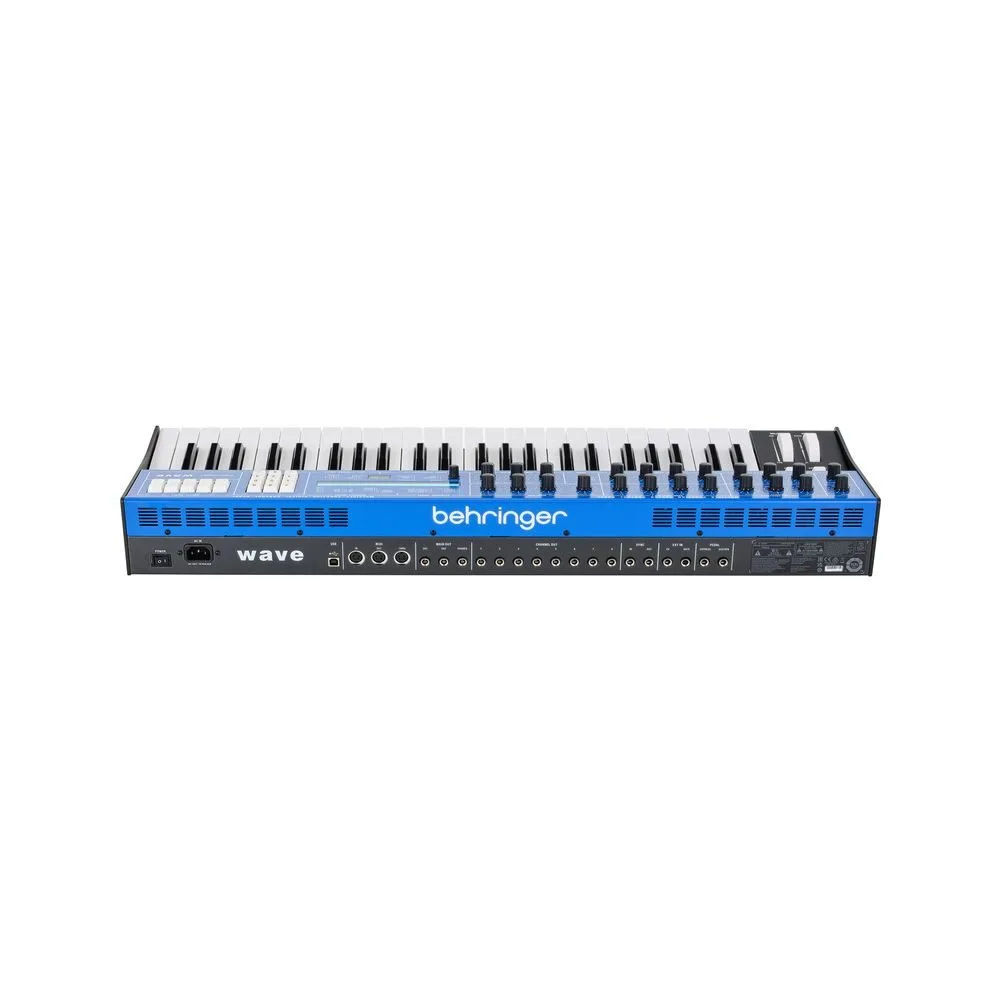
This is often where Behringer surprises, and the Wave is no exception. On the back you get a main stereo output, a headphone output and, above all, eight individual outputs, one per voice. For anyone who wants to process each voice separately at mixdown or for reamping, that is real comfort. Add CV and gate inputs, sync in and out, expression and sustain pedal jacks, USB-MIDI and the MIDI in, out and thru trio.
| Specification | Behringer Wave |
|---|---|
| Polyphony | 8 voices, 2 wavetable oscillators per voice |
| Engine | Hybrid, 8-bit (2.2) and 16-bit (2.3) wavetables, analog path |
| Filter | Analog, based on an SSM2044 reproduction |
| Wavetables | 30 factory, 64 user (64 waveforms), 32 transients |
| Modulation | 2 ADSR, 1 AD, 1 LFO, stereo width |
| Keyboard | 49 keys, velocity, channel aftertouch |
| Outputs | Stereo, headphone, 8 individual outs, CV/gate, sync, USB-MIDI |
| Price | EUR489 (sale), EUR519 regular |
Firmware 1.5: what really changes
The Wave ships with firmware 1.5, which fills out the engine. The most musical part: A/B voice detuning to thicken sounds, and wavetable modulation by velocity, so the timbre responds to your playing. On the slow-modulation side, new LFO shapes appear, including a random sample-and-hold with slewing, and a new parameter switches to one LFO per voice, reset on each note, where the default runs a single free LFO per group. The keyboard mode switches to B-mono and A-poly when nothing is patched to the gate input, preset names finally show on the OLED screen, and 26 sounds by Ultimate Patches join the bank. The update goes through the SynthTribe app.
Price and availability
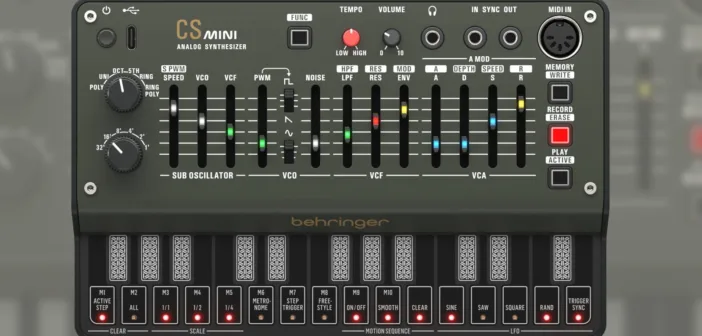
The Wave is on sale through the brand’s usual partners (Behringer product page). It launched at EUR599 in late 2024, came down to EUR519, and a Black Friday deal puts it at EUR489 until 30 November 2026. For an eight-voice synth capable of this sonic range, the positioning is aggressive, which is exactly the brand’s playbook, as already seen on the small CS Mini.
My take
The Wave does exactly what we hoped it would, and that is plenty: putting the PPG timbre within reach, the way Serum 2 did in software, without the wild used prices of the originals or the fragility of collector machines. The eight separate outputs and firmware 1.5 show the unit was not cut back where it counts. A PPG never sounds clean, and that is the whole point. At EUR489, the entry ticket to this piece of wavetable history looks almost too good. Whether that very particular digital grain belongs in your productions is up to you.