Cloud Microphones has long been known for its Cloudlifters, the activator boxes that rescued many a low-output ribbon mic, and for its in-house ribbon microphones. The brand now steps up with the True Blue 520, its first 500-series preamp, designed hand-in-hand with True Systems, Tim Spencer’s outfit famous for surgically clean preamps.
A True Systems core in a 500-series module
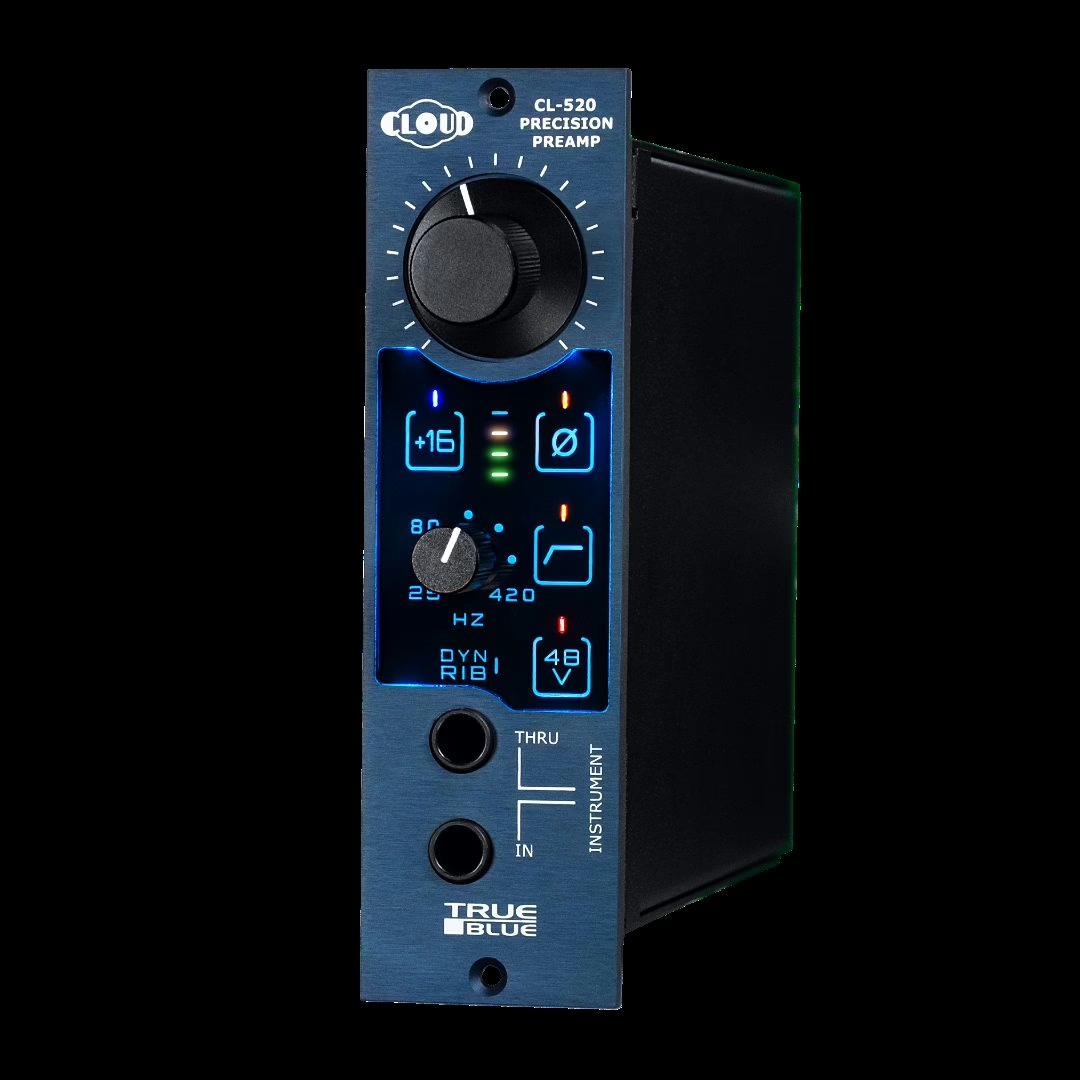
The True Blue 520, model CL-520, updates the preamplifier circuit that built True Systems’ reputation over more than two decades in studios, live sound and post. The direction is clear: high resolution, musicality, transparency, the opposite of a transformer preamp that colors on purpose. It delivers up to 76 dB of clean gain across two ranges, handles up to +21 dBu at the input without a pad, and relies on a fully balanced topology with no capacitors in the signal path in dynamic and ribbon mode.
That pursuit of neutrality comes with a real focus on reliability. The 0.1% precision resistors guarantee unit-to-unit consistency, a decisive asset if you pair two modules for stereo, and the rail-to-rail architecture aims for maximum dynamic range.
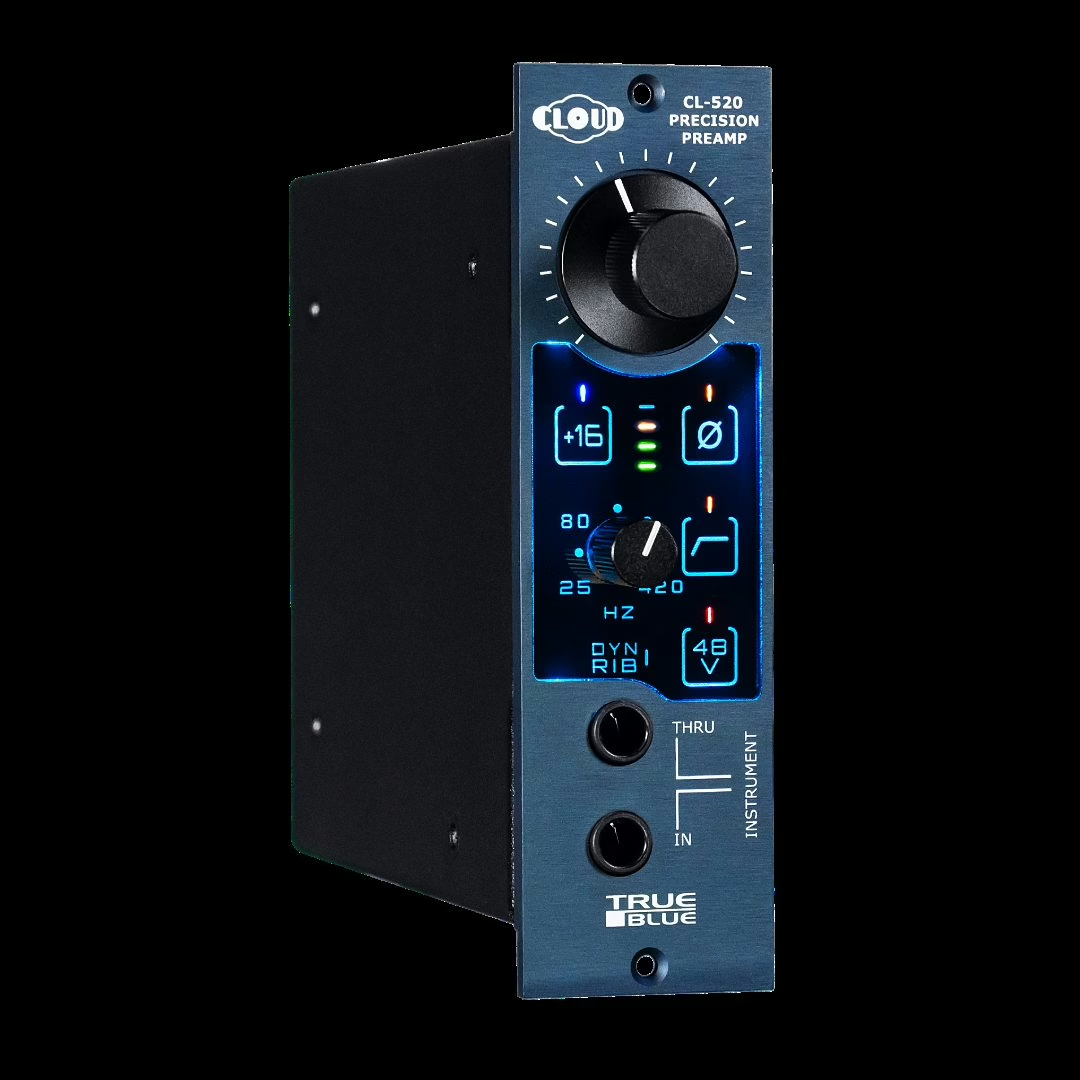
A touch interface that shortens the signal path
The CL-520’s real curiosity is its Cloud Touch-Control interface: illuminated touch controls replace the usual pushbuttons and toggle switches. Behind that fascia, microprocessor-controlled telecom relays handle the switching. The point isn’t cosmetic: the signal path is shortened and the unit becomes less sensitive to electromagnetic interference. A Blink-Delay feature flashes the indicator before engaging phantom power or high-gain mode, a welcome safeguard against slips.
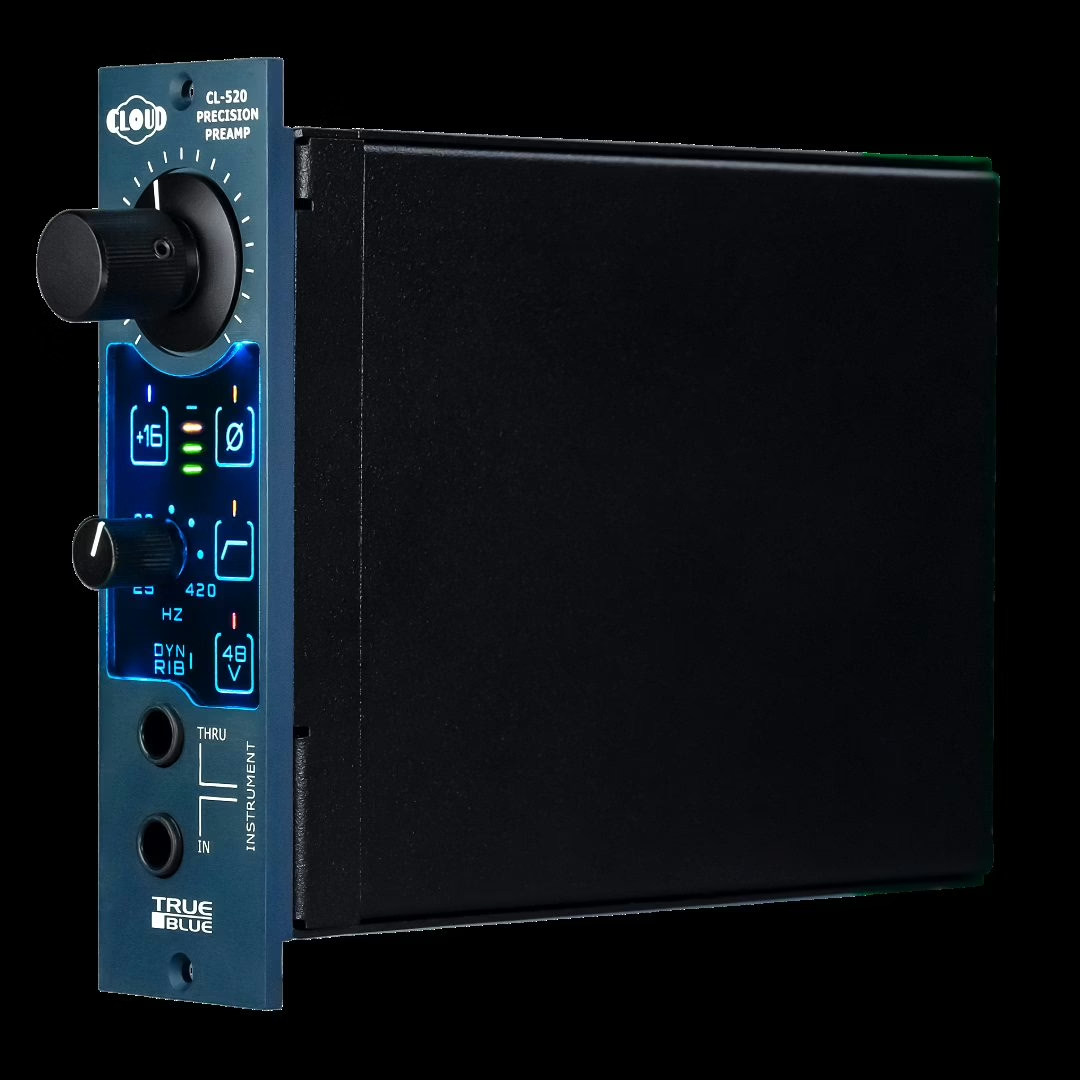
On the practical side, the module includes a FET-based instrument input with a THRU output, splitting the signal to feed an amp, another DI or a 500-series module in parallel without interruption. The high-pass filter is continuously variable from 25 to 420 Hz, with the response reaching down to 6 Hz once disengaged, and a four-level meter watches the signal.
Key points
| Spec | Detail |
|---|---|
| Format | API 500 module, compatible with standard racks and PSUs |
| Gain | up to 76 dB, two ranges, detented |
| Max input level | up to +21 dBu without a pad |
| DI | FET instrument input with THRU, 1 MΩ impedance |
| High-pass | continuously variable 25–420 Hz (6 Hz disengaged) |
| Made / warranty | Made in the USA, 2-year warranty |
| Ballpark price | around $799 per unit, matched pair available |
The preamp takes condensers, dynamics, ribbons and self-powered tube mics alike, with a dedicated dynamic and ribbon mode that keeps capacitors out of the path. That’s consistent with the brand’s DNA, historically built around temperamental ribbons.
My take
I love the color of a 1073 or an SSL channel, and I won’t pretend otherwise. But a genuinely transparent preamp, with plenty of headroom and low noise, has a place all its own: on a ribbon, a delicate acoustic take, an already-rich source you don’t want to dress up. The True Systems core is a safe bet for that brief. The touch interface leaves me more cautious about the feel, but the relay-and-shorter-path argument is engineering, not marketing, and deserves to be taken seriously.
Full details are on the Cloud Microphones site. In the same 500-series format, revisit our coverage of the Drawmer OC1 and FC1 compressors and the Manley Dual Channel tube EQs.
Frequently asked questions
What format and power does the True Blue 520 use?
It’s an API 500-series module, compatible with standard 500 racks and power supplies. It drops into an existing chassis with no special hardware.
Can it act as an instrument DI?
Yes. It has a FET-based instrument input with a THRU output: the signal feeds the preamp core while also passing through, uninterrupted, to an amp, another DI or a 500-series module for parallel paths.
Is it suitable for ribbon and tube mics?
It’s designed for condensers, dynamics, ribbons and self-powered tube mics. A dedicated dynamic and ribbon mode removes capacitors from the signal path, which helps detail on those sensitive capsules.
What is the high-pass filter range?
The high-pass is continuously variable from 25 to 420 Hz to tame proximity effect or clear a cluttered low-mid. Disengaged, the frequency response extends back down to 6 Hz for full bandwidth.
Where is it made and can it be paired in stereo?
It’s made in the USA and carries a two-year warranty. The 0.1% precision resistors ensure unit-to-unit consistency, and a matched pair is offered for stereo work.