Manley reworks its passive tube EQ know-how into two new dual-channel boxes: the Dual Mid Band EQ for sculpting tracks, and the Dual Main EQ built for buses and mastering. Passive inductor filters, tube make-up gain and in-house transformers bring the Manley color into a proper stereo format — at a price that matches the pedigree.
Two EQs, two clearly separate jobs
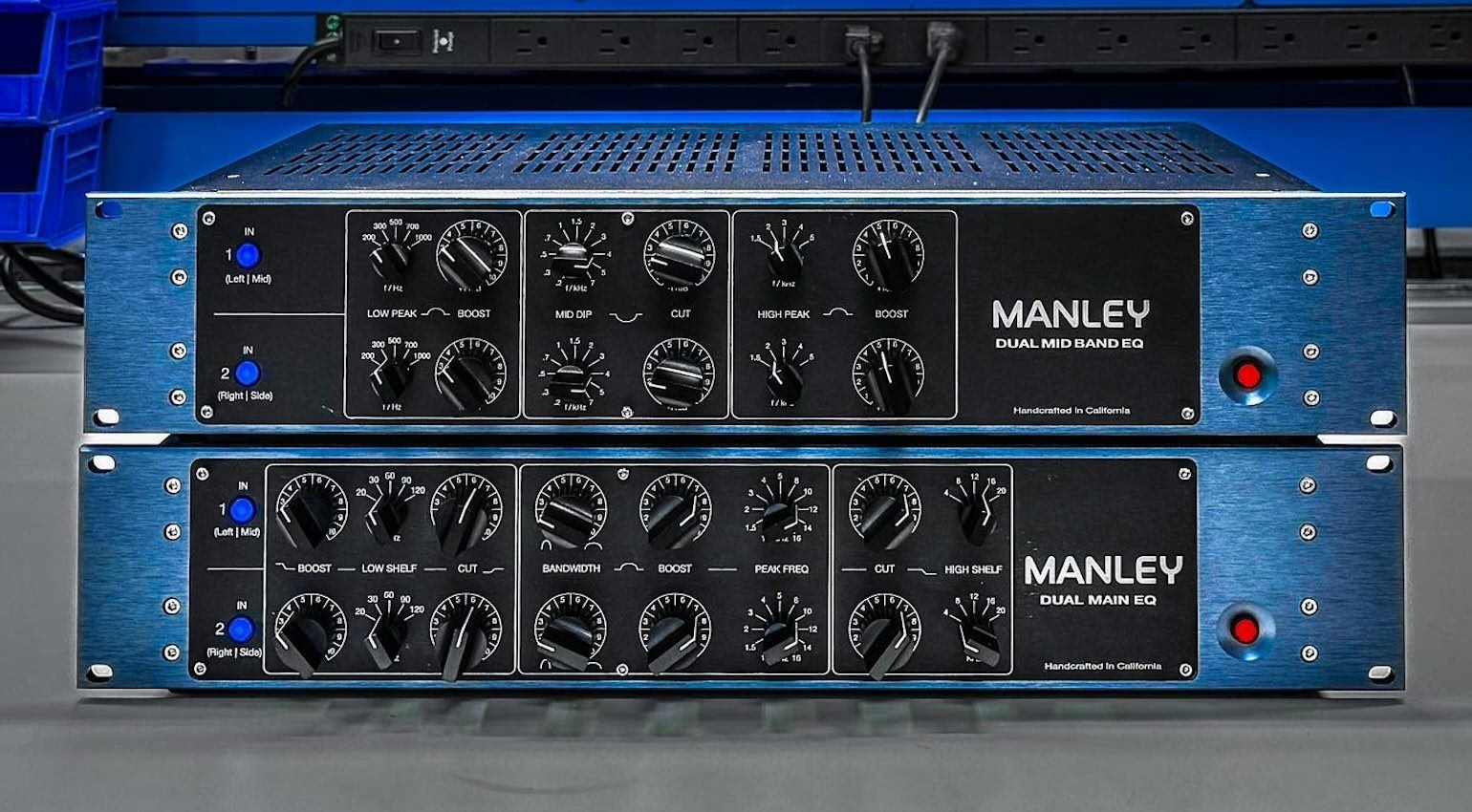
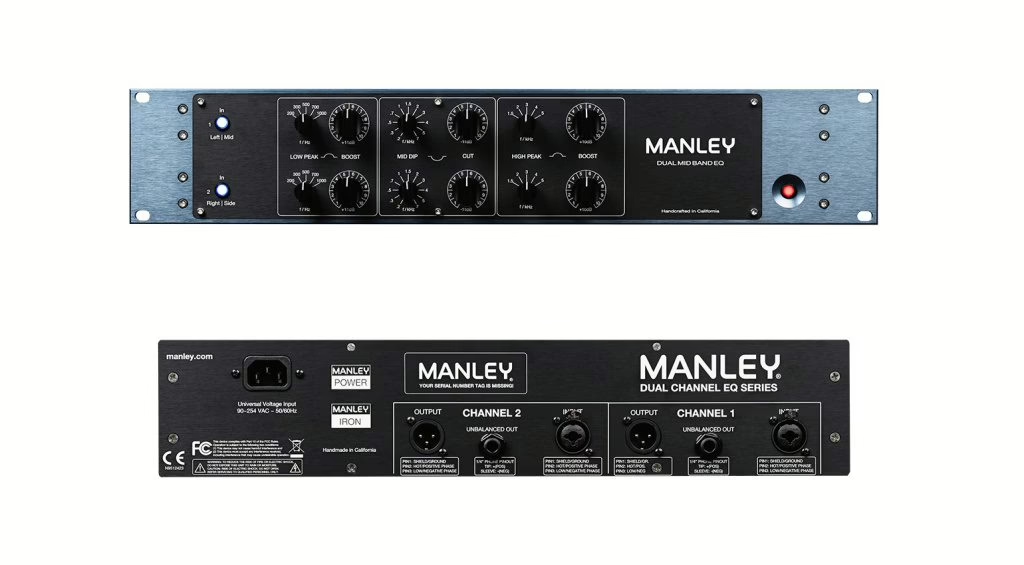
Manley isn’t shipping one product but a pair, each aimed at a specific spot in the chain. The Dual Mid Band EQ targets individual tracks. It offers three filter types — Low Peak, Central Dip and High Peak — with fixed-Q curves tuned to stay musical. The Low and High Peak bands each carry five selectable frequencies, while the Central Dip band offers eleven: enough to zero in on boominess or boxiness in the low-mids and pull it down.
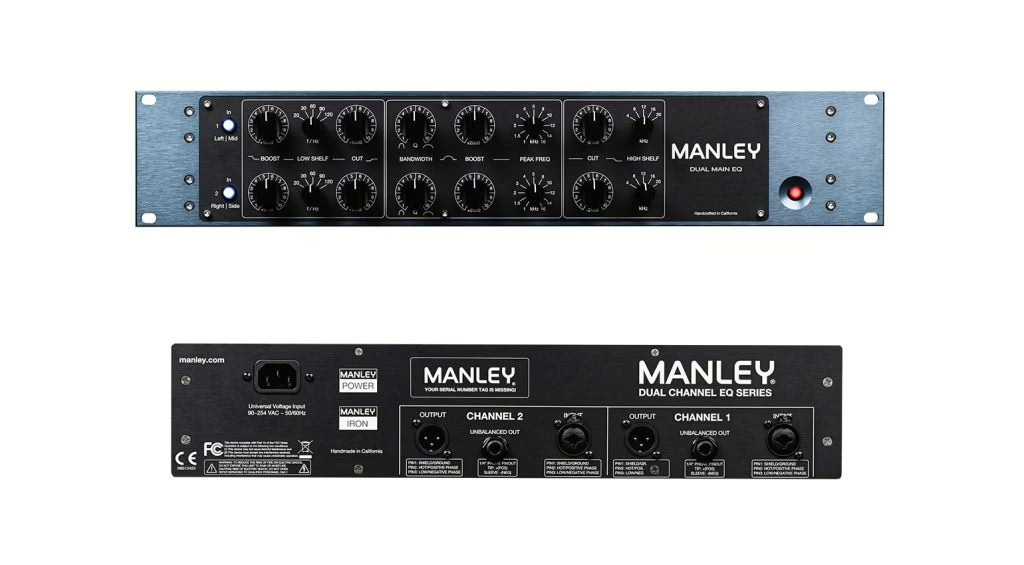
The Dual Main EQ plays in a different league: channel groups and the main mix bus. It carries a Low Shelf with separate Boost and Cut controls, a variable-Q Boost band and a high-shelf cut, following the same 5-11-5 frequency pattern as its sibling. This is a bus-color EQ — the one that sets the weight and air of a full mix rather than a single track.
Fully passive, fully tube
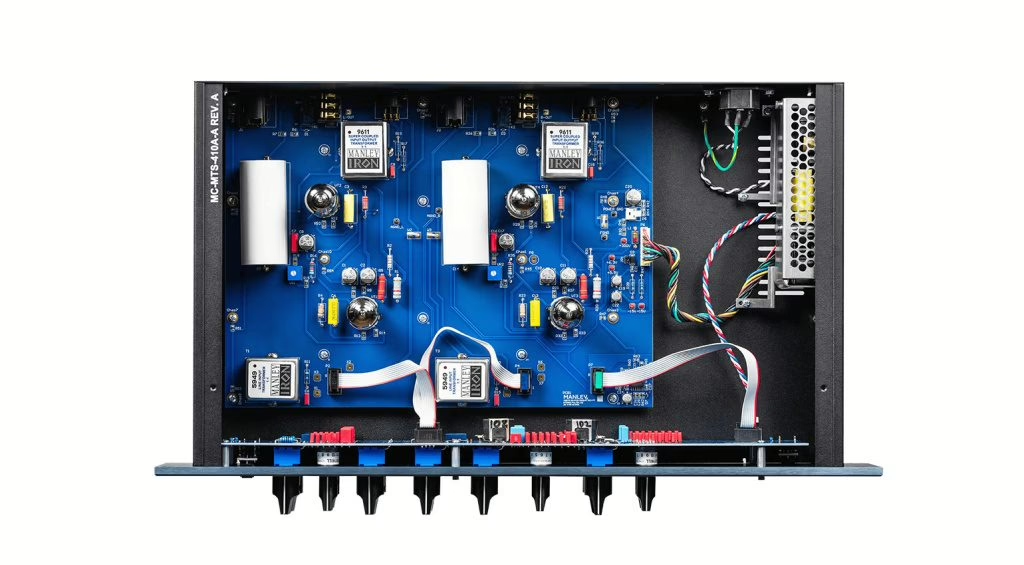
This is where the Manley DNA lives. Both units are built on passive inductor-based filter networks: no active circuitry in the EQ path. The signal runs through a network of resistors, capacitors and hand-wound inductors, which is lossy by nature; a high-headroom tube make-up stage then restores the level, followed by in-house transformers on the balanced outputs. That passive-filter-then-tube-recovery architecture is exactly what has made Pultecs sing for seventy years: the curves stay gentle, the grain stays organic, and you can push broad moves without the electronics tensing up.
Manley adds welcome flexibility: manual series chaining of the two channels, stereo operation and mid-side configuration. M-S opens the door to mastering and detailed stereo-bus work, EQing center and sides separately. Illuminated switching, universal power, a fresh industrial design — all built in California.
| Model | Target | Bands | Typical use |
|---|---|---|---|
| Dual Mid Band EQ | Individual tracks | Low Peak (5), Central Dip (11), High Peak (5) | Sculpting, clearing low-mids |
| Dual Main EQ | Groups, bus, mastering | Low Shelf boost/cut, variable-Q Boost, high-shelf cut | Bus color, weight and air of the mix |
The Pultec legacy, 2026 edition
Manley frames these as a modernization of its own heritage, tracing back to the 1990 Enhanced Pultec EQ, rather than as clones. The user philosophy is classic Pultec — broad bands, gentle interaction, forgiving behavior — but the implementation, the available frequencies and the stereo matching are built for today’s studio. The obvious reference point is the Massive Passive, Manley’s flagship passive tube EQ; these new Dual Channel units carry that spirit into a tighter, more specialized format.
Then there’s the sting: price. Both models are up for pre-order at around $5,499 (roughly £4,885), through dealers such as Sweetwater and Thomann. This is hand-built high-end EQ money, not a home-studio utility.
Let’s be blunt: at that price, a tube EQ only earns its keep if it does something audible your digital chain doesn’t. That happens to be exactly the home turf of Manley’s passive-tube approach. A high shelf that adds air without ever hissing, a low end that gets big without getting muddy: those gentle-curve, harmonic-recovery behaviors are hard to get as naturally fully in the box. I’m a committed in-the-box mixer, but this kind of hardware still fully belongs on a stereo bus or a mastering chain — where two matched channels work constantly and color matters more than track count. It isn’t dogma; it’s about the sonic result.
Further reading: our feature on choosing between an analog or digital console in 2026, the recent deep dive on audio compression to place such a stage correctly, and the Kush-style harmonic saturation plugins for a different flavor of tube color.