When a console builder as respected as Harrison decides to make its first audio interface, you pay attention. Harrison means the large studio and post-production consoles that shaped decades of production, and it also means Mixbus, the DAW that has spent years trying to bring the ergonomics and colour of a console into the all-digital world. The Flex-10 extends that logic into hardware: a desktop interface that makes no secret of its origins, proudly wearing VU meters and channel strips like the centre section of a vintage console dropped onto your desk.
A console channel strip in disguise
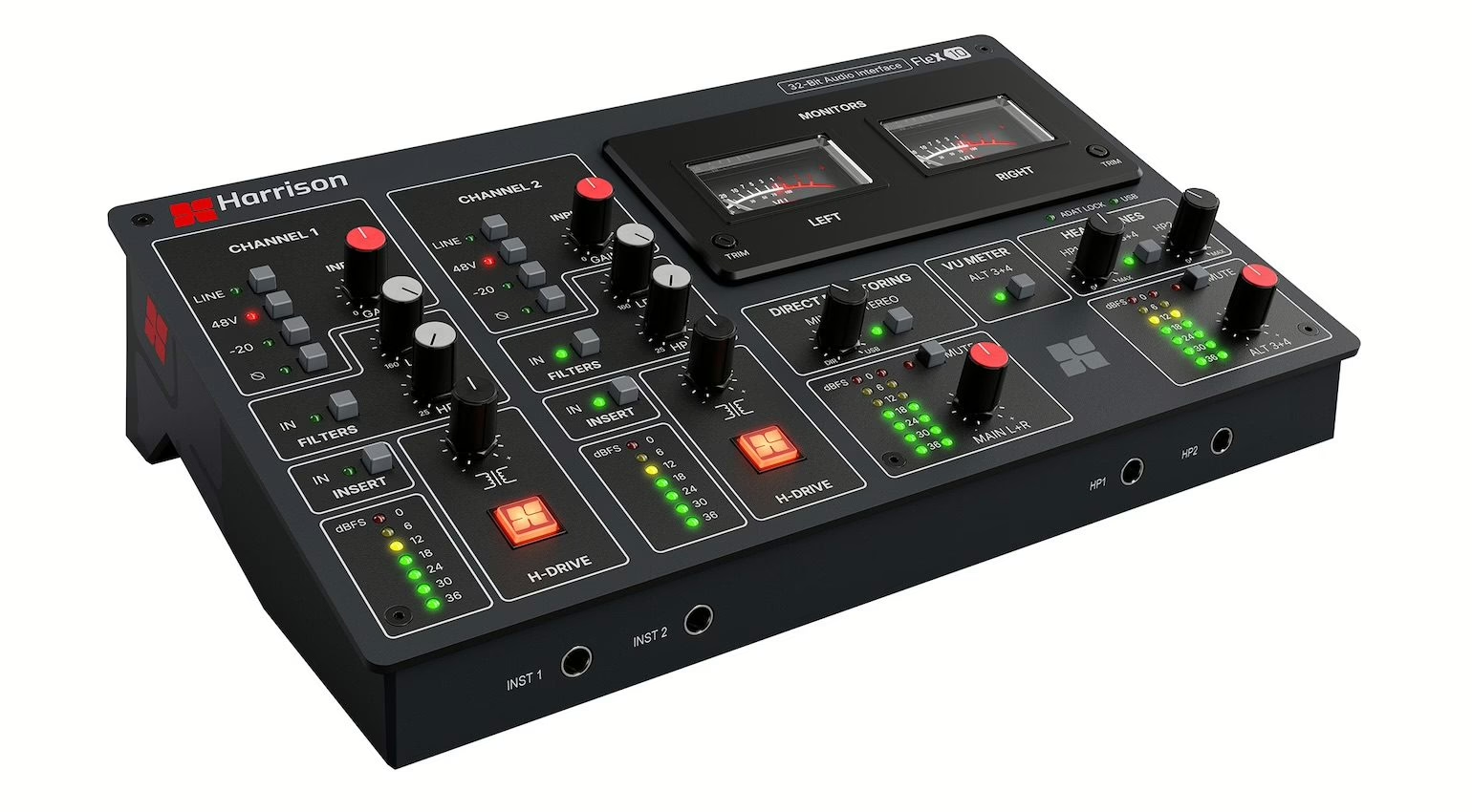
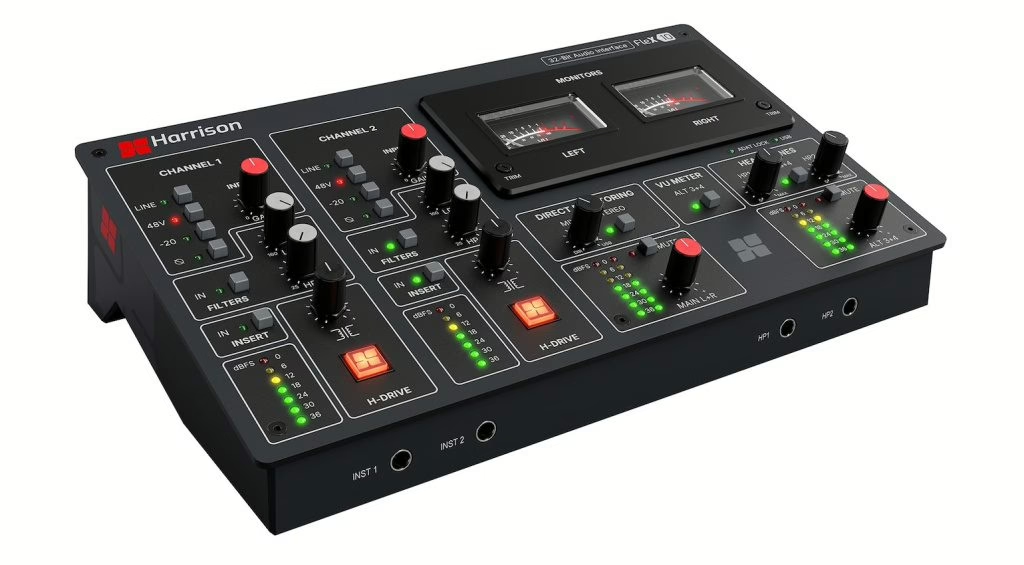
The Flex-10 is a 10-in/12-out, 32-bit/192 kHz interface connected over USB-C. On paper the spec sheet looks like plenty of rivals; it’s in the details that Harrison plays its hand. The two preamp channels carry H-DRIVE, real transformer saturation, and each channel has high-pass and low-pass filters lifted straight from the 32 Series consoles. In other words, this isn’t just a clean gain stage feeding a converter: Harrison offers genuine sound-shaping at the input, with the character to match.
Each strip carries the controls you’d expect from a console: line level, 48 V phantom power, a -20 dB pad and phase invert, all on physical buttons. Up front, two 1/4-inch inputs take guitars, basses, synths and drum machines at instrument level, making the Flex-10 an entry point for mic recording as much as for plugging machines in directly.
Monitoring, ADAT and connectivity
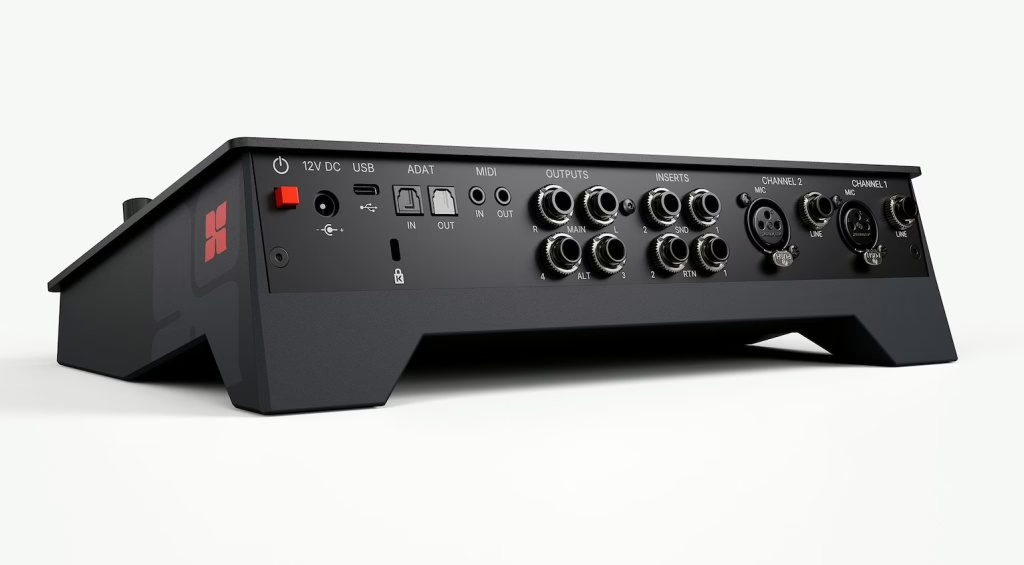
For monitoring, the Flex-10 offers two independent monitor outputs with dedicated level controls, so switching between two speaker pairs is easy, plus two high-end headphone outputs. For expansion, eight channels of ADAT I/O let you add external preamps or talk to other digital gear, so this modest desktop box can grow with a studio that’s scaling up. MIDI isn’t forgotten either, with in/out on 3.5mm TRS mini-jacks, now a common format on compact machines.
The software in the box
Harrison doesn’t stop at hardware. Every Flex-10 ships with a full licence for Mixbus 12, the company’s console-minded DAW, and the Harrison Creator Pack, a collection of virtual instruments, effects, guitar processing, loops and samples. For anyone starting out or looking to build a coherent chain in one go, the argument is strong: the interface, the input colour and the mixing environment all come from the same designer, with a shared sonic intent.
Specifications
| Feature | Detail |
|---|---|
| Format | USB-C interface, 10 in / 12 out |
| Conversion | 32-bit / 192 kHz |
| Preamps | 2 Harrison channels with H-DRIVE transformer saturation |
| Filters | High-pass and low-pass inherited from the 32 Series consoles |
| Expansion | 8 channels of ADAT I/O |
| Monitoring | 2 independent monitor outputs, 2 headphone outputs |
| MIDI | In/out on 3.5mm TRS mini-jack |
| Software | Mixbus 12 + Harrison Creator Pack |
| Price | €629 / $599.99 (RRP €729) |
My take
I’ve always argued that a good piece of hardware keeps its place as long as it brings something audible, not just a prestigious badge. The Flex-10 fits that logic exactly: the console filters and transformer saturation aren’t marketing gadgets, they’re sound-shaping tools at the point of capture, where treating upstream pays off most. The fact that everything comes from Harrison, with Mixbus at the end of the chain, gives this setup a rare coherence. At €629 this isn’t a disposable entry-level interface, but the positioning stays reasonable for what you get. If input colour and mixing interest you, our feature on choosing between an analogue or digital mixer takes the thinking further, as does our guide to gain staging in the digital domain. And to stay on the topic of character tools, take a look at the Softube Reference EQs.