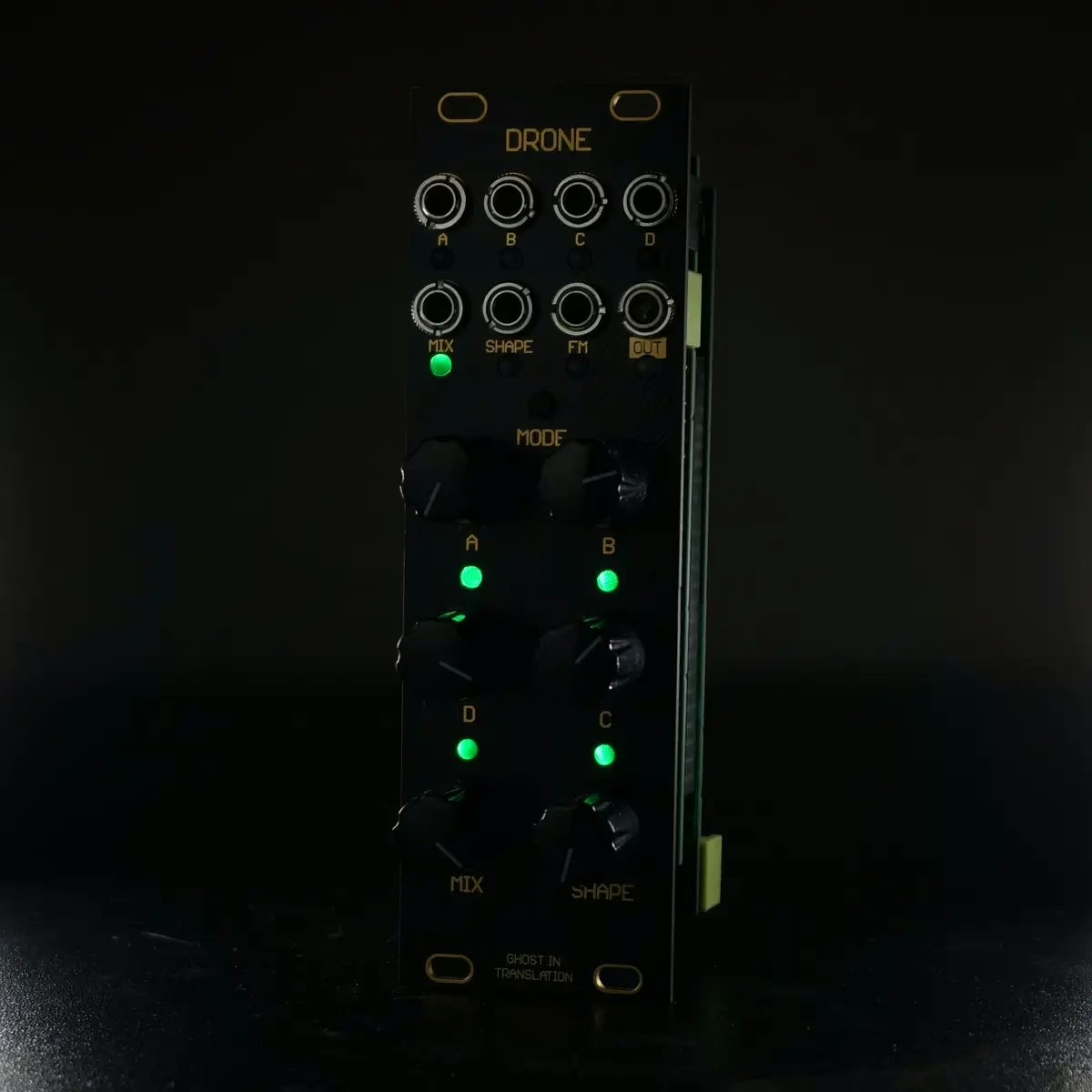
Some Eurorack modules don’t try to do everything; they try to do one thing exceptionally well. The Drone from Ghost In Translation is one of them. This small maker, known for open-source circuits built around the Teensy board, has just pushed its drone generator to version 2.0: four independent voices, sixteen synthesis algorithms and a motion recorder, all packed into eight HP. Enough to grow evolving textures without ever touching a keyboard.
A drone generator built for texture
The concept is right there in the name: sustained, rich, moving sounds — the pads that form the backbone of ambient, film scoring or the atmospheric stretches of a techno set. Each of the four voices is fully independent and gets its own 1V/octave pitch input, so you can tune them by ear, in chords, or drive them separately from a sequencer. This is no one-trick gadget: four simultaneous voices already make for a small orchestra of drones you can breathe life into independently.
The engine runs on a 32-bit floating-point DSP with stereo output at 48 kHz. Crucially, each voice can take on any of the sixteen onboard algorithms, from tame to abrasive: a sine paired with resonant noise, a sine run through a phaser and ring modulation, FM from a sine carrier, or a sawtooth pushed through a comparator for bitier tones. A single shape control — whose behaviour adapts to the chosen algorithm — lets you sculpt the grain without diving into endless menus.
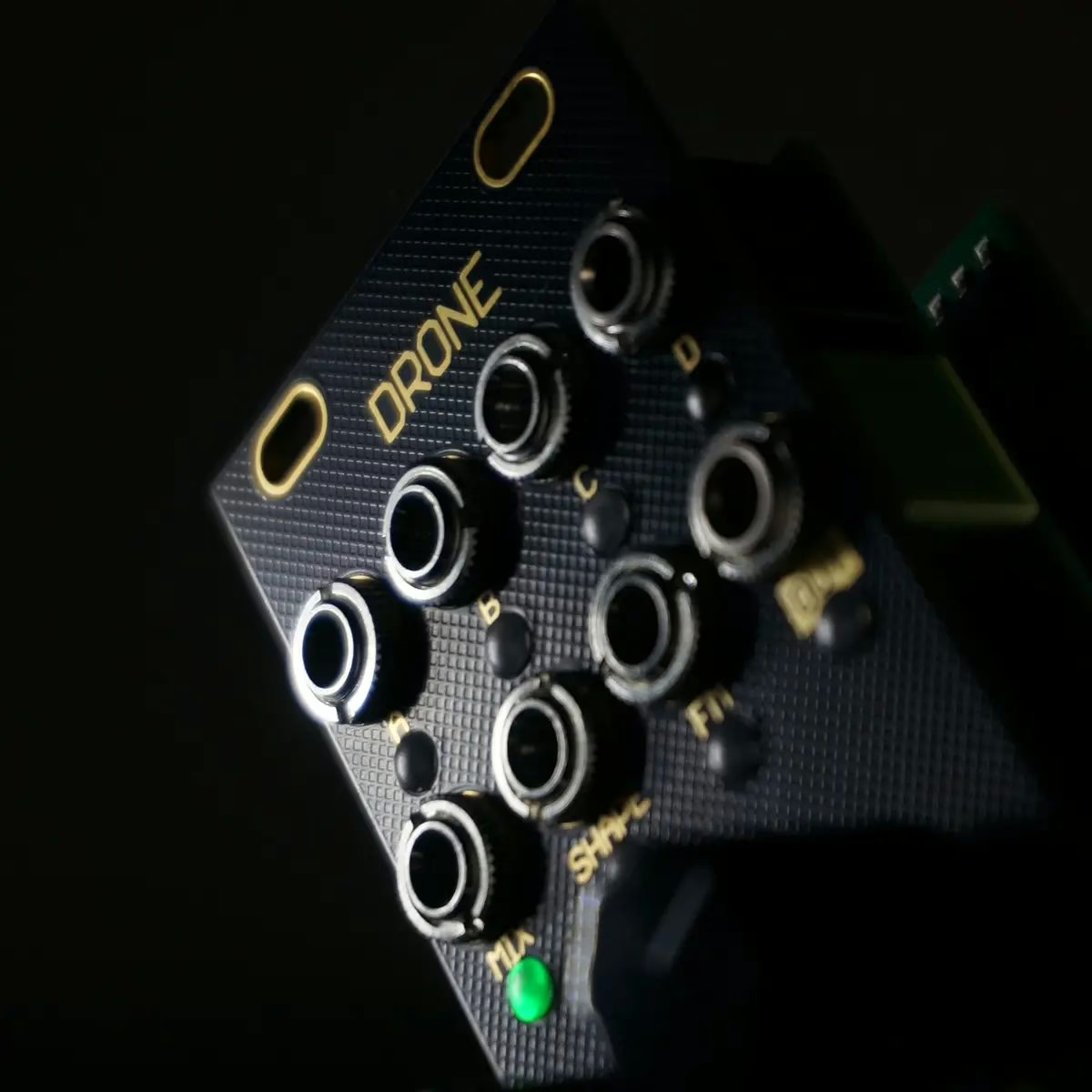
The spec sheet at a glance
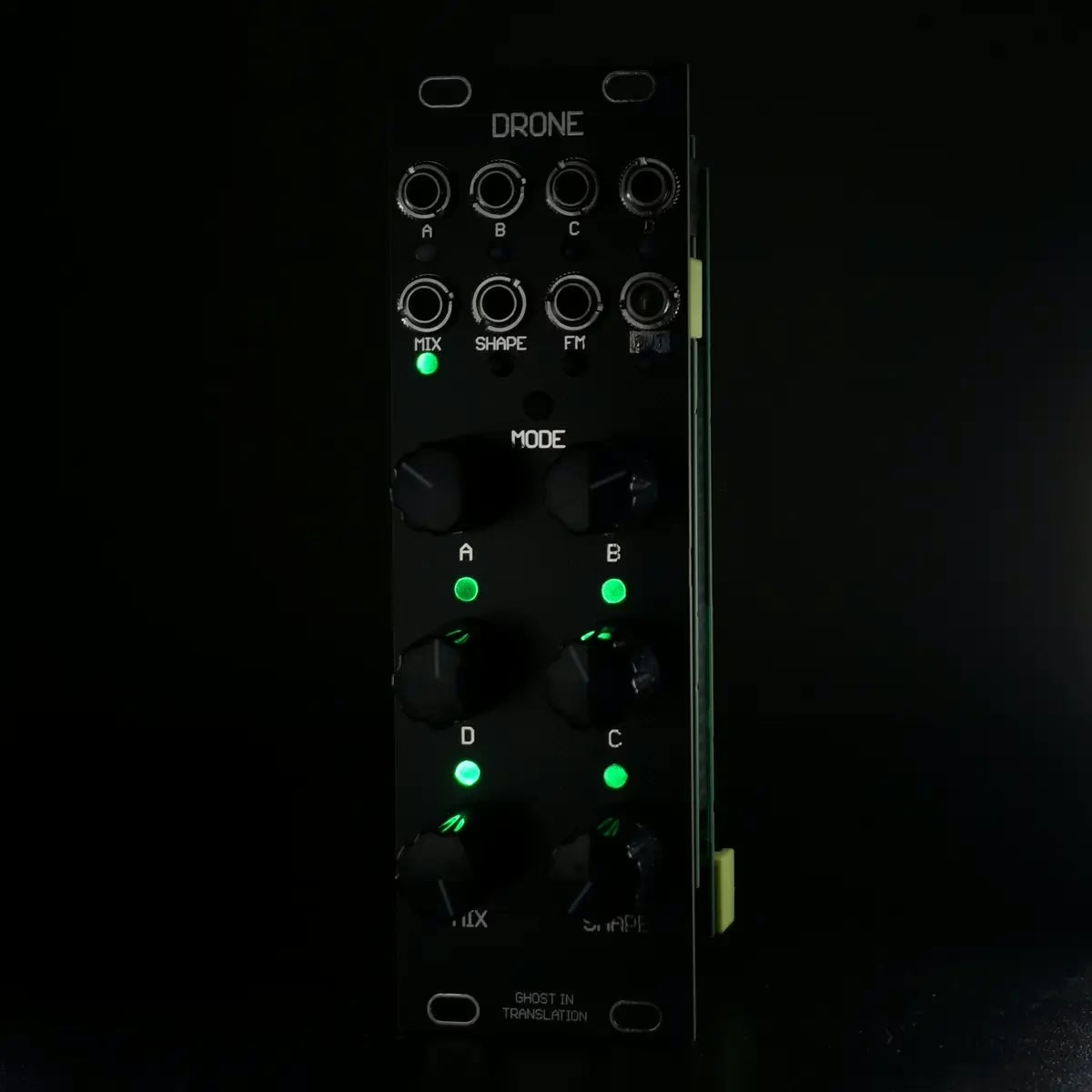
- Four independent voices, each with a 1V/oct input and a CV FM modulation input
- Sixteen synthesis algorithms, from sine drones to noisy, modulated textures
- 32-bit floating-point DSP engine, stereo output at 48 kHz
- Knob recorder / looper up to one minute or 32 MIDI-synced bars
- MIDI TRS Type A in and out, to drive the voices or sync the looper
- 8 HP wide, just 50 mm deep, with reversible (either-way) power
- Oscillator auto-calibration and a fully open-source platform
Open source all the way down
Ghost In Translation’s real signature is openness. The Drone 2.0 sits on the brand’s new “Motherboard 2.0” hardware platform, itself built around a Teensy 4.0. Both code and schematics are public: nothing stops you from tweaking the firmware, adding your own algorithms or forking the files to build your own variant. The module also includes oscillator auto-calibration — a detail that matters for a digital instrument meant to stay in tune over time — and reversible power that forgives ribbon-cable mistakes, a small mercy that has saved more than one module in a hastily wired case.
The gesture recorder deserves a closer look. Rather than a plain LFO, it captures your knob movements and loops them back, up to a minute or thirty-two bars locked to MIDI clock. On a drone-focused module, that’s exactly what a pad needs to stay alive: a slow filter drift, a gradual swell, a shimmer that keeps the sound from freezing.
The positioning echoes other recent modules that pack density into a small format, like the eight-voice Hampshire Electronics Vulcan MK2, or that blend synthesis schools, as with the Vannes Devices Obsidian semi-modular. If terms like resonant noise or ring modulation are still fuzzy, our primer on East Coast versus West Coast synthesis lays out the ground to place the Drone in context.
Price and availability
The Drone is ordered directly from the maker, either assembled or as a PCB-and-panel kit for the soldering crowd. The first “Very Early Bird” batch is already gone; the “Early Bird” run is said to be imminent at around €199, with a full price near €279. At that money, and for four drone voices in 8 HP, the math stays attractive for anyone building a texture-oriented modular system. All the details are on the maker’s product page.
My take
I’m wary of modules that promise everything; I have more affection for the ones that commit to an intention. The Drone is one of those. It won’t rival a big synthesis complex, and that’s not the point: it makes pads, four at a time, and it lets you open the hood. That last part isn’t window dressing. An open instrument, whose code you can read and change, is one that doesn’t die when its maker moves on — a longevity guarantee plenty of “serious” brands would do well to ponder. For a module at this price, it’s arguably the whole point.