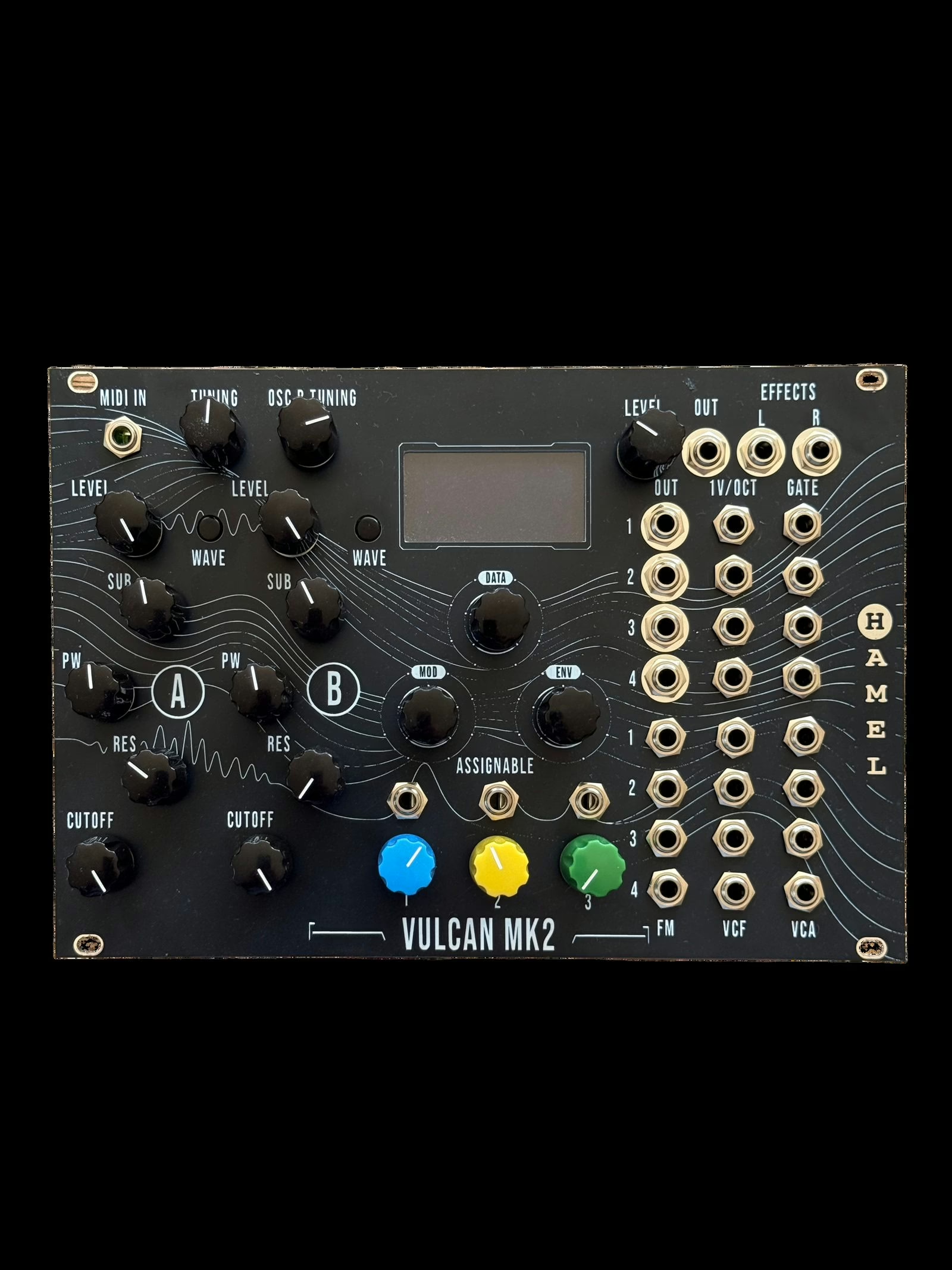
Fitting eight complete analogue voices into a Eurorack module was already a feat with the original Vulcan. With the Vulcan MK2, Hampshire Electronics doubles down and tightens the whole thing up: the panel shrinks from 56 HP to 37 HP, while gaining two independent digital engines. The result is one of the densest polyphonic modules around, aimed at players who want a real synth in their rack rather than yet another mono voice.
An all-analogue path, right to the output
The heart of the Vulcan MK2 is still its analogue section: eight voices, each with its own oscillators, a sub-oscillator, a resonant filter and a VCA. Crucially, the signal never leaves the analogue domain — there is no conversion stage anywhere in the audio path, from oscillator to output. The architecture is flexible too, letting you assign anywhere from one to eight oscillators per voice depending on whether you want a huge unison pad or wide polyphony.
Hampshire Electronics also sweats the details that matter in use. Automatic analogue calibration keeps all eight voices in tune, while an “age” parameter deliberately dials back in some drift and imperfection, recreating the slightly unstable behaviour of vintage polysynths. That is exactly the kind of design care that separates an instrument you enjoy playing from a plain voltage generator.
Three engines, up to 24 stacked voices
The MK2’s headline addition is a pair of digital engines, each eight-voice polyphonic and fully independent from the analogue section. They cover FM, wavetable, tuned noise, modal synthesis and Karplus-Strong physical modelling. You can play them on their own, but the real fun is stacking them on top of the analogue voices: combine all three engines and the instrument reaches up to 24 simultaneous voices, enough to build hybrid textures few modules can match.
- Analogue engine: 8 voices, 100% analogue path, resonant filter and VCA per voice.
- Two digital engines: 8 voices each, FM, wavetable, tuned noise, modal and Karplus-Strong.
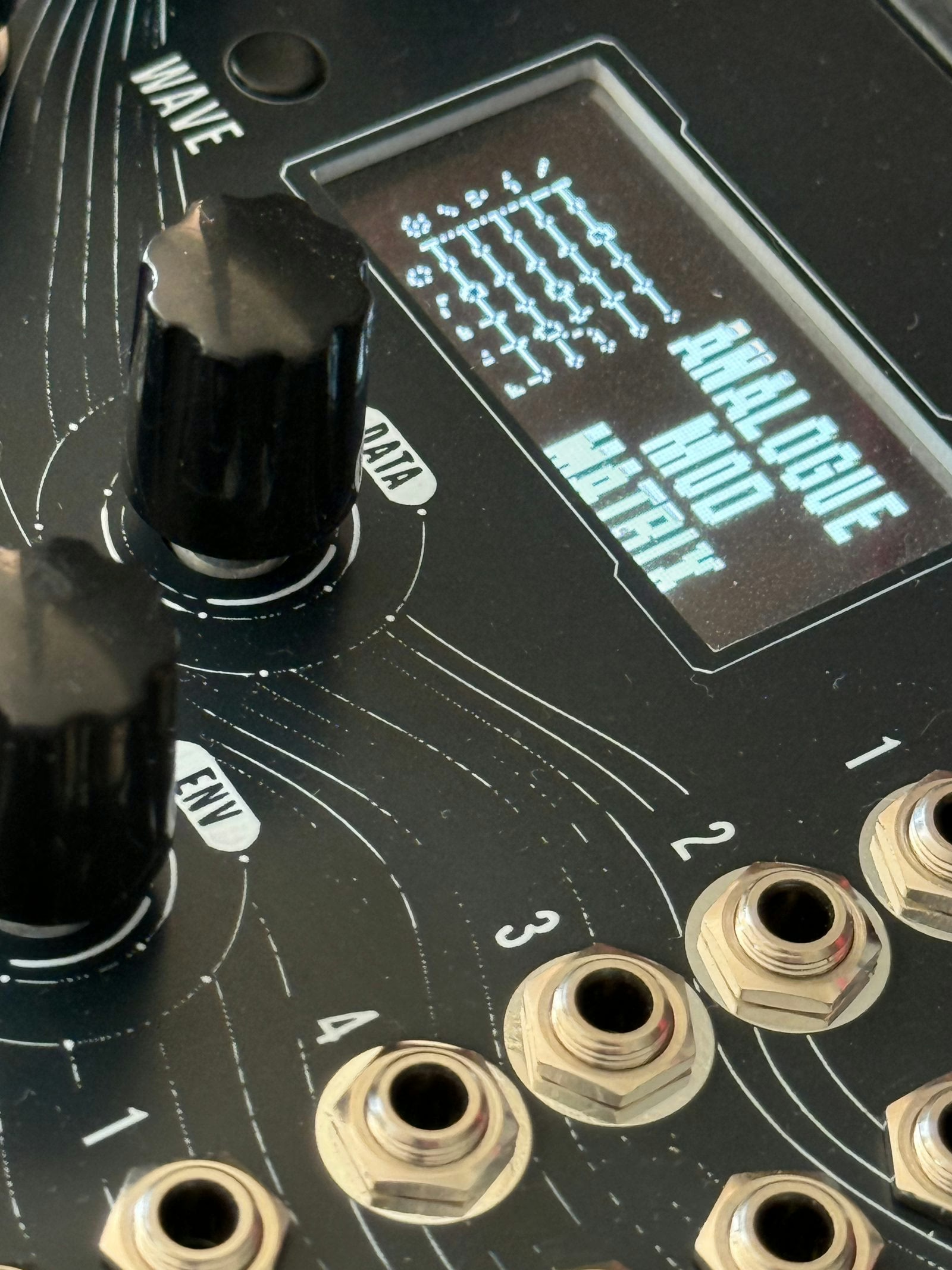
- Modulation: dedicated matrix per engine, with ADSR envelopes, LFOs and random modulation.
- Interface: OLED display for parameter feedback and preset management.
- Connectivity: CV, gate and modulation I/O, MIDI implementation, optional stereo effects board.
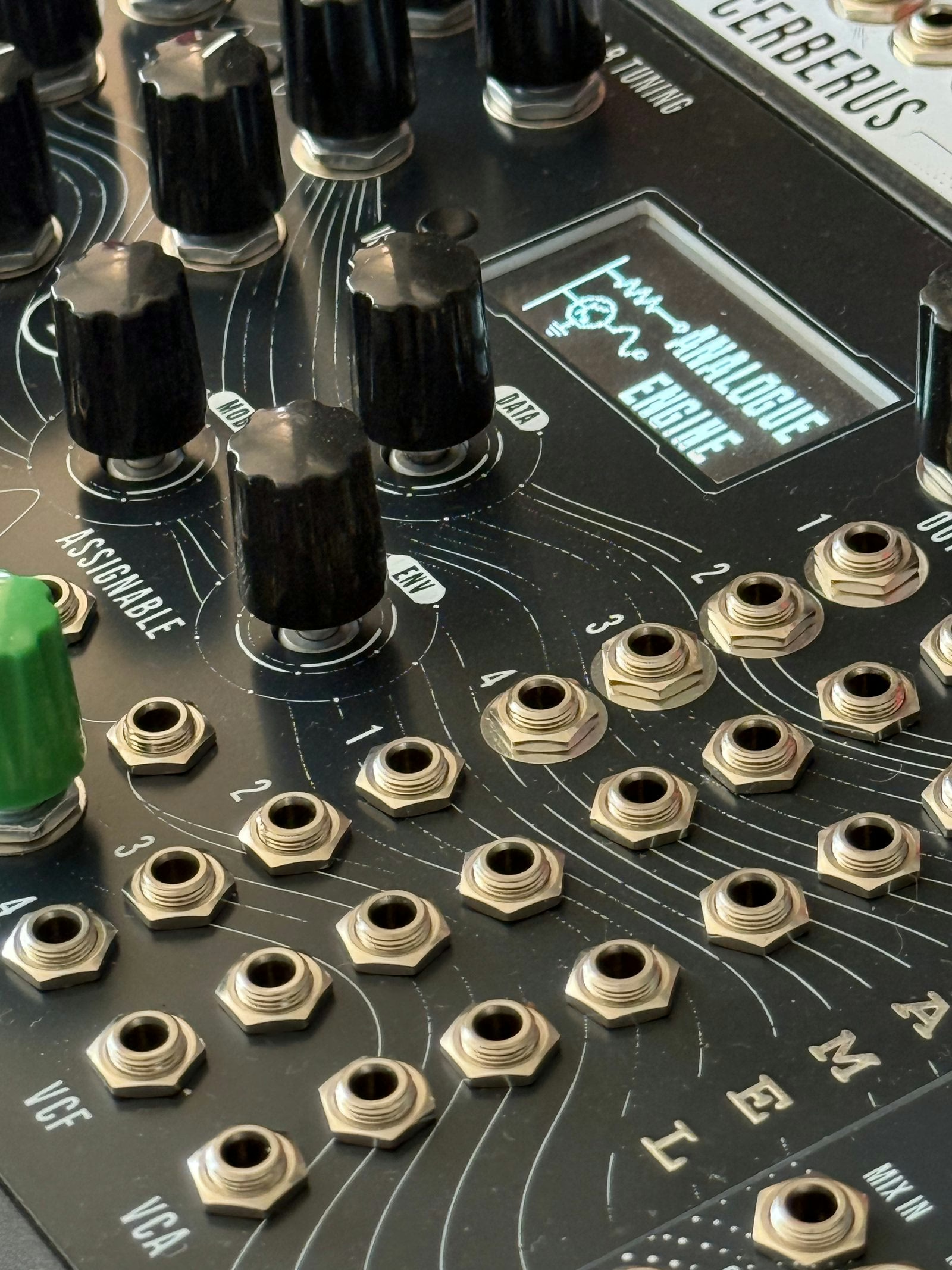
Format, power and positioning
Cramming this much into 37 HP comes at a cost: power draw. The Vulcan MK2 asks for 520 mA on the +12 V rail and 380 mA on the −12 V rail, which calls for a serious, properly sized rack supply. This is not a module you casually drop into a small, already-loaded skiff. In return, you get a self-contained instrument that plays a full analogue polysynth and a multitimbral digital synth without ever leaving the modular world.
The positioning is clear: where many makers ship desktop polysynths, Hampshire Electronics targets the modular user who wants polyphony and analogue colour without leaving their rack, while keeping the door open to CV patching. It is an unapologetically niche proposition, and one that fits the current trend of bringing genuine polyphonic keyboards back to Eurorack.
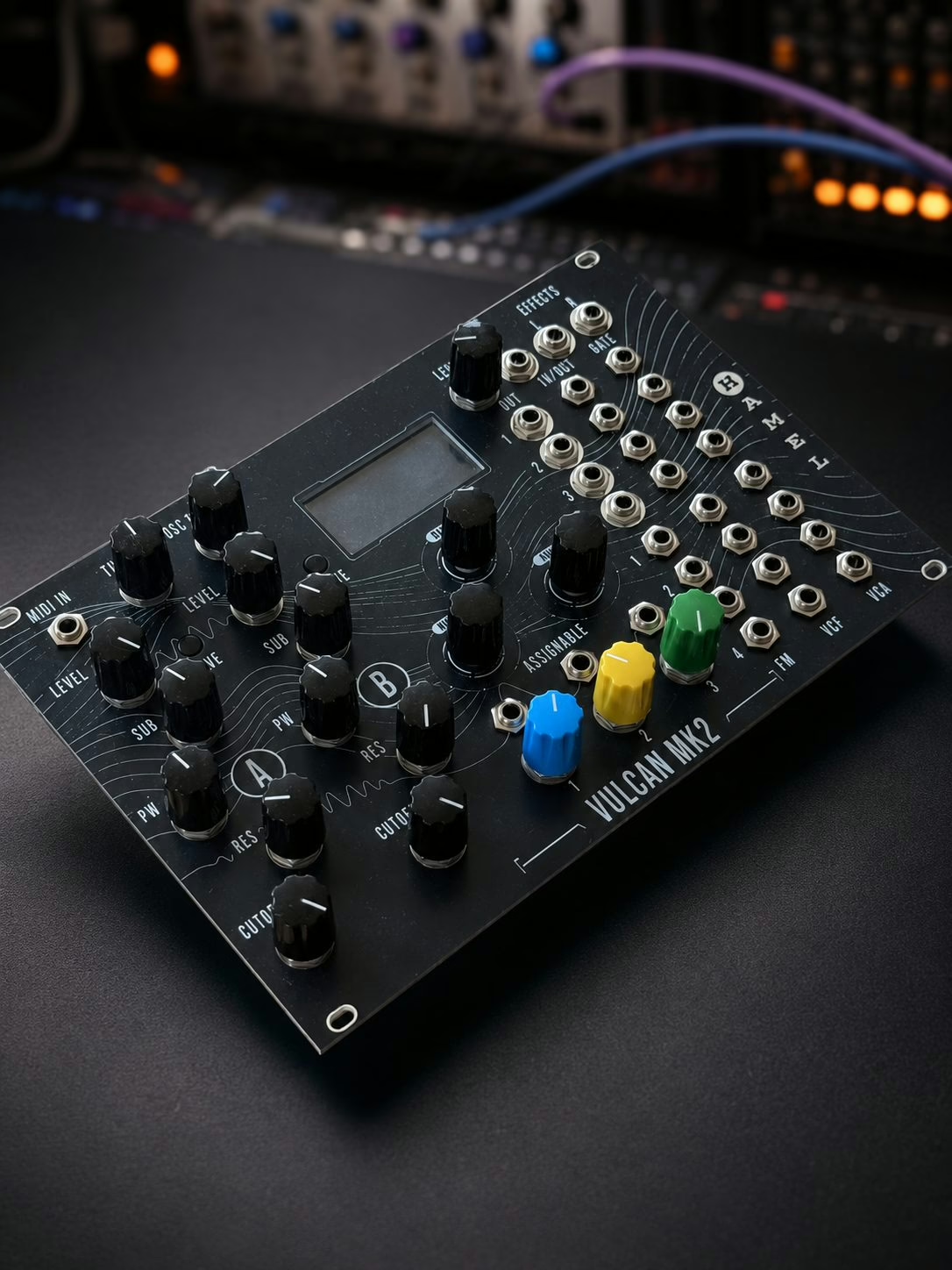
There is real engineering on show here. The fully analogue path and the automatic calibration suggest a builder chasing a instrument that stays in tune and breathes, not a spec sheet. My only reservation is the power appetite and the price: at this cost and current draw, the Vulcan MK2 speaks to the already-equipped modularist who knows what they want, not the beginner filling a first rack. For a compact, playable analogue polysynth in Eurorack, though, it has very little competition.
Pre-orders are open at £679, with a £50 discount for a £200 deposit and the balance due on dispatch, expected by the end of August. Full specs and official photos are on the manufacturer’s site.
For context, compare it with other recent takes on playable analogue: the semi-modular Vannes Devices Obsidian and the physical modelling of reFX Rippler.