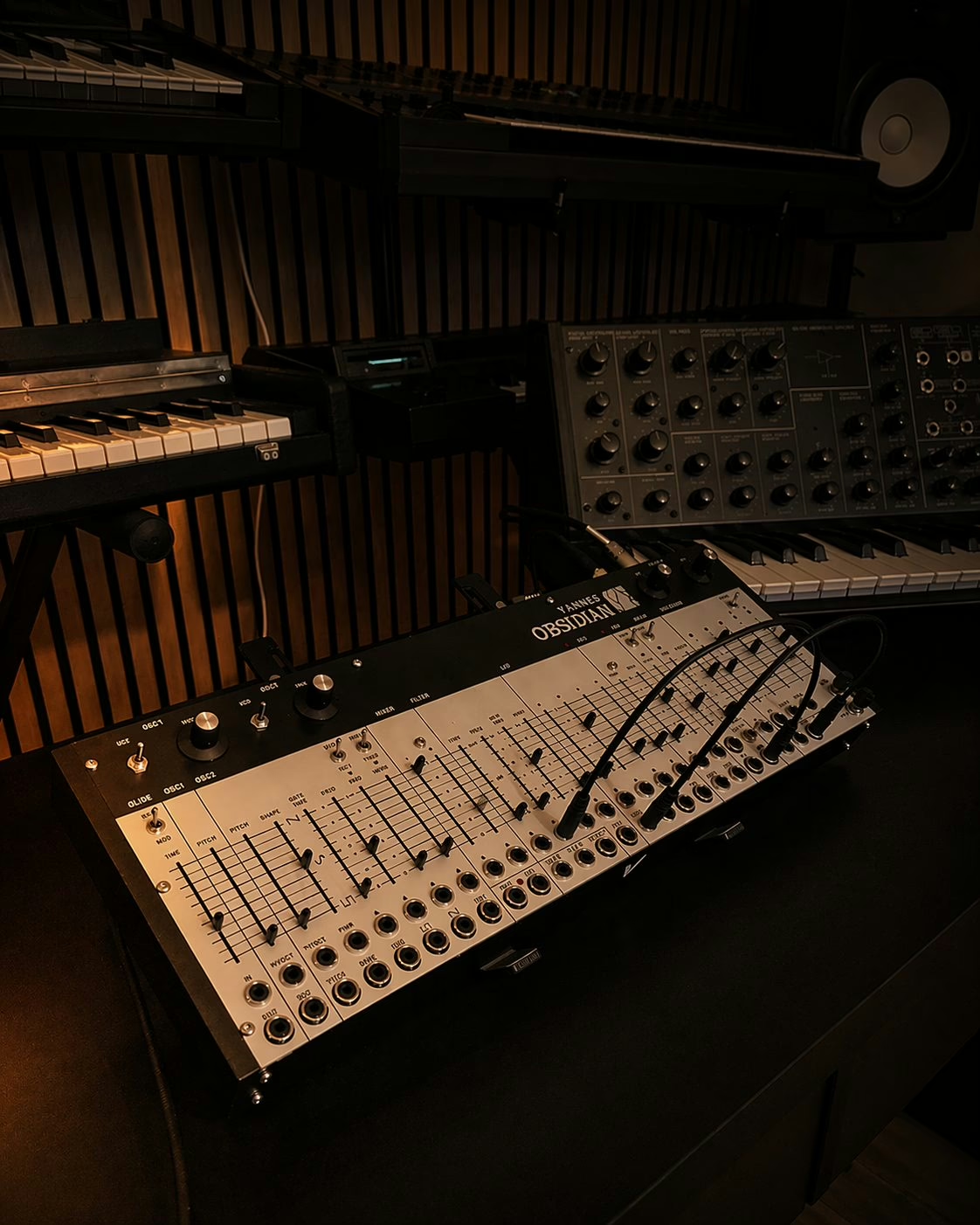
Some synths pick a side. The Obsidian refuses to. The first fully in-house instrument from Dutch boutique builder Vannes Devices takes on a rare challenge: getting subtractive East Coast logic and the more wayward tricks of West Coast synthesis to live together in one desktop box. On paper, that is a stretch. In practice, it is a semi-modular analog synth that feels designed by someone who knows exactly what they want to hear.
Vannes Devices: a builder comes back
Behind Vannes Devices is Koen Pepping, co-founder and former owner of Majella Audio. He started Vannes Engineering back in 2017, and in 2026 he is finally showing his first fully self-made instrument. That history matters. This is not a brand licensing a reference design; it is a designer who has spent years elbow-deep in analog schematics. You can hear it in how coherent the architecture is, where every section answers a musical intention rather than a marketing checkbox.
Two oscillators, two philosophies
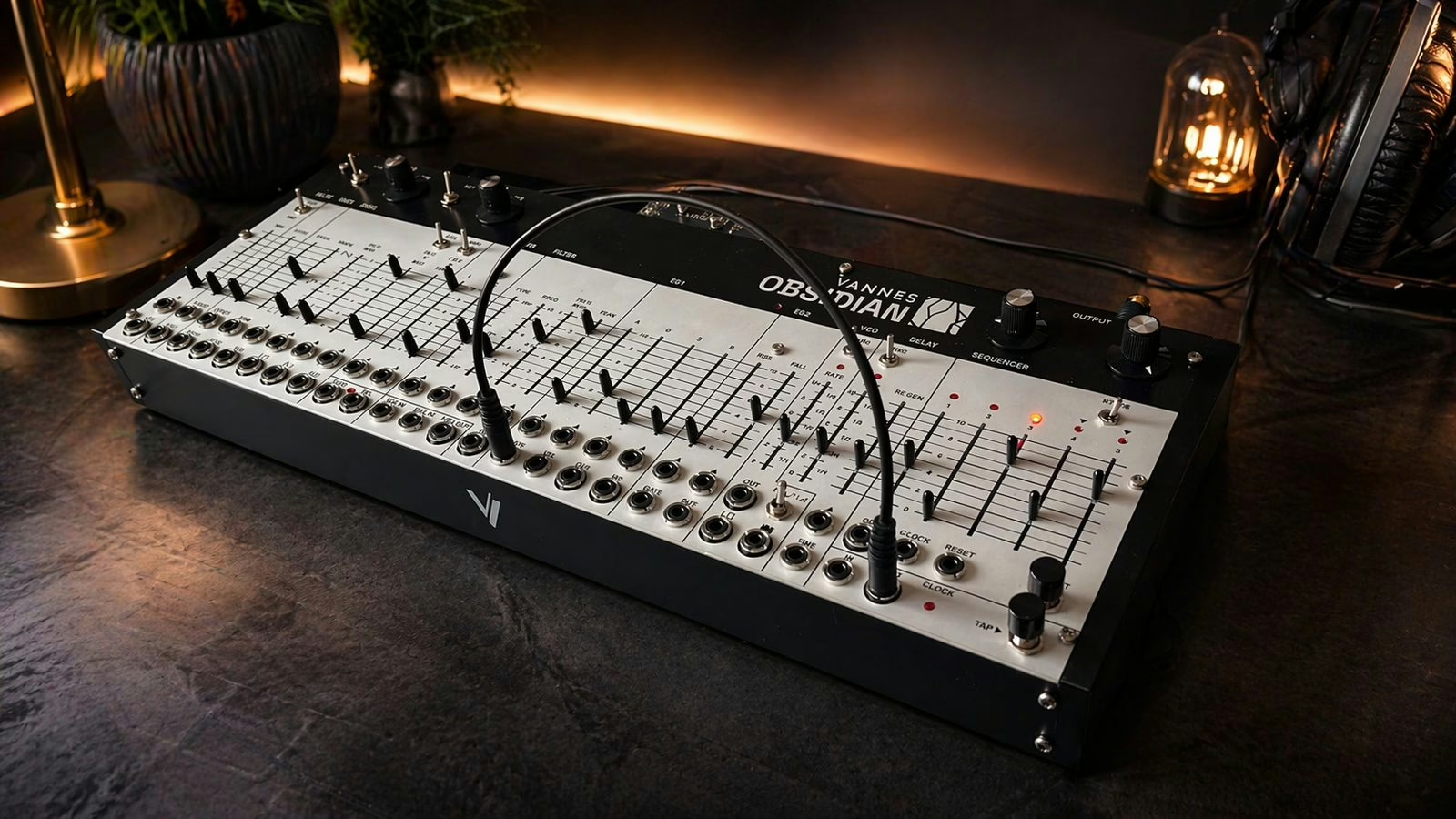
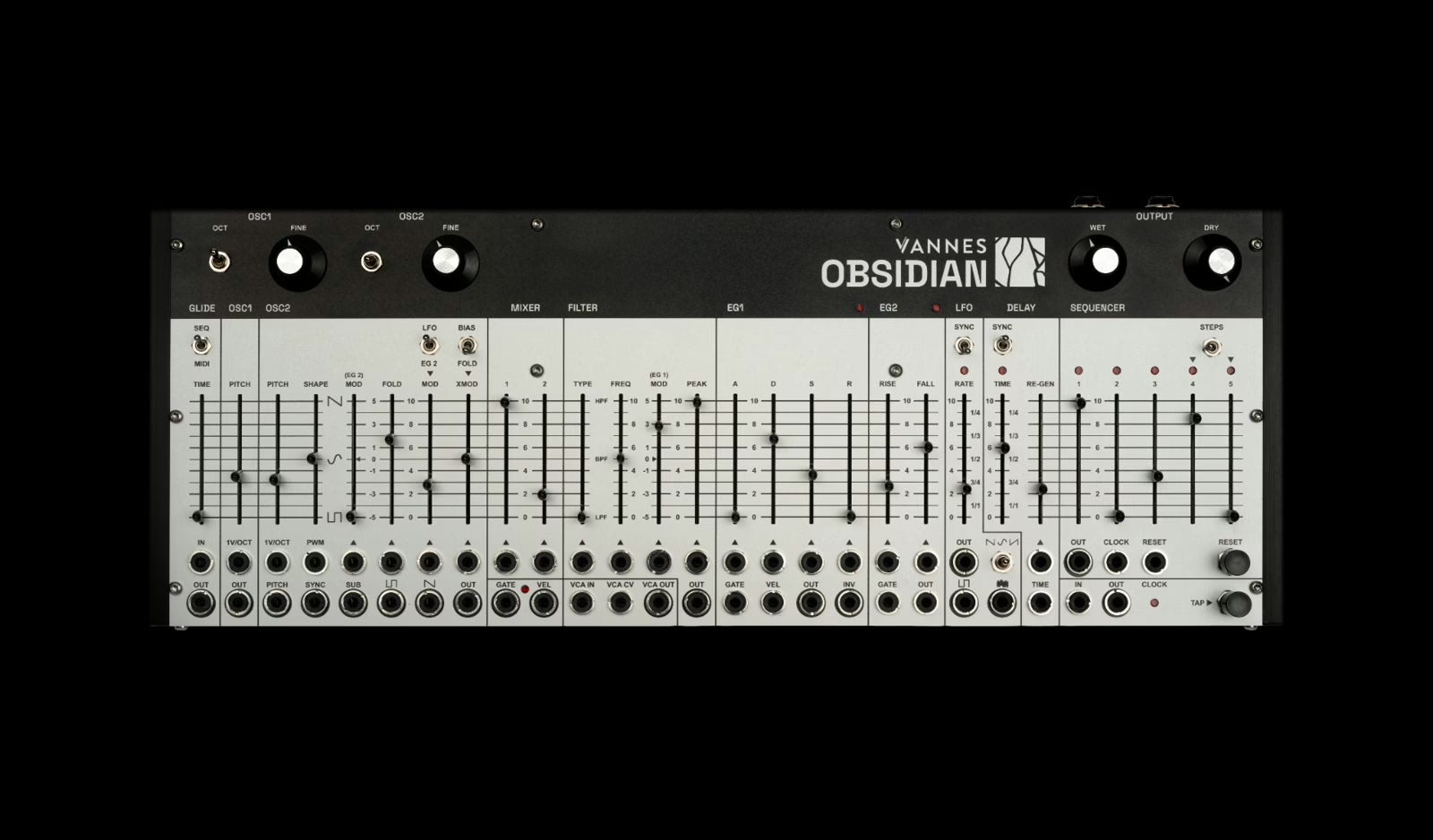
The Obsidian’s core is a pair of VCOs with opposite temperaments. The first is a clean, almost neutral sine-wave oscillator with a pitch fader and a fine-tune knob. The second heads firmly West Coast, with continuous wave shaping (saw-sine-square), pulse-width modulation, sync, a wavefolder and cross-modulation (XMOD). A sub-oscillator one octave down thickens the whole thing. It is a smart split: one “serious” oscillator to hold the note, one “playful” oscillator to run off into metallic harmonics and moving timbres.
A filter that morphs, two envelopes that clash
The multimode filter offers low-pass, high-pass and band-pass with continuous morphing between modes under CV control, so you can slide from a muffled sweep to a nasal honk without ever letting go of the modulation. Resonance is there too, of course. On the modulation side, the Obsidian plays its house duality again: a traditional fader-based ADSR on one hand, a Buchla-style function generator on the other, with voltage-controllable rise and fall times. A syncable LFO (saw, sine, ramp) sweeps from 0.01 to 100 Hz, covering slow drifts and near-audio-rate modulation alike.
Sequencer, delay and semi-modular thinking
The five-step sequencer, again West Coast in spirit, can be set to 4 or 5 steps with external or manual reset, and locks to tap tempo, a Eurorack clock or MIDI clock. Five steps is few, but it is exactly the tool for asymmetric, hypnotic patterns rather than tidy four-on-the-floor lines. A tape-style digital delay with voltage-controlled time and feedback closes the chain and lends itself nicely to synced rhythmic effects. The whole thing stays semi-modular: normalled to play right away, yet peppered with patch points the moment you want to break the rules.
How it stacks up in a crowded field
Desktop semi-modulars are a busy neighborhood: Moog, Behringer, Make Noise and a few others have planted flags there. The Obsidian’s angle is not a feature war but the deliberate marriage of two schools in a footprint that fits on the corner of a desk. That is a subtler bet than it looks: plenty of “hybrid” instruments just pile on options without ever finding a voice. Here, the clean-oscillator-plus-unruly-oscillator, morphing filter and dual-envelope structure yields an instrument that can hold a fat bass or a snarling drone with equal ease.
| Section | Key takeaway |
|---|---|
| Oscillators | Sine VCO 1 + West Coast VCO 2 (wavefolder, PWM, sync, XMOD) + sub-osc -1 octave |
| Filter | Multimode LP/HP/BP, continuous CV morphing, resonance |
| Modulation | Fader ADSR + Buchla-style function generator + LFO 0.01–100 Hz |
| Sequencer | 5 steps (4/5 selectable), sync tap / Eurorack / MIDI |
| Effect | Tape-style digital delay, CV time and feedback |
| Format | Desktop semi-modular, built-in patchbay |
My take. I have always had a soft spot for instruments that feel designed by an ear rather than a product department. The Obsidian ticks that box. The real question is not whether it “does” East and West Coast — any spec sheet can claim that — but whether the two worlds actually talk to each other once your hands are on the faders. The neutral-oscillator / turbulent-oscillator pairing and the morphing filter suggest they do. I will stay measured on one point, though: as of this writing the Obsidian is still described as an instrument in its final tuning phase, with the last revisions to the circuit board, enclosure and firmware underway. Price and availability are not locked. This is a project to watch closely, not yet a product to order sight unseen.
To dig further, it sits nicely alongside other recent releases bending the rules of the electronic instrument, from the Vermona drumDING analog drum machine to a fresh crop of free software synths and the return of physical modeling at reFX with Rippler.