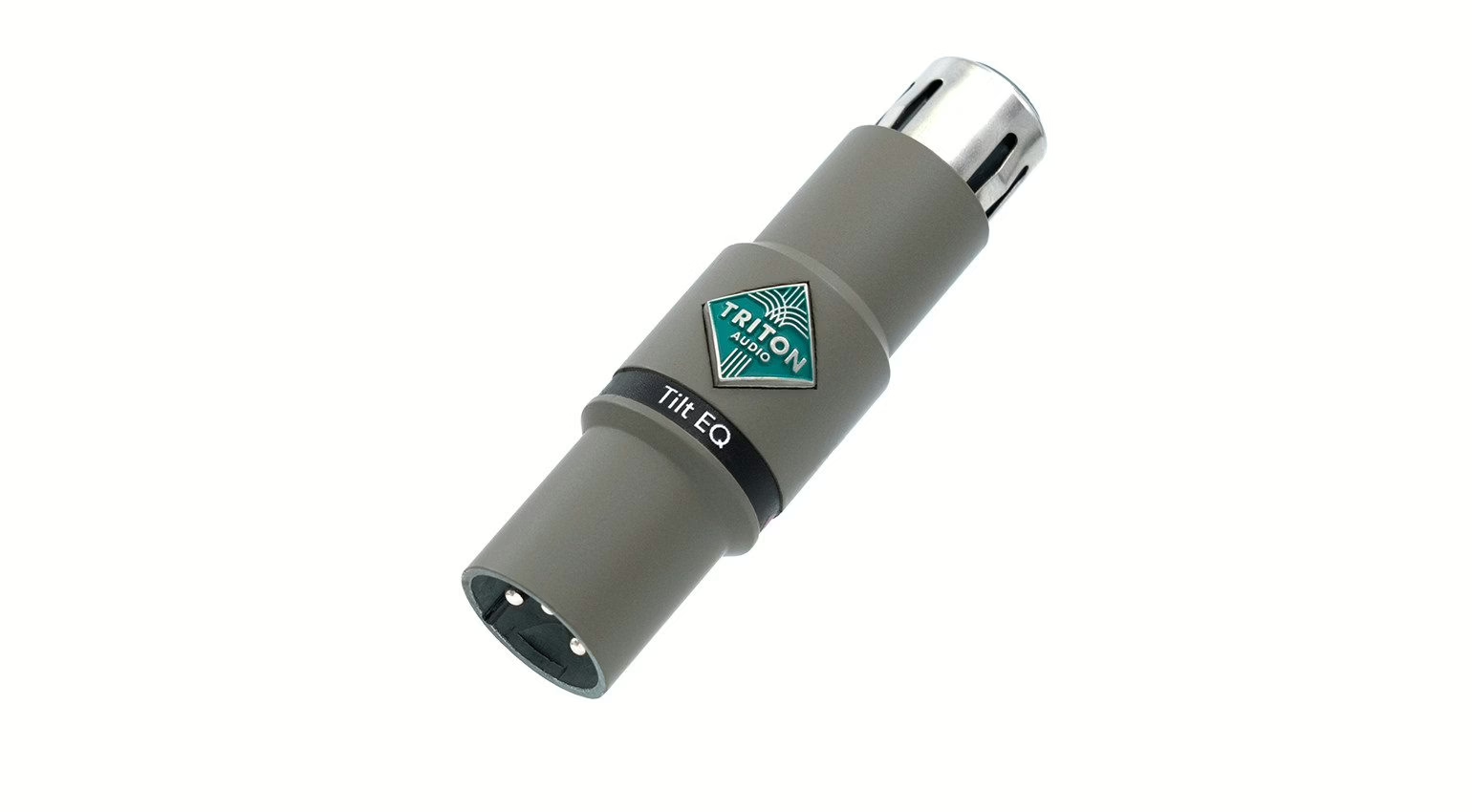
There’s a class of studio accessory nobody talks about much, but that you never let go of once you’ve adopted it: in-line preamps, those little XLR boxes that sit between the mic and the console to add clean gain. Triton Audio, the Dutch maker behind the famous FetHead, is expanding the family with the Tilt EQ. The twist this time: a built-in tone control on a single knob. On paper the idea looks almost too simple. In practice, it’s exactly the kind of tool that rescues a take.
A Class-A FET booster, now with a tilt EQ
The Tilt EQ follows the house recipe: a discrete Class-A FET circuit, powered by the 48V phantom from your console or interface, lifting the mic signal by 22 dB with no audible noise. It’s the FetHead logic, designed for the dynamic and ribbon mics whose low output pushes budget preamps to their limit. Those mics demand a lot of gain, and that’s precisely where cheap input stages start to hiss.
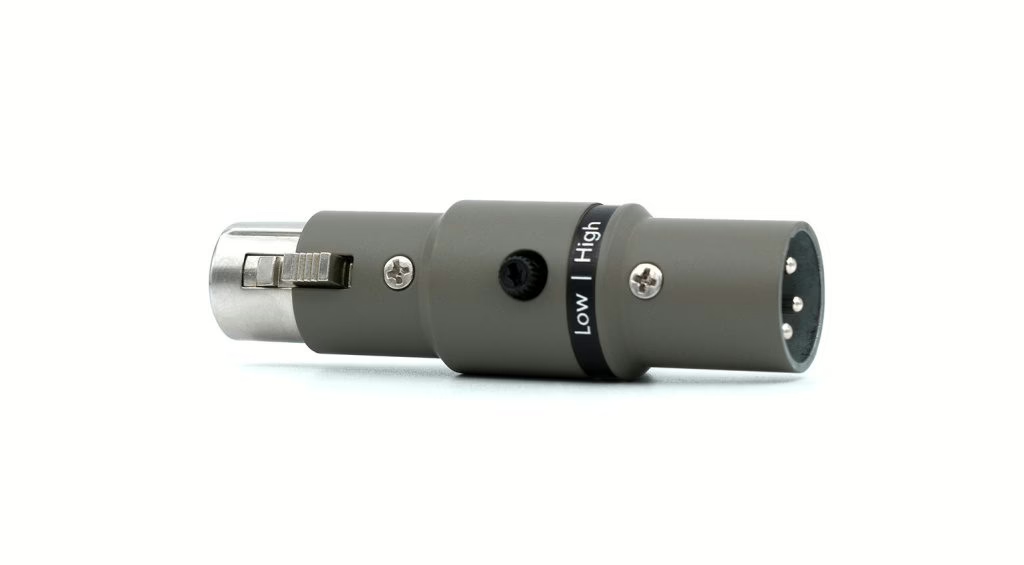
The difference is in the second stage: a tilt-style tone control, driven by a single knob, pivoting at 700 Hz. At the 12 o’clock position the signal passes untouched. Turn clockwise and you boost the top while cutting the bottom; turn the other way and you get the opposite, rounder and darker. One gesture tips the mic’s tonal balance around that pivot, without ever behaving like a full parametric EQ.
Why a tilt makes the difference on a ribbon
A ribbon mic, or a slightly dull dynamic, often suffers from a recessed top end. The usual fix is to chase it later, at the desk or in the DAW. The Tilt EQ lets you do it at the source, before the main preamp: a few degrees clockwise are enough to reopen the top and bring a vocal or an acoustic guitar forward. Conversely, on a harsh source, a small tilt toward the low end softens the whole thing.
An important point for owners of older ribbons: the box is indeed powered by 48V phantom, but it does not pass that phantom on to the connected microphone. A vintage ribbon, which hates seeing phantom hit its capsule, stays safe. That seemingly trivial detail is the whole difference between a universal accessory and one reserved for dynamics.
Where it really earns its keep
On stage and in the studio, I’ve spent years running ribbons and demanding dynamics behind preamps that were sometimes a little short on gain. The FetHead saved plenty of takes simply by supplying the gain that was missing. The Tilt EQ goes one step further: it lets you set the tone right at capture, which spares you heavy corrective moves afterwards. My real concern was never the cable — a good Mogami or Canare does the job — but the link that comes immediately after the mic. A clean stage plus a well-placed tilt often beats a corrective plugin bolted on later.
Price, availability and where it sits
The Tilt EQ is available now for around $119.95 (£77, €89). It stays true to the FetHead idea: an affordable accessory that doesn’t replace a high-end preamp, but earns its place everywhere — studio, location recording, podcasting, even on stage to lift a dull mic. The essentials are quickly summed up:
- +22 dB of gain from a low-noise discrete Class-A FET circuit;
- Single-knob tilt EQ, 700 Hz pivot, neutral at 12 o’clock;
- Powered by 48V phantom, not passed on to the mic (ribbon-safe);
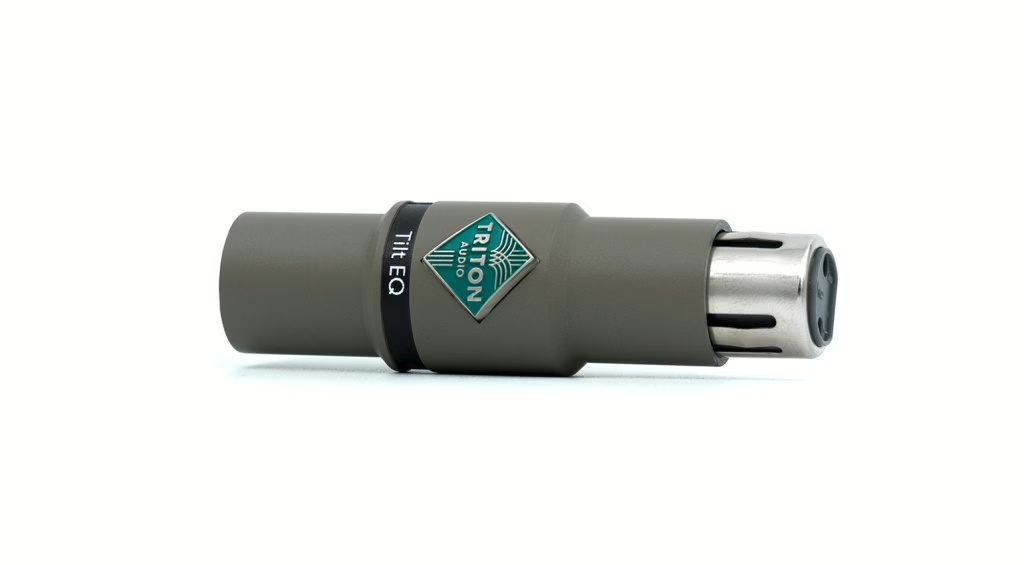
- In-line XLR connection, straight onto the microphone output.
Unlike big analog channel strips such as the Focusrite ISA C8X or the Manley tube EQs, the Tilt EQ isn’t after spectacular color: it’s after quiet efficiency — the kind you drop in your bag and forget, because it just works.

Should there be a Tilt EQ in your bag?
If you juggle ribbon mics, temperamental dynamics or interface preamps that run short on gain, the answer is probably yes. The Tilt EQ reinvents nothing, and that’s to its credit: it takes a proven idea, the in-line booster, and adds just enough tonal control to turn an average take into a usable one. At this price, it’s the kind of tool you wish you’d had sooner. For the full measurements, the official product page has the details.