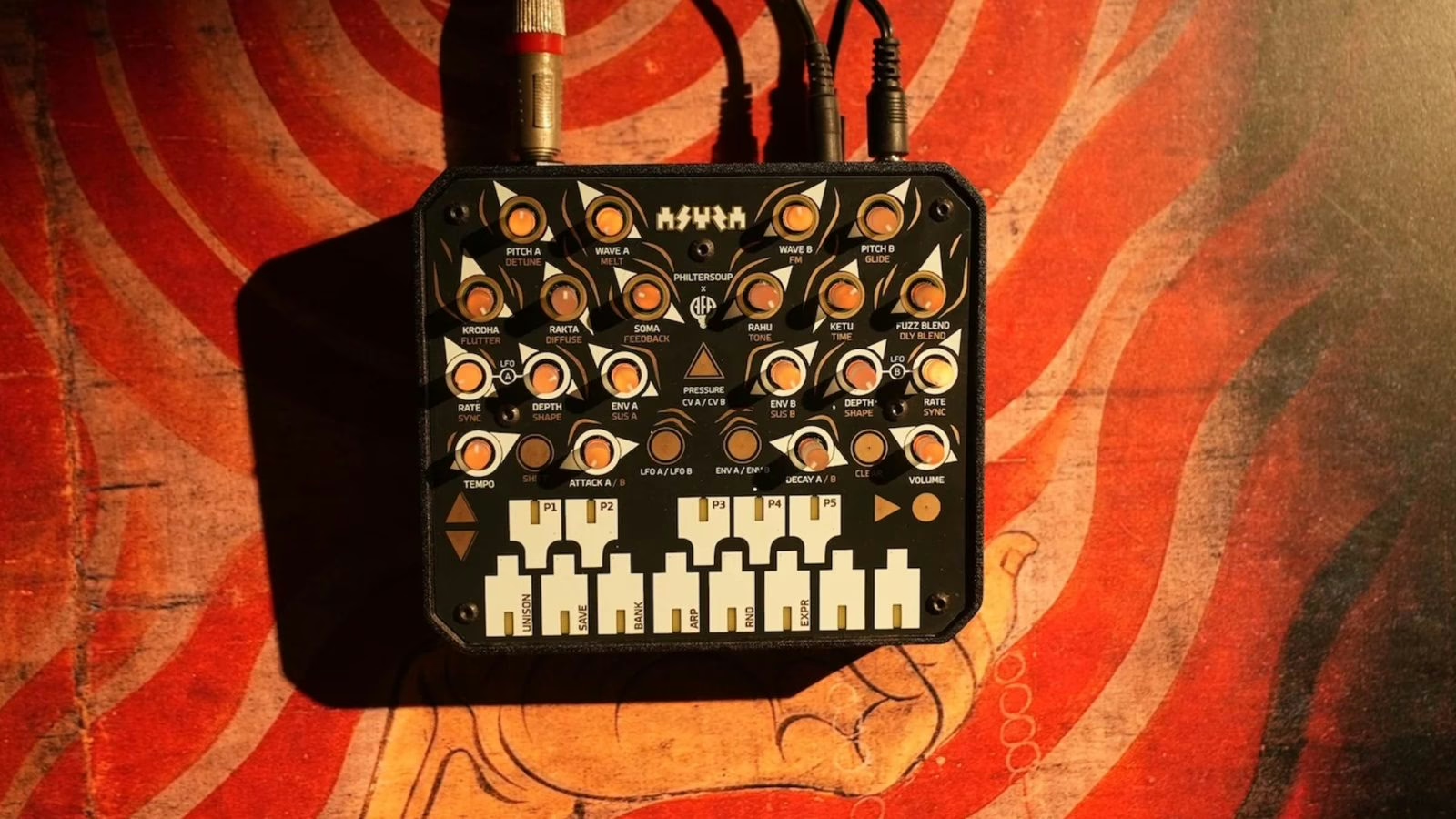
Some synths chase smoothness. The Asura is not one of them. After more than three years in development, India’s Animal Factory Amplification is finally shipping its first desktop instrument, designed with musician Sanjay Das (Philtersoup). The Asura is a six-voice wavetable polysynth that leans into an aggressive, textured aesthetic, the opposite of a polite, consensus-friendly machine. It is also, notably, the first standalone synthesizer designed and built in India.
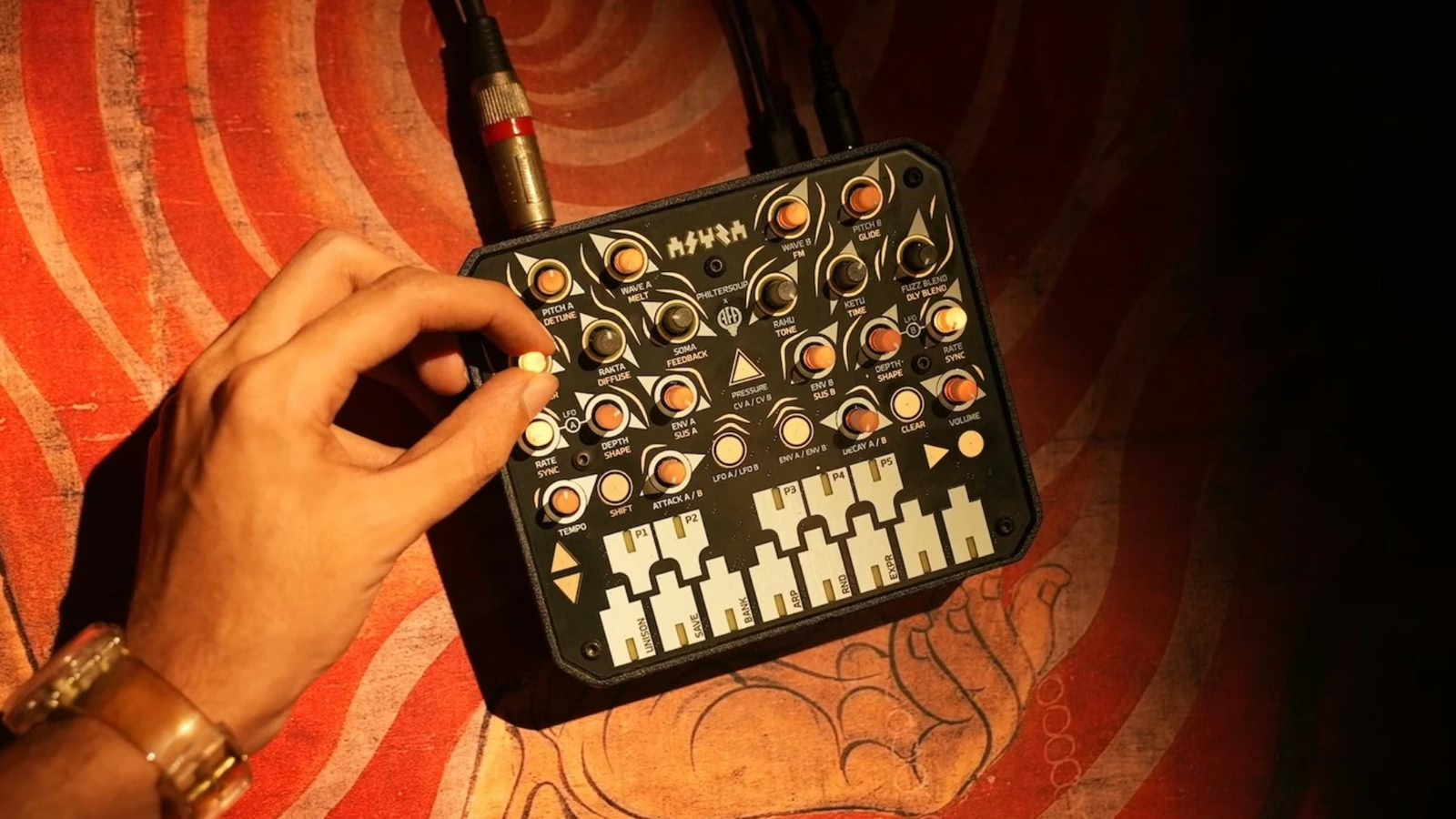
Two wavetables and one radical design choice
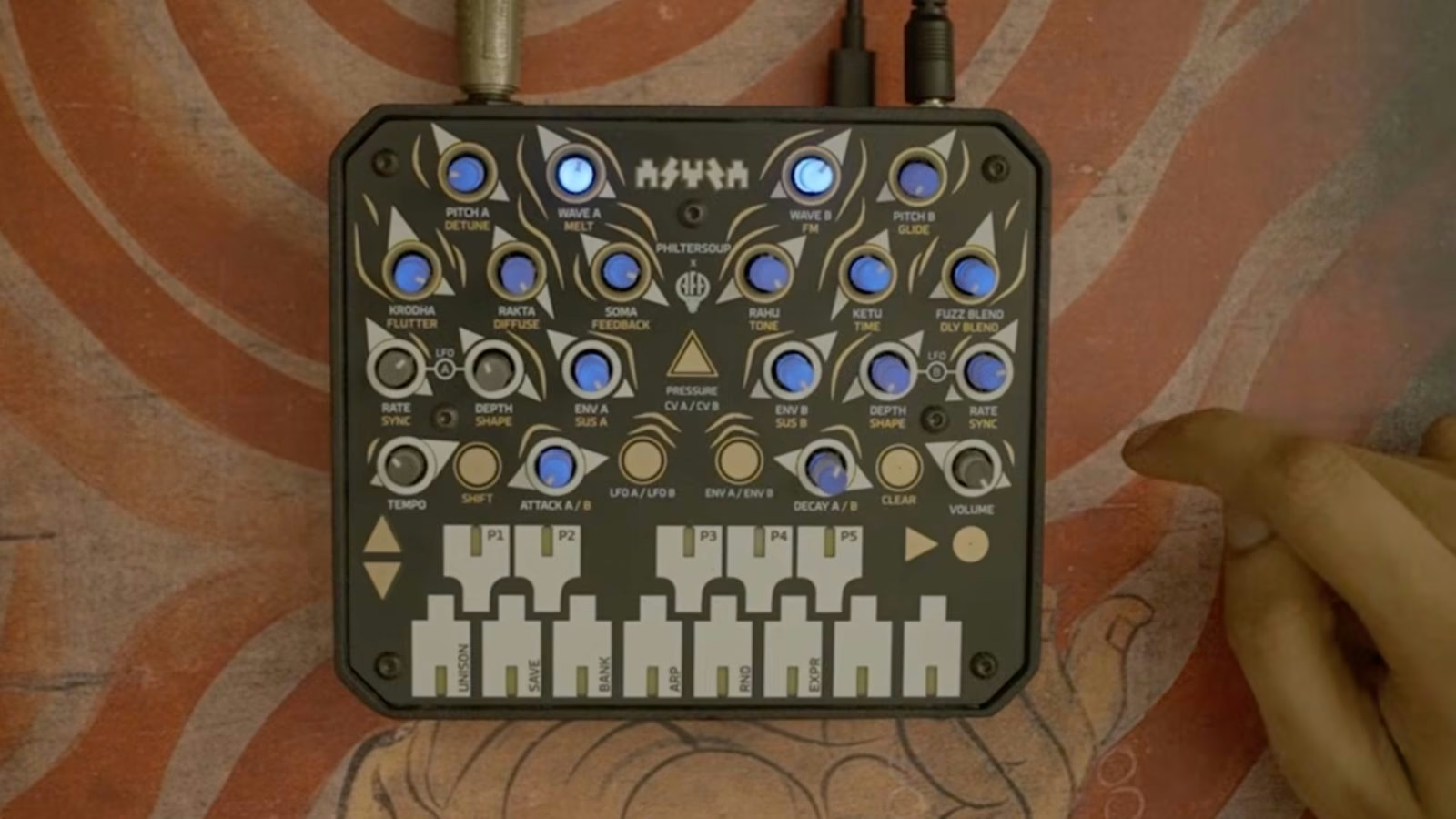
The sound engine is built around two wavetable oscillators. Each offers seven waveforms that the instrument smoothly interpolates between, delivering the spectral sweeps that define wavetable synthesis. The two oscillators can be summed conventionally, or set to modulate each other, pushing you into FM-adjacent territory with metallic, unstable spectra.
Then comes the real statement. On almost every synth, the oscillator signal runs through a filter that shapes the timbre. Here there is no classic resonant filter: the oscillator output feeds straight into an analog distortion circuit. That fuzz is the Asura’s signature, sitting between harmonic saturation and outright grit. If you want velvety pads, look elsewhere; if you want character, this is your machine.
Modulation, granular delay and a parameter-lock sequencer
The Asura does not stop at its engine. It packs a granular delay that shatters the signal into grains for diffuse or rhythmic textures, a natural fit for an already rough voice. The modulation matrix is generous: every parameter can be modulated, sequenced on the unit, or driven over MIDI and CV, which places the instrument as comfortably on a desk as in a modular system.
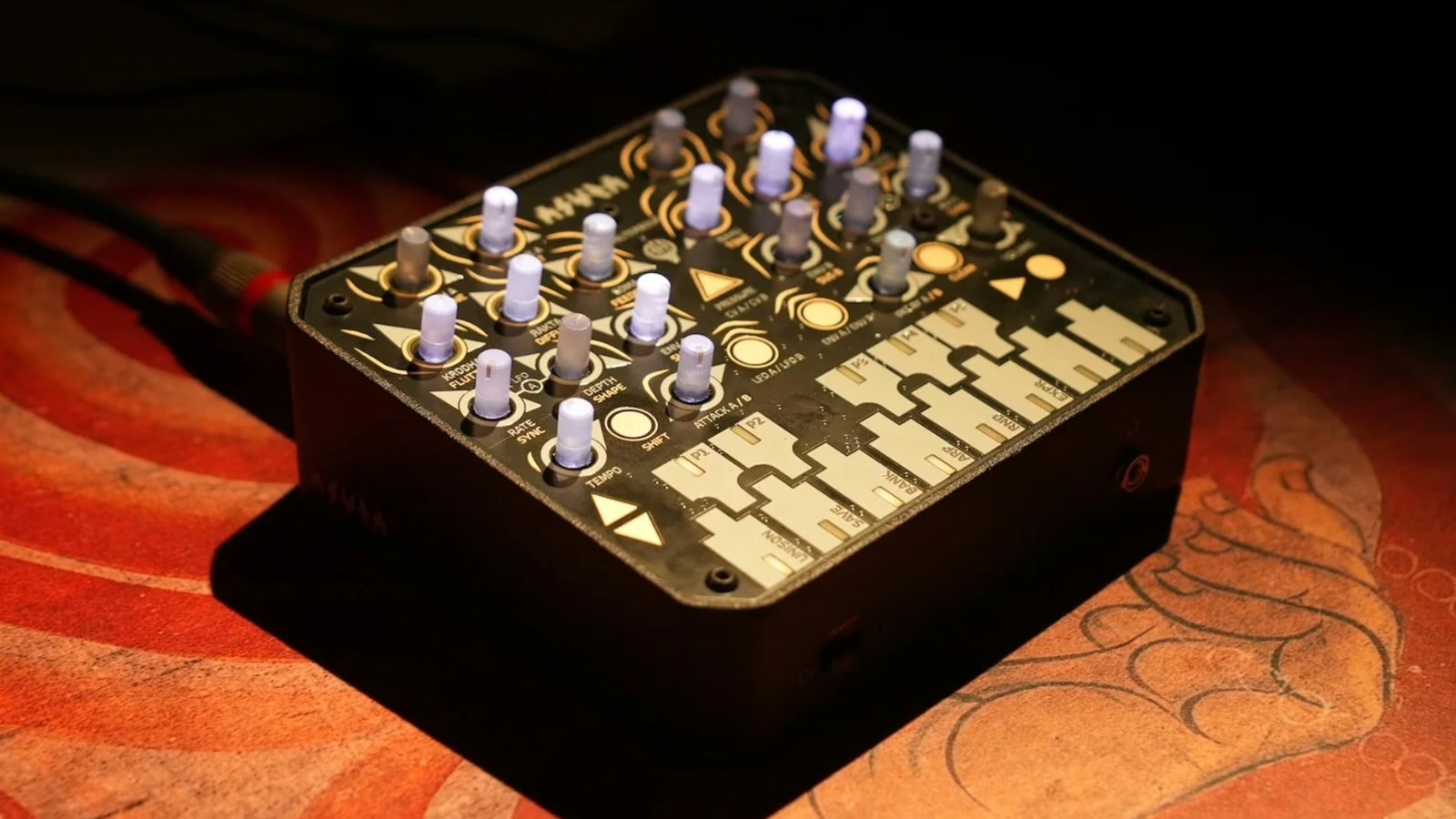
For sequencing, there is an eight-step sequencer with parameter locks: each step can store a different value for any parameter. It is the principle that made Elektron boxes famous, and it turns a simple pattern into a living, evolving sequence. On an instrument this focused on texture, it is exactly the right tool.
The specs at a glance
- Polyphony: six voices, portable desktop format.
- Oscillators: two wavetables (seven waveforms each, interpolation), summed or cross-modulating.
- Timbre: analog distortion circuit in place of the filter, built-in granular delay.
- Control: every parameter modulatable, eight-step parameter-lock sequencer, MIDI and CV.
Price and availability
The Asura is up for pre-order at a launch price of around €433 (roughly $470), valid until 15 October 2026. Production has started, with first units shipping from India from 31 October 2026. The price sits squarely in specialist desktop polysynth territory, which makes sense given the small-batch build and the unusual engine.
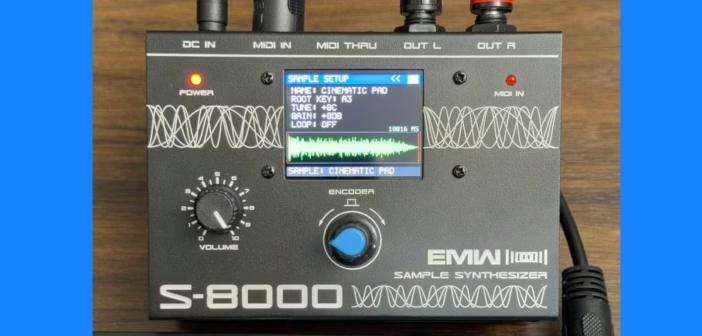
In a market where “wavetable” often means clinical cleanliness, the Asura goes the other way. It joins a busy season for compact synths, alongside the Sonicware ELZ_1 desktop module and the EMW S-8000 sample-playback synth. For the building block that powers it, our guide to wavetable synthesis lays the groundwork, and the Arturia MiniFreak shows another way to open wavetables up to texture.
My take
Swapping the filter for a distortion stage is the kind of call that separates yet another clone from an instrument with a point of view. The Asura does not try to do everything: it tries to do one thing, dirty living sound, and it earns it with parameter locks and a granular delay. Six voices are plenty for that job. The only real friction is the small-batch build and the shipping lead time from India. For a sound designer or producer who likes some bite, it is one of the most refreshing releases of the year.