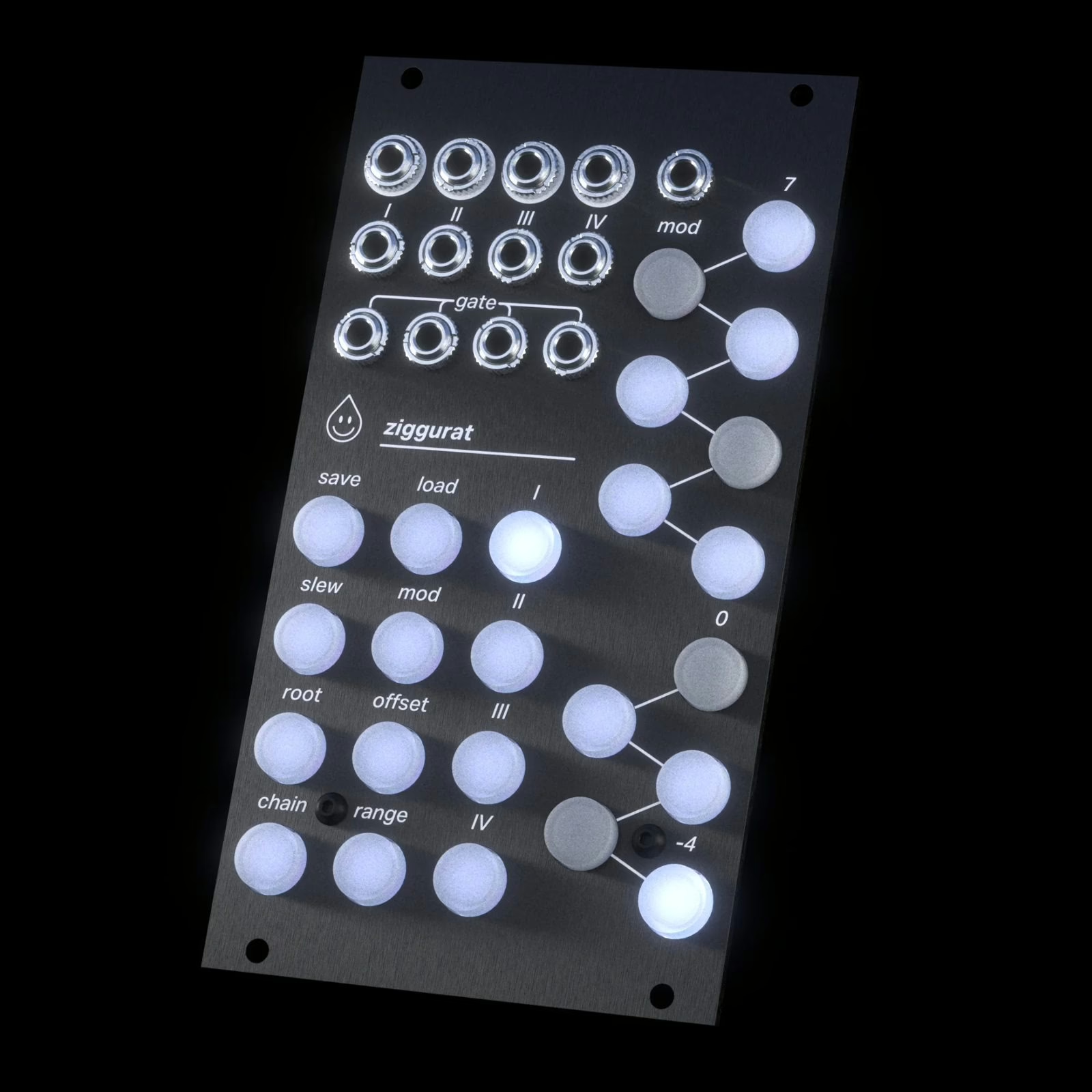
Acid Rain Technology adds the Ziggurat to its Eurorack line, a four-channel quantizer that does far more than snap voltages to the nearest note. The US maker pitches it as a melodic playground: you explore harmonic relationships by combining note masks, input signals, ranges and offsets until something grabs your ear — then you save the lot.
A quantizer built for exploration
On paper, a quantizer forces a control voltage onto the notes of a scale. The Ziggurat comes at it from the performance angle. Its four channels turn any mix of control voltages and gates into melodic lines, and the whole module leans toward guided improvisation rather than plain pitch correction. It is a companion for anyone getting several voltage sources to talk to each other in a patch and hunting for ideas, not just tidiness.
Four channels, one note mask
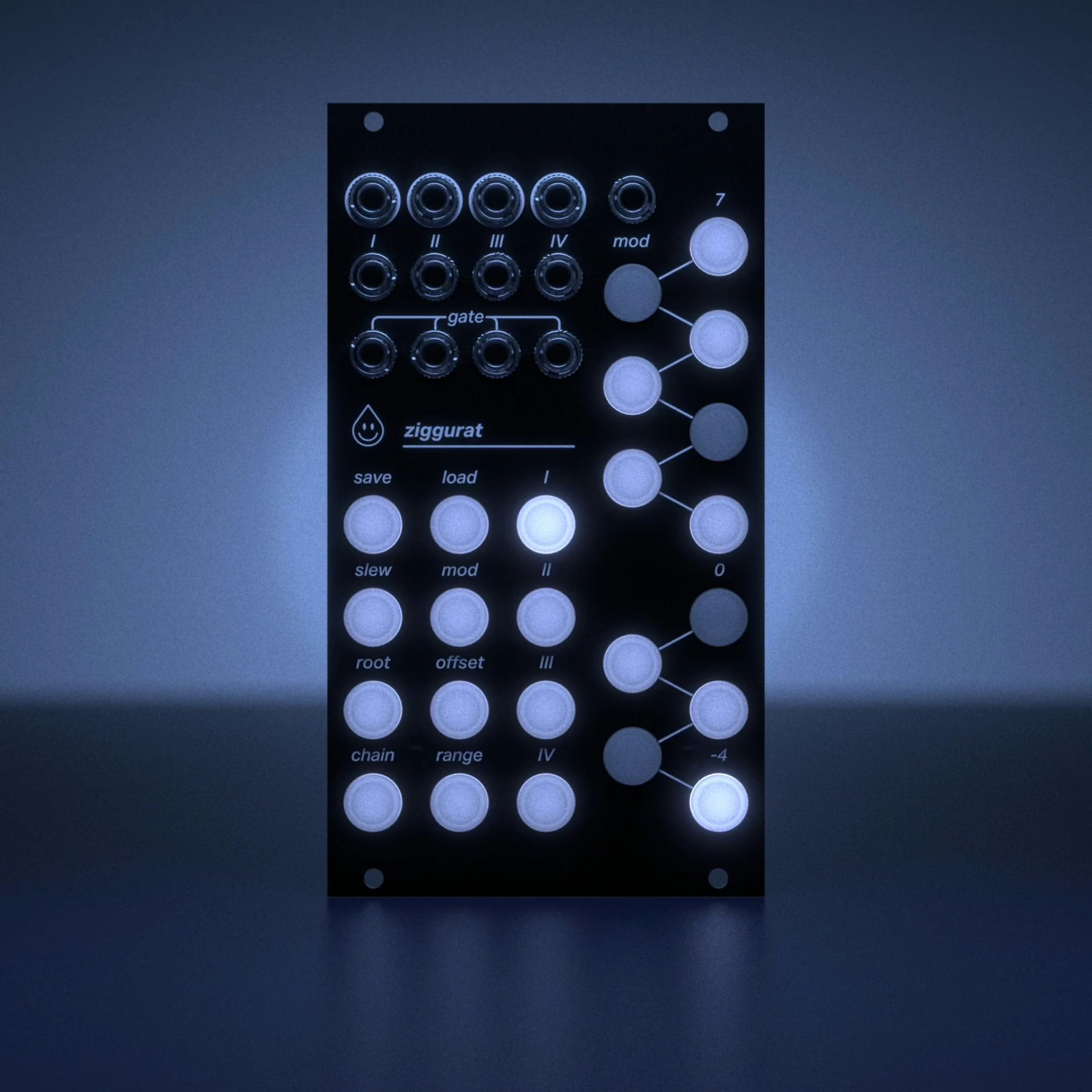
Each channel runs off a twelve-note keyboard that acts as a mask: switch the allowed notes on or off to shape the harmonic colour. Three moves define the play:
- Channel link: hold several channel buttons for a second to link them for polyphonic exploration, then unlink just as fast.
- Per-note slew: a glide time adjustable from 0.1 to 5 seconds applies to specific notes in the mask, for targeted bends and slides.
- Root, Offset and Range: a semitone transpose after quantization shifts the key, an offset before quantization moves the source, and the output range is set in octaves from -4V to +7V by pressing the two bounds you want.
Chain mode: an SH-101-style sequencer
Chain mode nudges the Ziggurat toward a small sequencer: type in a series of notes, step through them in order with a gate, and use a 0–5V voltage to move through the sequence either way. The Mod input, finally, assigns to a parameter — recall a snapshot, slew, root, offset or range — to modulate it on the fly. This sits at the crossroads of quantizer, sequencer and controller, familiar ground for anyone already working with CV/Gate every day.
| Spec | Detail |
|---|---|
| Channels | 4, linkable for polyphony |
| Memories | 35 slots (5 banks of 7) |
| Width / depth | 14 HP / 25 mm |
| Power draw | 90 mA on +12V, 10 mA on -12V |
| Price | around €350 |
Frequently asked questions
Is the Ziggurat polyphonic?
It runs four independent channels that you can link on the fly by holding their buttons for a second. Once linked, the channels move together for chord exploration, then unlink just as quickly.
Can I recall my settings?
Yes. The module offers 35 memory slots across 5 banks of 7, storing a channel’s full state — mask, range, offsets and slew included. That is central to an exploratory workflow where you want to get a happy accident back.
How is it different from a plain quantizer?
Beyond scale-mapping, it adds per-note slew, channel linking, an SH-101-style Chain mode and a Mod input assignable to several parameters. It moves from pitch correction to a genuine melodic idea generator.
What is the footprint and power?
It takes 14 HP with 25 mm depth and draws 90 mA on the +12V rail and 10 mA on -12V, with nothing on +5V. Easy to fit into a standard Eurorack case.
My take
The quantizer is the module you buy last and end up using constantly. The Ziggurat’s smart move is treating pitch accuracy as a starting point rather than the goal: per-note slew and Chain mode push it into playing territory, and the 35 memories stop you losing the great idea you found at 2am. At this price it targets the modular musician who wants to compose in the patch, not repair voltages. How four channels hold up in an already-busy system remains to be seen, but the melodic angle convinces.