The Moog Prodigy never had the Minimoog’s prestige, and that’s exactly what makes it endearing: released in 1979, this small two-oscillator monosynth was the “entry” Moog — affordable, direct, big-sounding, with nowhere to hide. Martinic has just delivered a software emulation that denies itself nothing: polyphony, a built-in sequencer and a spring reverb grafted onto the original circuit.
The original circuit, modelled at component level
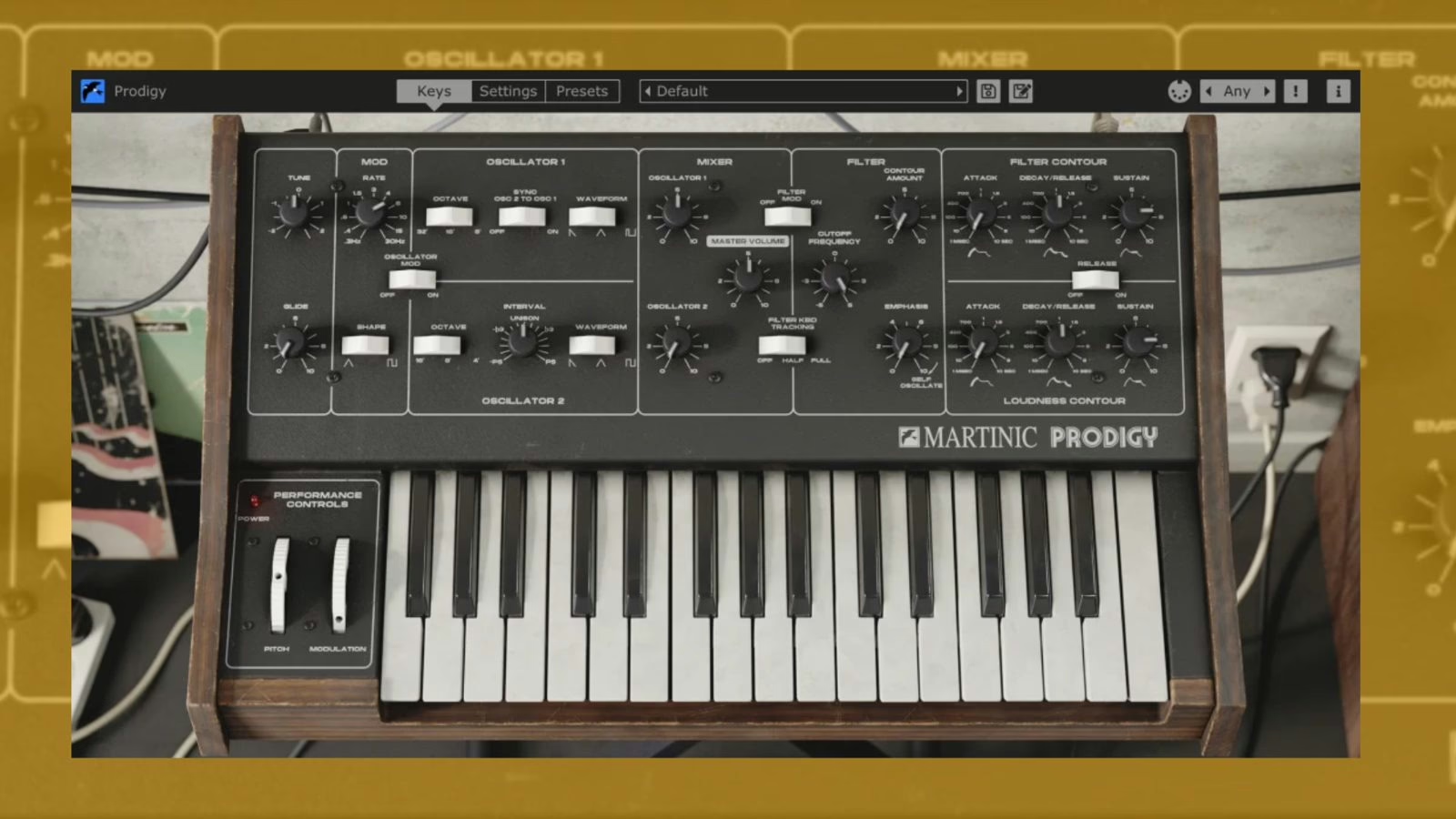
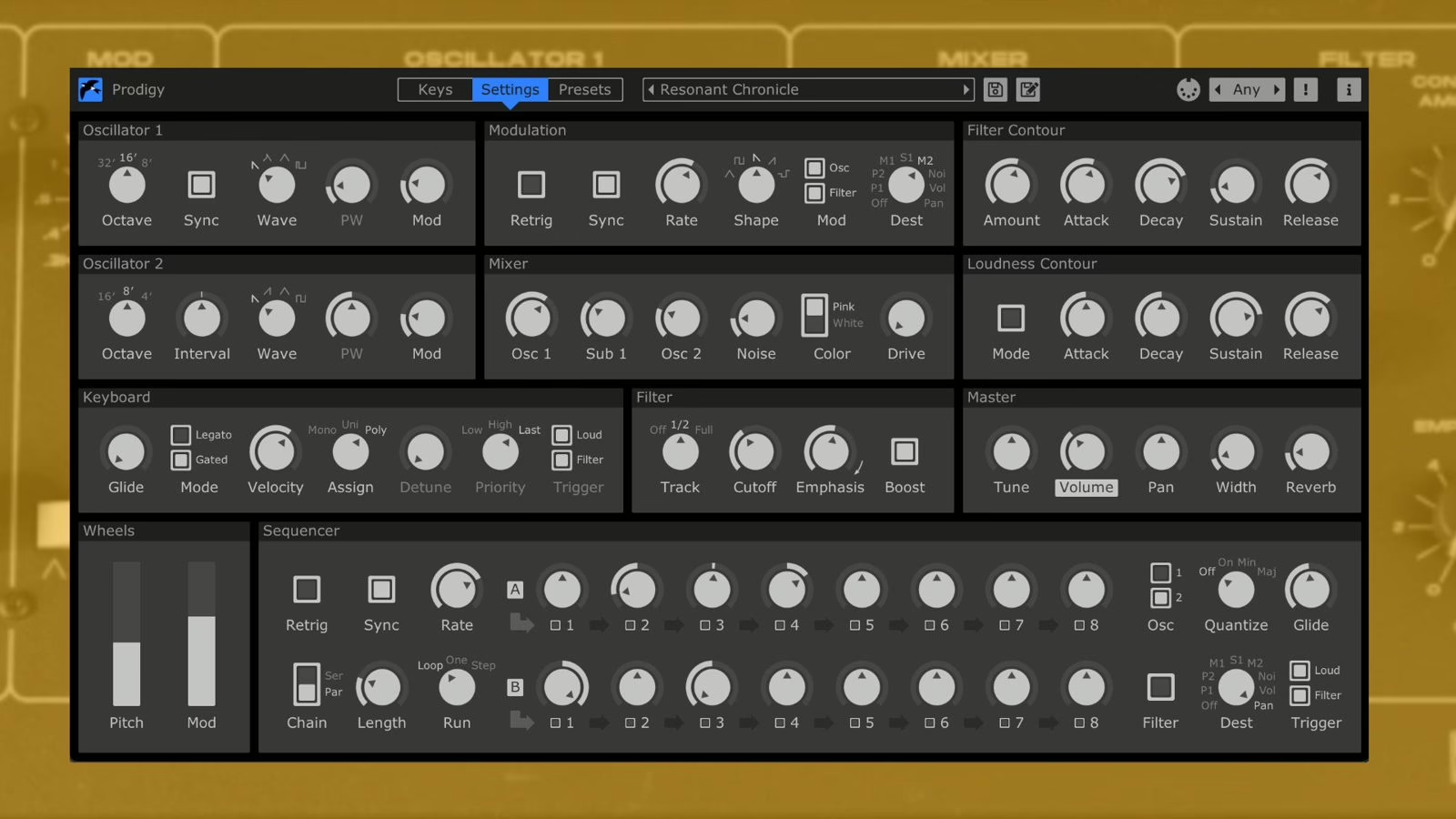
The core stays faithful to the Prodigy: two oscillators offering sawtooth, triangle and pulse, with sync and an interval function on OSC2, all running into a 24 dB/octave ladder low-pass filter — the famous Moog slope — with keyboard tracking and bass compensation. Martinic leans on its in-house ACE (Advanced Circuitry Emulation) technology, which models the analogue circuit’s behaviour rather than sampling a few settings. That level of modelling decides everything: how the filter breaks into self-oscillation, the grain of the resonance, the slight instability that keeps a virtual synth from sounding “frozen.”
What the original never had
The 1979 Prodigy was monophonic and stripped-back. The Martinic version keeps that character but opens the taps: sub-oscillator, pink and white noise generators, and an extended Multidrive stage to saturate the signal before the filter. For modulation, there are two full ADSR envelopes (filter and amp), an extended LFO with several waveshapes, syncable and routable to pulse width, noise, pan and other destinations. A reverb inspired by the Moog 905 spring module closes the chain, with stereo width and space controls.
Two additions genuinely change how you use it. First a sequencer: two eight-step chains in parallel, or a single sixteen-step sequence, with pitch sequencing, parameter automation, trigger modes, retrigger, quantization and glide. Then polyphony, up to eight voices, with unison up to six voices, detune and per-voice panning — enough to turn a bass-and-lead monosynth into a creamy pad. The plugin also handles MPE, MIDI learn and a dual interface: a vintage panel reproducing the Prodigy’s front, and an advanced panel exposing the added parameters.
Emulating a monosynth: the debate that never dies
I’m often asked whether analogue hardware is still “mandatory.” My answer hasn’t moved: fully in-the-box is viable, I adopted it without regret, and the real yardstick is the sonic result, never dogma. A virtual Prodigy that recalls eight voices, syncs to tempo and drops into a project in two clicks does things no one-oscillator box will do on a busy session. Still, the point of emulating a Prodigy rather than a Minimoog is that slightly raw, less polished grain — if the modelling preserved it, the tool has real personality; if it smoothed it out, it’s just one more subtractive synth. That’s the exact point on which to judge it by ear.
Price and availability
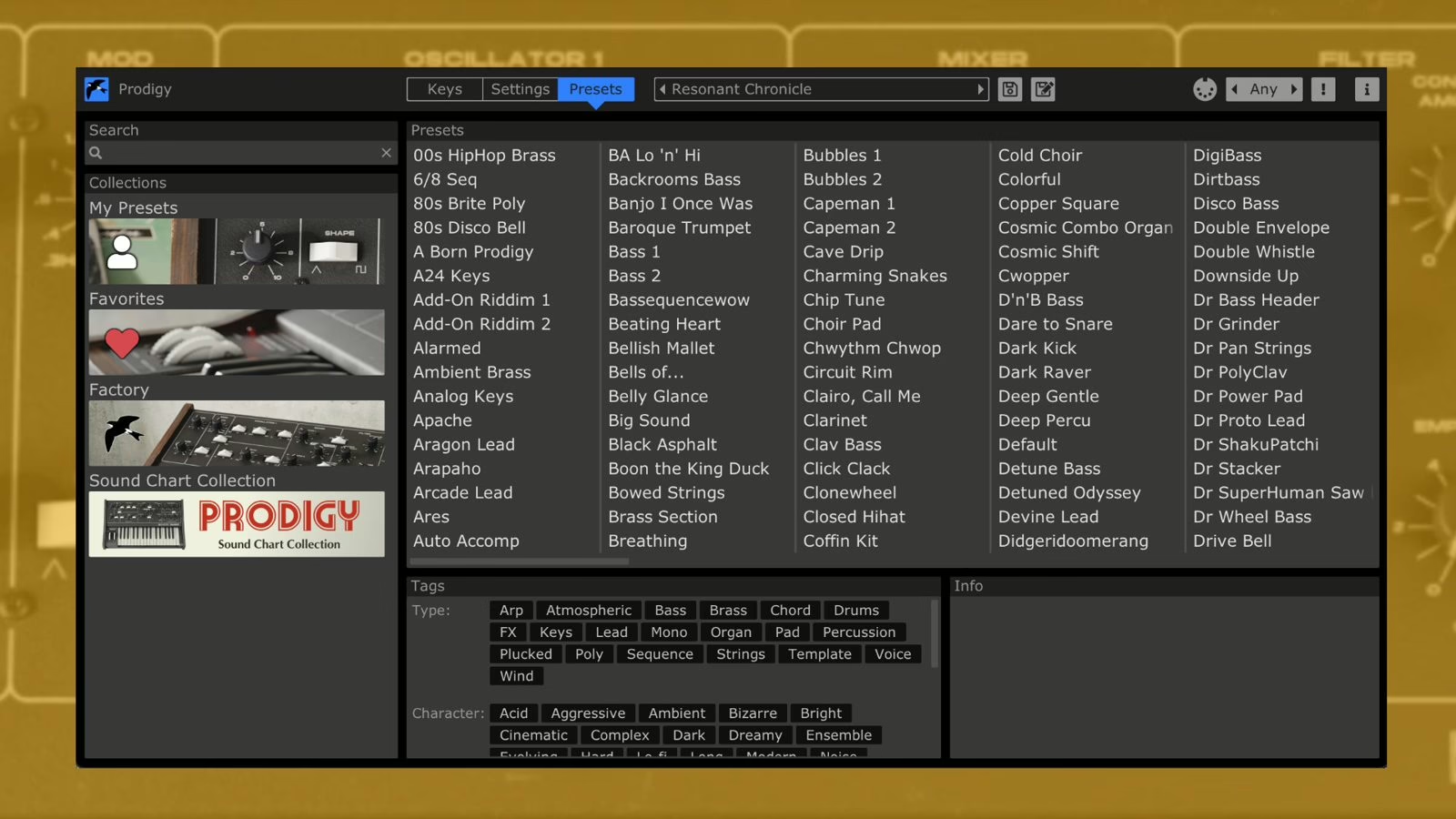
Martinic Prodigy shipped on 3 September 2026 in VST, VST3 and AU for macOS (Apple Silicon and Intel) and Windows, with more than 300 presets from several respected sound designers. The launch price is 34 euros, against 68 list, with a free trial. To go further, our explainer on subtractive synthesis covers everything happening between those two oscillators and the filter, and to drive the sequencer from a modular, see our guide to MIDI and CV/Gate. In the same spirit of software reissues, the Rhodes Clav Pro follows a neighbouring logic. Product details are on Martinic’s site.