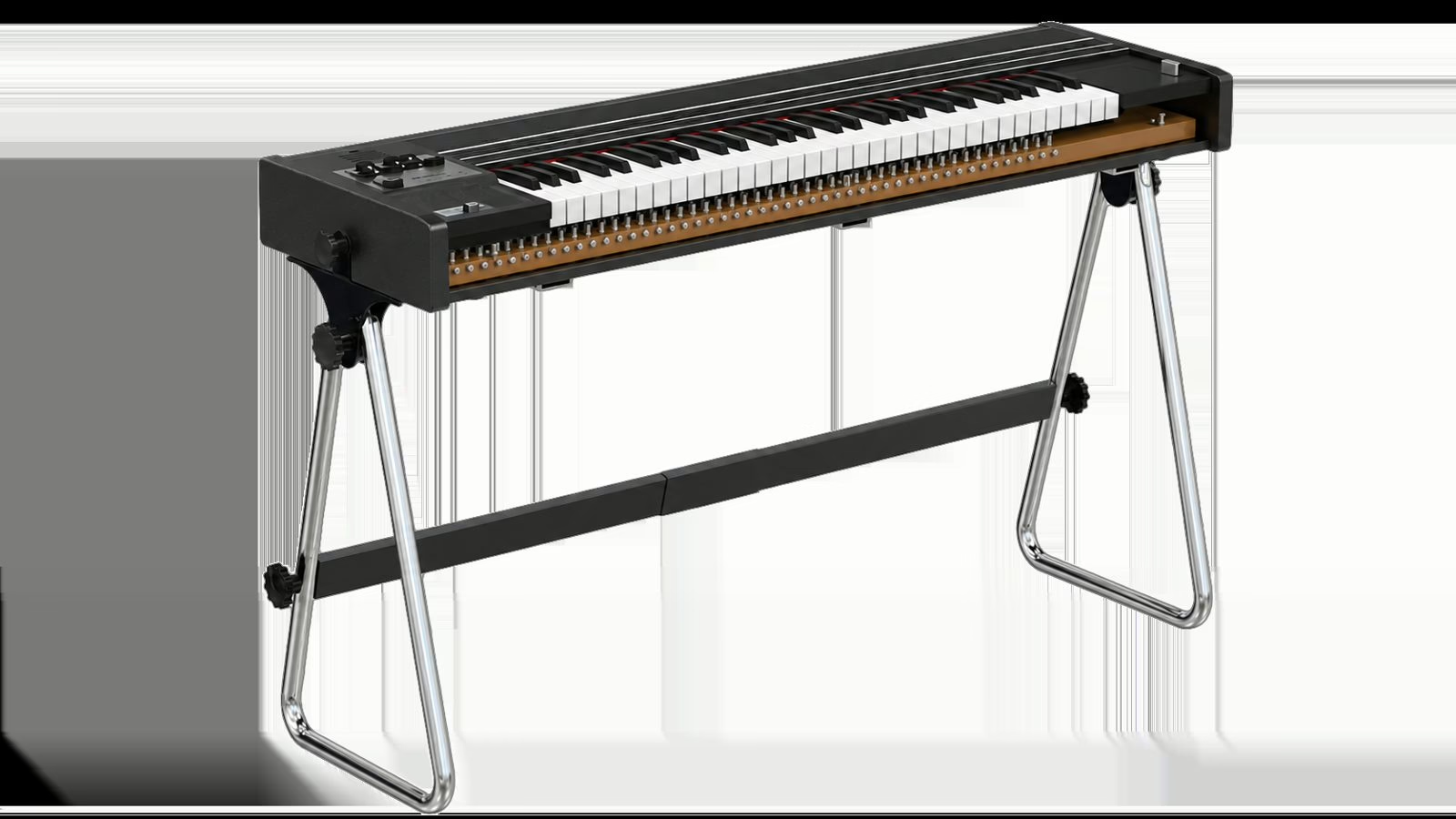
The Clavinet has never been just another keyboard. Under each key, a rubber tip strikes a metal string: the result has the attack and grit of a rhythm guitar, a nervous energy that drove whole eras of funk, soul and disco. That very character is what Rhodes puts front and center with Clav Pro, a virtual instrument built around a rare 1977 Clavinet D6 ‘Transition’ unit.
Rhodes isn’t after a surface-level sample set. The company promises a close recreation of the physical instrument, aiming to capture not just the tone but the playing feel that made the D6 famous.
A D6 captured up close
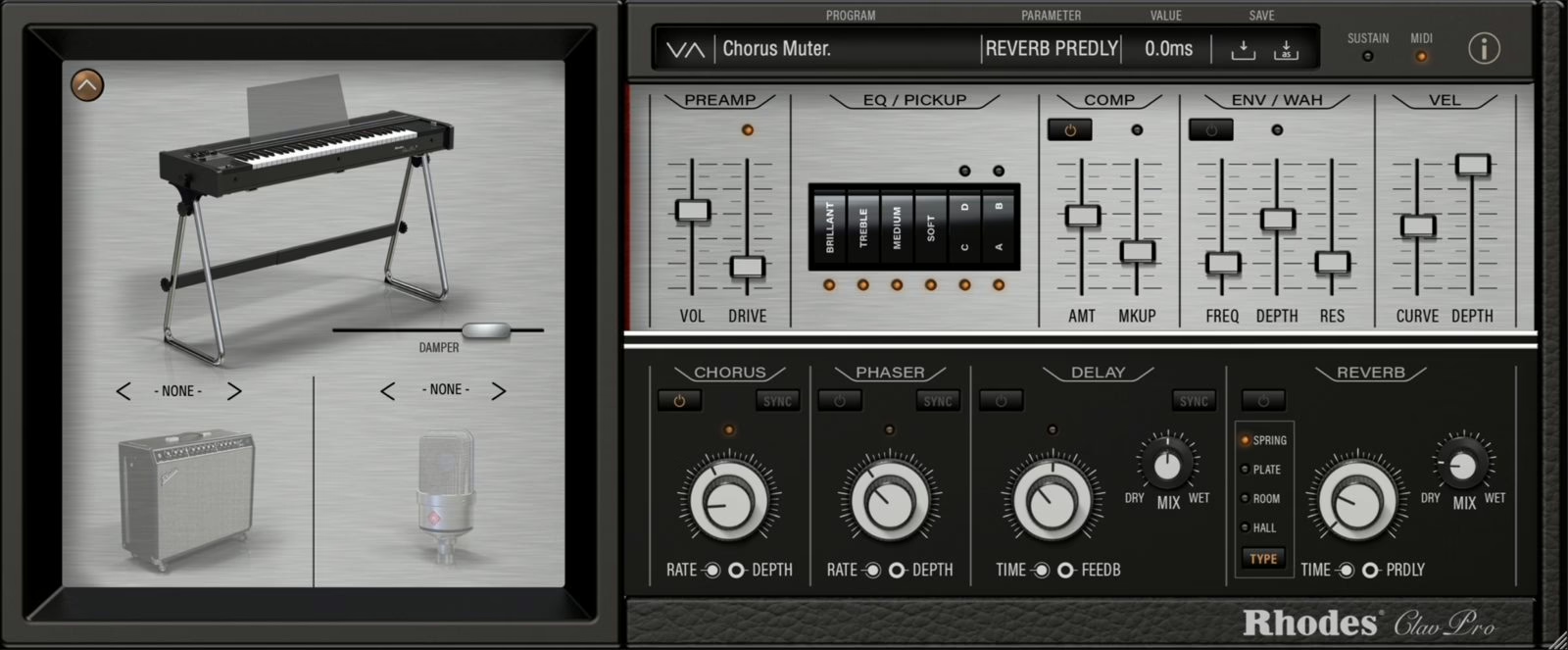
At the heart of Clav Pro sits a faithful reproduction of the original pickup selection system, mute slider and EQ circuitry. On a real Clavinet, those are exactly the elements that shape the tonal palette, from bright and snappy to darker, muted voicings. Rhodes says it sampled a 1977 ‘Transition’ example, a pivotal year in the instrument’s history.
That matters. A Clavinet responds to touch in an immediate, almost aggressive way: the smallest velocity change rewrites how a rhythmic part reads. Capturing that dynamic response, rather than a set of frozen notes, is the line between a gimmick and an instrument you actually want to play.
Controls that go beyond the original
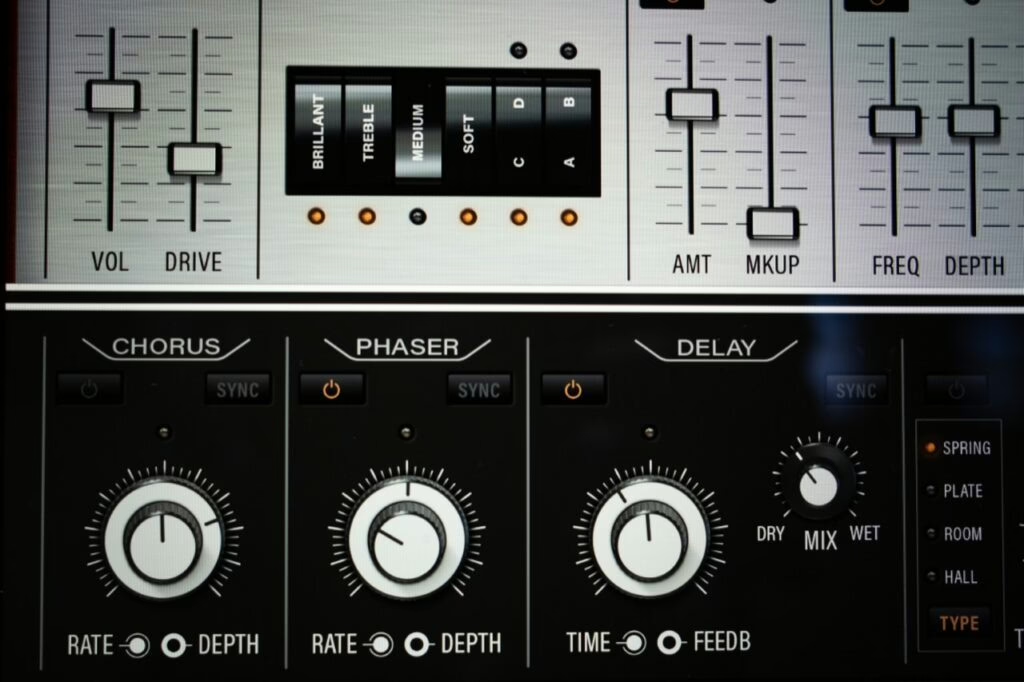
This is where Clav Pro stops being a straight tribute. Rhodes adds dedicated Drive, Compression and Envelope/Wah controls voiced for the Clavinet, covering everything from tight rhythmic stabs to saturated, expressive leads. More importantly, the instrument gains a sustain pedal function — no small thing, since the period Clavinet had none and cut the sound the moment a key was released.
Two more controls stand out. The Timbre Shift fader slides the sound between different states of the instrument, from polished to road-worn, as if moving from a pristine studio unit to a tired touring machine. The Mech Noise control dials in cabinet resonance and the mechanical key noise on both press and release — the kind of detail that separates a believable model from an overly clean sample library.
Amp, mics and an engine shared with Rhodes Anthology
Clav Pro runs on the same engine and interface as Rhodes Anthology. In practice, you get an amp section with three in-house models — named L5, JC and Duo — a choice of microphones, and a built-in FX suite that spares you from stacking third-party plug-ins to dress up the sound. Much like other recent virtual instruments, the goal is a fast, self-contained workflow.
The practical upside is obvious: a Clavinet is rarely used naked. In the real world it runs through an amp, a wah pedal, a touch of compression. Having all of that on hand, tuned for the instrument, saves real time in production.
Our take
The Clavinet is one of those instruments people long hesitated to trust to software — too physical, too tied to the gesture. A working D6 is rare, temperamental and expensive to keep alive. If the touch response is as convincing as Rhodes claims, a software Clav that holds up on stage and in the studio isn’t a betrayal; it’s a favor to anyone who wants that sound without babysitting half-century-old mechanics.
Availability, formats and price
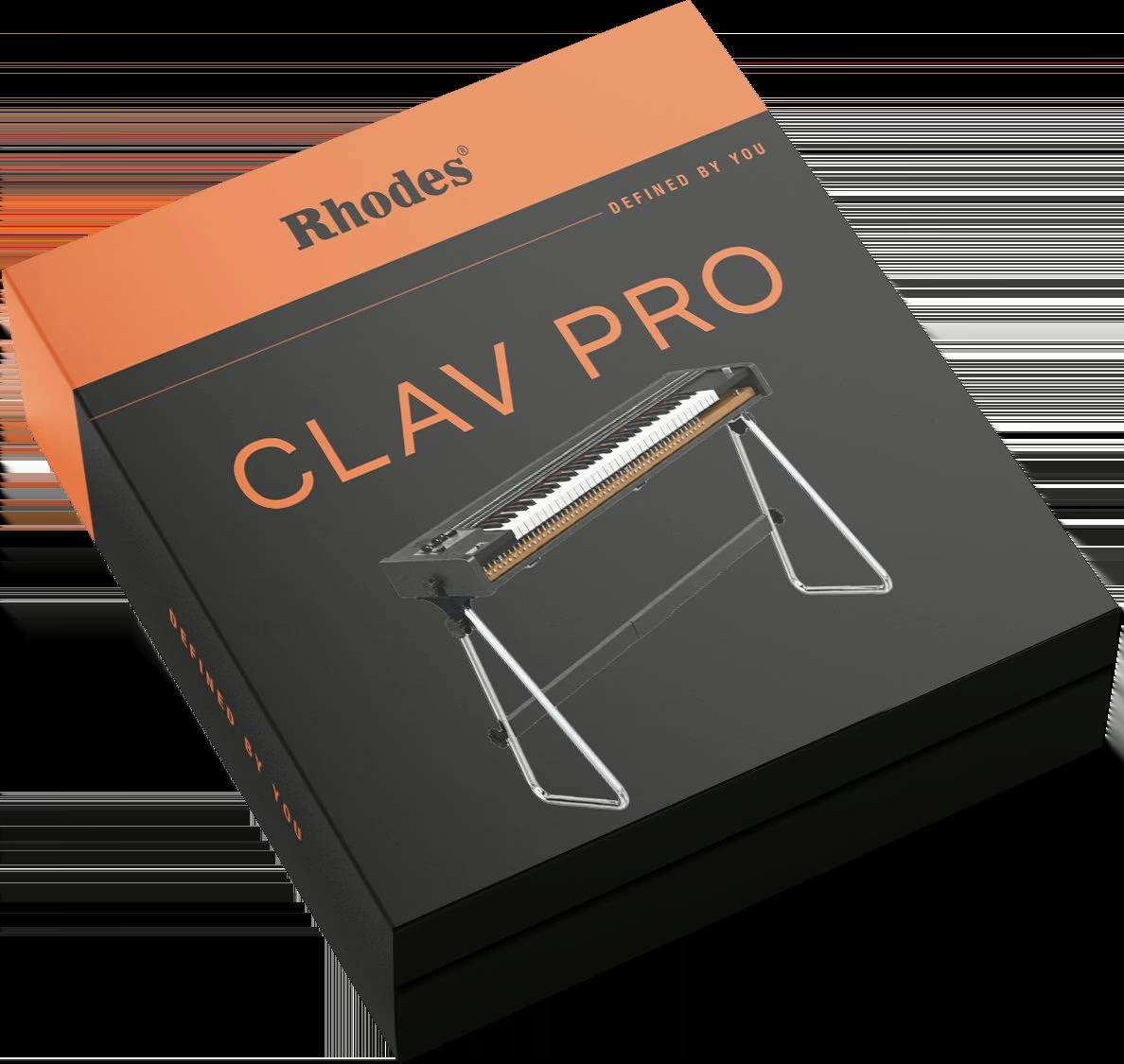
Clav Pro ships in VST3, AU and AAX, for macOS and Windows, with no standalone version. It lists at roughly $90–$130 depending on region (introductory pricing at launch), with a 14-day free trial to try before you buy. Against the many software alternatives crowding the vintage-keys market, Rhodes’ pitch comes down to one thing: the brand’s legitimacy over its own sonic heritage.
Frequently asked questions
What formats and systems does Clav Pro support?
It’s available in VST3, AU and AAX, for macOS and Windows. It runs inside a DAW; there is no standalone version at this stage.
How does it differ from a real Clavinet D6?
Beyond the sound, Clav Pro adds functions the original lacked: a sustain pedal, a Timbre Shift fader to move between instrument states, a mechanical-noise and cabinet-resonance control, and built-in drive, compression and wah sections.
Which instrument was it sampled from?
Rhodes says it sampled a rare 1977 D6 ‘Transition’ model, captured by its own sound designers.
Does it share anything with other Rhodes software?
Yes: it’s built on the same engine and interface as Rhodes Anthology, which is why it includes the amp models, microphones and in-house FX suite.
How much is it and can I try it?
Pricing lands around the $90–$130 mark, with a launch discount at release. A 14-day free trial is available to test it before purchase.