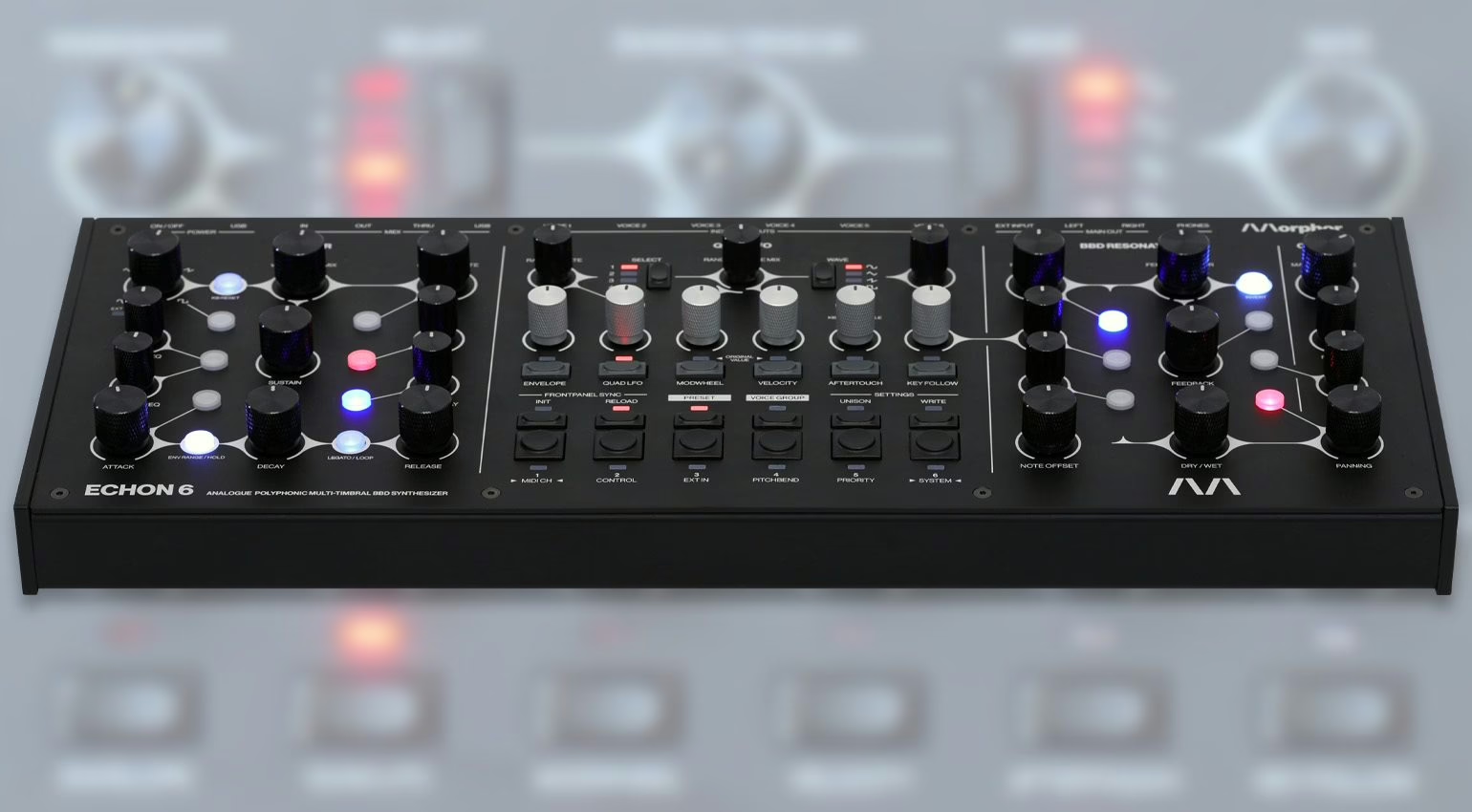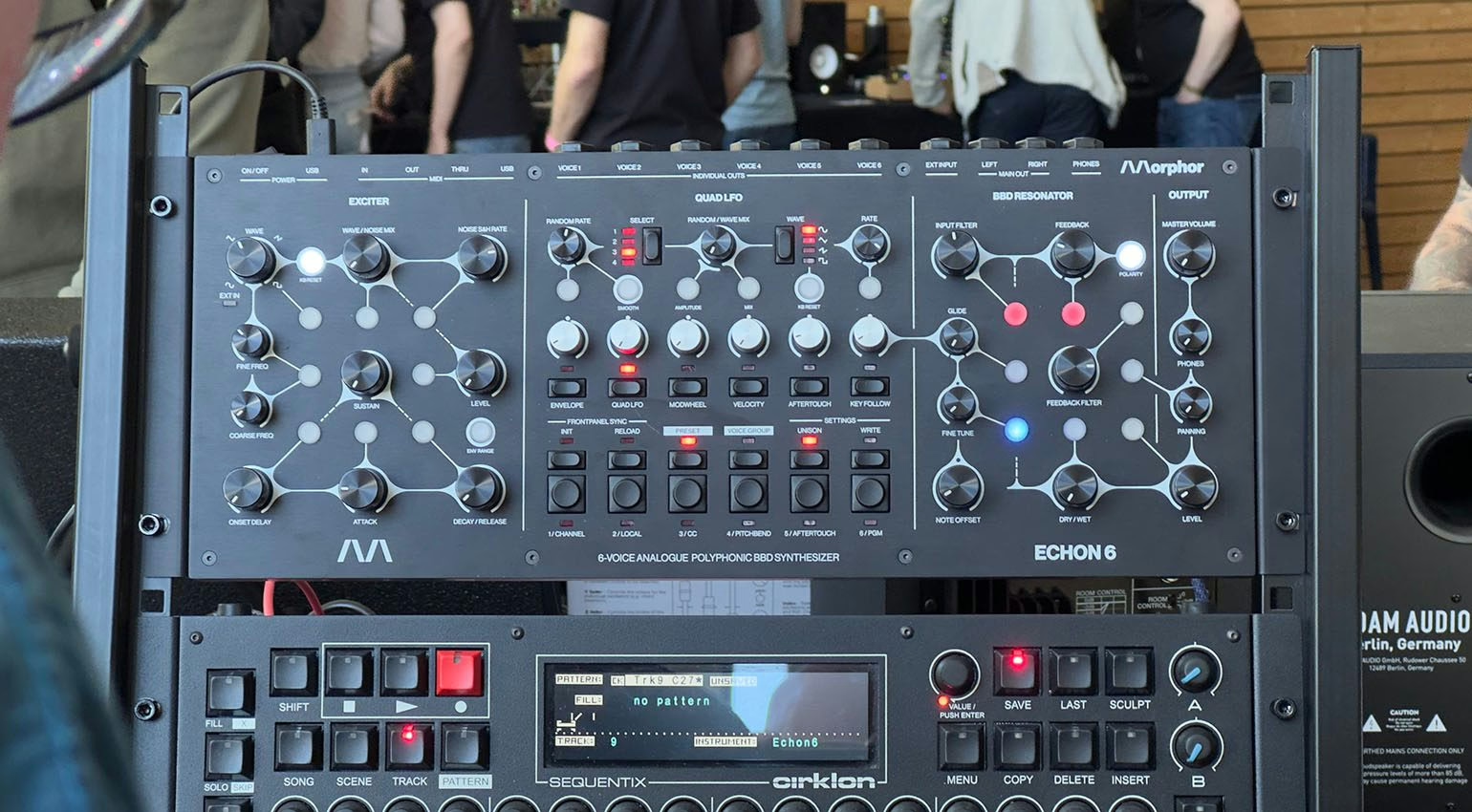
Clones and reissues roll past every week. The Morphor Echon 6 offers something that has become rare: an architecture no manufacturer had ever taken to production. Shown as a prototype and then refined over months, this six-voice analog desktop polysynth is finally shipping, with first deliveries quoted at just a few days through its retail channel. It’s worth pausing on, because it sounds like nothing else.
Analog synthesis built on bucket-brigade resonators
The heart of the Echon 6 is a clever piece of engineering repurposing. BBD (bucket-brigade device) circuits, those analog delay lines, made their name in the chorus and delay units of the 1970s and 1980s. Morphor uses them in a completely different way: each voice carries a 1024-stage BBD resonator that tracks the keyboard and behaves like a resonating body. The logic is close to modal or physical-modeling synthesis, but entirely in the analog domain, with no DSP in the audio path. The payoff is organic timbres, harmonics that move with your playing, and a texture that’s hard to coax out of conventional oscillators.
The six voices are genuinely independent, each with its own resonator. That’s what enables full polyphony and, as we’ll see, some unusual multitimbral use.
An exciter to feed the resonators
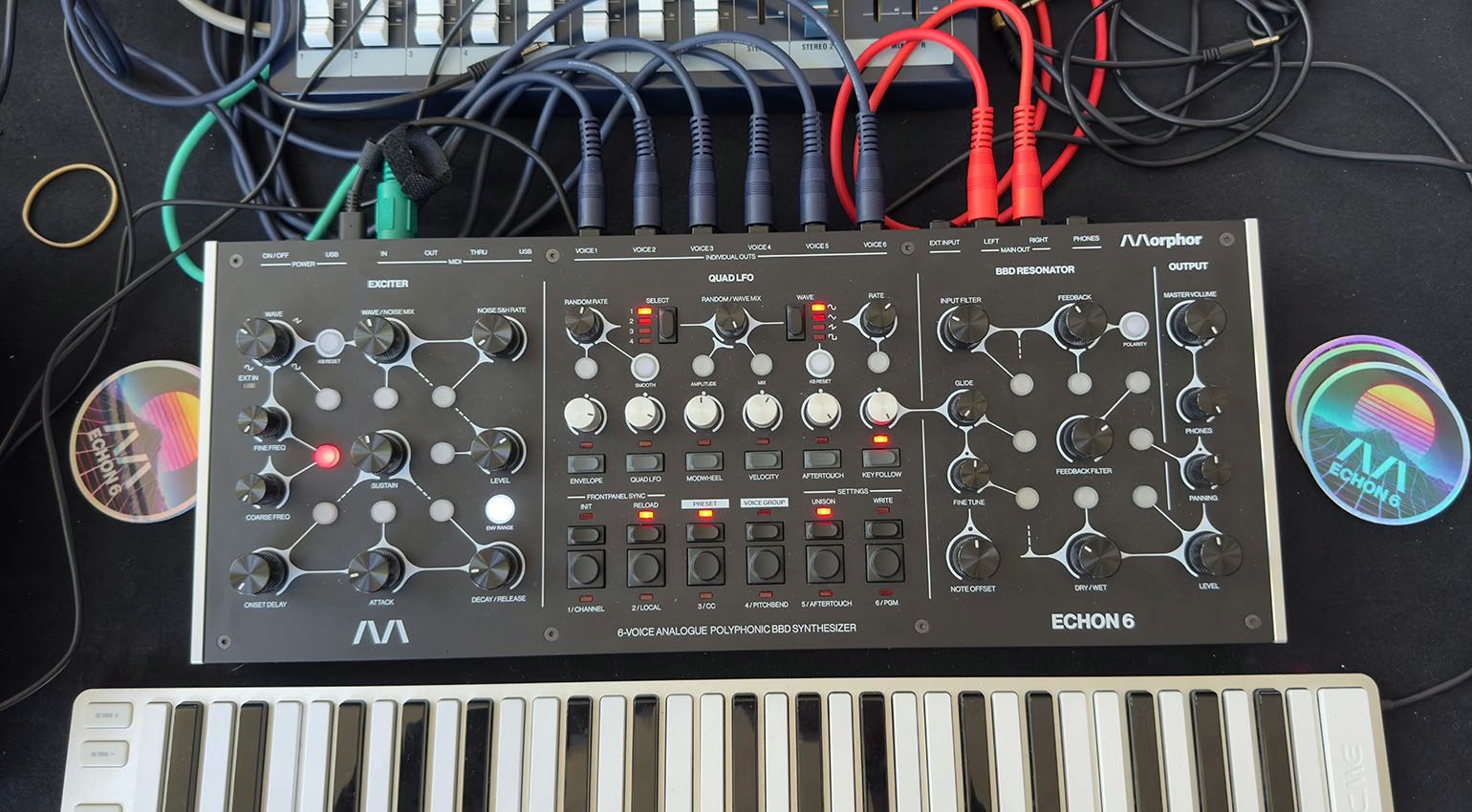
A resonator only sings when you excite it. That’s the job of the exciter section, which blends three sources — the waveshapes of an analog VCO, a noise generator and an external audio input — through a crossfader. That material is shaped by a loopable ADSR envelope with onset delay, then runs through a 12 dB/octave input filter before feeding the resonator. A second filter sits in the feedback line, giving fine control over how energy circulates and colors inside the resonator. This is where the instrument’s character lives: how you strike the resonating body matters as much as the body itself.
Deep modulation, MPE and multitimbrality
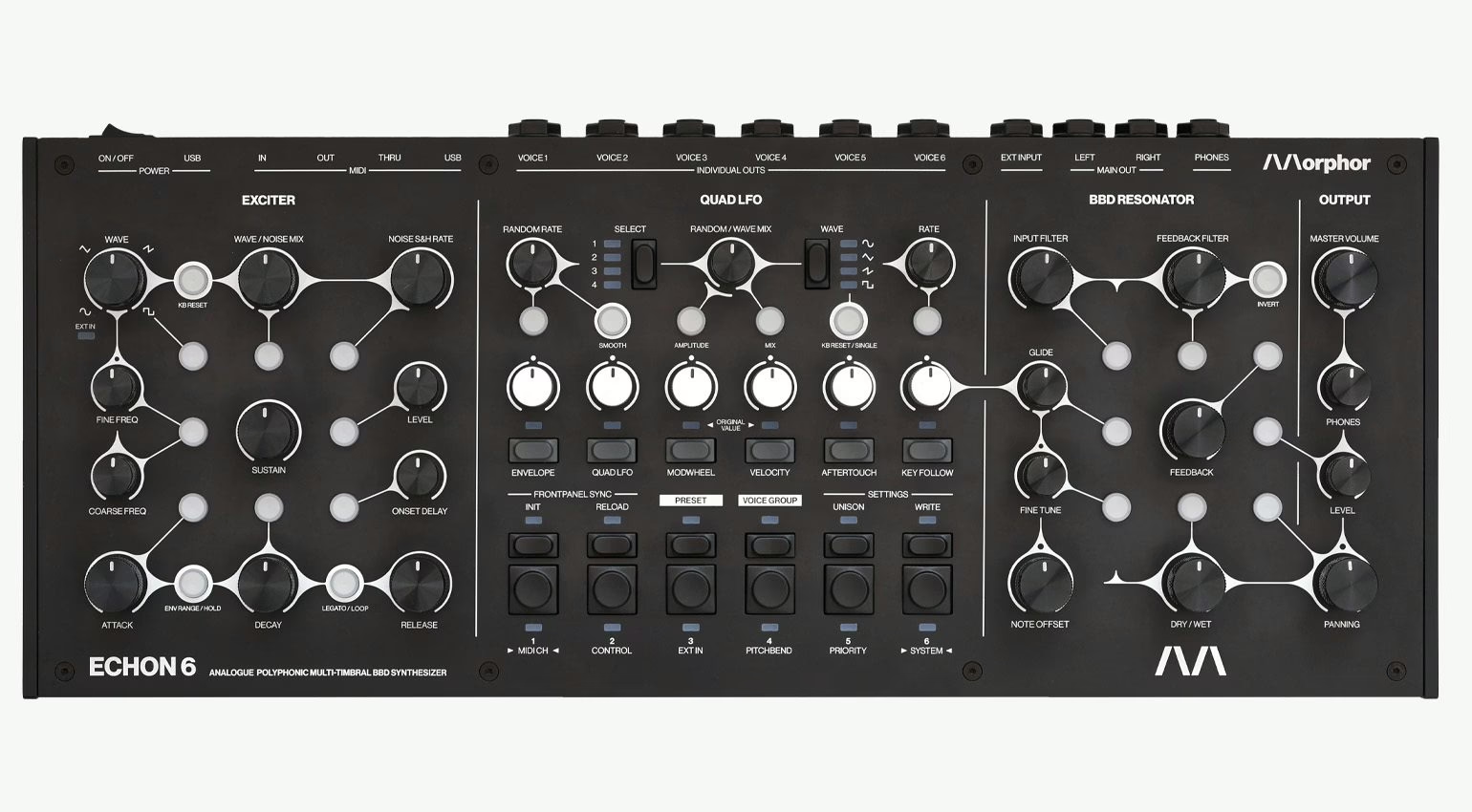
The modulation section matches the ambition. Four LFOs join the exciter envelope, and a generous modulation matrix routes the usual sources — mod wheel, velocity, key follow, polyphonic aftertouch — to a wide range of destinations. The Echon 6 is MPE-compatible, which on a resonator architecture opens an unusually expressive playground: pressure and glide literally animate the resonance of each note.
It’s also multitimbral up to six parts, with individual stereo outputs per voice. You can process each voice separately at the console, or treat it as six little synths at once. A full unison mode stacks all six voices. Memory-wise, there are 72 factory sounds and 144 user slots.
| Spec | Echon 6 |
|---|---|
| Voices | 6, one 1024-stage BBD resonator per voice |
| Exciter | VCO + noise + external input, crossfader, loopable ADSR envelope |
| Filters | 12 dB/oct input filter + filter in the feedback loop |
| Modulation | 4 LFOs, matrix, MPE, polyphonic aftertouch |
| Outputs | 6 individual stereo outputs, 6-part multitimbral |
| Memory | 72 factory presets + 144 user |
Price, availability and where it sits
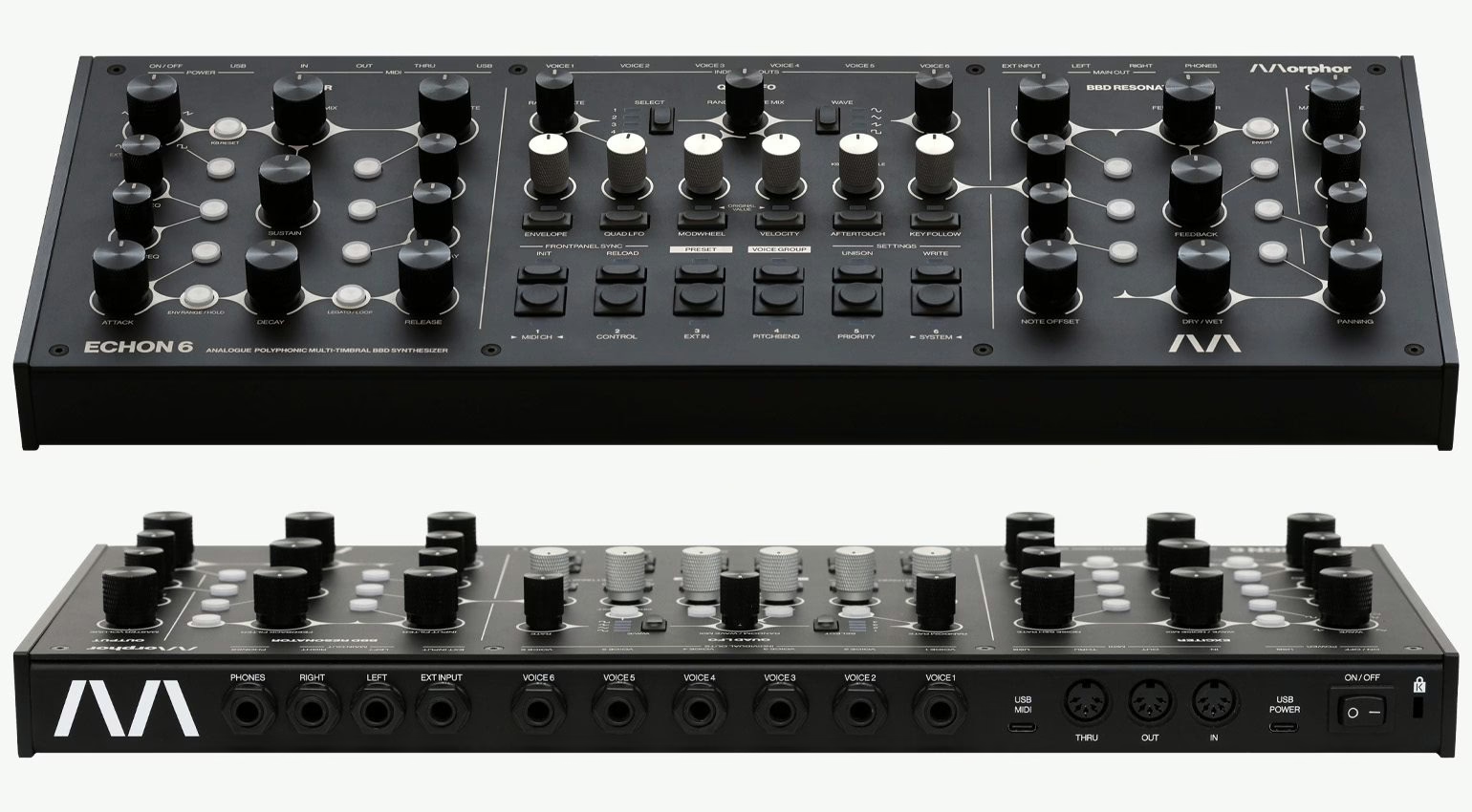
The Echon 6 lands around $2,999 / £1,999 / €2,295, in an aluminium chassis that sits on a desk, mounts in a 19-inch rack or on a VESA bracket. The first run is limited, and the unit is now orderable with delivery quoted within days. This is clearly a boutique object, built in small batches, at the price that implies.
That price will raise eyebrows, and fairly so. But set it against what it delivers: not another take on a classic, but a family of sounds you won’t get elsewhere. In a market flooded with budget clones — we meet one most weeks — seeing a small maker bet on a genuinely new architecture is refreshing. Turning the BBD into a resonator is a bold technical wager, and the execution, judging by the depth of the spec sheet, doesn’t feel improvised.
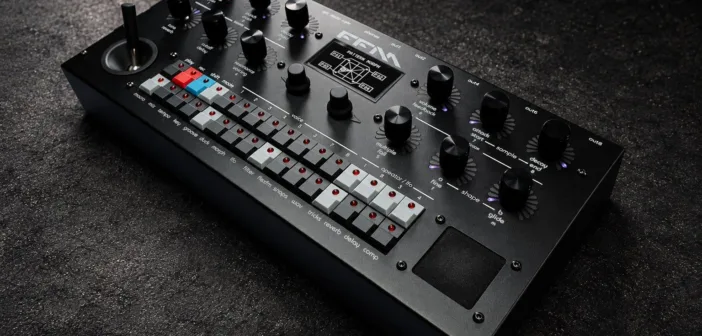
The real question is the obvious one: does it sound good? That’s how an instrument like this gets judged, not on paper. Analog resonators promise living material; you’ll need to hear them in a mix to call it. But the Echon 6 clearly joins the small club of machines that would rather invent than copy, alongside oddities like the SOMA Enigma or u-he’s MELT Eurorack module. In today’s landscape, that counts for something.