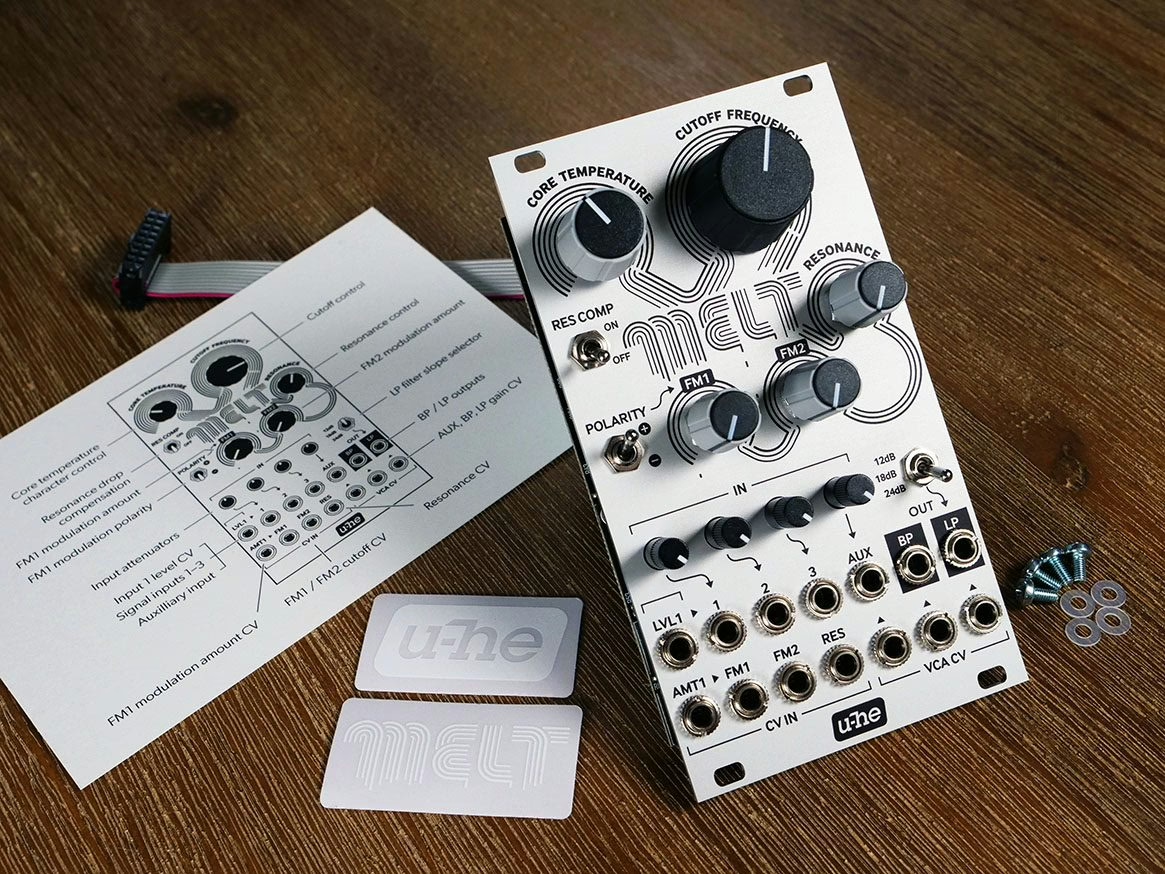
You know u-he from Diva, Zebra, Hive and Repro: soft synths that many rate among the most musical on the market. The German studio has just done something few expected: put out an actual physical object, in metal and components, in a Eurorack. MELT is a 14 HP analog filter, and it is the company’s first fully hardware product. A prototype had been floating around since Superbooth 2022; four years on, it is available at around 299 euros.
It is a real gamble. When a developer that built its name on software modeling decides to carve that knowledge into an analog circuit, you expect more than yet another ladder filter. MELT is upfront about its ambitions: it wants to be the final shaping stage of a synth voice, where the sound takes on its definitive color.
A cascade filter with switchable slope, built to sit last
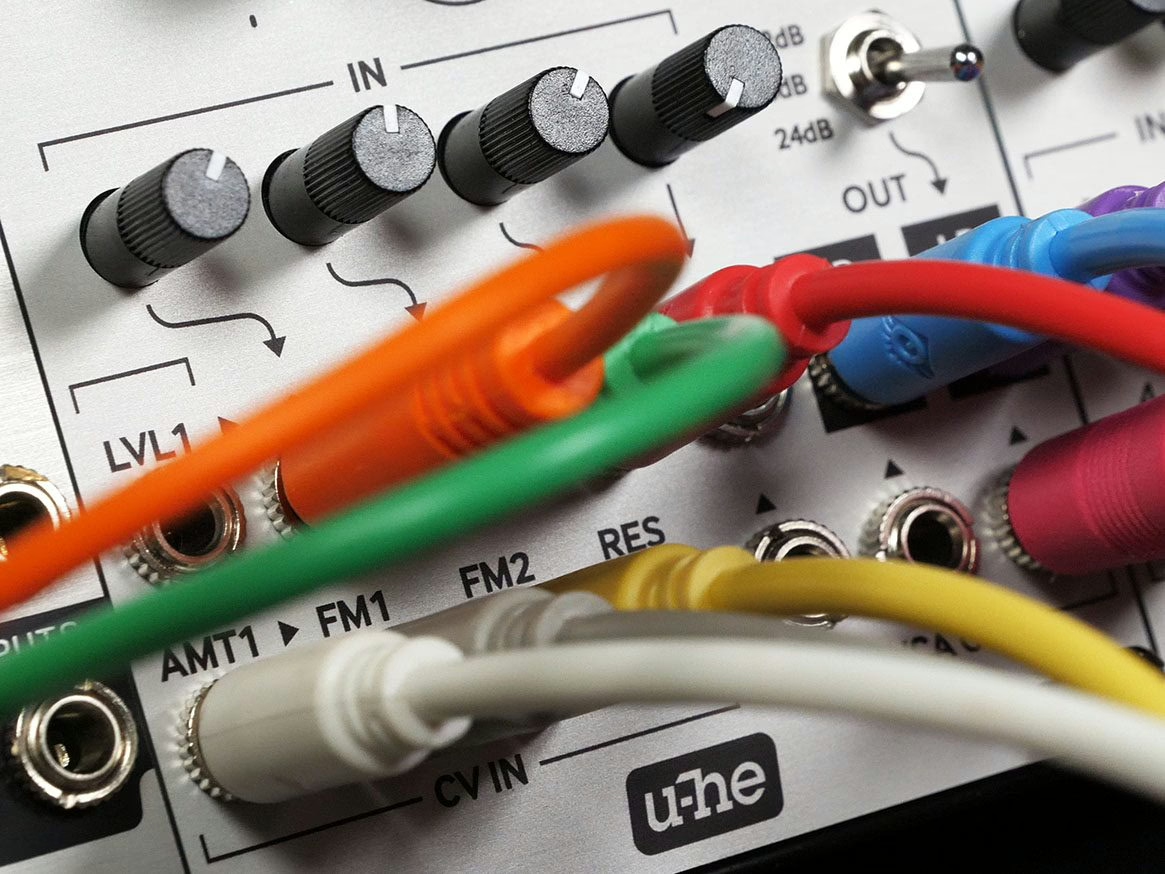
At the heart of MELT sits a four-pole cascade low-pass filter, paired with an independent band-pass output. The low-pass slope switches between three values: 12, 18 or 24 dB per octave. That is smarter than it looks. At 12 dB the response stays open and lively, letting the harmonics breathe; at 24 dB you get the classic, tighter four-pole behavior in the Moog vein. Moving between them changes the character radically without ever touching the cutoff.
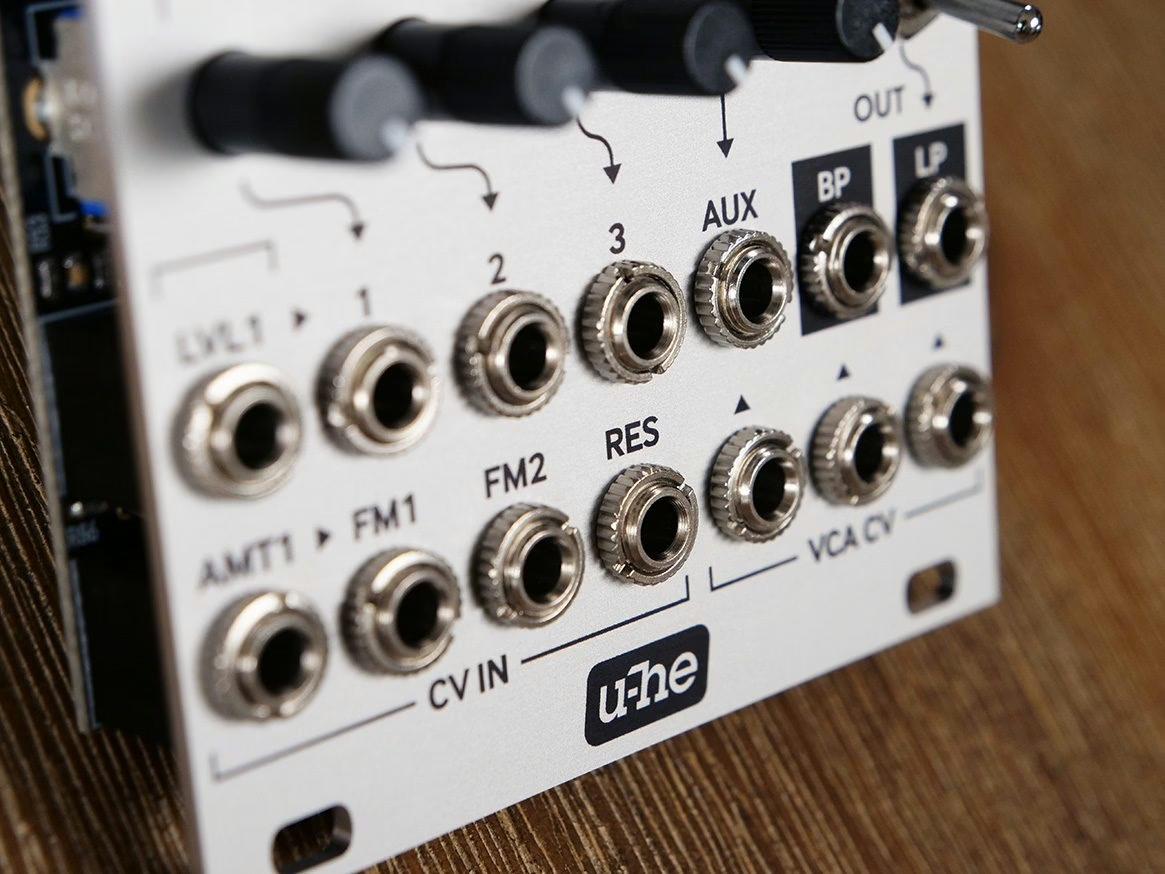
The low-pass and band-pass outputs are available in parallel, each with its own output VCA. You can therefore balance the two colors separately and route them to different destinations, opening the door to dual-band tones far richer than a plain single-output filter.
Core Temperature: the control that makes the module
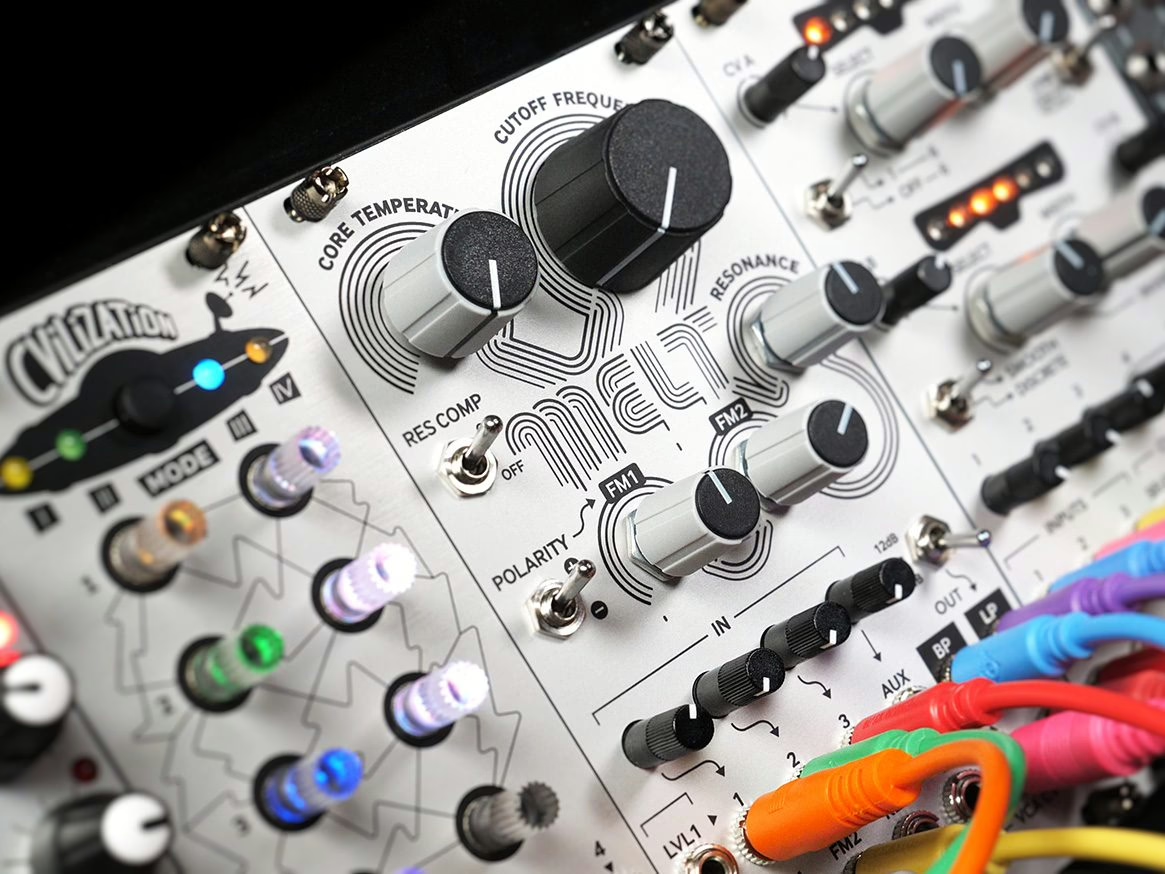
MELT’s real signature is the Core Temperature knob. It does not act on frequency but on the nonlinearity of the filter core: distortion, saturation, the way the circuit behaves under heavy resonance. At the low end the filter stays clean, tidy, almost surgical. At the top it overheats, the self-oscillation takes on color, transients bite and the sound turns genuinely aggressive. In between lies a whole palette of textures you dial in by ear, with no menu in sight.
A RES COMP switch (resonance bass-drop compensation) keeps the low end intact as you push resonance, where many filters scoop out and lose the body of the signal. A design detail, but one that matters the moment you crank resonance on a bassline.
What you patch around it
MELT is not only a filter: it is also a small input mixer. Three audio inputs blend on the front panel, and input 1 has its own VCA, handy for fading a signal in via an envelope. An auxiliary input bypasses the filter and lands straight at the output VCAs, useful to fold back a dry signal or a second timbre.
On the modulation side, two cutoff CV inputs (FM1 and FM2) each have an attenuator and can be inverted. Resonance has its own CV input. The module stays frugal: 70 mA on +12 V, 70 mA on -12 V, no +5 V needed, at roughly 32 mm deep including the bus cable. Nothing exotic to plan for.
| Specification | MELT |
|---|---|
| Format | Eurorack 14 HP, ~32 mm deep |
| Filter | 4-pole cascade low-pass + band-pass output |
| Low-pass slopes | 12 / 18 / 24 dB per octave (switchable) |
| Signature | Core Temperature (variable saturation and nonlinearity) |
| Inputs | 3 audio inputs (VCA on input 1) + auxiliary input |
| Modulation | 2 attenuverting cutoff CVs, resonance CV |
| Power | 70 mA (+12 V) / 70 mA (-12 V), no +5 V |
| Price | around 299 euros / $299 |
Why this launch matters
Moving from software to analog is anything but obvious. You have to source parts, run a production line, own hardware support: three jobs the all-digital world lets you ignore. That u-he took them on, with a module whose design was clearly refined over years, says something about the place well-thought-out hardware still holds, even among those who excel at emulation.
I say it all the more freely because I have championed working in the box for a long time: you can mix and produce entirely inside the computer without giving anything up. But an analog filter with an audible grain, with a control that walks the sound from velvet to distortion in a single move, is no nostalgic gimmick. It is a link in the chain that adds something the ear actually hears. The criterion was never analog dogma against digital, but the sonic result and the quality of design. On both counts, MELT arrives with a real case to make.
It still needs a long listen in a full system, on polyphonic voices and hard-driven basslines. But in a Eurorack market flooded with filters that all sound alike, a module signed by an exceptional studio and built as a final stage deserves your ear. If you are exploring modular, it follows on naturally from voices like the Pittsburgh Modular Lifeforms SV-1 Mini, pairs with sharp utilities like the Xaoc Devices Skopje and Budapeszt, and sits well next to strong-character instruments such as the SOMA Enigma.