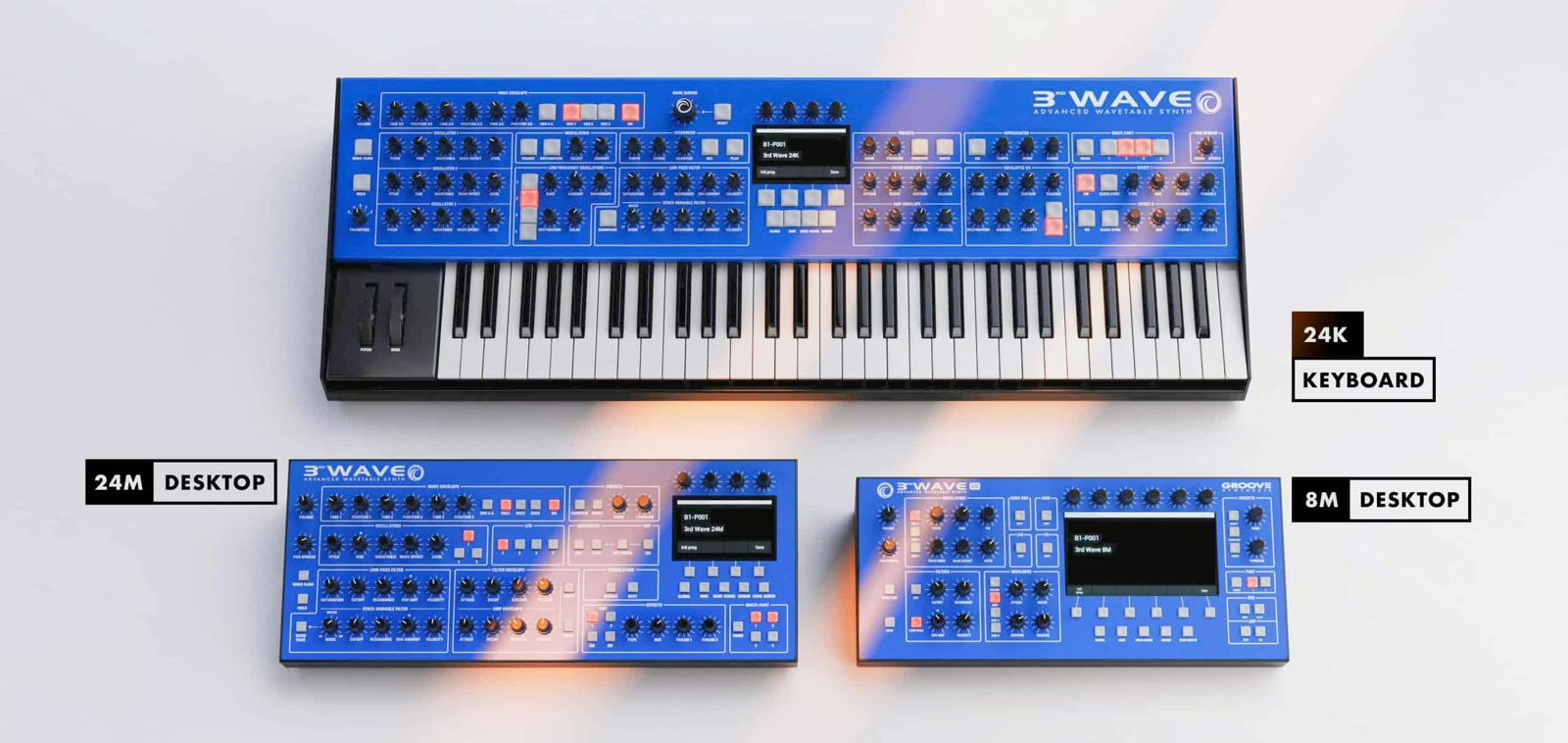
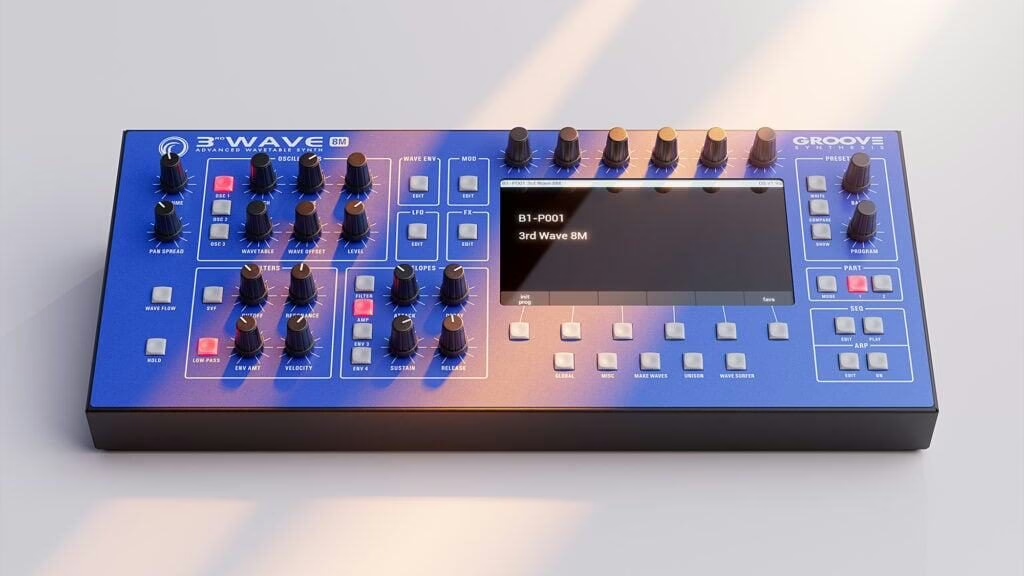
The 3rd Wave was never just another wavetable synth. Groove Synthesis built it as the declared successor to the PPG Wave and the Waldorf Microwave — the first two “waves” of wavetable synthesis, with this one staking a claim to the third — wrapping four synthesis layers per voice, modern converters and premium build into a serious instrument. The free OS 2.0a update reaches all three models in the range, and it does far more than squash bugs: it adds real sonic capability.
A quick reminder of the family first, since OS 2.0a covers the lot:
| Model | Format | Polyphony |
|---|---|---|
| 3rd Wave 24K | 61-key keyboard | 24 voices |
| 3rd Wave 24M | Desktop module | 24 voices |
| 3rd Wave 8M | Compact module | 8 voices |
A shimmer reverb built like a synthesis module
The headline feature is a shimmer reverb, dropped into the second effect slot. The shimmer trick is familiar: feed a pitch-shifted copy of the signal back into the reverb tail so the wash appears to “rise” as a choir of harmonics. Groove Synthesis’ take allows pitch shifting in fractional semitones across a two-octave span — one octave down to one octave up — while a Filter Cutoff control shapes the tone from dark to bright.
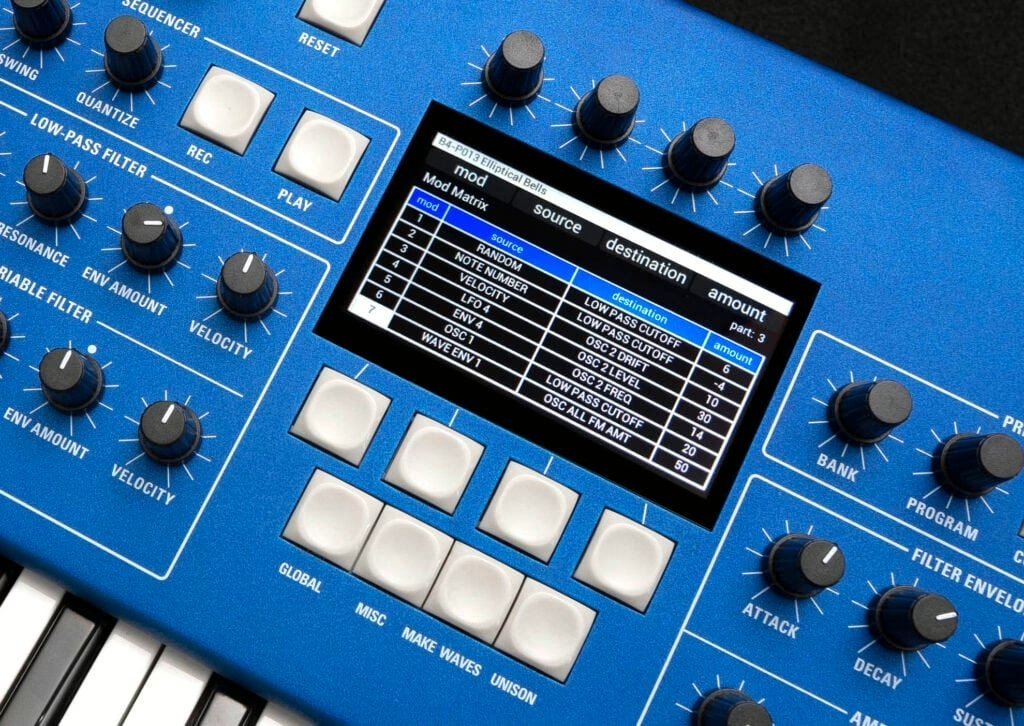
The real design move is elsewhere. Reverb time, pitch amount and the effect’s high- and low-pass filters are all exposed as mod-matrix destinations. That means you can sweep the shimmer’s pitch with a slow LFO, bloom the reverb from an envelope attack, or let its filter drift over a held note. It turns a static effect into a living module — fitting, on an instrument whose whole ethos is exactly that.
Make Waves: build your own wavetables, now in spectral
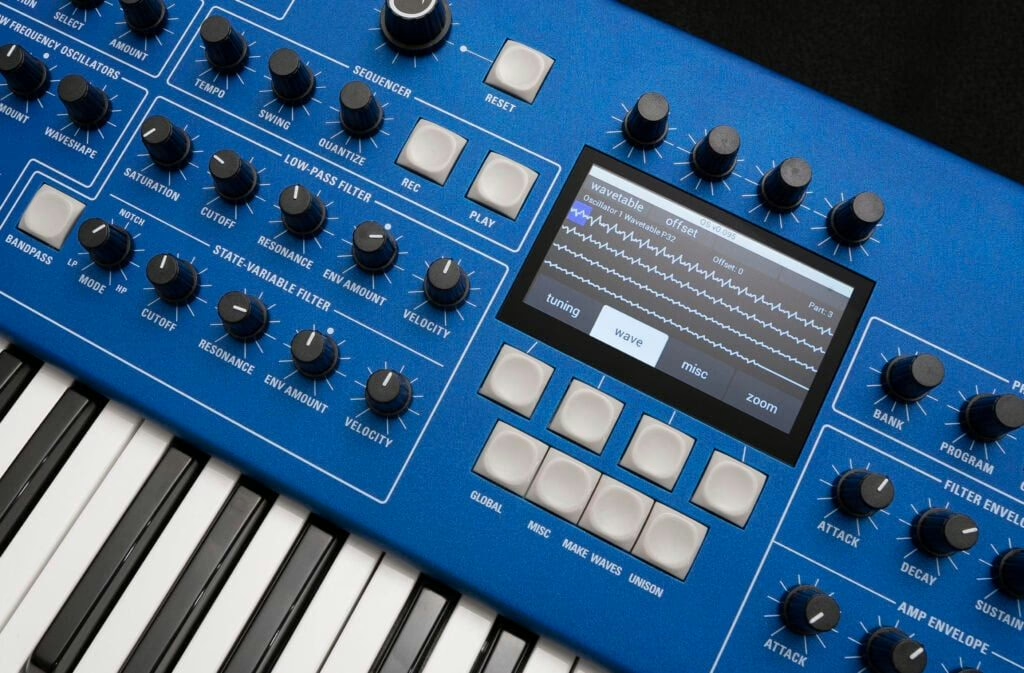
The second major job in OS 2.0a is Make Waves, the on-board tool that turns a sample into a playable wavetable right inside the machine. Groove Synthesis first tightened the behaviour of the existing modes, then added a Spectral mode. Where Pitch On hunts for stable pitches and Pitch Off finds splice points in unpitched material, Spectral analyses the content in the frequency domain.
The difference shows on awkward sources: chorused sounds, ambient recordings, notes whose pitch wanders or never quite settles. Those used to trip up conventional pitch detection; spectral analysis gives them coherent wavetables without the splice artefacts you got before. If you like starting from a field recording rather than a textbook waveform, that’s a door swinging open.
MIDI and studio integration, tidied up
The rest of the update is clearly aimed at people running the 3rd Wave in a real production chain:
- expanded MIDI CC mappings on the 24M and 8M modules, to drive more parameters from a sequencer or controller;
- new SysEx features for importing and exporting wavetables and samples;
- a new envelope retrigger option with a quick reset, handy for tight percussive attacks;
- assorted bug fixes.
Groove Synthesis has also confirmed a companion software editor, in development, to organise and edit sounds from a computer — the missing link in the ecosystem, and one owners had been asking for.
What it actually changes
A free update that adds a modulatable reverb and a new way to build wavetables is not marketing gloss: it is value handed back to people who already bought the instrument. That is exactly what you want from a maker that thinks in the long term, and it is part of what justifies the price of a hardware synth in a software-first world. I lived through the shift from analogue to computer-based production first-hand, and I’m still convinced a good wavetable plugin does most of the job today. But a 3rd Wave’s interface — one control per function, a display that shows the wavetable scanning in real time — changes how you shape sound: you modulate while playing, not by digging through menus. The shimmer becoming a modulation destination is the perfect illustration.
New to the topic? Our explainer on FM synthesis lays out another big family; on the wavetable side, Serum 2 reaching Linux and the arrival of discoDSP Corona 7 show the method has lost none of its momentum. The official OS 2.0a page is up at Groove Synthesis.