On a news set, a sports commentary position or a multi-mic podcast, the engineer spends much of the show doing the same thing over and over: open the mic that’s talking, close the rest, pull back the guest who’s too hot, push up the one who mumbles, and keep the whole thing inside the loudness spec. That is precisely the job Telos Alliance wants to hand to a machine with CastCompanion, the new module of the Jünger Audio flexAI platform shown at IBC 2026.
An autonomous mixing engine, not just another automixer
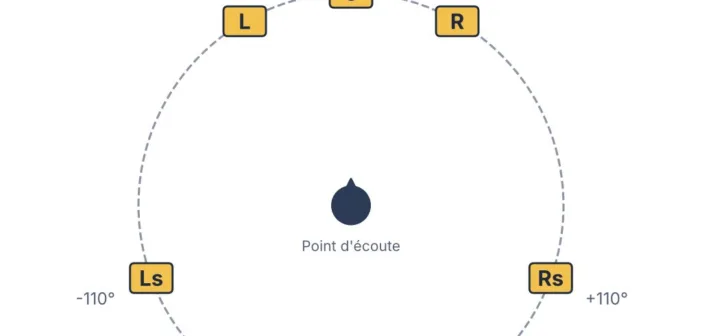
CastCompanion is billed as an autonomous broadcast mixing engine built for live voice sources: sports commentary, news production and podcasts. The principle isn’t new — automixing has been around for years — but Jünger’s approach goes further than gain-sharing that simply opens and closes channels. In one chain it combines automixing, AI-assisted denoising, voice enhancement, upmixing to 7.1.4 and loudness management aligned with EBU R128 S4.
The detail worth your attention is how the work is split. The intelligence is called JAIC (Jünger Audio Intelligent Companion): it listens to incoming signals, works out who is speaking, at what level and against what background noise, and decides which parameters to apply. But it never touches the audio itself. Processing stays with Jünger’s established deterministic algorithms, running in the real-time audio path. The AI proposes, the deterministic engine disposes — and that is what delivers predictable latency and the reliability an on-air feed demands.
Why splitting AI from processing matters
In broadcast you cannot run a chain whose latency drifts with a neural network’s mood, nor a processor that “reinvents” the sound from one sentence to the next. That’s the standard complaint against end-to-end AI processing. By keeping the AI to analysis and decisions, and leaving the rendering to known, measurable algorithms, Jünger gets reproducible behaviour: the same signal yields the same result, with stable latency. For a technical director, that’s the difference between a demo toy and something you’d actually trust on a 24/7 transmission.
CastCompanion also carries a dedicated low-latency monitoring path, so talent and operators can hear themselves without the delay of the full chain. On sports commentary, where the talent has to stay locked to the picture and the stadium atmosphere, that’s not a minor point.
From voice to 7.1.4, with connectivity built for modern production
Loudness handling aligned with EBU R128 S4 — the supplement that frames short-form and distributed content — puts the tool squarely inside European delivery rules. Upmixing to 7.1.4 shows Jünger isn’t thinking only radio and podcast, but immersive production for television and streaming too.
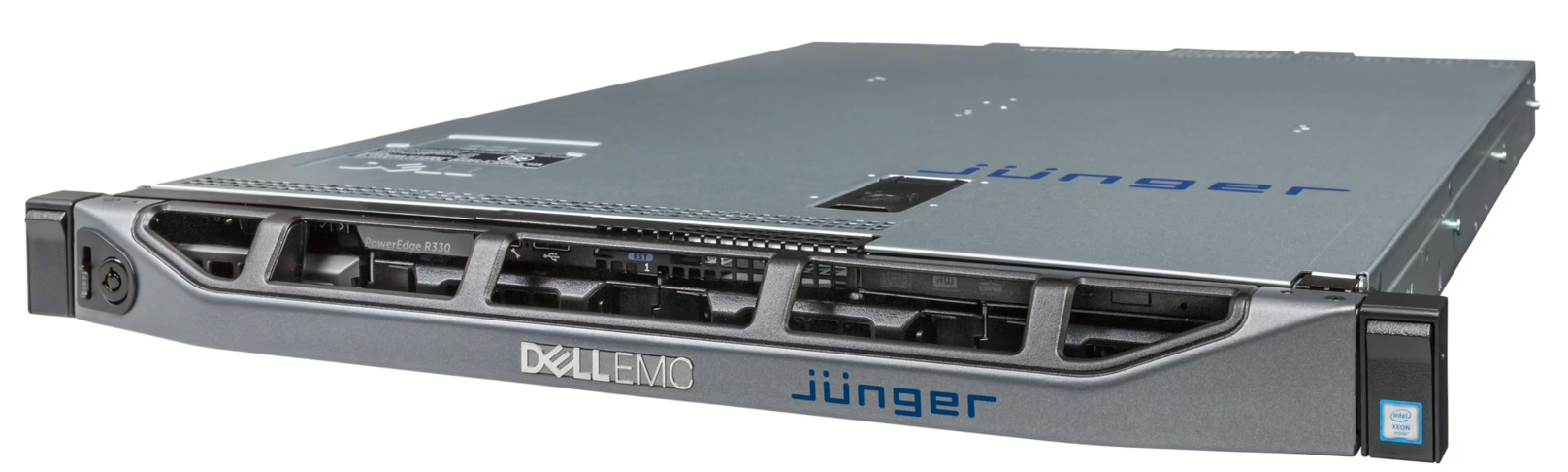
On the hardware side the platform opens up: a new 12G-SDI interface for the AIXpressor supports SD-SDI, HD-SDI, 3G, 6G and 12G formats up to 4K/UHD 60p, with integrated video delay to re-sync audio and picture. Add NDI connectivity and integration with TVU’s live production platform. flexAI is meant to run on hardware, on a server, over IP or in the cloud — flexibility that fits today’s hybrid galleries, the same ones that run on audio-over-IP.
My take
I’ve spent enough time in the chair to know that riding the faders on three or four contributors for two hours is tiring and error-prone — the split second you look away, when two guests talk over each other, always shows up on air. An engine that takes that thankless job off your hands without dragging in wandering latency is genuinely useful. I stay cautious on one point: AI denoising and voice enhancement are excellent until you push them too far — beyond that, the voice takes on that artificial grain you now hear everywhere. The good news is that this kind of tool is judged by ear, not on a spec sheet, and Jünger has a culture of transparent processing. One to check on the stand, ears open. Either way, CastCompanion continues the run of intelligent processors we’ve seen this broadcast season, from the Omnia XII to the audio-over-IP consoles.