


Description
Technical
Specifications
Inputs / Outputs
| Total inputs | 10 |
|---|---|
| Mic inputs | 2 |
| Total outputs | 10 |
| Mic preamps | 2 mic, line and DI channels with Marinair transformer, mic gain +21 to 68 dB, line -12 to +35 dB, DI +13 to +60 dB, phantom power |
| Outputs | 2 balanced TRS monitor outputs (+18 dBu max), front TRS headphone output (+10 dBu max) |
Processing
| Max sample rate | 192 kHz |
|---|---|
| Bit depth | 24 bits |
| Conversion | 24-bit, up to 192 kHz, line dynamic range above 111 dB |
Networking
| Networking & protocols | USB / ADAT |
|---|
Physical
| Width | 182 mm |
|---|---|
| Depth | 203 mm |
| Height | 76 mm |
| Weight | 1.7 kg |
Other
| Connexion | USB 3.0, bus powered |
|---|---|
| Pilotes | Class compliant on Mac, USB Audio driver for Windows |
| Es Total | 10 inputs and 10 outputs (2 analogue and 8 ADAT in, 2 analogue and 8 ADAT out) |
| Inserts | Balanced insert per channel, send always active |
| Revision | Since January 2026: digital inputs from the DAW (hardware insert), power switch |
Strip & details
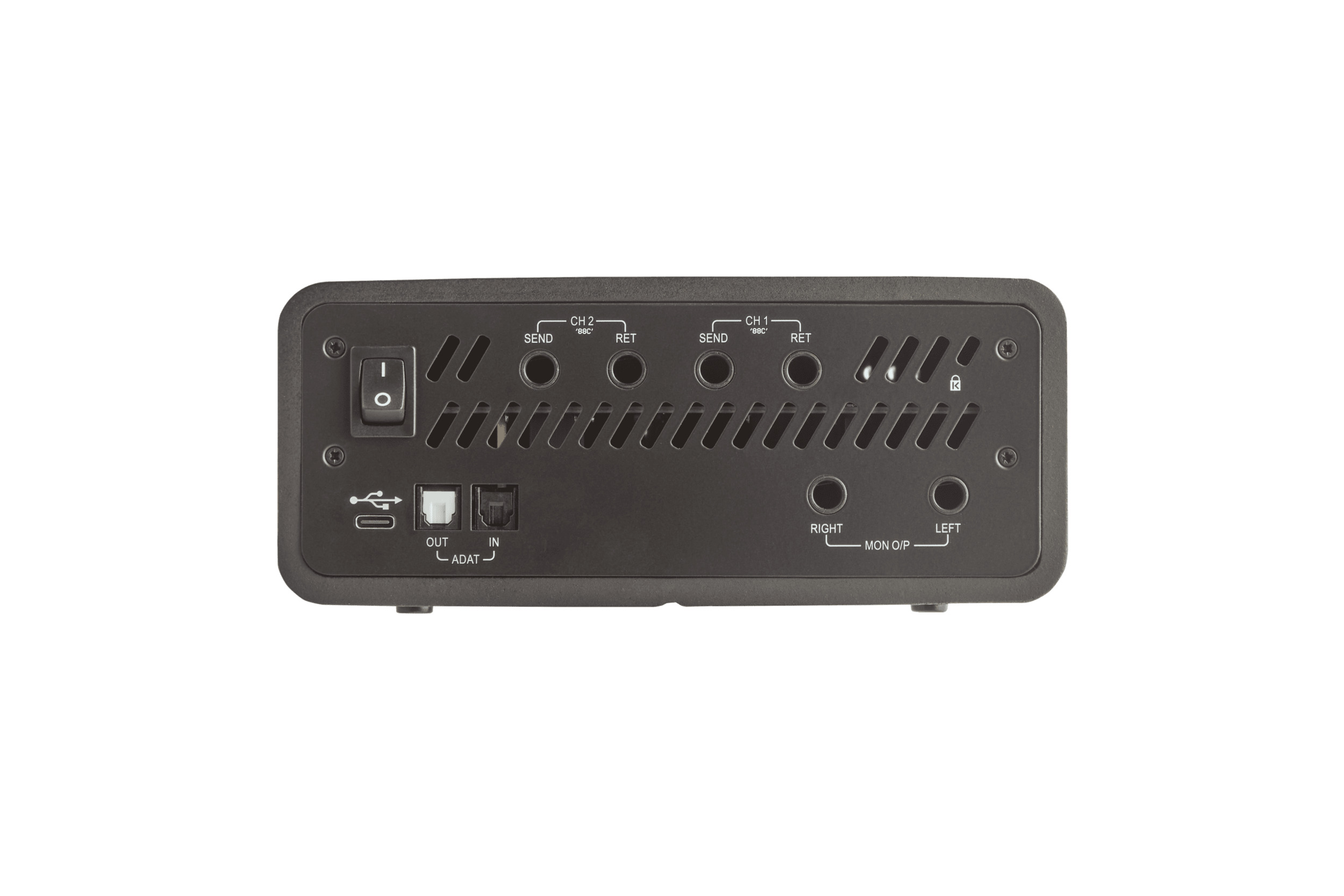
Rotate your phone to landscape for a better view of the strip.
Documents
Editorial & artists
Our take
History & design
The 88M is a desktop USB audio interface introduced by AMS Neve at the June 2022 NAMM show. It is powered by the USB 3.0 bus and runs class compliant on Mac, with a USB Audio driver supplied for Windows. Conversion runs up to 24-bit and 192 kHz.
Its two mic, line and DI input channels go through a Marinair transformer, the same technology as the large-format 88RS console. Mic gain runs from +21 to 68 dB, line gain from -12 to +35 dB and DI gain from +13 to +60 dB, with phantom power. Each channel has a balanced insert, whose send is always active and doubles as an analogue output ahead of the converter.
On the output side, the 88M offers two balanced TRS monitor outputs, set by an 88RS-style pot with a centre detent at -12 dB, and a front headphone output with independent level. A pair of optical ADAT ports adds eight digital inputs and eight digital outputs, 10 inputs and 10 outputs in all.
Units built from January 2026 accept signals from the DAW as inputs: a recorded track can then go back through the transformer and the insert loop, like a hardware insert. This revision also adds a power switch, according to the user manual published in February 2026.
Links
More audio interfaces
Some merchant links are affiliate links. Purchases may support Digital Mixing at no extra cost.
Documents are archived locally for preservation. Source credited. Takedown requests: [email protected]