The Behringer Wave just put the PPG Wave and its wavetable grit at a price nobody saw coming (see our piece on the Behringer Wave). The question follows naturally: if that sound appeals to you, which other machines and plugins do the same job, and at what price? Wavetable is the synthesis that scans through series of waveforms to build moving, metallic or vocal timbres that a fixed wave simply cannot produce.
The eight instruments gathered here cover that ground, but not all in the same way. Some clone the PPG recipe to the letter, digital oscillators and analog filters, in the same vein as the other Behringer-made synth clones; others do wavetable their own way, all digital or inside a stack of engines; others live in your computer. We sorted them into honest families, from closest to the Wave to furthest, with the sound, the price and the intended use for each.
The direct PPG heirs, in hardware
The Behringer Wave clones the PPG Wave: digital wavetable oscillators paired with analog filters. These two machines follow the same recipe and sound closest to the original.
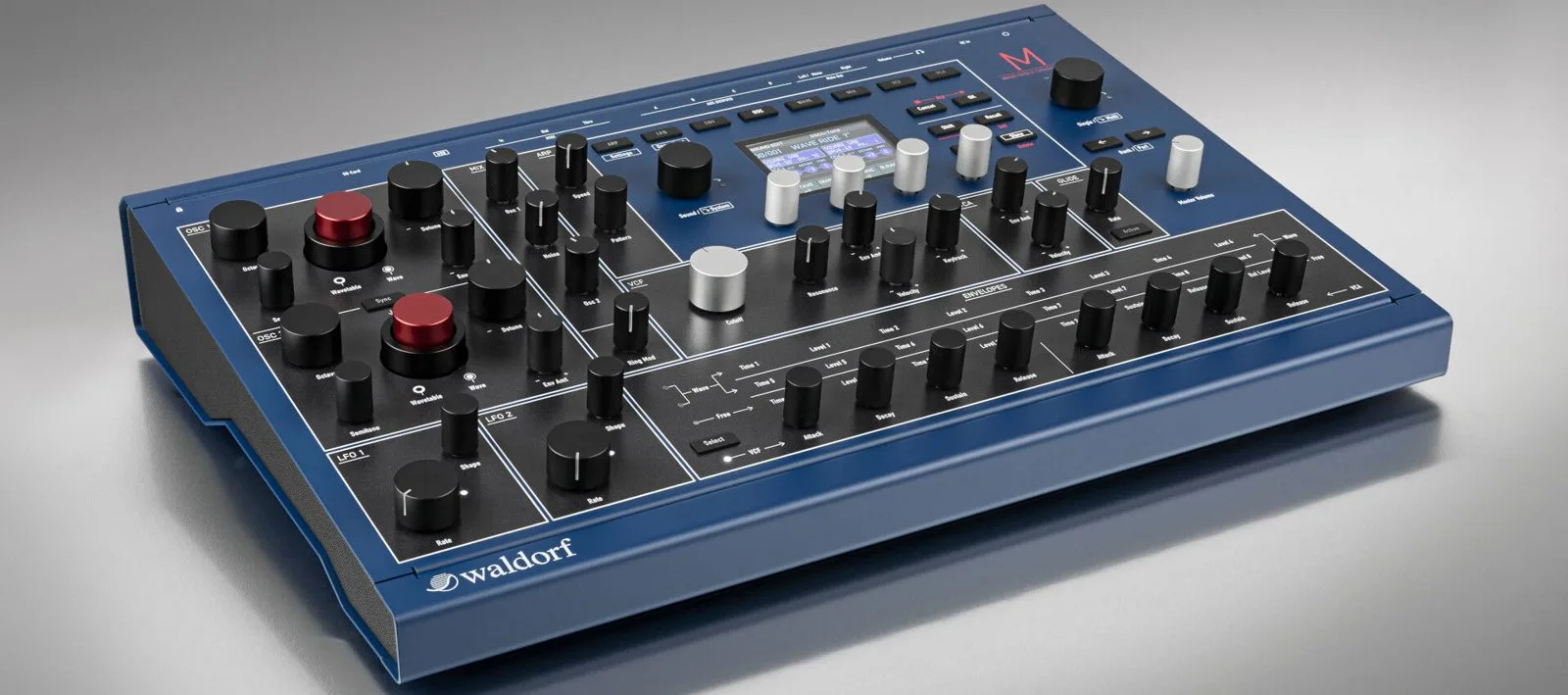
Waldorf M: the Microwave lineage back in service
It is hard to be more legitimate than this. Waldorf is the company that carried on Wolfgang Palm’s work after the PPG Wave, and the M follows the exact same recipe: two wavetable oscillators, a deliberately raw 8-bit Microwave 1 mode and a cleaner Microwave II mode, all run through an analog ladder VCF. Eight voices, four multitimbral parts, 2,048 programs including PPG Wave 2.3 wavetable conversions.
It sounds the way the Behringer Wave aims to sound, with added analog grit on top. The price, though, makes it a pick for players who want the original rather than a quick way into the genre.
In short: Waldorf, around 1,879 EUR, desktop hardware, 8 voices, two wavetable oscillators and an analog VCF.
See the Waldorf M at the maker
Groove Synthesis 3rd Wave 8M: the high-end tribute, compact edition
The 3rd Wave was conceived from the start as a modern homage to the PPG Wave, wavetable oscillators and analog filters included. The 8M version, released in 2025, drops the keybed and some voices to land under 2,000 dollars while keeping the engine and the sound. Eight voices, a wide display, three oscillators per voice, studio-grade ergonomics.
This is the one to aim for if the Behringer Wave gave you a taste for analog wavetable and you want to move up without spending close to 5,000 dollars on the keyboard model.
In short: Groove Synthesis, around 1,995 USD for the 8M, desktop hardware, 8 voices, wavetables and analog filters.
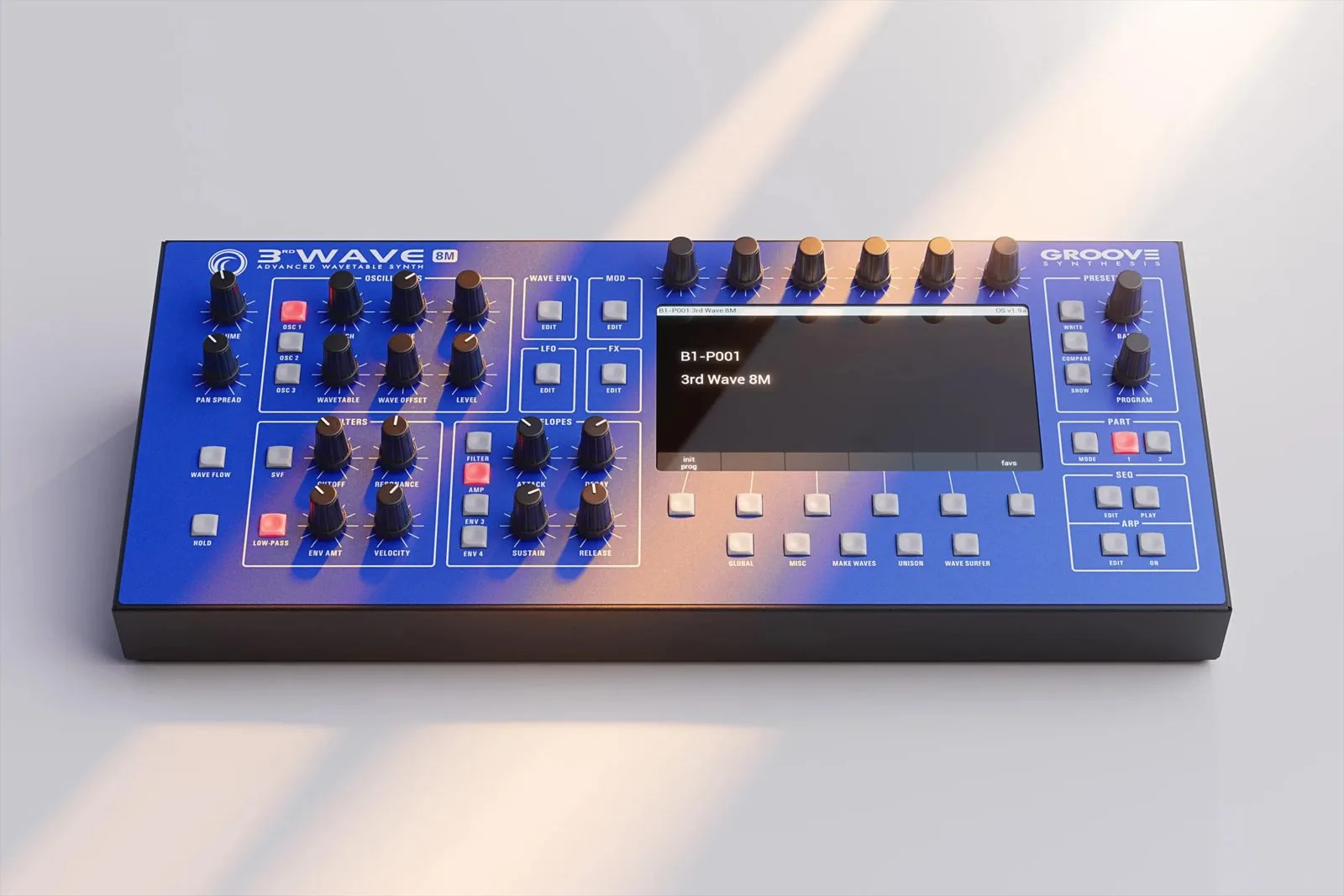
See the 3rd Wave 8M at the maker
Wavetable hardware, from budget to flagship
All three do wavetable in hardware, each in its own way: one chases the lowest price, another takes a morphing approach, the last stacks up synthesis engines.
Modal Argon8: the most affordable wavetable hardware
The Argon8 plays the card the Behringer Wave also claims, hardware wavetable on a budget. A 37-note keyboard, eight voices, a fully digital engine with a large wavetable bank, a generous modulation matrix and MPE support. No analog filter here, so the grain is cleaner and more modern, less vintage than a PPG clone’s.
Good news on availability: Modal, after a rough patch, has been back since late 2024 under new ownership, and the Argon8 is in the catalog again. As a first wavetable machine, its features-to-price ratio is still among the best.
In short: Modal Electronics, around 799 EUR, 37-note keyboard, 8 voices, digital wavetable, MPE.
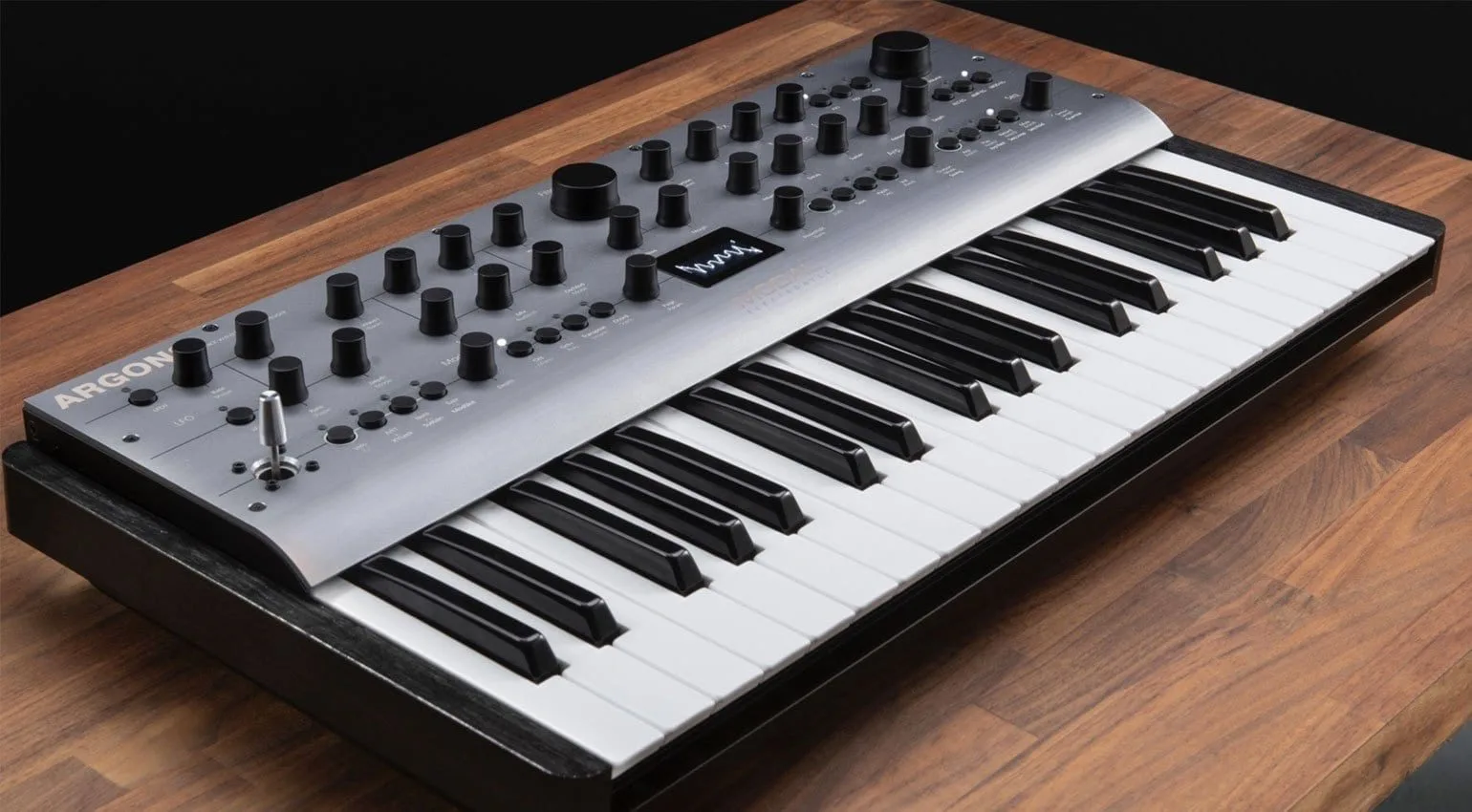
See the Modal Argon8 at the maker
ASM Hydrasynth: wave morphing as a signature
The Hydrasynth does not scan wavetables the way a PPG does, it does wave morphing: each oscillator crossfades from one single-cycle wave to the next, with eight transition shapes and Mutant modules to mangle them. The approach is different from the Behringer Wave, yet the sonic territory overlaps heavily, moving pads, metallic timbres and digital textures included.
Add a keybed with polyphonic aftertouch and a deep modulation matrix, and you get one of the most expressive digital synths in its class. Pick it for its own character as much as for its kinship with classic wavetable.
In short: ASM, around 1,399 USD for the 49-key version, 8 voices, wave morphing, 3 oscillators, polyphonic aftertouch.
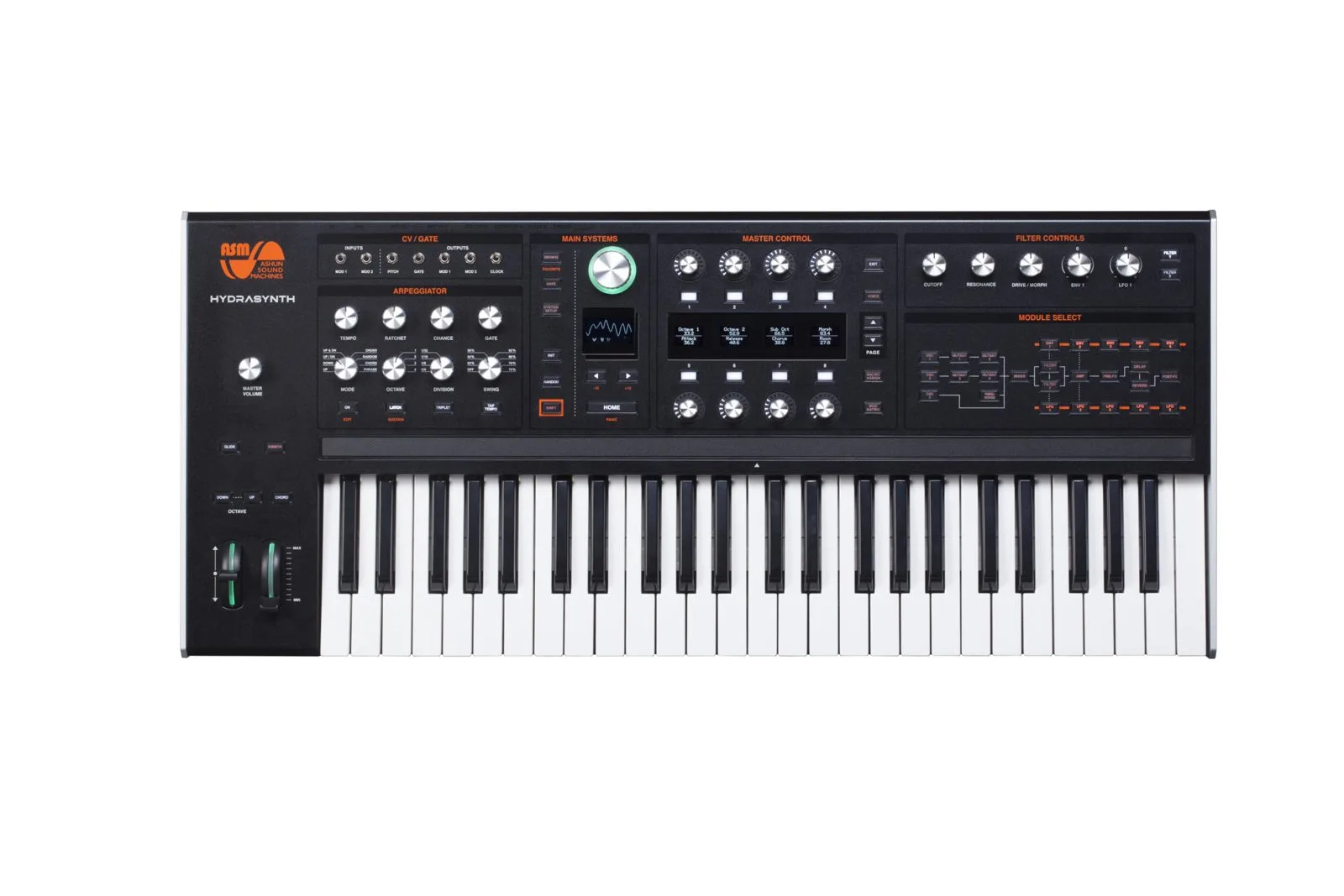
See the ASM Hydrasynth at the maker
Waldorf Iridium: wavetable among five engines
The Iridium does wavetable, and does it very well, but it is only one of its five synthesis engines, alongside granular, resonator, kernel and sample. Sixteen voices, a dual stereo output, a touchscreen to draw and warp wavetables by hand: this machine aims higher and wider than the Behringer Wave.
Budget around 2,000 dollars for the desktop on sale, more for the keyboard with polyphonic aftertouch. The choice for players who want wavetable without giving up everything else, and who have the budget for a full creative instrument.
In short: Waldorf, around 1,999 USD for the desktop, 16 voices, multi-engine including wavetable, touchscreen.
See the Waldorf Iridium at the maker
Wavetable without a soldering iron: three plugins
If the idea is to hear this kind of synthesis inside your DAW, three plugins cover the ground, from free to the paid benchmark.
Xfer Serum 2: the software wavetable benchmark
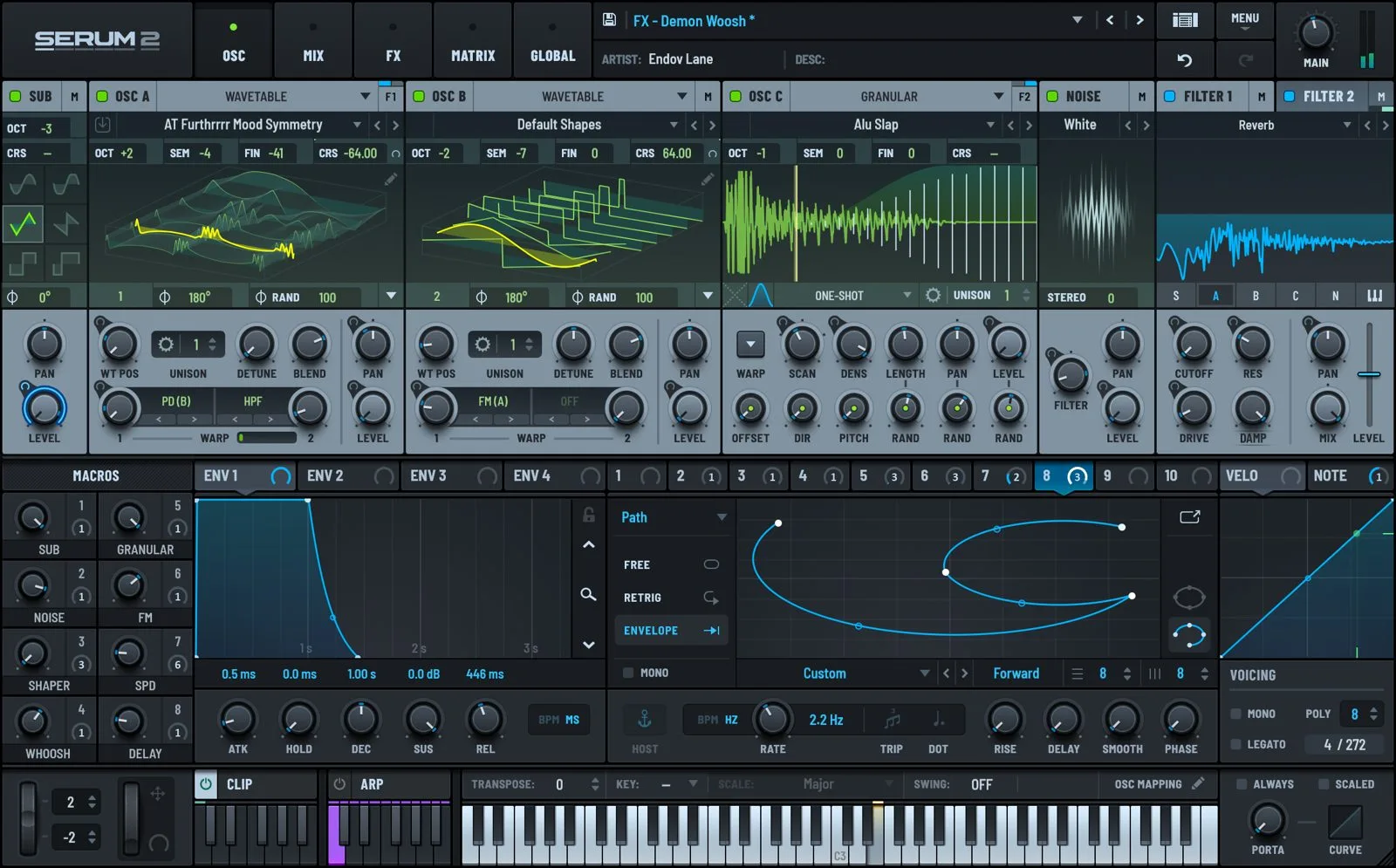
Serum became the wavetable benchmark in plugin form, and version 2 widens the scope with granular and spectral oscillators, new filters and a revamped effects engine. You watch the wavetable move in three dimensions, draw your own with the mouse, or drop in a sample to turn it into a waveform.
To get the Behringer Wave sound inside your DAW, with no box and no cable, this is the most direct and best-documented tool around. The update from the first Serum is free for existing owners.
In short: Xfer Records, 249 USD, VST3, AU and AAX plugin, macOS and Windows.
See the Xfer Serum 2 at the maker
Vital: the free wavetable that barely compromises
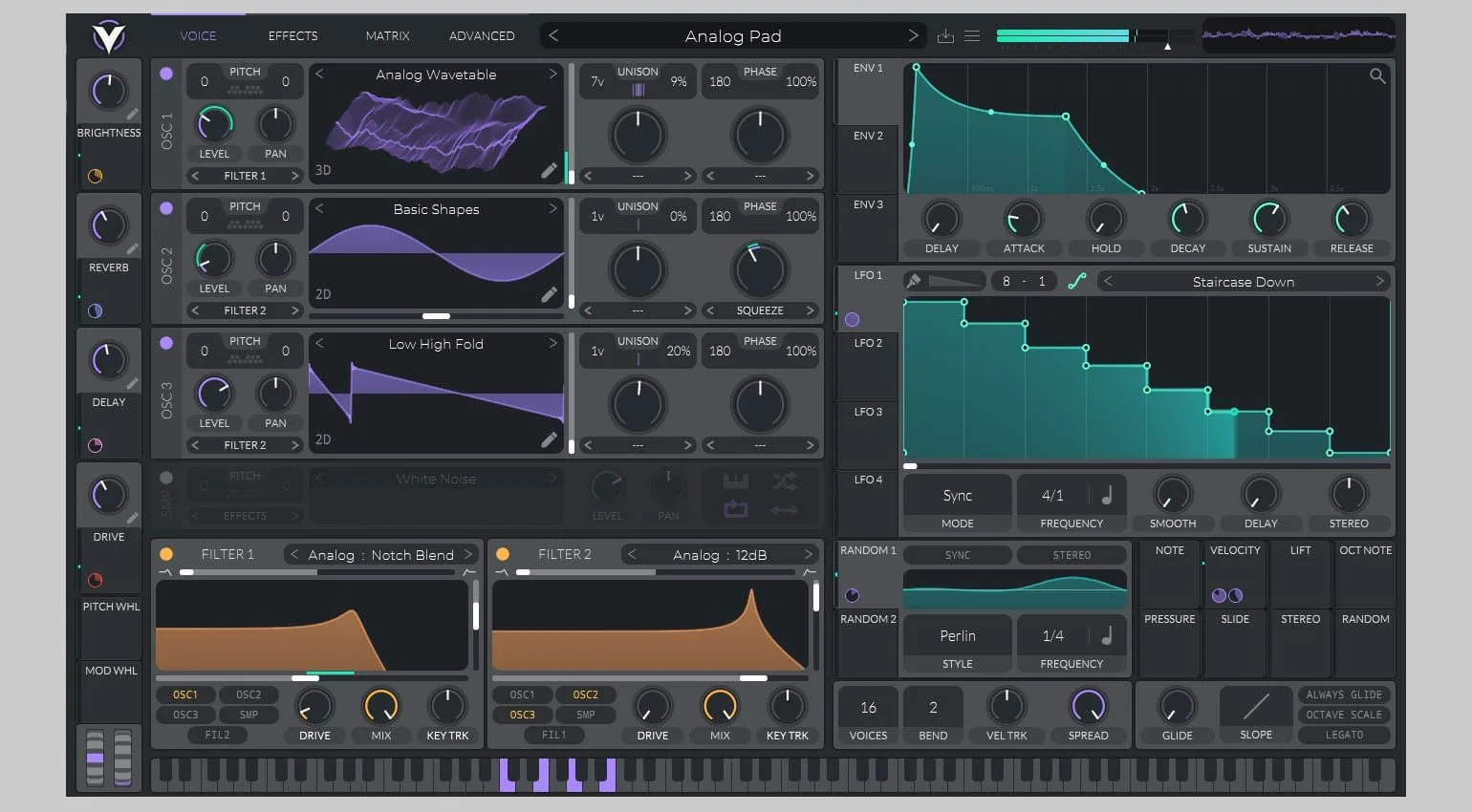
Vital offers a complete wavetable synth for zero, and it is the simplest way to explore the genre without spending a cent. Spectral warping of the waveforms, visual modulation, wavetable generation from text or from a sound: the interface sits close to Serum’s, only more colorful.
The free Basic tier unlocks the whole synth; the paid tiers, around 25 and 80 dollars, mostly add content. If the Behringer Wave intrigues you but you want to test the waters first, start here, alongside the other free software synths we rounded up.
In short: Vital Audio, free for the Basic version, around 25 and 80 USD for more content, VST3, AU and CLAP, macOS, Windows and Linux.
Arturia Pigments: wavetable inside a Swiss army knife
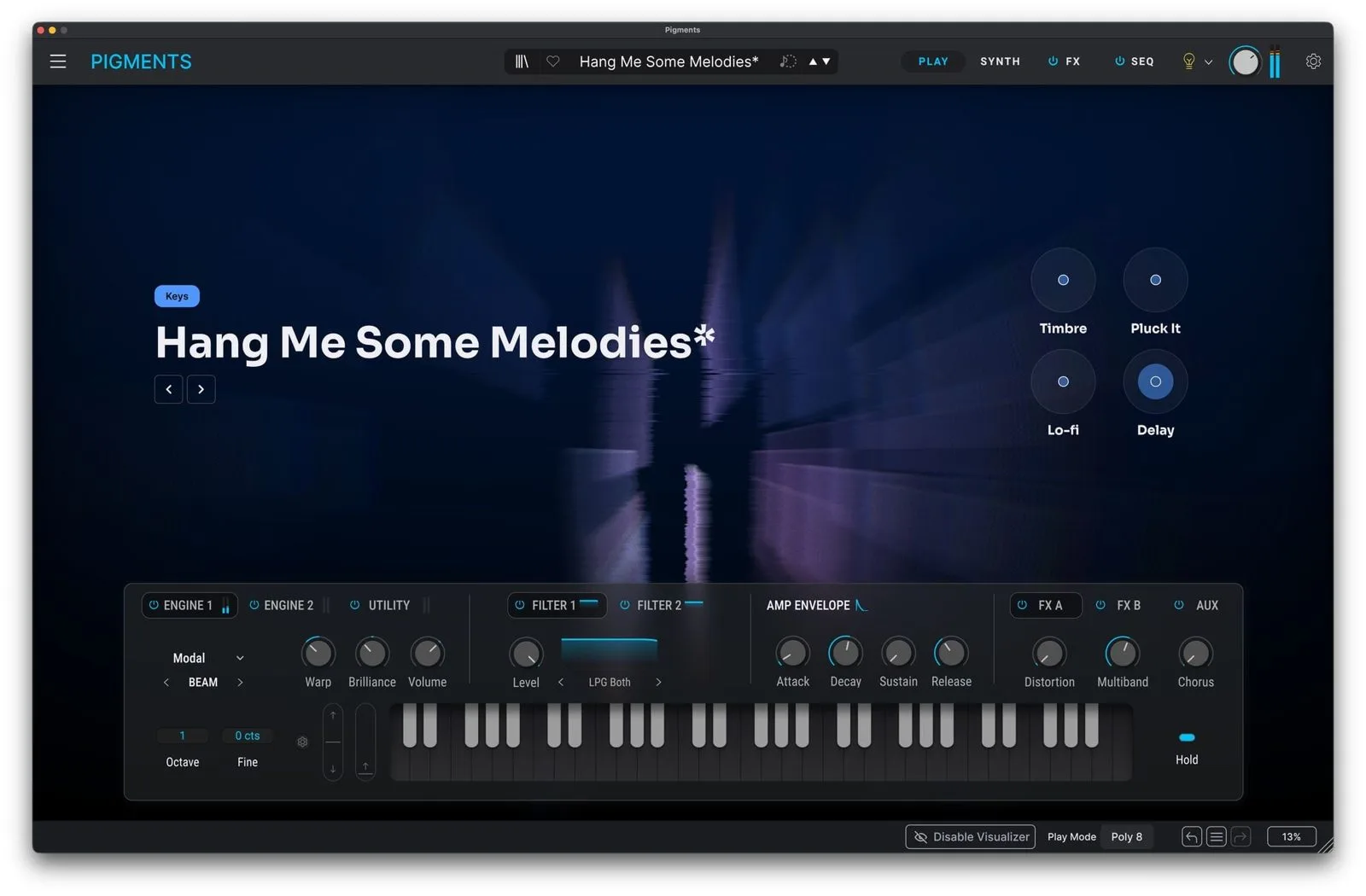
Pigments is not just a wavetable synth, it is a multi-engine software instrument, virtual analog, harmonic, granular and sample included, that the wavetable mode rounds out. Its strength lies in the modulation, clear and generous, and in a modern sound of its own. Version 7 refines the interface and the filters further.
The list price sits around 199 EUR, but Arturia runs promotions very regularly, sometimes at half price. A good choice if you want wavetable without being locked into it, inside a versatile tool.
In short: Arturia, around 199 EUR and often discounted, Pigments 7, Standalone, VST, AU, AAX and NKS, macOS and Windows.
See Arturia Pigments at the maker
The quick recap
| Product | Maker | Price | Its job in a word |
|---|---|---|---|
| Waldorf M | Waldorf | ~1,879 EUR | Faithful clone |
| 3rd Wave 8M | Groove Synthesis | ~1,995 USD | PPG tribute |
| Modal Argon8 | Modal Electronics | ~799 EUR | Affordable |
| ASM Hydrasynth | ASM | ~1,399 USD | Morphing |
| Waldorf Iridium | Waldorf | ~1,999 USD | Multi-engine |
| Xfer Serum 2 | Xfer Records | 249 USD | Plugin benchmark |
| Vital | Vital Audio | Free | Free plugin |
| Arturia Pigments | Arturia | ~199 EUR | Swiss army knife |
Which one should you pick?
It all depends on where you start. For the PPG sound in its truest form, with analog warmth, the Waldorf M remains the centerpiece, and the Groove Synthesis 3rd Wave 8M offers a modern, compact take if the budget allows. To get into wavetable hardware without spending a month’s salary, Modal’s Argon8 is the obvious starting point, while the Hydrasynth will win over anyone after an expressive machine full of character first. The Iridium is for players who want it all, wavetable included, in a single high-end instrument. And if the plan is simply to hear how this kind of synthesis sounds before investing, Vital costs nothing, Serum 2 sets the standard and Pigments adds versatility. The Behringer Wave itself keeps an edge many lack: real PPG grit in hardware, for the price of a high-end plugin.