


DDA DMR12
Technical
Specifications
Inputs / Outputs
| Total inputs | 56 |
|---|---|
| Mic preamps | Mic gain (channel input to mix) 65 dB; line gain 10 dB. Input impedance: mic >2 kΩ, line >10 kΩ. Source: brochure (technical specs). |
Processing
| Mix buses | 12 |
|---|---|
| Aux sends | 8 |
| Frame | Two frame sizes: large 2.26 m (89") holding up to 56 modules (44 inputs + 12 outputs, 56/12/24 style); small 1.95 m (77") up to 44 I/O modules (20/12/24 style). Source: DDA DMR12 brochure. |
| Architecture | "Multiple Input Concept": every module is an input module. Modules carry a second line input beside the mic; via Aux 7/8 returns, capacity can reach up to 112 inputs at mixdown. Source: brochure. |
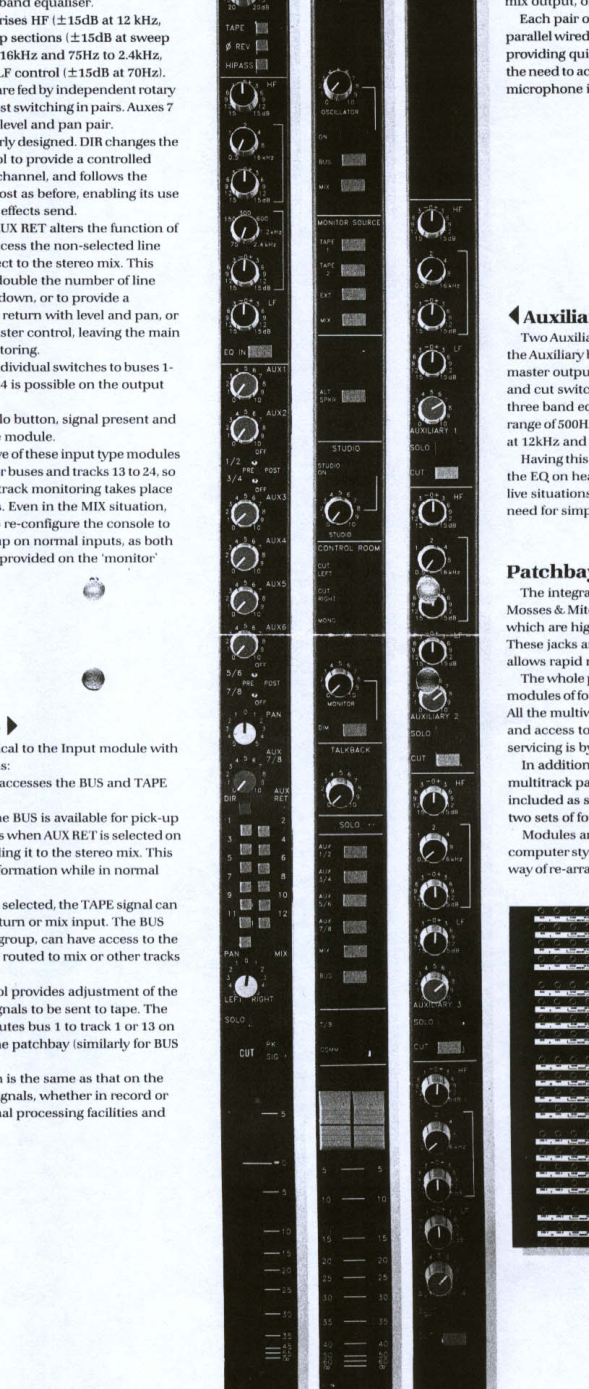
| EQ | 4-band EQ: HF shelf ±15 dB at 12 kHz; two swept mids ±15 dB (500 Hz–16 kHz and 75 Hz–2.4 kHz, Q 1.5); LF shelf ±15 dB at 70 Hz. Source: brochure. |
| Buses | 12 group buses routable to 24 multitrack tracks; 24-track monitor returns. Source: brochure. |
| Aux sends (details) | 8 aux sends; Aux 7/8 switchable (dedicated effects send or second input to the stereo bus). Source: brochure. |
| Routing and patching | Integral patchbay with Mosses & Mitchell long-frame TT bantam jacks; mics on XLR (Althiway panels), multitrack sends/returns on EDAC multiway connectors. Source: brochure. |
| Audio performance | Mic EIN (55 dB gain, 200 Ω ref) < -127 dBv; distortion < 0.05%; adjacent-channel crosstalk -90 dB at 1 kHz; electronically balanced outputs <75 Ω. Source: brochure. |
Surface
| Fader layers | 1 |
|---|---|
| Touchscreen | No |
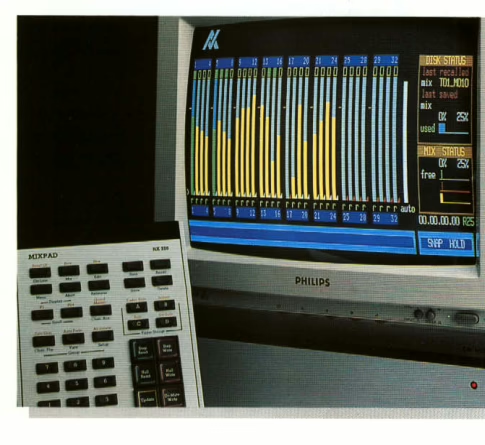
| Automation | Two systems catered for: "DDA MIDI Muting" (128 mute patches, 9 mute groups, solo-in-place, MIDI channel selection) and VCA fader & mute automation compatible with third-party Audio Kinetics Reflex, Optifile and Steinberg Mimix systems. Source: brochure. |
| Metering | Moving-coil VU standard; BBC PPM or LED bargraph optional. Source: brochure. |
Recording
| Onboard recording | No |
|---|
Networking
| Redundant PSU | No |
|---|---|
| Redundant networking | No |
Physical
| Width | 2,260 mm |
|---|---|
| Build | Aluminium extrusions and honeycomb base panel for a rigid, light structure; optional floating cable ducts. Source: brochure. |
Strip & details
Rotate your phone to landscape for a better view of the strip.
Software
Other screenshots
Documents
Editorial & artists
Our take
History & design
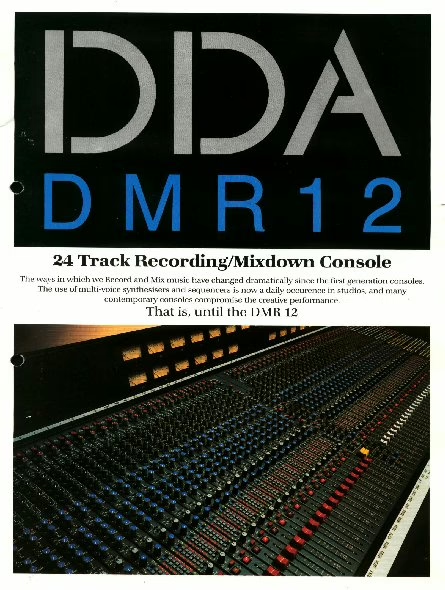
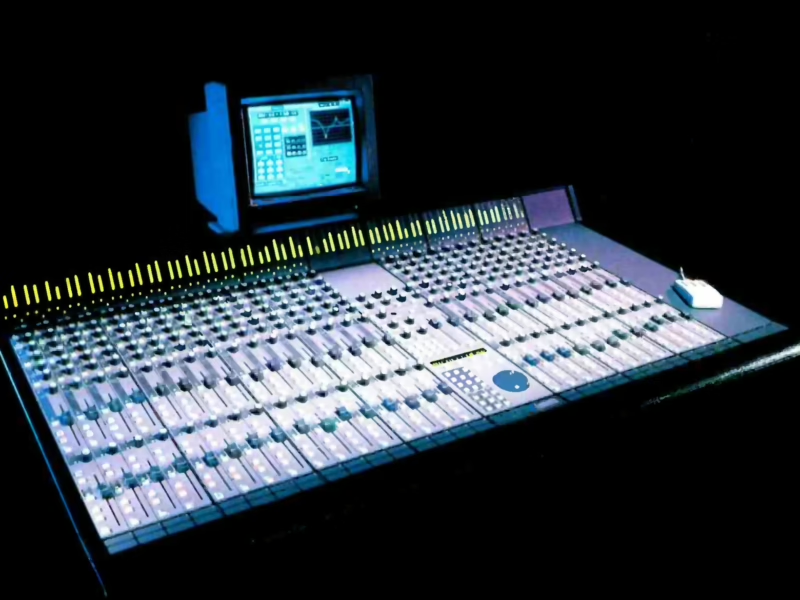
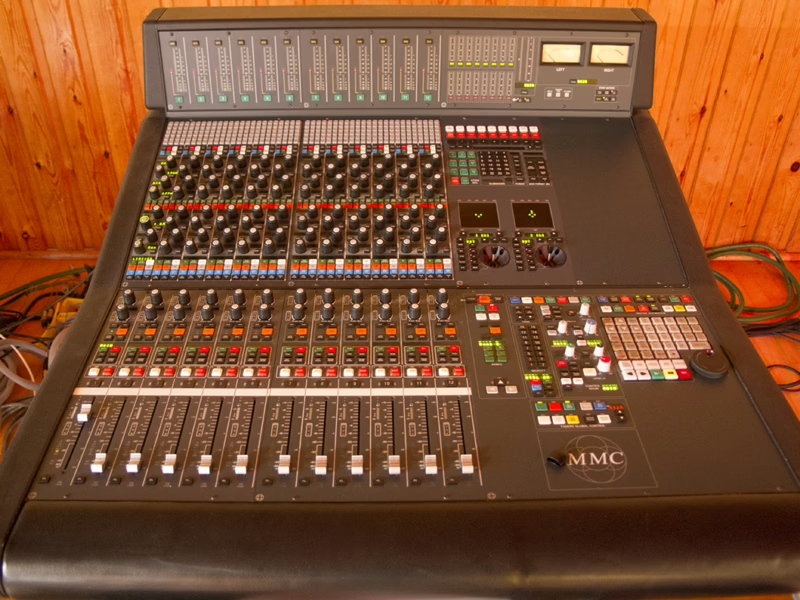
The DMR12 is an in-line analogue recording console introduced by DDA around 1990 and designed for 24-track studios. It came in two frame sizes: a large 2.26 m frame holding up to 56 modules (44 inputs and 12 outputs) and a smaller 1.95 m frame limited to 44 I/O modules.
Its central idea is the “Multiple Input Concept”. Every module is an input module that carries a second line input alongside the mic input. Together with the Aux 7 and 8 returns, the console can bring up to 112 sources into the mix.
Each channel has a four-band EQ with ±15 dB of range: a 12 kHz high shelf, two swept mids (500 Hz to 16 kHz and 75 Hz to 2.4 kHz, Q of 1.5) and a 70 Hz low shelf. Mixing relies on 12 group buses routable to the 24 multitrack tracks, with 24-track monitor returns, and on 8 aux sends, the last two of which can act as an effects send or as a second input to the stereo bus.
For day-to-day operation the DMR12 has an integral patchbay with Mosses & Mitchell bantam jacks, mic inputs on XLR and multitrack connections on EDAC connectors. Automation is handled either by DDA MIDI Muting (128 mute patches, 9 mute groups, solo-in-place) or by VCA fader and mute automation compatible with third-party Audio Kinetics Reflex, Optifile and Steinberg Mimix systems. Moving-coil VU meters are standard, with BBC PPM or LED bargraphs as options.
The brochure quotes 65 dB of mic gain, an equivalent input noise below -127 dBv at 55 dB of gain, distortion under 0.05% and -90 dB adjacent-channel crosstalk at 1 kHz. The frame combines aluminium extrusions with a honeycomb base panel to stay rigid without being heavy.
- David Dearden, Chief designer
Links
Related consoles
Some merchant links are affiliate links. Purchases may support Digital Mixing at no extra cost.
Documents are archived locally for preservation. Source credited. Takedown requests: [email protected]