Tim Exile is known for two things: live performances where he mangles sound in real time like few dare to, and a long history with Reaktor, Native Instruments’ modular environment he has been one of the most creative users of. Now he takes the logical next step and releases Karst, his own node-based modular audio system. And this is not yet another sandbox for tinkerers: Karst is explicitly aimed at songwriters, not at instrument designers.
That distinction is not cosmetic. Where Reaktor emphasises building tools, Karst sets out to fold composition and performance straight into the workflow. The pitch: close the gap between “patch something together” and “write a track.” It is a rare angle in software modular, a world that is often technically intoxicating yet discouraging the moment you actually need to finish a song.
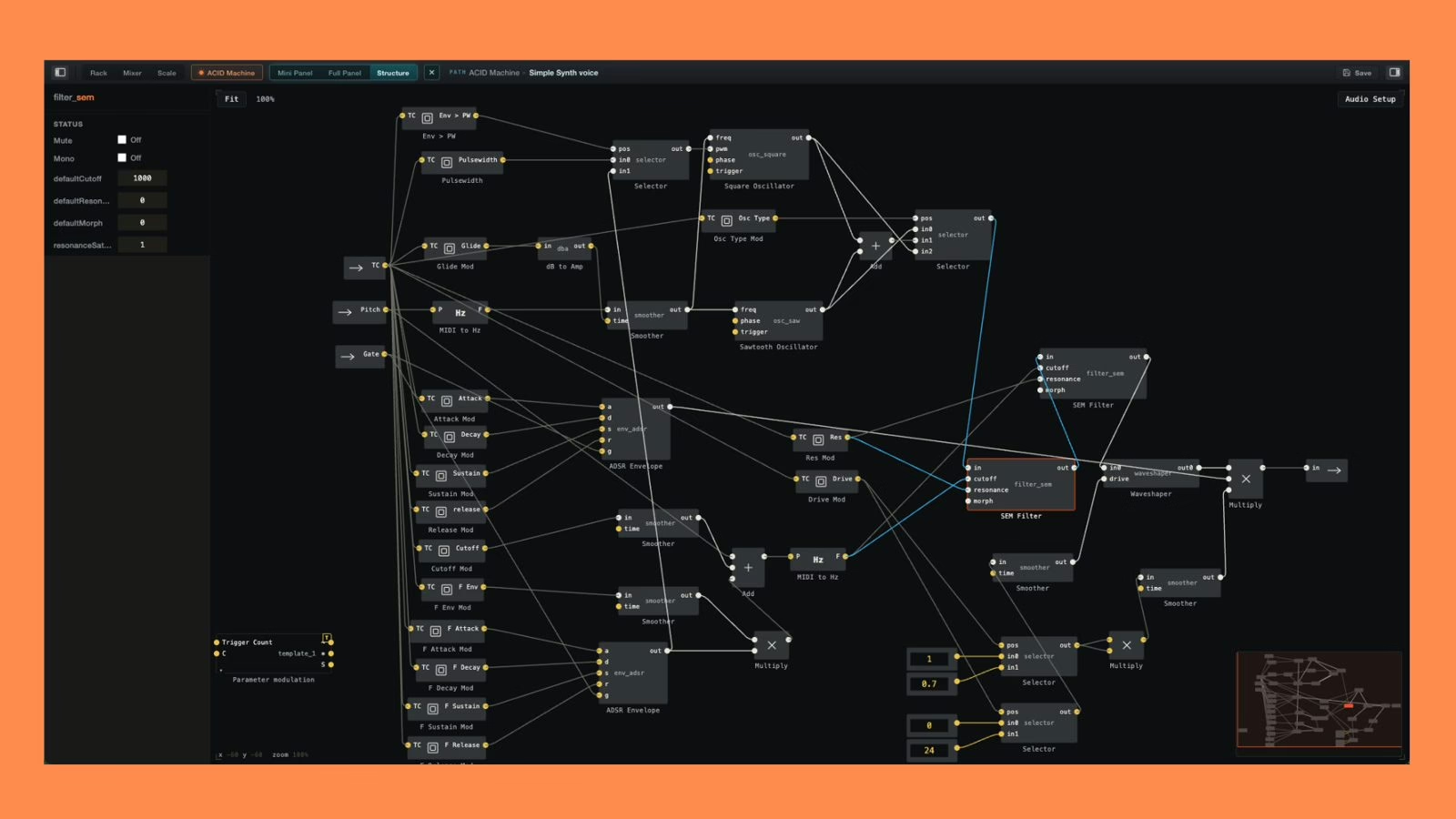
Modular, without the patching chore
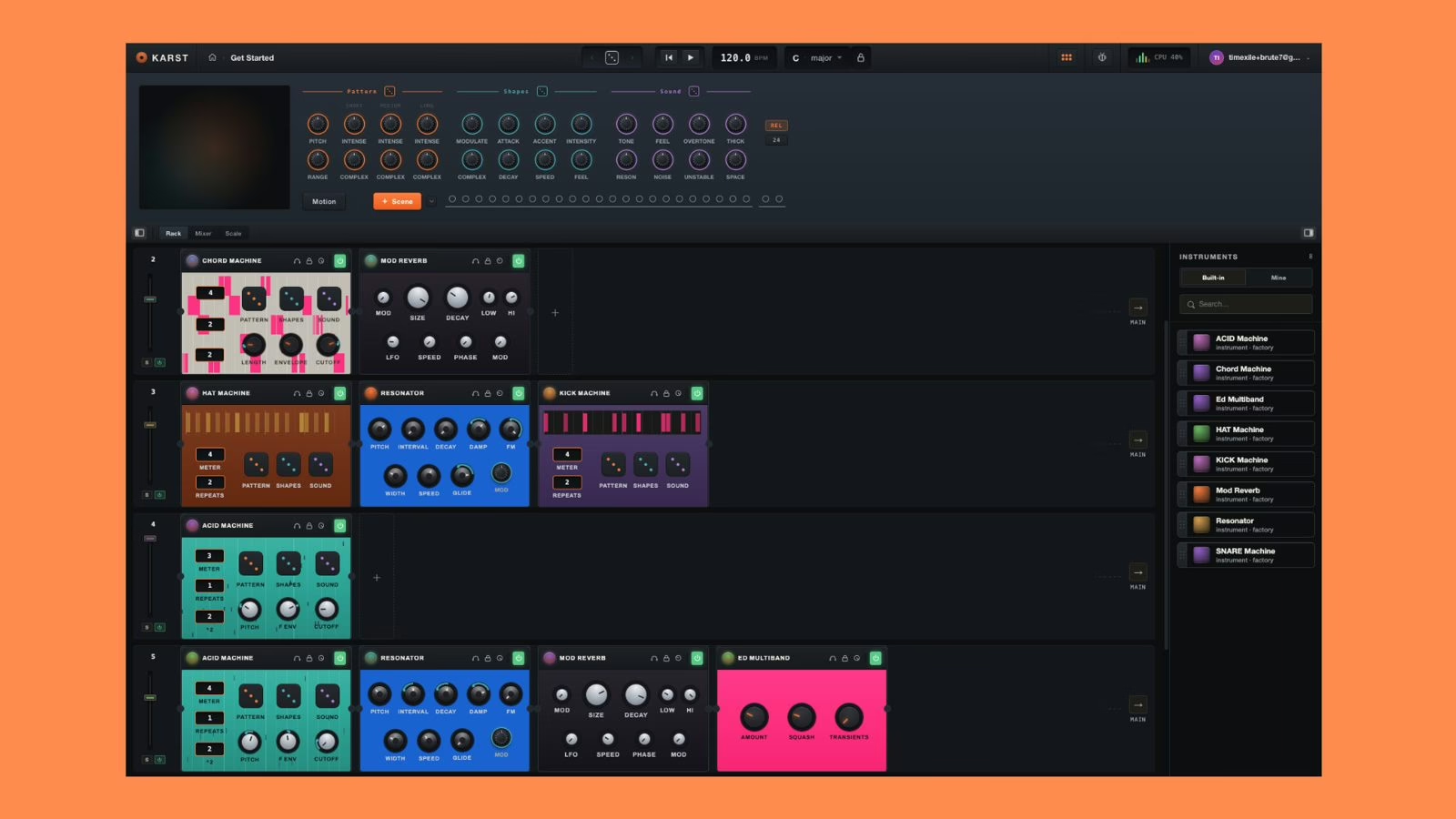
Karst’s first move is to remove the part of modular that puts people off: managing connections. You drop in instruments and effects and they auto-connect; manual cabling is still there for advanced routing, but it becomes an option, not a prerequisite. You keep modular depth while killing the barrier to entry.
Around that core, Tim Exile stacks tools clearly built for music-making rather than engineering:
- Generative DNA: tools for building generative algorithms without hand-managing event scheduling or polyphony.
- Smart Dice: generate small or large variations of your instruments in a single gesture.
- 24 global macros: high-level controls meant for playing and evolving a patch live.
- Scenes: save and recall full system states, preset-style.
- Plugin hosting: embed your own plugins inside Karst’s generative ecosystem.
The system ships with synthesis- and sample-based instruments — acid, chord, kick and snare machines — plus effects (a resonator, a modulated reverb), with the stated goal of adding new modules every week.
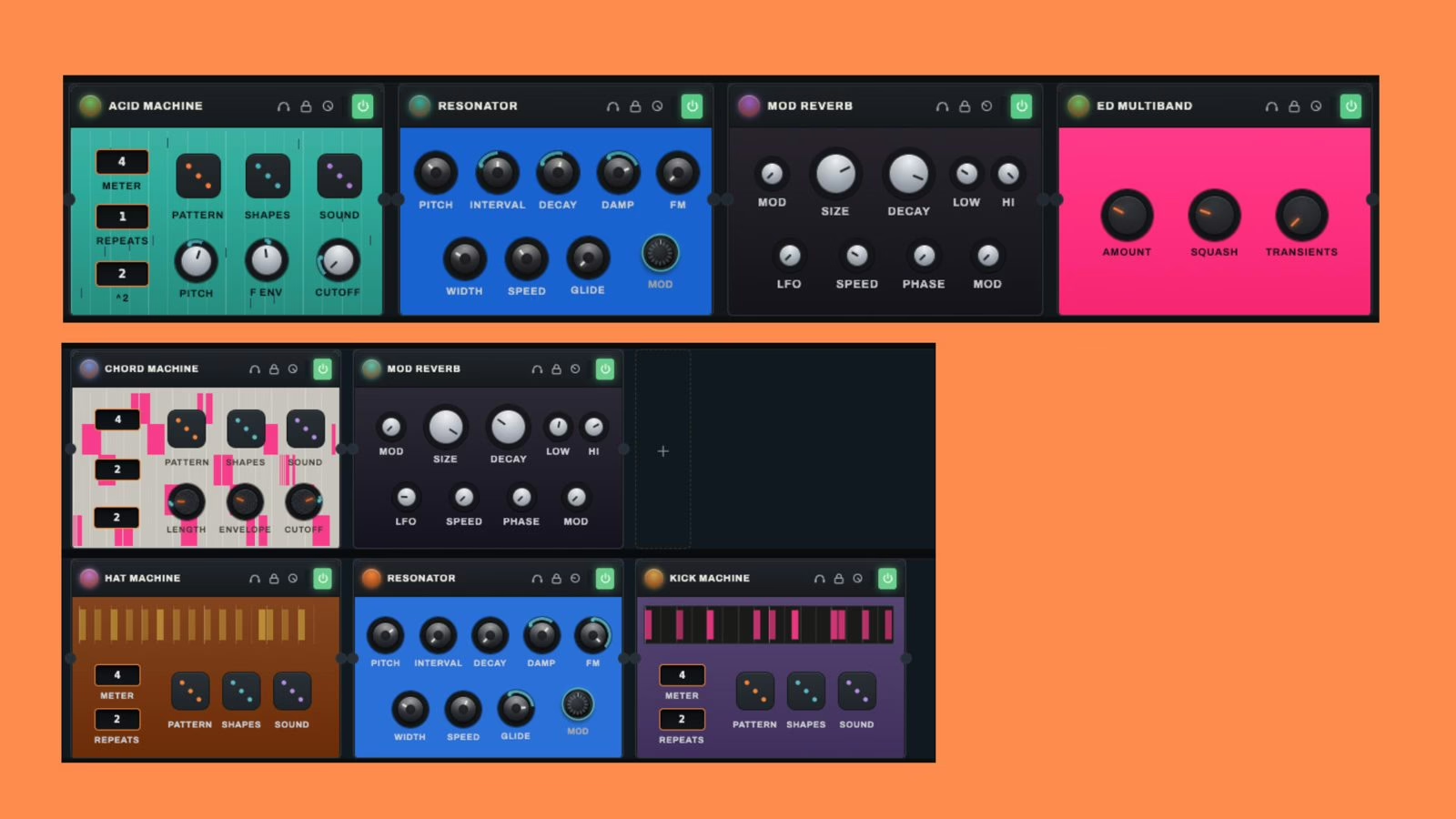
Browser first, standalone and plugin next
The launch call is clear: Karst runs today in a desktop browser, as a private beta 0.1. You can try it for free, then unlock full access at a launch price (£69 instead of £99). A standalone app and a plugin version to bring Karst inside your DAW are announced for the last quarter of 2026.
Anyone following the developer will recognise the lineage: Karst succeeds the New Modular System (NMS), a set of Reaktor-based tools Tim Exile showed earlier this year and is now discontinuing. NMS backers get Karst for free, the maker reckoning the new system “basically is NMS — and a whole lot more.” In other words, the experience banked on Reaktor is reinvested into an independent base, free of any dependence on a third-party host.
My take
I lived through the shift from analog to computer-based music from the inside, and I have always felt software modular hit the same wall: fascinating to explore, exhausting to finish. Most environments of this kind produce patches, rarely songs. If Karst delivers on its promise — putting composition and playing back at the centre, and making cabling a detail rather than a rite of passage — then it goes after the genre’s real weak spot, not its technical shop window. The browser bet fits the times and drops the trial barrier to zero; that said, private beta 0.1 status calls for caution, and a “generative” tool is only as good as the musicality of its constraints. That is exactly where an artist like Tim Exile, who genuinely plays his systems on stage, can make the difference against the usual over-engineered contraptions.
In the same vein of software instruments that lean on generation and gesture, see the return of Tweakbench Tendril, the free BEATSURFING VRAC plugin, and, on the host side, the FL Studio 2026 release.