Greg Mackie and Peter Watts no longer design for other brands: with the D24 and D32, the two engineers are launching their own digital live sound consoles under their M&W Pro Audio brand. Shown at InfoComm in Las Vegas, they are expected at the end of autumn 2026.
Two major names in console history
The announcement only makes full sense when you look at the two names behind it. Greg Mackie founded Mackie Designs in 1988 — after TAPCO (1970) and AudioControl (1976) — and made the serious, affordable compact mixer a mainstream reality. Peter Watts has been designing consoles for more than thirty-five years: he was head of R&D at Trident Audio Developments in London, then vice president of engineering at Mackie.

This is far from the duo’s first outing. Founded in 2009 in Wales, M&W Pro Audio long worked as a design office: its partnership with QSC, started in 2010, gave birth to the TouchMix series — those small touchscreen digital mixers that convinced many operators to move over to screens. With the D24 and D32, they are taking centre stage again and signing these products in their own name.

Everything on screen, without giving up faders
The design choice can be summed up in one line: a large touchscreen to control everything, but real motorised faders under your fingers. Each model takes its name from the number of onboard mic/line preamps — the now well-known shielded Lyric preamps, designed by Watts.
| D24 | D32 | |
|---|---|---|
| Touch-sensitive motorised faders | 13 | 17 |
| Fader travel | 70 mm | 100 mm |
| Lyric preamps | 24 | 32 |
| Parameters shown per channel | 10 | 10 |
| Format | Compact | Extended |
Beyond the specs, both consoles share the same DNA:
- fader strips with digital displays that show ten channel parameters at a glance;
- more than one hundred distinct screens to cover all functions;
- a built-in subwoofer crossover with selectable slope — enough to tune a system without an outboard processor rack;
- a twelve-function footswitch and remote control via tablet using a simple web browser.
The D32 adds the most visible selling point: a detachable stage box that separates the control surface from the stage I/O.

A “Simple Mixer” mode for non-technicians
Another hallmark of the brand is accessibility. Both consoles offer a ten-channel Simple Mixer mode, designed for occasional operators — places of worship, community halls, conference rooms, small events. It’s the same philosophy that made Mackie successful: a real console in the hands of people who aren’t sound engineers, without overwhelming them. The target is clear: installed and lightweight sound systems, rather than major touring.

What still needs confirming
Two unknowns, and not minor ones: M&W Pro Audio has provided no pricing, and no detail on the audio networking (protocol, number of digital inputs/outputs). Yet in such a fiercely contested part of the live digital console market, these are exactly the factors that will determine the real positioning.
My take
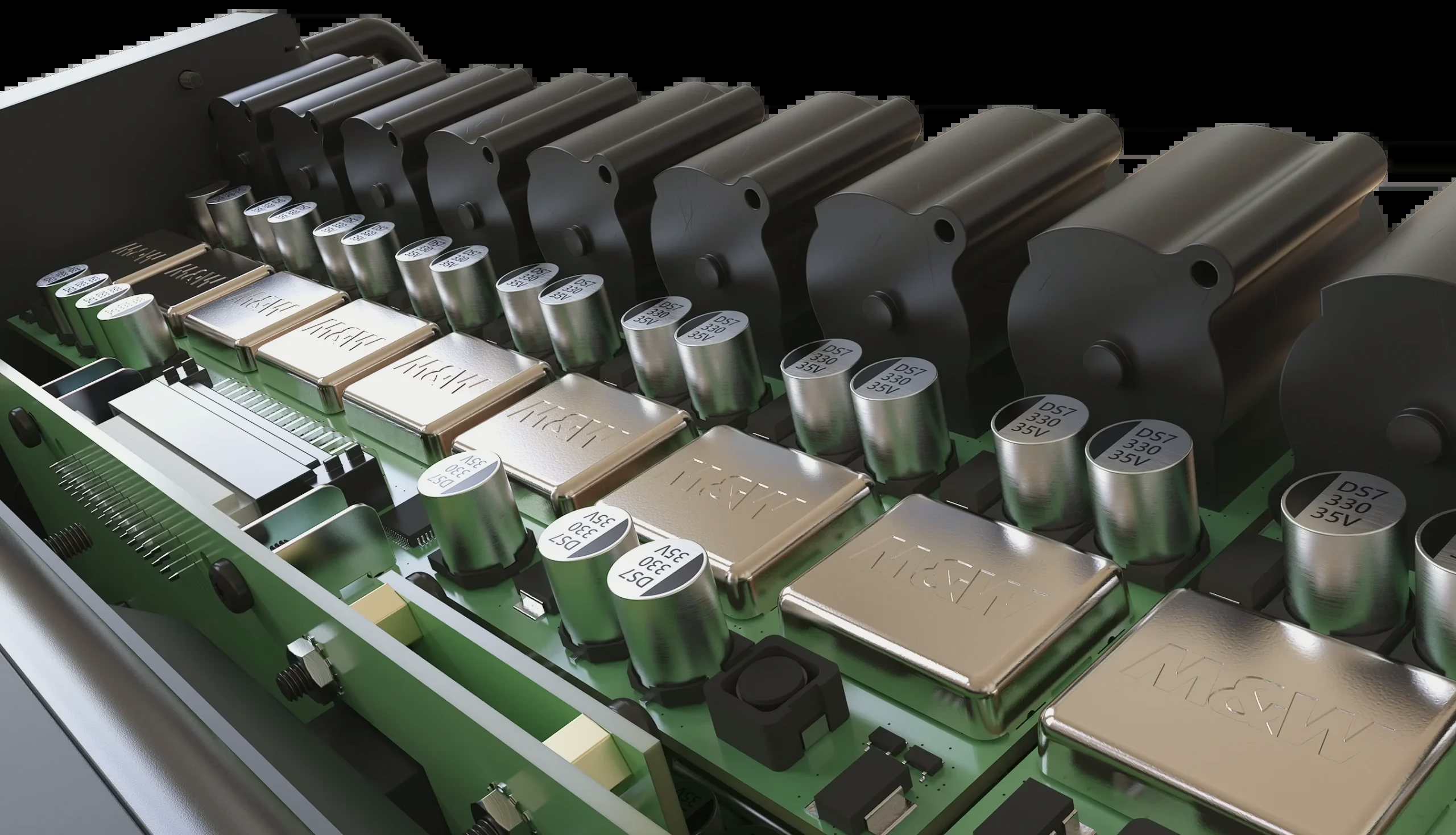
I’ve spent enough years behind PA consoles to be wary of touchscreen “revolutions”: a screen will never fully replace the muscle memory of a physical surface when you need to kill feedback in a second without looking. But two things catch my attention. First, Mackie’s obsession with accessibility, which has always been a genuine strength rather than a marketing slogan. Second, and above all, Watts’s signature on the preamps: on a live console, that’s where everything starts, and it’s all too often the area that gets compromised to hit a price point. If the Lyric preamps live up to the promise, these two desks deserve a careful listen rather than snap judgement. The rest — networking, latency, build quality — will be judged in the field.
Why this launch matters
Ultimately, the announcement is a small industrial event: two major designers are returning to the market under their own brand at a time when digital live consoles have become commonplace. The question now is whether M&W Pro Audio can establish itself directly, where its expertise has so far powered other brands’ ranges. We’ll find out in autumn 2026; those who are curious can already browse the manufacturer’s website.
For further reading: our coverage of the new generation of Yamaha MGX consoles, our pro guide to the Soundcraft Ui24R, and our in-depth feature to understand routing and busses on a digital console.