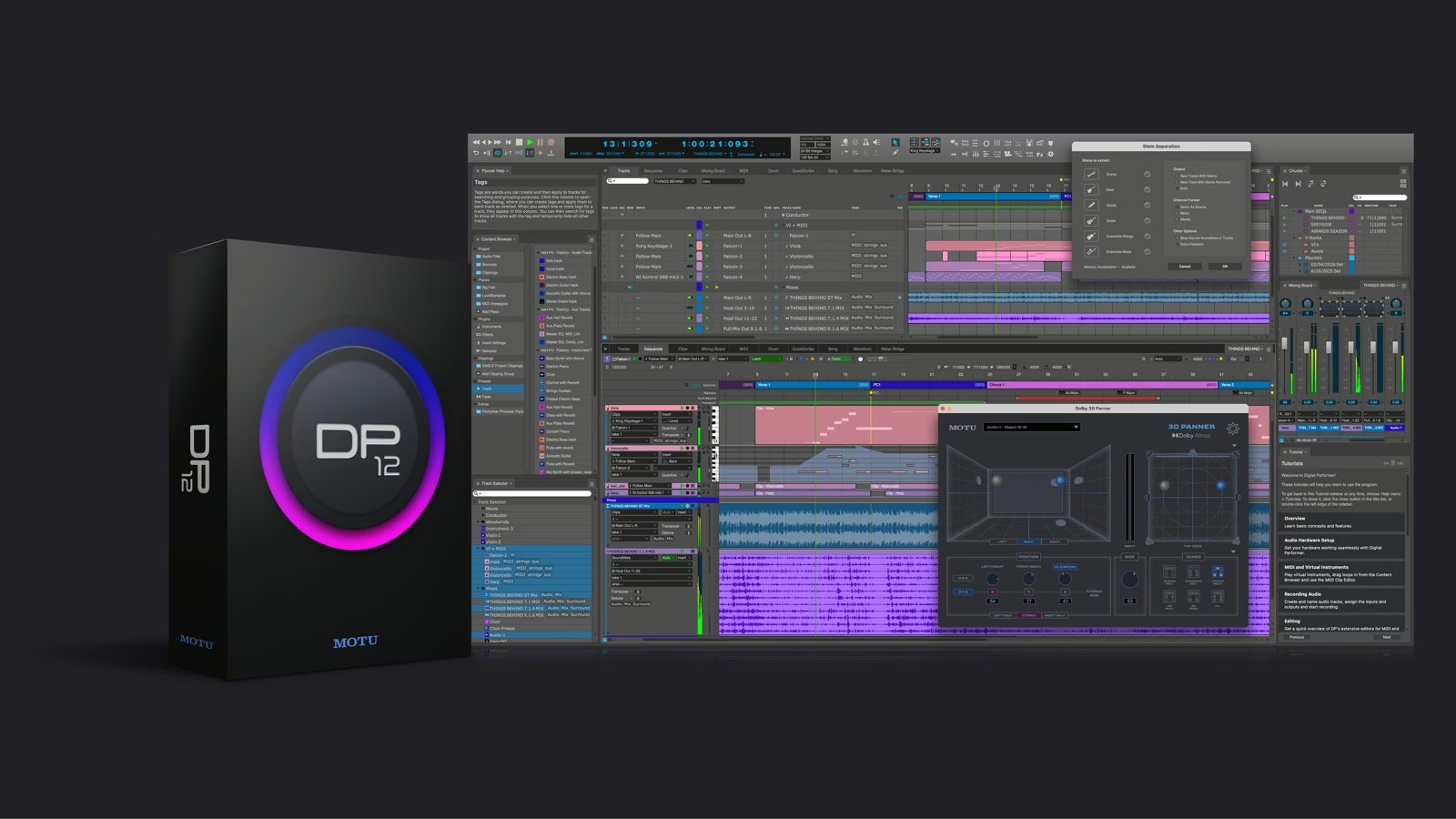
Digital Performer has crossed the decades quietly, but this version 12 will not go unnoticed. MOTU beefs up its workstation on the two fronts that matter today: immersive audio and artificial intelligence. The software is shipping now, for macOS and Windows alike.
Dolby Atmos comes to DP
DP12 brings everything needed to mix, render and deliver in Dolby Atmos. You place and move any source— sound, effect, instrument, dialogue — through the three-dimensional field, height included. Immersive mixes can be monitored on a system up to 9.1.6 (the six height channels), or binaurally on any standard headphones. It is a strategic addition: Atmos is no longer reserved for mastering or big rooms, it moves into the everyday production tool. All current surround formats are supported, from 7.1.2 to 9.1.6.
Stem separation, built in-house
The other big one is AI stem separation, which MOTU says runs on technology developed entirely in-house. From a stereo mix— an existing track, a demo — DP12 isolates separate tracks: drums, bass, vocals, guitar, and even string and brass ensembles. For remixing, covers, teaching or clean-up, the appeal is obvious, and running locally avoids the detour through an online service.
Everyday comfort
MOTU did not forget ergonomics. The new Arrangement Strip sits below the timeline, in both the Tracks Overview and the Sequence Editor: you reorder a song’s sections by dragging coloured bars. Track Freeze now fires with one click, without creating a separate track. Add MusicXML import and export with notation software, support for high frame rates (up to 120 fps) and VST3 auto-migration that lets a compatible plugin change versions without breaking settings and automation.
| New feature | Detail |
|---|---|
| Dolby Atmos | Mix, render and deliver, monitoring up to 9.1.6, binaural on headphones |
| Stem separation | In-house AI: drums, bass, vocals, guitar, strings, brass |
| Arrangement Strip | Reorder sections via bars, below the timeline |
| Track Freeze | One click, no extra track |
| Also | MusicXML, up to 120 fps, VST3 auto-migration |
Price, versions and systems
DP12 is priced at $499 for the full version, with a $195 upgrade for owners of a previous version and a $395 competitive offer. On the system side it needs macOS 12.7 or later, or Windows 11 (24H2). By adding both Atmos and stem separation, MOTU lines DP up with the features rival majors have been folding in one by one. To go deeper, read our guide to getting started in Dolby Atmos and our piece on stem separation in Universal Audio LUNA 3.0.
Frequently asked questions
How far can you mix in immersive?
DP12 handles current surround formats up to 9.1.6, where the last six channels are height channels. Binaural rendering also lets you monitor an immersive mix on headphones, with no multichannel setup.
Does stem separation go through an online service?
No: MOTU cites technology developed in-house, running inside the software. Separation produces distinct tracks— drums, bass, vocals, guitar, strings, brass — from a mix.
Which operating systems are supported?
DP12 runs on macOS 12.7 or later and on Windows 11 (24H2). It remains a genuinely cross-platform DAW.
How much is the upgrade?
The upgrade from a previous version is $195, the full version is $499, and a $395 competitive offer is available for users coming from another DAW.
My take
DP has long been the connoisseur’s DAW, quiet but formidable on MIDI and picture work. By adding Atmos and in-house stem separation, MOTU ticks the two boxes everyone watches in 2026, and not as gimmicks: the fact that separation runs locally, with no cloud, genuinely matters for anyone handling sensitive material. The price stays reasonable and the upgrade accessible. The real question is separation quality against the best dedicated tools— but building it straight into the sequencer already changes the day-to-day.