Roland has added a new model to its FP line — its best-selling portable piano family — and this one hides Wi-Fi under the hood for the first time. The FP-40 slots between the entry-level FP-10 and FP-30X and the step-up FP-60X and FP-90X, with a simple pitch: power on and play, no menu-diving required.
A sound engine borrowed from the grands
At the core of the FP-40 is the Piano Reality Sound Engine, the technology Roland normally keeps for its GP-series digital grands. It chases the harmonic depth and dynamic behaviour of an acoustic, with a response that shifts with playing force rather than just getting louder. Polyphony jumps to 256 voices, double the model it replaces — enough to hold a busy passage with the sustain pedal down without cutting off older notes.
On the sound side, the FP-40 carries 305 tones. Forty of them are reachable straight from the panel; the rest live in the app, a trade-off that keeps the front clean but leans on a phone or tablet to browse the full bank.
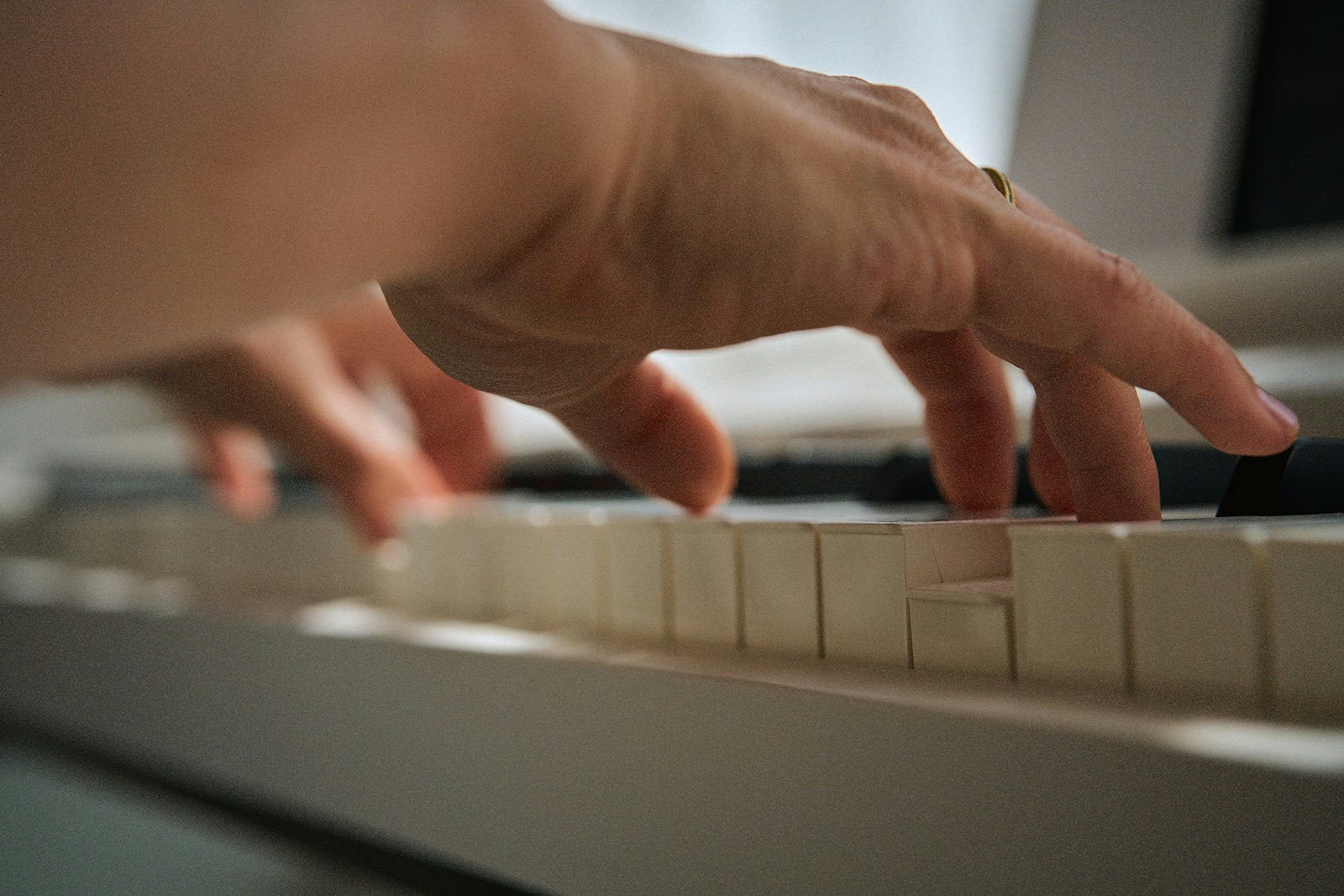
The PHA-4 Standard keybed is the real story
The FP-40 keeps the PHA-4 Standard, a weighted hammer action that is well known at this price. It combines three sensors per key for accurate fast repetitions, an escapement mechanism that mimics a grand’s slight resistance at the bottom of the throw, and an Ivory Feel coating to stop fingers slipping. It is a proven keybed and, in this bracket, still a benchmark for serious practice.
Wi-Fi is the feature that shapes the offer
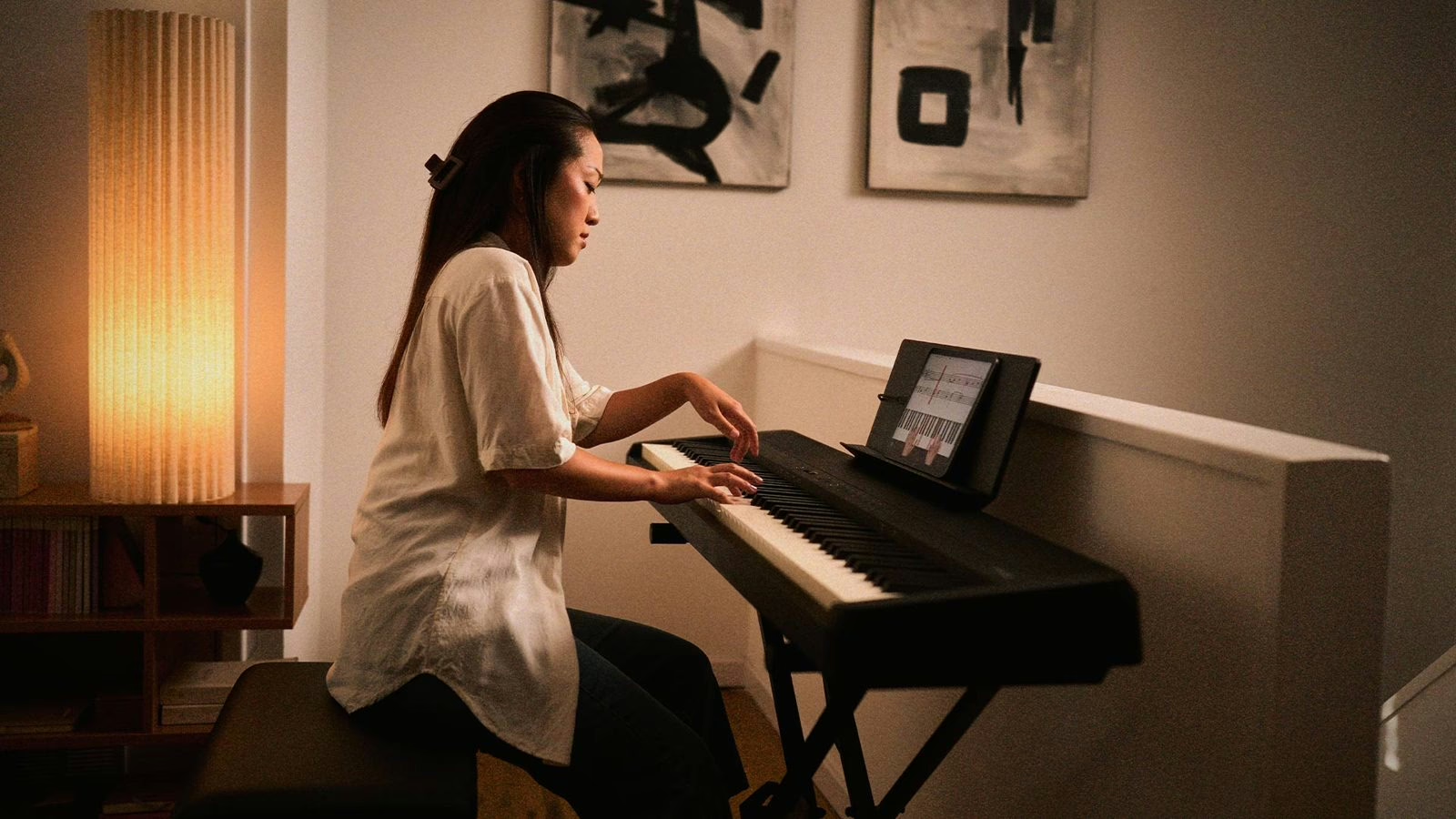
The real break is the built-in networking. The FP-40 is the first FP-series piano to include Wi-Fi, and it uses it for the Piano Sphere app, developed with Skoove. Progress tracking, real-time feedback on your playing, and a library of around a hundred songs and lessons push the piano towards guided learning — territory tablets have claimed in recent years.
You can read this as a modernised study piano as much as a living-room instrument. The catch is that the app-based features assume you are happy to work alongside an external screen — a deliberate choice that follows directly from the stripped-back panel.
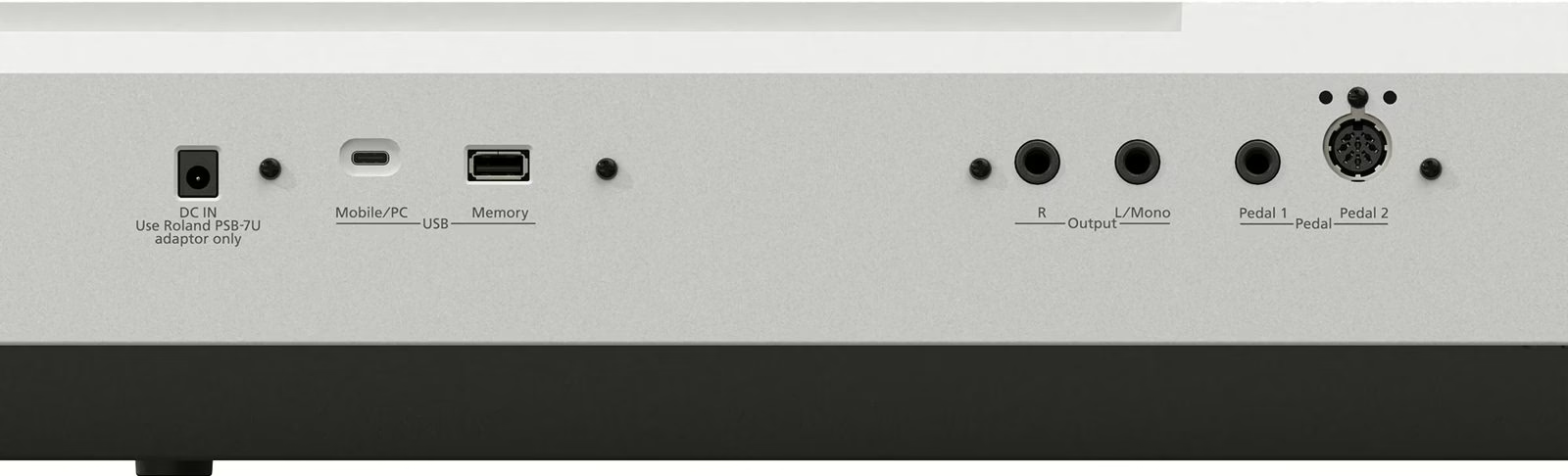
Connectivity and format
The FP-40 adds Bluetooth audio and Bluetooth MIDI to its USB-C connection. You can stream a source from your phone through the built-in speakers, drive a DAW wirelessly, and hook the instrument up to a computer with a single USB-C cable. The keyboard stays at 88 weighted keys in a portable frame, true to the range.
Where the FP-40 sits in the range
| Model | Position | Key point |
|---|---|---|
| FP-10 / FP-30X | Entry level | Compact, budget-focused |
| FP-40 | New mid-range | Built-in Wi-Fi, Piano Reality, 256 voices |
| FP-60X / FP-90X | Portable flagship | Bigger amplification and features |
Price and availability
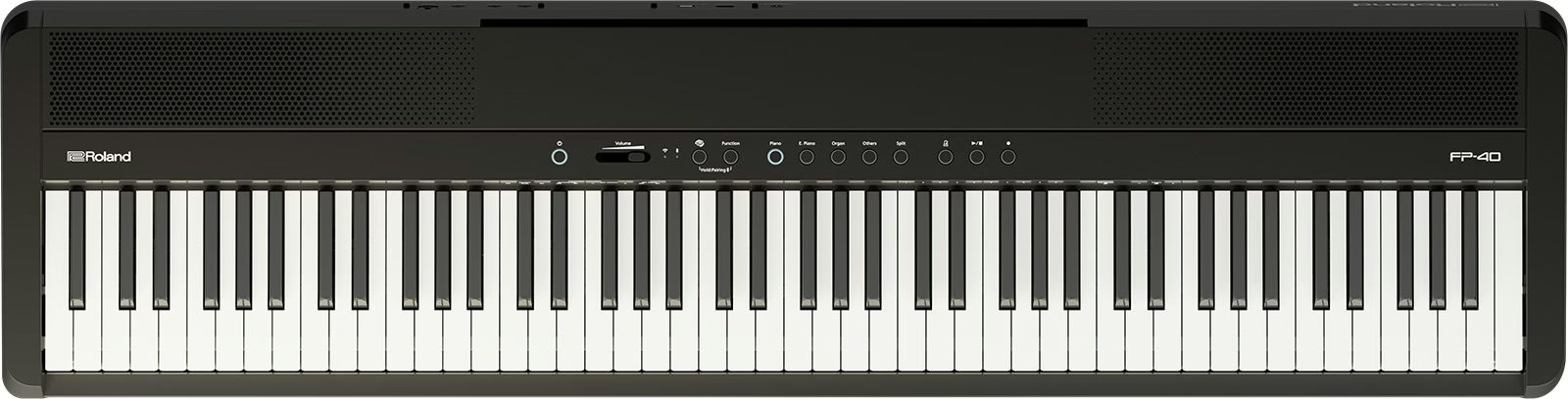
Roland lists the FP-40 at around $749 in the US, in black and white finishes. That puts it squarely against portable study and light-stage digital pianos, where a serious weighted keybed and a strong sound engine make the difference under the fingers and to the ear.
My take
The built-in Wi-Fi is not a marketing gimmick: it is what lets Piano Sphere turn a second piano into a coherent learning tool, no dongle or workaround needed. The real strength, though, is the PHA-4 Standard keybed and the GP-derived engine, two pieces that punch above their class. Having only forty sounds on the panel feels stingy, but on a portable piano you use three of them anyway. For a committed student or a pianist who wants a reliable home keyboard, the FP-40 ticks the right boxes without fuss.
Related reading: our pieces on the Polyend Keys and the Yamaha PSR-SX620. Product page: Roland FP-40.
Frequently asked questions
Does the Roland FP-40 need an internet connection to work?
No. The Wi-Fi powers the Piano Sphere app and its learning features, but the piano plays normally without a network. The 40 panel sounds and the keybed are fully available offline.
How many sounds can you reach without the app?
Forty of the 305 tones are selectable straight from the panel. The rest of the bank is browsed through the app, which is why the interface is deliberately minimal.
Is the keybed the same as on the pricier FP models?
The FP-40 uses the PHA-4 Standard, a weighted hammer action with escapement, three sensors per key and an Ivory Feel coating. It is the benchmark keybed for this segment; the step-up models mainly add bigger amplification and extra features.
Can you use it with a DAW?
Yes. The FP-40 connects to a computer over USB-C and sends MIDI over Bluetooth, so you can use it as a controller or record your playing into a music-production app.