Behringer keeps working its strategy methodically: put instruments in as many hands as possible, even if it means shrinking the legends. After turning the Minimoog Model D into a Eurorack module, then a compact unit, the brand is now shipping the D Mini — first announced as the D Soul — for €99. The first batch sold out fast, proof the demand was there. Let’s look at what this little box is hiding.
Three VCOs and a ladder filter in a pocket format
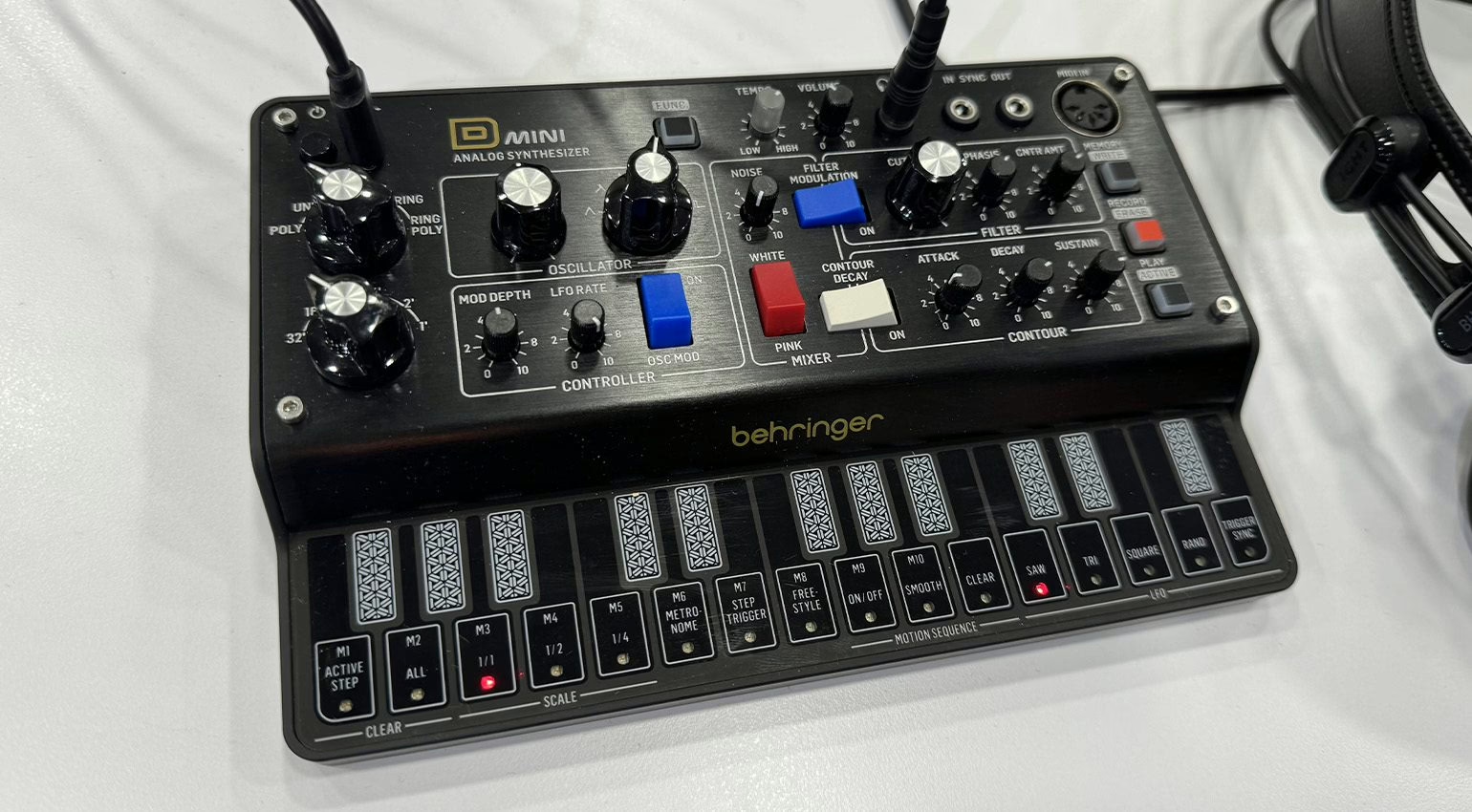
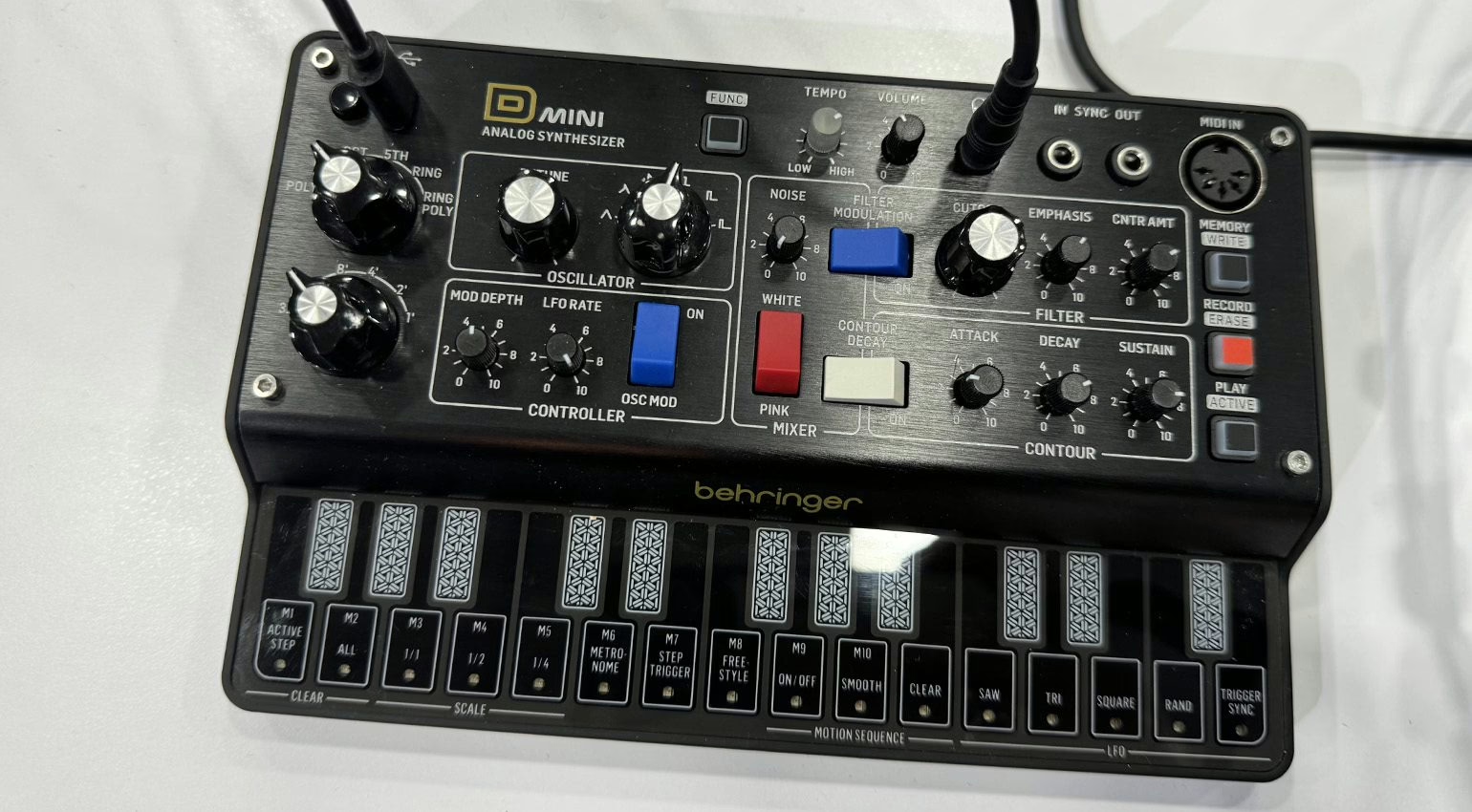
The core stays faithful to the Model D recipe: three analog oscillators, each offering five waveforms — sawtooth, triangle, sharktooth, square and pulse. A single master tune knob sets all three VCOs at once, which simplifies playing at the cost, inevitably, of fine per-oscillator tuning. Behind that sits a ladder-style lowpass filter with resonance, the part that defined the Minimoog’s sonic signature. A white and pink noise generator, with its own volume control, rounds out the sources.
On envelopes and modulation, the D Mini stays deliberately simple: an ADS envelope and a four-waveform LFO that can modulate the oscillators and the filter. This isn’t a do-everything machine, but an unapologetic bass-and-lead synth, straight in the lineage of its namesake.
Sequencer, touch keys and voice modes
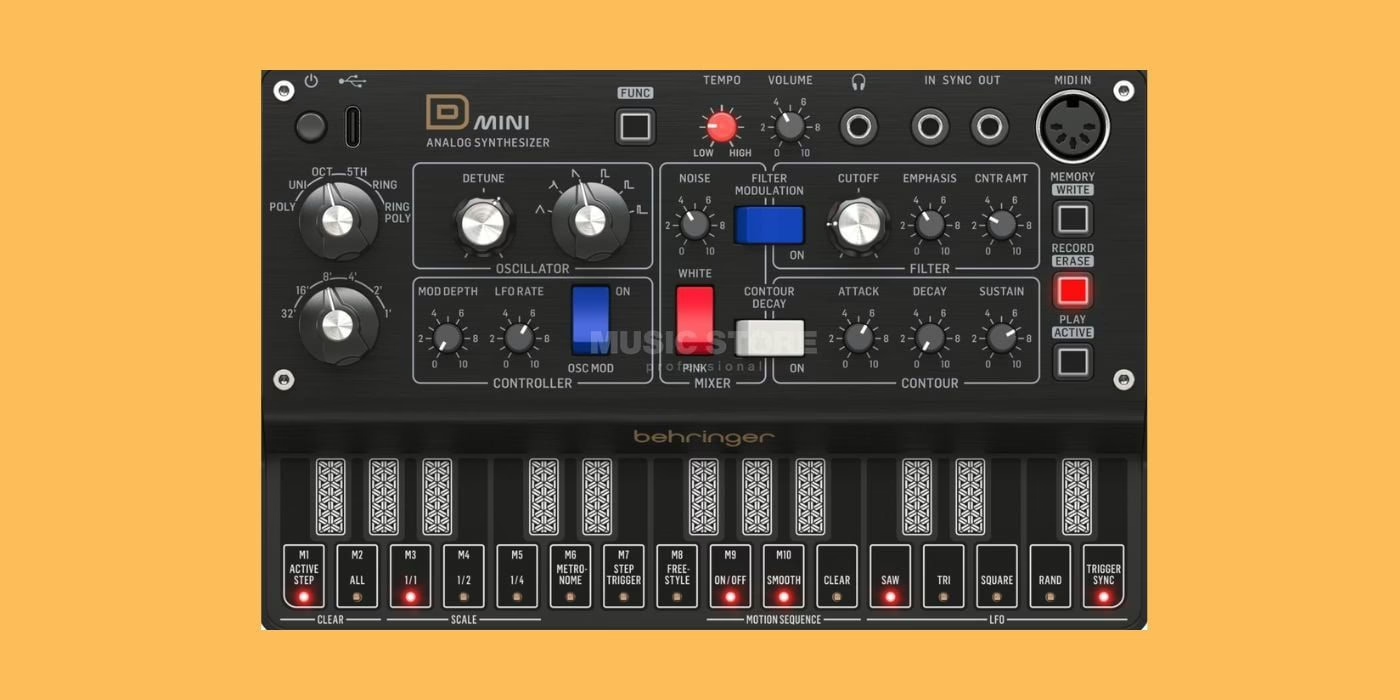
Where the D Mini breaks from the original Model D is ergonomics and modern features. It carries 27 capacitive touch keys, MicroFreak-style — a choice that will divide opinion, but one that makes the pocket format possible. There’s also a 16-step sequencer with motion recording, eight memory slots and a scaler function to stay in key.
The most interesting part is the voice modes: the D Mini offers six, including a three-voice paraphonic mode, a unison mode and a ring modulator. Mind the wording, though: this is paraphony — the three VCOs spread across the notes you play but share a single filter and envelope. It’s not true three-voice polyphony, but at this price, holding three notes on a Model D derivative is still unexpected.
Connectivity and integration
The I/O fits the on-the-go use it’s aimed at. Power comes over USB-C, which also handles MIDI with full NRPN and CC control — enough to drive the unit from a DAW or fold it into a larger rig. You also get a headphone output, sync in/out ports and a MIDI input on a TRS mini-jack. Eighteen direct-access controls cover the main functions, so you’re not diving into menus.
Price, availability and where it sits
At €99, the D Mini clearly lands in the second-synth or entry-point category, without giving up the essentials of the Model D DNA. It’s now available in Europe, the first run having sold out before a restock. Against the full Behringer Model D — pricier but more generous on I/O and playability — the D Mini plays the portability and rock-bottom-price card; against rival small analog synths, it adds paraphony and a sequencer where many stay monophonic.
My take
I’m not dogmatic about the brand: a well-designed Behringer earns its place, and the criterion stays the sonic result and build quality, never the badge. Here the pitch is honest: three VCOs and a ladder filter for €99 is, objectively, a lot of synthesis per euro. The touch keys are the obvious compromise — you don’t play them like a real keyboard — but they’re the price of this footprint. What remains is to hear the oscillators and filter in real conditions; that’s where the line between toy and genuine little instrument gets drawn. For a beginner, someone rounding out a rig, or anyone after a portable analog bass source, the bet is tempting. The brand had already beefed up its entry-level offering recently with the Dice 1U2 interface and its Midas preamp; the D Mini extends the same logic on the instrument side. In the same clever-bass-synth vein, we also took a close look at the Arturia Pure SUB, and, on the compact semi-modular front, the Pittsburgh Modular SV-1 Mini.