The Yamaha DM5 landed in September 2026 to plug the gap between the little DM3 and the big DM7. On paper it delivers: 96 kHz, DM7-derived architecture, up to 64 Dante ins and outs, 24 mix buses and, on the standard model, twin fader bays and twin screens. On the invoice it is another story— around $9,999 for the DM5, $6,999 for the DM5 Compact. At that price the question is fair: what does the same job, and sometimes for a lot less?
Here are eight compact digital consoles built for the stage, sorted into three honest families: the true rivals that play on the DM5’s turf; the more affordable alternatives that cover most of the work; and finally the in-house baby sister and the surface-less cousin, for anyone who wants the results without the footprint. Not all of them do exactly the same thing— we say so each time. Prices are indicative US street figures and vary by dealer, region and configuration.
The true rivals: same turf as the DM5
These are pro consoles— compact but complete— able to run a real show with a remote stagebox, audio networking and generous processing headroom. They go head to head with the DM5.
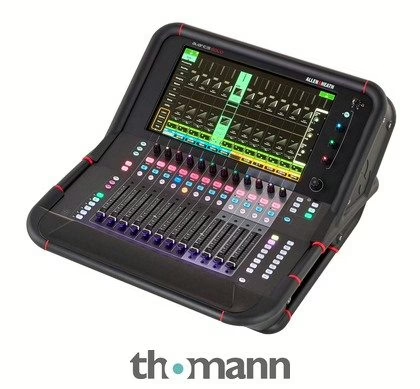
Allen & Heath Avantis Solo
The most direct answer to the standard DM5. The Avantis Solo carries 64 processing channels at 96 kHz, a huge 15.6-inch Full HD touchscreen and an XCVI FPGA core with vanishingly low latency. Every input gets the full chain (preamp, HPF, gate, parametric EQ, compressor, delay), and two rear expansion ports take Dante, MADI, Waves or gigaACE. Against the DM5 you swap Yamaha’s twin screens for a single large one— a matter of taste— but the horsepower and networking are clearly there.
In short: Allen & Heath · around $9,500 (64-channel config) · 64 channels, 96 kHz, 15.6″ screen, optional Dante/MADI/Waves cards
→ See the Avantis Solo on the Allen & Heath site
Behringer WING
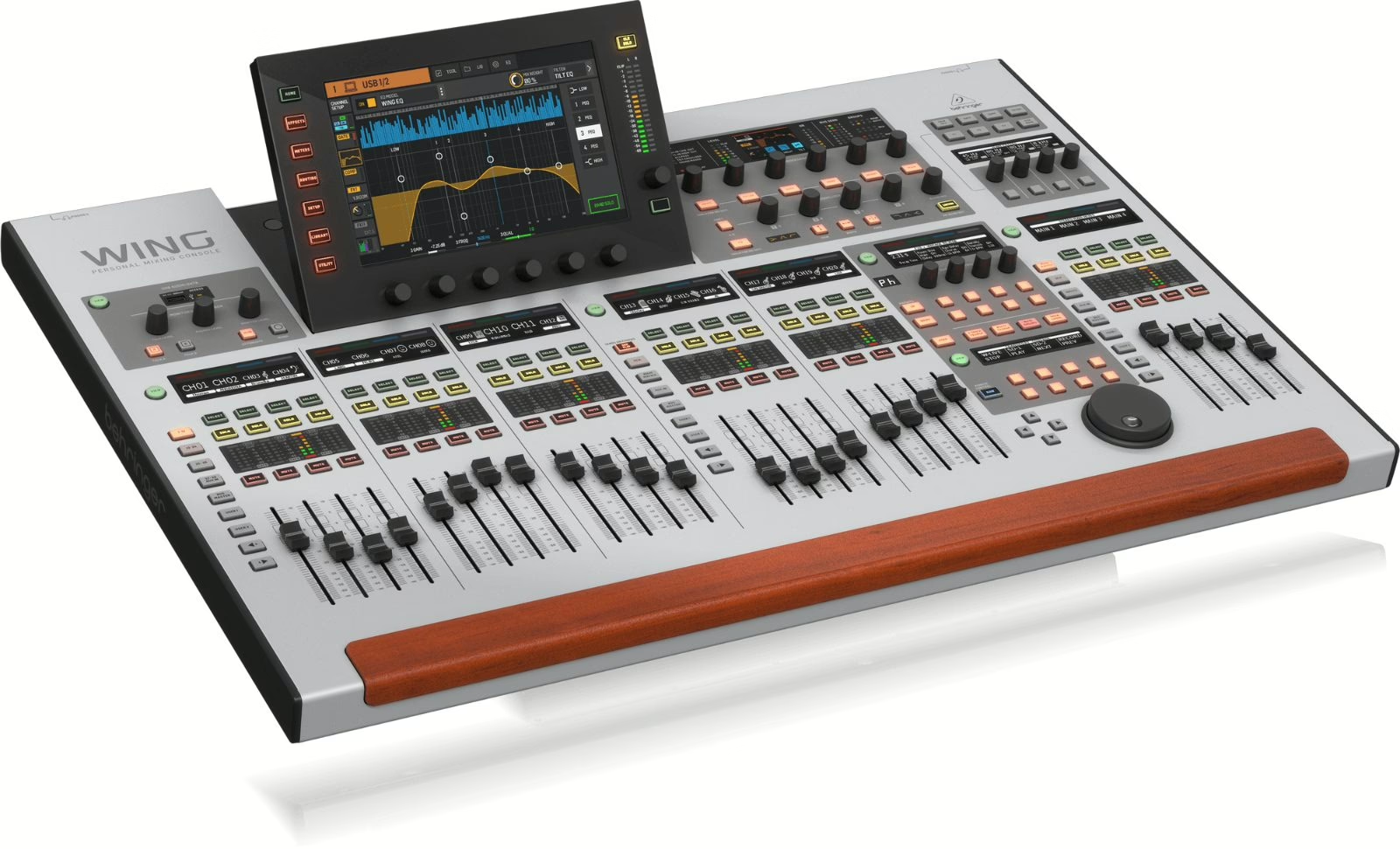
The provocation of the list. The WING does, near enough, the same job as a pro compact console: 48 channels, 24 motorized faders, a 10-inch tilting touchscreen, 24 Midas Pro preamps, three AES50 ports for 144 channels of I/O, multitrack recording to dual SD cards and optional Dante— all for barely more than $3,000. The trade-offs are real: fit and finish, after-sales support and a thinner accessory ecosystem than Yamaha’s. But on features per dollar, nothing comes close. For many rental shops it is the alternative that makes the DM5 hard to justify.
In short: Behringer · $3,499 · 48 channels, 24 faders, 10″ screen, Midas Pro preamps, AES50, optional Dante
→ See the WING on the Behringer site
Midas M32R Live
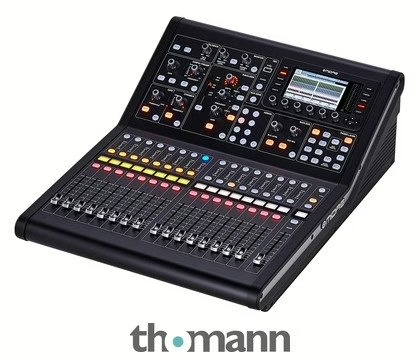
The workhorse of the stage. The M32R Live is not the newest— 48 kHz, a 5-inch screen— but it runs on the Midas preamps that built the brand’s reputation and on proven touring reliability. 40 channels, 16 Midas preamps, more than 50 built-in effects and a Klark Teknik expansion module for 32-track recording. It does the DM5’s core job— making a band sound clean, night after night— without the modern polish or the 96 kHz. If budget rules and ruggedness matters more than the spec sheet, it is still a safe bet.
In short: Midas · around $3,000 (Dante bundle) · 40 channels, 48 kHz, 5″ screen, Midas preamps, 32-track expansion
→ See the M32R Live on the Midas site
The more affordable alternatives: most of the job
Now we drop in size or price without leaving the pro world. These three cover the vast majority of live needs, each with its own character.
Allen & Heath SQ-5
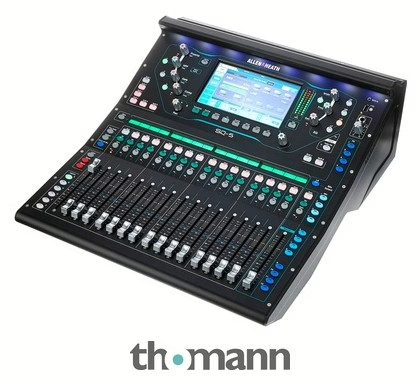
Allen & Heath finesse in a tighter frame than the Avantis. The SQ-5 processes 48 channels at 96 kHz with sub-millisecond latency, eight stereo FX engines and a 32×32 USB interface for recording. It offers a large slice of what the DM5 provides— 96 kHz sound, refined preamps, a stagebox ecosystem— in a smaller box. Note that Allen & Heath refreshed the range in 2026 with the SQ+ models (SQ5+, SQ6+, SQ7+), a notch above; pricing shifts accordingly, so budget around $2,500 to sit in this segment.
In short: Allen & Heath · indicative around $2,500 (range refreshed to SQ+ in 2026) · 48 channels, 96 kHz, 16 preamps, 32×32 USB interface
→ See the SQ-5 on the Allen & Heath site
PreSonus StudioLive 32SC
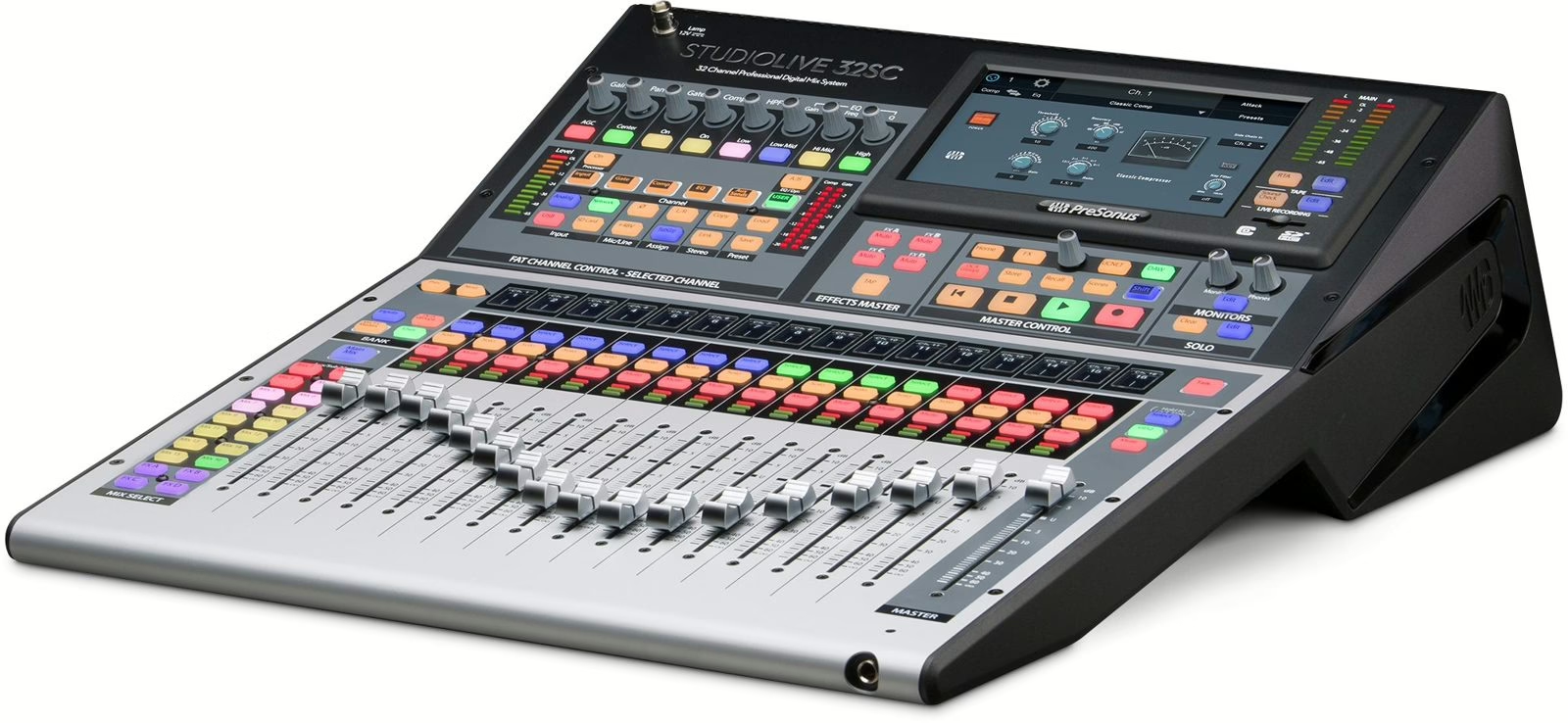
A stage/studio hybrid in a rackable subcompact frame. The 32SC packs 32 channels, 17 motorized faders, 16 XMAX preamps, a DSP engine that runs up to 286 simultaneous processors and, above all, the well-known Fat Channel (vintage-style EQ and compressors) on every channel. It records multitrack to SD and doubles as a 64×64 interface. The difference from the DM5: networking here is AVB, not Dante— and the house DNA is still very much recording-focused. So it only does part of the same job, but it does it well for anyone splitting time between the room and the studio.
In short: PreSonus · around $2,199 · 32 channels, 17 faders, Fat Channel, AVB networking, SD + 64×64 USB recording
→ See the StudioLive 32SC on the PreSonus site
QSC TouchMix-30 Pro
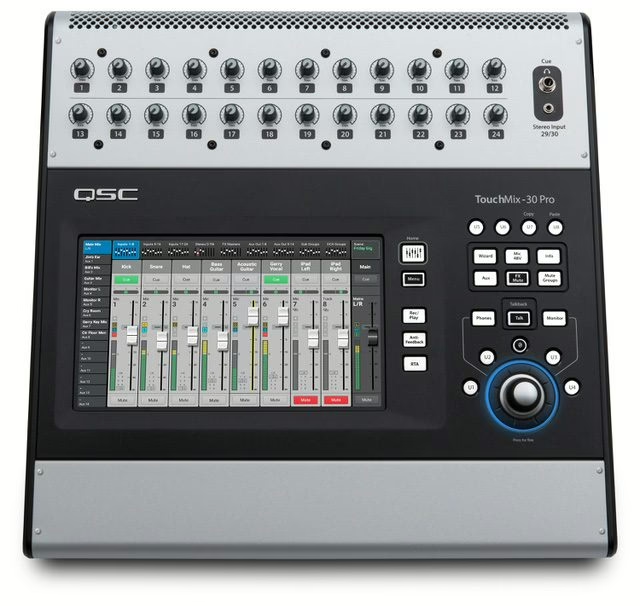
A different philosophy: no physical faders, everything runs through a 10-inch touchscreen (or a tablet over Wi-Fi). 32 channels, 24 Class-A preamps, six FX engines, 32-track recording to an external drive, and genuinely useful wizards— anti-feedback, room tuning, dual real-time analyzers— for the lone operator. It fits in carry-on luggage. It won’t replace the feel of a real fader surface, but for pure portability and a fast learning curve it plays a different, convincing tune.
In short: QSC · $1,499 · 32 channels, 10″ touchscreen, 24 preamps, anti-feedback and room-tuning wizards, 32-track recording
→ See the TouchMix-30 Pro on the QSC site
The baby sister and the surface-less cousin
Two ways into this world without aiming for the top tier: stay in the Yamaha ecosystem one step down, or drop the surface entirely for a rack driven from a tablet.
Yamaha DM3
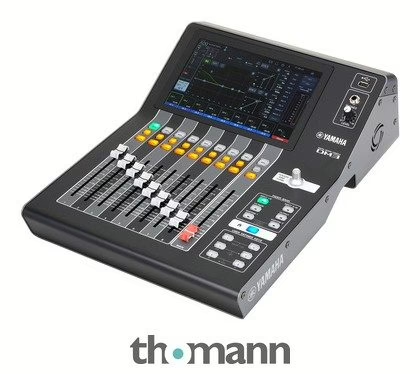
The direct baby sister— the very model the DM5 sits above. The DM3 handles 22 channels at 96 kHz, with 16 preamps, 9 motorized faders and a 9-inch touchscreen. The Yamaha workflow is identical— same reflexes, same mixing logic— which makes it the most coherent entry point for anyone who wants the Yamaha house without the DM5 budget. It is not in the same league on channel count, but for a club, a house of worship or a small tour it is plenty.
In short: Yamaha · from around $1,699 (DM3 Standard; DM3S ≈ $1,889) · 22 channels, 96 kHz, 9 faders, 9″ screen, Dante on some versions
→ See the DM3 on the Yamaha site
Allen & Heath CQ-20B
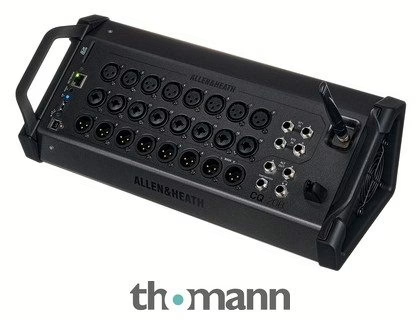
The radical cousin: no surface at all, everything driven from the CQ app (tablet, phone, computer). In an ultra-compact rack box, the CQ-20B offers 96 kHz on an FPGA core, 16 mic/line inputs, built-in Wi-Fi and Bluetooth, an SD/USB recorder and gain and feedback wizards. At under $1,000 it is the doorway back to some Allen & Heath know-how without the footprint or the budget. It only does part of a DM5’s job— no large surface, fewer channels— but for a discreet install or nomadic troubleshooting it is remarkably handy.
In short: Allen & Heath · around $999 · 20 channels, 96 kHz, surface-less rack format, CQ app, Wi-Fi/Bluetooth, SD/USB recording
→ See the CQ-20B on the Allen & Heath site
The recap
| Console | Brand | Indicative price | The job in a word |
|---|---|---|---|
| Allen & Heath Avantis Solo | Allen & Heath | ≈ $9,500 | Direct rival |
| Behringer WING | Behringer | $3,499 | Best features per dollar |
| Midas M32R Live | Midas | ≈ $3,000 | The touring workhorse |
| Allen & Heath SQ-5 | Allen & Heath | ≈ $2,500 | Compact finesse |
| PreSonus StudioLive 32SC | PreSonus | ≈ $2,199 | The stage/studio hybrid |
| QSC TouchMix-30 Pro | QSC | $1,499 | The all-touch traveller |
| Yamaha DM3 | Yamaha | ≈ $1,699 | The in-house baby sister |
| Allen & Heath CQ-20B | Allen & Heath | ≈ $999 | The surface-less cousin |
Which one should you choose?
If you genuinely want DM5-level capability without the Yamaha badge, the Avantis Solo is the most serious rival and the WING the most tempting— it does almost everything for a third of the price, provided you accept the Behringer ecosystem. To run dates without second-guessing reliability, the M32R Live remains an obvious call. Anyone after the Allen & Heath colour in a smaller frame will look at the SQ-5 (or the new SQ+), while the StudioLive 32SC speaks to those who record as much as they mix.
Below that, the logic changes: the TouchMix-30 Pro for portability and the solo operator, the DM3 to stay with Yamaha at half the money, and the CQ-20B to slip a serious mixer into a bag. The DM5 keeps its appeal— range coherence, 96 kHz throughout, generous Dante— but unless you need its twin screens and its input count, several of these alternatives put on the same show for far less. To place the DM5 precisely within Yamaha’s lineup, revisit our detailed look at the DM5 and DM5 Compact; and if the digital-versus-analogue question still nags, our analogue or digital console guide lays the groundwork. On the hands-on side, see also how to use scenes and snapshots live and how to record a show in multitrack.